How reliable is our healthcare?

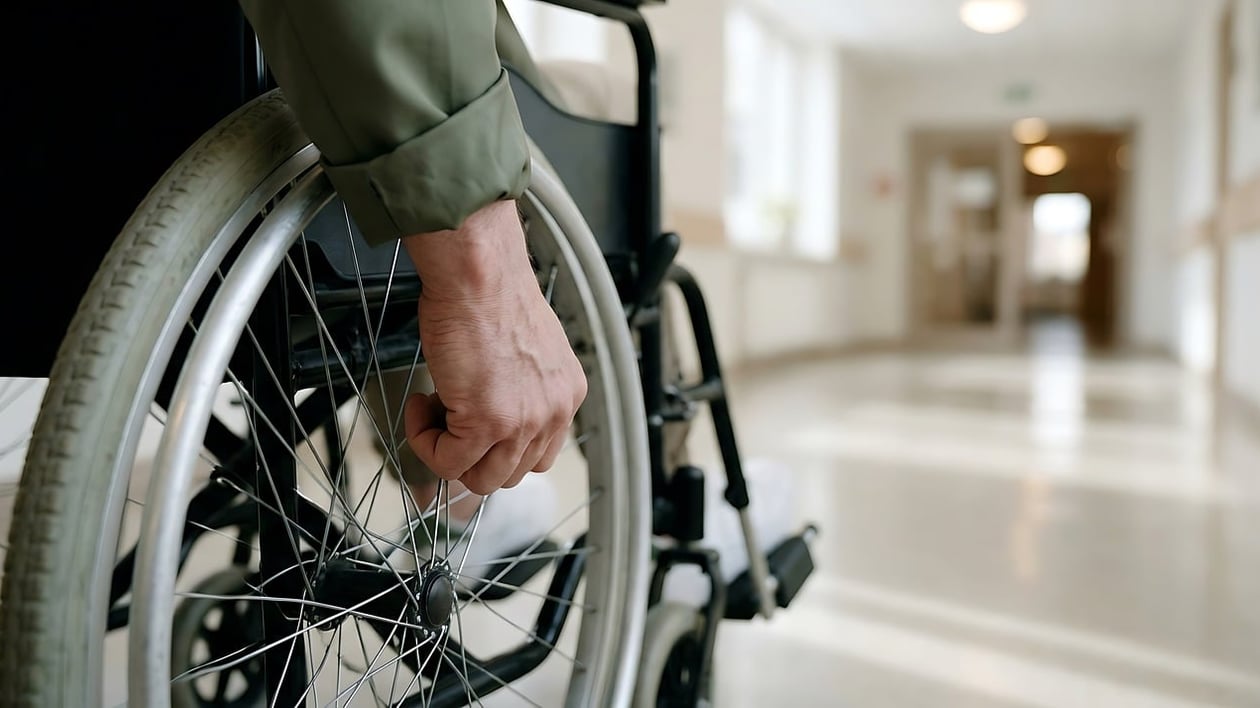
Anyone sitting in a GP surgery in the morning can be back home by lunchtime – with a referral in hand and weeks to wait for the next free specialist appointment. Both experiences belong to the same healthcare system. Reports of hospital insolvencies therefore tell only part of the story. How reliable public healthcare in Germany is also shows in whether someone remains reachable for us between two appointments, or whether help is waiting at home after a discharge.
The first appointment often works. The second takes time.
In a representative Forsa survey commissioned by Techniker Krankenkasse, 74 per cent of people with statutory health insurance reported getting a GP appointment within a few days. By contrast, 56 per cent waited more than four weeks for specialist treatment. These are the respondents’ own experiences. How urgent the examinations in question were medically cannot be read from these two figures alone. To the TK insured persons’ survey
In everyday life, this makes a difference. Anyone who receives a referral can still ask at the surgery: “By when should I have the appointment, and whom do I contact if that doesn’t work out?” This gives the waiting time a medically discussed framework. That is particularly valuable for people with several conditions who have to coordinate appointments at different practices.
How far is it to the nearest practice?
How quickly someone gets an appointment also depends on where they live. For 2025, the National Association of Statutory Health Insurance Physicians (Kassenärztliche Bundesvereinigung) lists 40 planning areas in which the responsible state committees have found a shortage of doctors. In a further 173 planning areas, they saw a shortage looming for the region. Both findings mainly concerned GP care. The distinction matters for municipalities: with an impending shortage, there is still the chance to arrange a successor or an additional practice before one is missing. KBV regional needs planning
A planning area covers several places of residence. How easily a practice can be reached in everyday life can differ even between two neighbouring municipalities. For someone who can drive, a morning appointment in the next village may well be manageable. Anyone who depends on the bus or on a companion has to match the outward and return journeys to consulting hours. For regular check-ups in particular, it is therefore worth looking not only at the next free appointment but also at the connection home.
What a region gains or loses with its hospital beds
In 2025, Germany recorded around 17.7 million inpatient treatments. At the same time, the European Country Health Profile shows more potentially avoidable hospital admissions for diabetes than the EU average. The comparison raises a question that is easily lost in the debate about hospital beds: what help reaches chronically ill people early enough for them to cope at home? In an individual case, no judgement about the necessity of an admission can be derived from the statistics. Hospital statistics from Destatis · Country Health Profile Germany, Figure 12
Financing explains part of the differences between sites. The federal states plan inpatient care and in principle bear the investment costs of the hospitals included in their plans, for example for a new building or a larger piece of equipment. Ongoing treatment is mainly financed by the health insurers. Both case-based flat rates and a separate budget for nursing care at the bedside play a role here. When a provider reports financial difficulties, it can therefore mean different things: funds are lacking for a conversion, current income is not enough to run the hospital, or a planned service finds too few patients. Each of these causes calls for a different answer. Hospital financing at the Federal Ministry of Health
Three regions and their experiences
Templin in Brandenburg has tried a different approach. Among other things, a unit was set up at the hospital in which the team could first observe patients and then decide on an inpatient admission. In around two years it cared for more than 1,000 cases. In the Templin area, the number of inpatient treatments fell by 14.4 per cent between 2016 and 2020. The period includes the first year of the pandemic, so the decline cannot be attributed entirely to the project. What is transferable is above all the idea: between immediate discharge and admission to a ward, a place for observation and clarification can make sense. Evaluation report on the Templin pilot project
Bad Gandersheim in Lower Saxony shows what can cause such an intermediate solution to fail. A ward with 25 beds was intended for people who were too ill to be cared for at home but did not need a large hospital. After a good two years, it closed at the end of March 2026. University Medical Centre Göttingen cites a persistently low occupancy and a lack of conditions for reimbursed transfers. The GP practice and the psychiatric day clinic remained. Anyone asking about the “health centre” today therefore has to ask more precisely: what treatment is possible there – and can I stay overnight? Review and current services from University Medical Centre Göttingen
In the Westallgäu, the closure of the Rotkreuzklinik Lindenberg had a further consequence. According to the district, the emergency doctor service remained staffed. An expert report at the same time showed problems with the response time in the Oberstaufen area and a looming problem for Lindenberg. At peak times, an additional ambulance was stationed in Oberreute. The district reports improved response times. For a municipality, it is therefore worth asking two times separately when a site closes: when does help arrive, and how long does the subsequent transport to a suitable hospital take? Report from the district of Lindau
The biggest place of care is one’s own home
At the end of 2023, 4.9 million of Germany’s 5.7 million people in need of care lived at home. 3.1 million received only care allowance and were mostly looked after by relatives. Behind this figure lies work that appears in no bed statistics. Whether a discharge goes well can depend quite practically on whether someone collects the medication on Friday and whether support is there over the weekend. Care statistics from the Federal Statistical Office
Who plans the first days after discharge
For the transition out of hospital there is discharge management (Entlassmanagement). The hospital has the task of clarifying the need for further care and helping to prepare follow-up treatment. For a limited period, hospital doctors can, for example, prescribe home nursing care. This is particularly important when a weekend lies between the last day on the ward and the next available practice appointment. Discharge management at the Federal Ministry of Health
An example: a patient comes home after a hospital stay. Her daughter can do the shopping but lives an hour away. Whether the mother can manage the stairs, whether a prescribed aid arrives in time and who takes care of the first change of dressing are three different questions. In the discharge conversation, it is possible to record for each of them what has been agreed, who still has to give feedback and whom the family can reach in case of a delay. Even those who live alone can in this way name early on what support is actually available at home.
What can be drawn from this for everyday life
Personal room for manoeuvre differs depending on the situation. With a referral, it helps to know the medically acceptable waiting time. With a hospital stay, the question about the first day at home often makes sense even before discharge. And anyone who regularly accompanies or cares for someone can tell the treatment team which tasks are compatible with work, distance and their own health. This information is part of planning realistic follow-up care.
At regional level, the reliability of care can be checked against concrete changes. After a site closure, for instance, it is of interest how long the journey to the receiving hospital takes. After the opening of a health centre, it also matters whether GPs can refer patients there and whether their further care is arranged. Such information gives people locally a basis for assessing changes and bringing their experiences into the public discussion.
Cover image: AminRajput21 / Pixabay
Notes on content provided by authors
Comments
Loading comments …
Become a member to read and write comments. GAIA members read and write comments in the members' portal.
Become a member Already a member? Read the comments in the portal →