If the economy is doing well, are we all doing well?
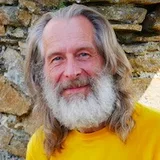

Today I invite you to a particularly holistic look at the economy.
Dr Michael Ehrenberger’s article, the editorial of the current issue of his magazine “natur heilt” (Nature heals), has already made waves among readers.
For me, the article is a very profound stocktaking of our economic culture which, especially in times like these, highlights issues from which most people would rather look away. However, the article also shows what each individual can contribute to the urgently needed change! If we do not live this change, the pressure of suffering will keep growing until we finally shape the change – or it is shaped for us. We have the choice! I have already decided, because “We are the ones we have been waiting for!”
Article by Dr Michael Ehrenberger
It is a fact that our lives are shaped by the economy to an extent that far exceeds our imagination. The free market economy has long since spread across the whole Earth. Even “communist” states such as China play along with the ruinous game and thus contribute to our Earth soon being in even greater difficulties than it already is.
Politicians, of course, strive to get a large piece of the cake while still in office – and once they are voted out or resign, well-paid posts in the private sector are guaranteed.
Perhaps you are wondering what a critique of the capitalist market economy is doing in a magazine called “Natur heilt”. I will try to show how much our global health depends on the economic system currently practised – how it is sustained by it, but also massively damaged. There are certain connections of whose huge extent we may not even be aware. But there are also ways out, which we can only take together; for that we need the abilities to cooperate and communicate. In my opinion, change has to come and it will come. There is not yet any strong resistance to change in the free market economy. The Nobel laureate Milton Friedman (1912–2006) demonised the intentions of managers who want to avoid discrimination and pollution and provide jobs for the long-term unemployed. He called them hypocrites who abused their power and undermined the foundations of a free society. Friedman is regarded as one of the most important founders of modern economics, and unfortunately his theses are still valid in the training of young economists.
Where has this attitude of business leaders taken us? In 2019, 0.9 per cent of the world’s population owned 43.9 per cent of all global wealth, and the gap keeps widening. Some more recent textbooks even put forward the thesis that self-interest (of companies or corporate bosses) is, so to speak, a modern form of charity (“Wirtschaftsethik” by Lüdge and Uhl, 2018). But this game cannot last for ever. “The pitcher goes to the well until it breaks.”
Prof. Dr Christian Kreiß, whose work inspired me to write this article, reports on further disturbing abuses on his website menschengerechtewirtschaft.de. Some of his books can be downloaded free of charge as PDF files from his website.
The helmsman lies, the captain is drunk and the engineer has sunk into dull lethargy, the crew all perjured scoundrels, the radio operator too cowardly to send an SOS. The ship’s goblin steers the ship of fools, full speed ahead and course set for the reef. Reinhard Mey, “Das Narrenschiff” (The ship of fools)
But let us look at individual areas of the economy’s colourful hustle and bustle. The list does not claim to be complete, nor are any players addressed personally or even presented as guilty, for in the sense of a holographic world view we too are players and cannot escape responsibility.

Electronics and the car industry
The light bulb was invented in 1879; the invention is attributed to Edison, which is demonstrably wrong. The real inventor was a certain Joseph Swan, with whom Edison founded a joint company after a short legal dispute. In those years the race for energy began – the race was on, and it continues to this day. We currently consume enormous amounts of energy worldwide, often without being aware of it. Running the search engine “Google” alone uses more than 20 trees per second (!); the CO2 emissions caused by internet use in Germany (source: ZDF, 2019) are as high as the CO2 emissions caused by all aircraft in Germany. The question arises: “flight shame or internet shame”?
Of course we are aware that we cannot turn back the clock, but the fact remains: the more the internet is used – including, of course, WhatsApp, Facebook etc. – the more the environment is damaged, and this naturally affects our global health. Humanity is currently consuming energy as if there were no tomorrow.
The fact is that no household can do without electricity any more. Emergency plans are currently being drawn up all over Europe for a total “blackout”, which we will very probably not be spared.
Everything has to happen faster, we need the latest devices, and if a primary school child does not yet have a mobile phone, mockery and scorn are not long in coming. The psychological strain on children is increasing – also a serious health problem.
“Geiz ist geil” (stinginess is cool) was the advertising slogan of a chain of electronics stores some years ago, which of course always offered the latest developments. Even bigger televisions, robotic lawnmowers (which, by the way, have already cost many hedgehogs their lives), robotic vacuum cleaners and of course “Alexa”, which can play us any music but is not at all squeamish about passing on our data. Electronics as far as our senses reach, and beyond.
Of course we are happy to accept offers of even faster devices with even more storage, and if the budget is not enough, then buying on instalments will do. But the constant development of modern technology brings further dangers to our health. Have you ever seen electrical appliances growing on trees? Certainly not! So the questions arise of “where from” and “where to”. The question “where from” is easily answered: 24 million mobile phones are sold in Germany every year. That requires 720 kilograms of gold, 264 kilograms of palladium, 7.3 tonnes of silver, 396 tonnes of copper and 1,531 tonnes of plastic. Many materials are mined in the poorest countries in the world, where workers have to work under inhumane conditions for low wages. The parts are then manufactured and assembled in Asia, flown to Europe and offered to us for sale. When the mobile phone or other electronic device is no longer up to date, it is disposed of. For telephones there are already initiatives to reuse the valuable raw materials (Ö3 Wundertüte, www.refurbed.at etc.). Things look less good for other technical devices, however.
It is estimated that 20–50 million tonnes of electronic waste are generated worldwide every year. It has to be disposed of. One of the main dumping grounds is in Ghana, near the capital Accra. Broken devices are exported there and then taken apart by local children in search of usable raw materials. What can no longer be used is often burned. This produces toxic fumes that have serious health consequences for the children. Although the EU prohibits the export of electronic waste, around 155,000 tonnes a year still find their way from Germany to Africa.
The whole situation is also driven by so-called “planned obsolescence”, meaning that some manufacturers of electronic devices build pre-programmed weak points into their products. When such a point breaks, a repair is usually no longer worthwhile. A new device is bought and the old one is thrown away. It is estimated that this practice accounts for the extra output of about 16–18 large power stations and seven waste incineration plants.
Let us take a brief look at the car industry
In the car industry, of course, there is also cheating and trickery, just to get at consumers’ money. Top managers pay themselves bonuses of dizzying heights. Well, that is for these bosses to settle with themselves.
It becomes much more interesting, however, when exhaust emissions are manipulated and the health of many people is affected as a result. Yes, the corporations are fined heavily (which, at the end of the day, the consumer pays again), and some managers even end up in court, but the people who implemented the corporations’ ideas usually go unnoticed. Would it not have been appropriate in this case to show some moral courage and not follow the instructions blindly?
We are faring much the same at present with the much-praised electric cars, which serve many “green-minded” fellow citizens as a fig leaf. Behind the emission-free drive, however, there are facts that are readily forgotten.
There is, of course, no question that an electric car drives without emissions and can thus significantly improve air quality in cities. This naturally raises hopes that cities will become liveable places again, at least as far as the air is concerned. Often overlooked, however, are some very delicate facts that we want to look at more closely.
The “heart” of every electric car is its battery. Some models have batteries weighing around 700 (!) kilograms. These batteries use special elements such as lithium and cobalt, whose extraction is hard to accept ethically and morally. Nevertheless, the Green parties in Europe praise the e-car as the “miracle worker”.
A large amount of lithium is mined in Chile. For this, the lithium-rich groundwater is pumped into basins and evaporated there. This means a massive intervention in the ecosystem.
“Pumping the brine out of the groundwater lowers the water table and dries up not only watercourses but also meadows and wetlands. Original grazing land is lost, and rare bird species nesting there are threatened. The numerous lagoons that characterise this ecosystem are drastically altered. And the local, largely indigenous population suffers from water shortages. The reason is the targeted evaporation of the water to increase the lithium concentration in the basins, without any provision to collect it or return it to the groundwater. As a result, meadows and wetlands are in danger of drying out, which poses a direct threat to fragile habitats, nesting bird species and original grazing land. The morphology of the lagoons that characterise this ecosystem is also drastically altered.” Source: Global 2000
We see problems similar to those in Chile in Africa as well. There, in the Congo, one of the poorest countries in the world, people dig for cobalt. It is true that widespread child labour has been replaced by large mines, but people are not much better off. Blasting is carried out in the mines, and it is not uncommon for people to be injured or even killed by flying rocks. At night, young men sneak into the mines and carry the cobalt-rich rock to the black market to sell it. “We are not stealing, we are only taking what belongs to us,” say the young men. If the guards notice what is going on, they set their dogs loose or even shoot. Just imagine large corporations buying the water rights in Austria, then selling the water while the population gets nothing. “Unthinkable,” you will say – not so in the Congo. The country is far away, and industry’s hunger for cobalt is growing. About 50 per cent of the cobalt needed for batteries comes from Africa, and the battery of a large e-car often weighs up to 700 kilograms. Facts that are better kept from us consumers.
So we see that progress in the digital field, but also in the manufacture of electrical appliances, brings great problems and places a massive burden on the environment.
Agriculture and food
In hardly any other area of the global economy is there so much cheating, stretching, colouring, adulterating and lying as in the food industry. You know the orientation of “Natur heilt”: “Let food be thy first medicine.” (Hippocrates) – unfortunately this sentence is rarely followed, and hardly at all in modern medicine. Beginning with food production, I will now list some facts that drastically illustrate the path various products have taken before they end up in our shopping bags and then on our plates.
Agriculture
Every year about 158,000 square kilometres of rainforest are cleared. For comparison: Austria has an area of about 83,000 square kilometres. So at least twice the size of Austria in rainforest is destroyed every year – for timber and paper, for conversion into oil palm or soy plantations or cattle pastures, for the exploitation of mineral resources such as iron ore, gold, oil or gas, or for the construction of large dams. Indigenous peoples are driven out (in the best case), as yet unknown medicinal plants are wiped out, and animals are robbed of their habitats.
In our latitudes, soils are fertilised and compacted by machinery; genetically modified plants are still banned here, but permitted in many countries. Monocultures are created that give pests the opportunity to multiply, and then insecticides are used to keep crop damage as low as possible. In many regions of Europe there has therefore been a massive decline in insects, amounting to as much as a 75 per cent drop in insect populations. The reasons for this are the impoverishment of the landscape through intensive agriculture, over-fertilisation, intensive forestry, light pollution (insects are often nocturnal and die at street lamps etc. – it is estimated that there are a billion insect victims per night in Germany) and nature-hostile private gardens (about three per cent of Germany’s area consists of private gardens, which are not managed in an insect-friendly way but are loaded with about 600 tonnes of pesticides a year).
Where do these measures lead? Food has to be cheap (example: BILLA – this brand name derives from “Billigladen”, cheap shop). Customers demand discounts (the “Rabattmarkerl” stamps at the Spar group), which in turn encourage buying. Whatever is not used up in shops, restaurants, on ships or in households is destroyed. It is estimated that in industrialised countries about half a kilogram of food per inhabitant is thrown away every day. Products that have consumed resources (energy, fertiliser etc.) are thrown away, and the next day the shelves are full again. In Switzerland, 2.5 million tonnes of food are disposed of every year, two thirds of which are still edible when thrown away.
Animals are fattened and transported across countries in incredible suffering. Calves from Austria are exported to Spain and Lebanon, crammed together, thirsty, frightened. Austria in turn imports veal to make the world-famous Wiener schnitzel, which actually comes from Milan. Cattle are climate sinners. They give off gases that contribute to global warming. You don’t have to become a vegetarian or vegan straight away, but meat from the supermarket? No thank you!
Not only does food production place a massive burden on the environment, but inferior products are also made from nature’s treasures. Empty of nutrients, rich in unnecessary calories, advertised at great expense and sold through special offers. Work out for yourself how your personal health and global health suffer as a result. Modern food production causes not only suffering and pollution, but also chronic diseases. These diseases in turn form the breeding ground for a very powerful industry, the pharmaceutical industry.
The health industry
With the following thoughts I do not want to give the impression that I am an opponent of conventional medicine. Lives are saved in our hospitals every day, and many of the skills of doctors would have been unimaginable 20 years ago. In my opinion, conventional medicine is absolutely justified in being used.
It only becomes problematic when profit maximisation is pursued from various sides. Almost all large pharmaceutical companies are listed on the stock exchange, so profit maximisation naturally comes first among the tasks the corporate bosses have to accomplish. The thirty largest pharmaceutical companies together have a market value of more than 600 (!) billion dollars. The pharmaceutical giants have become real money machines, at least according to the thinking of the free market economy. “Profit maximisation before health” is their motto, and it is not the medicines that work best that are sold, but those with the highest profit margin.
Of course, work also has to be done at the grassroots. This includes practices that can definitely be described as criminal. If, for example, a plant is found that could help in many areas, efforts are made to influence legislators through lobbyists so that this plant is banned. Was it a coincidence that a law was passed banning the sale of annual mugwort (Artemisia annua) in Europe (in December 2019)? After all, initial research showed that the plant might be used for viral diseases (including Covid-19). Mugwort is already used against malaria in Africa, and the pharmaceutical lobby does not like that at all either (more information in the film “Das Fieber”, The fever). The film “Das Fieber” becomes a thriller showing how powers such as the World Health Organisation, pharmaceutical companies such as Novartis and foundations such as that of Bill and Melinda Gates profit from human suffering.
The pharmaceutical industry is in a real frenzy of power, driven by money and greed. Ethics and morals are foreign words in this business. But there is nothing this industry fears more than healthy people, for they are “sales killers”. It is interesting, then, that global food corporations are in cahoots with the pharmaceutical industry. This happened with Nestlé and Pfizer: the Swiss corporation bought Pfizer’s infant nutrition business for twelve billion dollars. The deal was brokered by Emmanuel Macron, who certainly did not do so selflessly.
The pharmaceutical industry is intertwined with many institutions, including, of course, the WHO. Some pharmaceutical giants hold blocks of shares in their “competitors”, which naturally protects against healthy competition. If you want to know more about this topic, read René Gräber’s blog (www.naturheilt.com, German). You can subscribe to a newsletter free of charge.
What can we do?
Before we turn to solutions, I would like to tell you a little story. Many years ago there was a small village in India. There was no wealth; the people lived on what they grew. If they were lucky, they could sell part of the harvest. One day, however, the rain failed to come – a catastrophe for the villagers. But a rainmaker came to them, and the villagers asked him whether he could help. The rainmaker replied that he could try, but he needed a hut for it. He was given the hut and withdrew. Nothing happened in the following days, and unrest spread through the village. But slowly the sky changed, clouds gathered and it began to rain heavily. When the villagers asked the rainmaker how he had done it, he said: “I came to your village and noticed that something was not right here. So I withdrew to find out what was not in order with me; I put things in order within myself, and the longed-for rain came.”
This short parable teaches us that in bad times it is not helpful to point the finger at “the others”, but to begin with ourselves – even if we suddenly no longer swim with the current. I admit that the individual’s possibilities are limited, but with cooperation and sufficient communication a great deal can be achieved.
A few thoughts on this:
- Become aware of the power of the consumer: only things that are bought are produced.
- Think globally and act locally. Use the offers of local producers and avoid supermarkets as far as possible.
- Don’t join in every trend (electronic devices, clothing etc.).
- Consider whether banks are still a safe place for your savings. If you have doubts – which are entirely justified – put your money somewhere safe.
- Educate your children. You can show them pictures that illustrate parts of the problem. It sounds harsh, but great apes are dying out because their habitat is being turned into palm oil deserts. Palm oil ends up in Nutella. Explain to your children the problems behind food production.
- Get to know nature’s treasures and respect them. Very often plants and plant extracts help better than chemical products.
- Avoid the products of large corporations such as Nestlé. These corporations never have your health in mind, only their own profit maximisation.
- Also give up your faith in fair politics. Politics and business are so closely linked that objectivity is no longer possible on either side. All interests are directed at the money you earn and at your vote at election time. Refuse to hand over your vote – once you have given it away, your voice is silenced.
The list of possible initiatives you could take is of course not complete, and it also takes courage and a little imagination to break new ground. We should also be aware that the path is not an easy one; nevertheless it is worth taking, because it can save lives.
So, at the end of the article, I ask once again: “If the economy is doing well, are we all doing well?”
DOWNLOAD THE ORIGINAL ARTICLE (German, PDF)

Notes on content provided by authors
Comments
Loading comments …
Become a member to comment publicly. GAIA members write comments in the members' portal — under their nickname, visible to everyone.