Censorship instead of a Nobel Prize: the 150 MHz frequency


Dieter Broers, bestselling author, film-maker and biophysicist, researched the biological effectiveness of the 150 MHz frequency in the 1980s.
He carried out his research in cooperation with several universities, but instead of receiving a Nobel Prize for his outstanding scientific findings, he met only ignorance and censorship.
For decades, science seems to have been on standby with regard to the 150 MHz frequency – even though the biological effectiveness of the 150 MHz frequency in connection with the Schumann frequency is sufficiently documented. The practical therapeutic successes achieved with it in seriously, chronically and “incurably” ill people are undisputed. Nevertheless, field treatment has so far been denied the public and medical recognition it deserves. Today we know that with this frequency, which corresponds to the frequency of human DNA, cell assemblies as well as the consciousness (pineal gland) of sick people can be brought into a healing process.
Today Dieter Broers has been elected to the Nobel Prize committee. This shows that his results as a scientist were indeed taken seriously.
True to the motto “Those thought dead live longer”, this technology is making a big comeback. The 150 MHz frequency – together with the Schumann frequency and Tesla technology – was built by the Russians into a device for energising water, which has led to phenomenal results in thousands of documented self-experiments within Europe.
New scientific studies, and studies already published, all confirm that the discoverer, Dieter Broers, deserved the Nobel Prize long ago! Hopefully this honour will still be bestowed on him.
Play video (German)
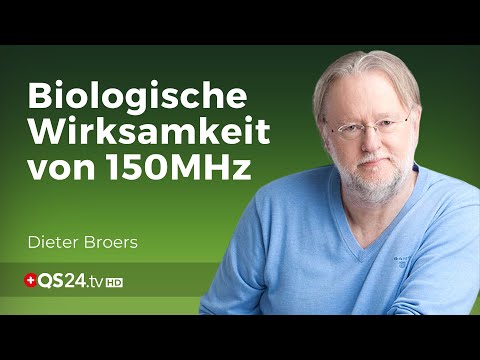
Duration: approx. 60 min
Presenter: Alexander Glogg
Guest: Dieter Broers
- Bestselling author
- Documentary film-maker
- Biophysicist
150 MHz are a gain for your body.
Activate your DNA and regenerate your body. Numerous studies confirm the positive effect.
Notes on content provided by authors
Comments
Loading comments …
Become a member to comment publicly. GAIA members write comments in the members' portal — under their nickname, visible to everyone.