"Germany completely lost without power" – which countries are best prepared for disasters
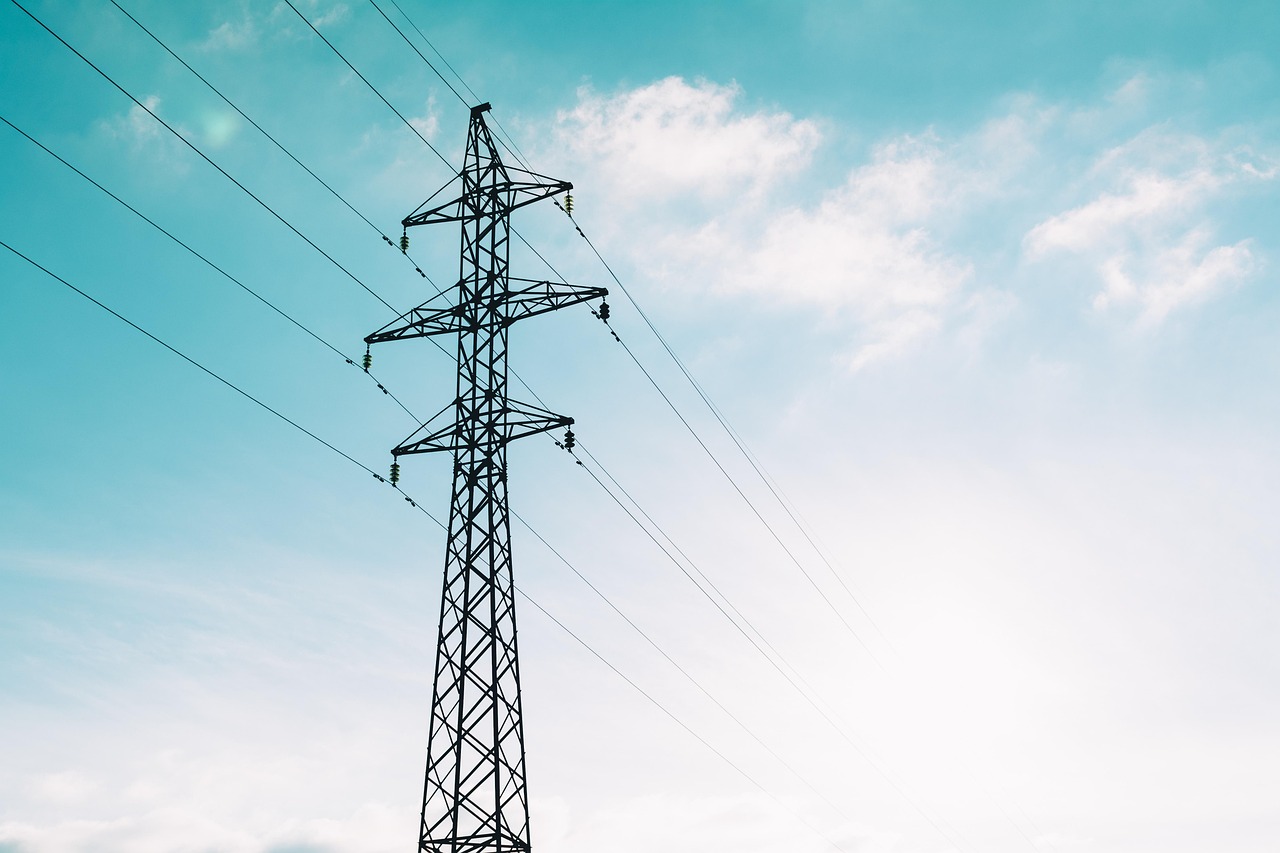
Maurice Forgeng, Epoch Times
In brief:
- According to a study, no country in the world is optimally prepared for major disasters that would be fatal for many.
- A nuclear war, natural disasters or a long-lasting blackout would plunge everyday life worldwide into chaos.
- Australia does best in an international comparison.
- If Germany were without power for a longer period, much would collapse.
- The study is meant to raise awareness – everyone can also prepare themselves.
A deadly epidemic, a long-lasting blackout, a nuclear conflict: several possible disaster scenarios could have devastating effects on our global civilisation.
A new international research paper by environmental scientist Dr Florian Ulrich Jehn and an international team concludes that no country on Earth is protected (German) against all the risks of such an extreme scenario. Jehn has been working at the FernUniversität in Hagen since this year.
The study is titled “No place to hide? Regional resilience and vulnerability to global catastrophic risk”. It shows which protective factors matter in an emergency and how good the chances of success are.
Which disasters does the study consider?
There are a number of possible scenarios that could trigger global chaos – and wipe out many human lives. The study’s authors examined the effects of various major catastrophic events. “We are concerned with scenarios that could wipe out at least ten per cent of humanity at a stroke. Not many disasters manage that in a short period,” Jehn explained.
These include a nuclear war or the eruption of a supervolcano such as Yellowstone (German) in the USA or the Campi Flegrei (German) in Italy. These events can cause a nuclear winter, that is, a longer-term reduction in incoming sunlight. Among other things, this would affect our food production (German). Many plants would die because they lack vital sunlight. There would be massive crop failures.
It would affect our electricity generation even more directly: generation from “renewables” would almost entirely disappear. Temperatures would also fall. “Something like that would make it colder globally,” Jehn said.
Another disaster scenario would be a large-scale, long-lasting power failure, also called a blackout. The Iberian Peninsula showed last year that this can happen. Interference frequencies from inverters led to a complete failure (German) in Spain, Portugal and parts of southern France. “Without electricity we would also soon have no fuel, not even fertiliser for the fields,” Jehn noted.
Further disaster scenarios could be an asteroid impact (German), high-altitude electromagnetic pulses or geomagnetic storms (German). Large-scale cyber attacks (German) and pandemics (German) can also lead to global chaos.
Germany not very resilient
Although, as mentioned, no country in the world offers protection against all disaster scenarios, there are nevertheless differences between states. The study’s authors do not give a ranking, but they do name individual countries with regard to their resilience.
“Germany is certainly not one of the more resilient countries. Without electricity it is completely lost,” Jehn judged. “Where it does at least score is democratic stability and food production.” The latter, however, would probably collapse quickly if the sun were darkened – as things stand.
An analysis in Hesse around four years ago came (German) to a similar conclusion: the consequences of a blackout would be serious. “Several hundred deaths” would have to be expected within the first 96 hours of such a failure. It would hit the weakest in society, above all patients in hospitals and care homes.
Australia best equipped
The results are far better on the other side of the globe – especially in Australia. According to Jehn, “it does well in our study.” Should a nuclear winter occur, the mostly high temperatures would be an advantage for the inhabitants.
“It is an island, so it can seal itself off and isolate itself more easily. Australia produces an enormous amount of food, has a lot of its own industry and mining,” the environmental scientist described. “It is also rich and a fairly stable democracy – all of these are things that make a country more resilient.” Neighbouring New Zealand also meets many of these criteria, but has less industry, is considerably smaller and therefore less self-sufficient.
But the continent on the other side of the world also showed disadvantages in the researchers’ study. According to Jehn, Australia depends heavily on imports of important products such as medicines, fuels and fertilisers. If these were cut off in an emergency, things could soon become critical there too.
The aim is to raise awareness
The FernUni researcher also explained the purpose of this work. “Our aim is to […] raise awareness of the topic,” said Jehn. “It is something we as a society urgently need to think about.”
He went on: “Disasters on this scale hardly feature in German debates. But if you do not prepare at all, things will definitely go wrong.” The crisis and energy expert Stefan Spiegelsperger also repeatedly says (German), fittingly: “Whoever manages to prepare is prepared to manage.”
According to Jehn, there is room for manoeuvre. This includes, for example, trade agreements with other countries that guarantee the exchange of vital goods even in an emergency. This does, however, raise the question of whether the trading partner really can or will deliver the goods in an emergency.
Jehn also speaks of “so-called ‘resilient foods’. These are foods that would allow large production volumes even in a disaster.” They include, for example, special bacteria (German) that metabolise nutrients in bioreactors into nutritious protein powder. In general, Germany has a lot of technical knowledge and, apart from the budget gaps, financial resources – actually good preconditions for arming itself.
Preparing for all eventualities
“There is a lot that can be done,” Jehn said, encouraging proactive action. “Societies can survive quite a lot if they only prepare and stay united.” And in the best case, according to a hopeful conclusion of the study, horror scenarios can be averted completely. “Prevention is of course always better than resilience,” the researcher is sure.
Spiegelsperger gets more specific and has created (German) a comprehensive checklist for a blackout or other disasters for every private individual, divided into different sections. These include above all first aid, heat, light, water, food, communication and hygiene. In his view, people should be able to look after themselves for at least three weeks without external supplies.
The crisis expert also recommends keeping an emergency backpack ready in case you have to leave your home quickly. “An emergency backpack can unfortunately become necessary sooner than you would like. Look at the Ahr valley,” he writes. Cold, a chemical accident (German), a nuclear meltdown or fire (German) could also be an acute reason to flee.
The study was published on 23 August 2026 in the journal “Global Challenges”.
This article first appeared in German in Epoch Times – with kind permission of Maurice Forgeng. Translated from German by GAIA.
Cover image: Pexels / Pixabay
Notes on content provided by authors
Comments
Loading comments …
Become a member to comment publicly. GAIA members write comments in the members' portal — under their nickname, visible to everyone.