GfKV newsletter #24 – What the Hormuz crisis teaches us about interconnected crises

Herbert Saurugg, saurugg.net
“What I have learned about complex systems is this: it is often possible to tell when a system is approaching a tipping point. What finally pushes it over, one almost never knows.”
This thought from our member Marco Felsberger describes a fundamental problem of crisis preparedness: we can recognise that a development is becoming more dangerous. When exactly it tips, what triggers it and what the consequences will actually be, however, often cannot be reliably predicted.
We saw exactly this very clearly in recent months, when our assessments of the Global System Break and of the effects of the de facto closure of the Strait of Hormuz turned out to be wrong (see in particular our GfKV newsletter #19 and #20).
But how do we deal with this? Wait until there is certainty? By then it may be too late to prepare. Should we treat every possible escalation as inevitable? That, too, leads to wrong decisions.
In his book “Count-the-Tankers: 206 Tage mitten in einer globalen Krise – was ich über Risikoanalyse, Vorausschau und ihre Grenzen gelernt habe” (206 days in the middle of a global crisis – what I learned about risk analysis, foresight and their limits), Marco addresses this tension. He describes the consequences of the Iran war for global supply chains and, in doing so, questions his own supply chain analyses.
Where was he right? Where did he underestimate adaptability? And why did plausible reasoning sometimes still lead to the wrong expectation? There are probably few examples of authors publicly reviewing their own forecasts and assessments in such a self-critical and reflective way. He therefore has our particular respect. This is the only way to really learn and get better.
This spurs us on as well. We would therefore like to share this knowledge and the insights derived from it with our readers.
Key points for readers in a hurry
- Crises cannot be predicted exactly. Warning signs are often recognisable, but the specific trigger and course remain uncertain. Preparedness therefore does not need certainty, but comprehensible decisions and regular review.
- Hidden dependencies can be decisive. A single missing component can bring entire processes to a halt. Multiple suppliers offer little additional security if they need the same intermediate products, facilities or transport routes.
- Systems are vulnerable – and adaptable. Higher prices, alternative deliveries and reduced consumption can cushion shortages. This sometimes prevents a failure, but does not come without economic and social consequences.
- Restart usually takes longer than the outage itself. A first delivery does not mean normalisation. What matters is whether supply is secured in the long term and reserves are rebuilt.
- The winter remains uncertain. Marco estimates the risk of a temporary shortfall in German gas demand by the end of March at around 25 per cent. This is not the same as a failure of household supply, however. For diesel, he expects high prices rather than empty petrol stations. These are model estimates, not certainties.
- Past successes in adaptation are no guarantee. If reserves continue to shrink, the next strain may be harder to absorb.
In his book “Count-the-Tankers”, Marco Felsberger shows what we can learn from recognised dangers, surprising adaptations and our own faulty forecasts.
Check the critical dependencies in your own environment: What must not be missing, how long will your buffers last, and what do you need for a restart?
A single missing item can make the difference
“Good plans, drawn up by capable people, failed because one single thing was missing.”
A piece of equipment did not arrive. A piece of information did not reach the person responsible. An inconspicuous intermediate product was missing – and suddenly far more came to a standstill than anyone had expected.
This becomes particularly clear with helium: around a third of global production comes from a single industrial complex in Qatar. The shipments have to pass through the Strait of Hormuz. At the same time, helium for cooling superconducting MRI magnets cannot simply be replaced by another substance.
Several weak points come together here: a concentrated production site, a vulnerable transport route and few alternatives.
For our preparedness, this means: multiple suppliers are not yet independent supply. Perhaps they all obtain the same intermediate product from the same facility.
The more important question is therefore: What shared dependency lies behind our supposed alternatives?
Both can be true at the same time
This short sentence runs through Marco’s reflections as an important mindset, corresponds to the both-and thinking we keep citing, and is also valid in many other current contexts. You should bear this in mind even when you are immediately certain what the “truth” is, or when facing cognitive dissonance.
Governments can negotiate and at the same time prepare for escalation. A supply chain can be under massive pressure and still keep functioning. A warning can describe a real mechanism whose consequences are nevertheless overestimated.
Marco sums up his own blind spot.
“I modelled very precisely how supply disappeared, but hardly how people behaved who had to make do with less of it.”
Copper mines did not halt production as expected. They paid extraordinarily high prices for sulphuric acid because a shutdown would have been even more expensive. Airlines cut flights before they ran out of fuel. Holidaymakers booked fewer flights as a precaution. Companies found other suppliers, changed processes or accepted considerable additional costs.
The crisis was therefore not over. Its consequences simply looked different from what was expected.
This is an important distinction: a product can be expensive, available only to a limited extent, or actually no longer obtainable. These states are not the same. They call for different measures.
At the same time, it is worth asking: Who can afford to adapt, and who gets less because others can pay more?
Why a higher price does not solve every problem
A seemingly simple question changes the view of many supply chains:
“Is this product made deliberately, or does it arise as a by-product of making something else?”
For a product made deliberately, higher prices can stimulate additional production, provided facilities, energy and raw materials are available.
For a by-product, this does not work independently of the main process. More demand for helium does not automatically lead to more natural gas being processed. The same applies to sulphur, which arises mainly in oil refining and natural gas processing and is needed, among other things, for fertiliser production and metal extraction.
Anyone who needs critical materials should therefore not only ask: “Who supplies this to us?”
At least as important is: “Who could provide additional quantities, and what does that depend on?”
Be cautious – and check your own caution
A warning that comes too late can cost an entire production line. Securing yourself early requires money and attention at first. It is therefore understandable to plan, when in doubt, for a serious development.
But this attitude, too, must have limits. Safeguards can become expensive, tie up capital or turn out in hindsight to have been unnecessary.
Marco openly describes how his models repeatedly swung too far towards scarcity. Only the regular review of earlier forecasts made the pattern clear: he had captured the disruptions more precisely than the reactions to them.
A simple habit can be derived from this for your own planning:
You should write down not only why you are taking a measure,
but also what would speak against your own assessment.
How will we know that we need to adjust?
Under what conditions can we withdraw a safeguard again?
Quickly disrupted does not mean quickly restored
A strait can be effectively closed within a few days: the risk rises, insurers withdraw, shipowners no longer send their ships through.
The way back works differently. Security must return. Mines may have to be cleared. Insurers need confidence. Ships must be repositioned, supply contracts fulfilled again and stocks refilled. Many of these steps can only begin once the previous one is complete.
A political agreement or a single tanker therefore does not prove normalisation.
Marco distinguishes three stages:
- Initial recovery: A previously blocked function works again.
- Lasting recovery: It works reliably over several delivery cycles.
- Normalisation: Quantities and stocks stabilise, makeshift solutions can be withdrawn.
There is also a second question: Does the old system return at all? Or do new supply relationships, transport routes and structures emerge during the crisis?
“A model that clearly recognises the collapse can be at its most unreliable precisely when the system begins to recover.”
For crisis preparedness, this means: think about the restart from the outset – not only once the immediate disruption appears to have been resolved.
This very topic is often overlooked or underestimated when planning blackout preparedness. The longer a power outage lasts, the more protracted the restart.
What does this mean for the coming winter?
In his latest update of 13 November 2026, Marco focuses mainly on gas and diesel. The following probabilities are Marco’s model estimates, not official forecasts.
Gas: LNG deliveries remain decisive.
Marco now puts the probability that Germany will be unable to fully meet its gas demand on at least one day by the end of March at around 25 per cent. Previously it was around 20 per cent. The uncertainty is large: his range runs from 10 to 40 per cent.
This does not mean a nationwide failure of household supply. It concerns a single day on which imports and storage deliver less than is still needed after the price-driven reductions in industrial consumption. He considers a mandated shutdown considerably rarer, at under 10 per cent.
Three developments weigh on his assessment:
- Storage is emptying faster than expected,
- additional LNG deliveries are failing to materialise, and
- changes in the polar vortex could increase the risk of later cold spells.
Against this stand mostly mild seasonal weather forecasts. Whether the increased cold risk will actually reach ground level remains open.
A great deal therefore depends on whether more LNG cargoes arrive again. If they return, the risk falls markedly in Marco’s scenarios. If imports remain at the current level, it rises.
This is also relevant for Austria, as there is a close link with German gas supply.
Diesel: Higher costs rather than empty petrol stations
In October, Marco described diesel supply as the European supply chain closest to collapse. His latest update shows, however, that this does not automatically mean an imminent supply gap at petrol stations.
The diesel price he cites for 8 November is around 2.24 euros per litre, and thus close to the middle of his model for November. For January, his model expects an average price of about 2.30 euros. He considers a supply gap at petrol stations by March very unlikely, at under 3 per cent.
For businesses, the focus is therefore initially on higher costs and the resilience of their transport supply, not on the assumption that diesel will soon generally be unobtainable.
The decisive question: Will the buffers be refilled?
That a system has coped with a crisis so far can be reassuring. But it must not obscure what this adaptation has cost.
“But this experience arose in a system that still had buffers. A large part of them has now been used up.”
Is supply being stabilised sustainably? Or does it only keep working because stocks are shrinking, maintenance is being postponed and reserves are being used up?
This distinction is more important than the next sensational headline. It protects against premature all-clears just as much as against the expectation that collapse must now inevitably come.
This very tension makes Marco’s book interesting:
He describes why systems are more vulnerable than we often believe – and at the same time more adaptable than his own models initially suggested. He also leaves in place those passages where he was wrong.
These statements can clearly be applied to the electricity supply system as well. In the past, here too there were less obvious buffers and adaptations that ensured the expected problems and major disruptions did not materialise. But here too there are fewer and fewer buffers and reserves, while more and more stressors are added. So it is not – and never was – about predicting the exact point in time, but about the recognisable, increasing fragility that makes major disruptions more likely. For:
For preparedness, it is not only the probability of occurrence that counts, but also the severity of the possible consequences and our state of preparation.
Turning an insight into a concrete improvement
Let us look at our own dependencies: Which service is indispensable for our household, our business or our municipality? Which single missing prerequisite could interrupt it? And what would be needed for a restart?
If you would like to understand how Marco arrived at these insights, read the book excerpts in my blog post “Count-the-Tankers” or, better still, go straight to the whole book.
Then choose one critical dependency in your own environment. Discuss it with those affected and agree on a concrete improvement. And not only when the next warning promises certainty.
The events of recent weeks show how differently disruptions can affect our everyday lives
Cyberattacks on refrigeration systems in European supermarkets and French blood banks, bomb threats against flights and schools in several countries, the outage of several Microsoft 365 services lasting longer than a day, and another nationwide ground stop in US air traffic.
Not every disruption is caused by an attack. In the Microsoft outage, the company cites a technical cause; in the US ground stop, communication problems at air traffic control were reported. A common background to these different events is therefore not proven. But they make clear how dependent everyday processes are on interconnected systems – and how both deliberate interference and technical faults can have far-reaching consequences.
For preparedness, this means:
We must reckon with further unexpected disruptions as well as with deliberate attempts to unsettle us. What matters is not to foresee or know every cause, but to remain able to act even when important services are temporarily unavailable.
We can rarely influence the causes. But we can often mitigate their effects, and thereby take the wind out of the sails of possible deliberate attempts at unsettling us. It is in our hands how hard we can be hit. Whatever the cause.
This article first appeared in German on saurugg.net – with kind permission of Herbert Saurugg. Licence: CC BY-NC-SA 4.0, Herbert Saurugg. Translated from German by GAIA.
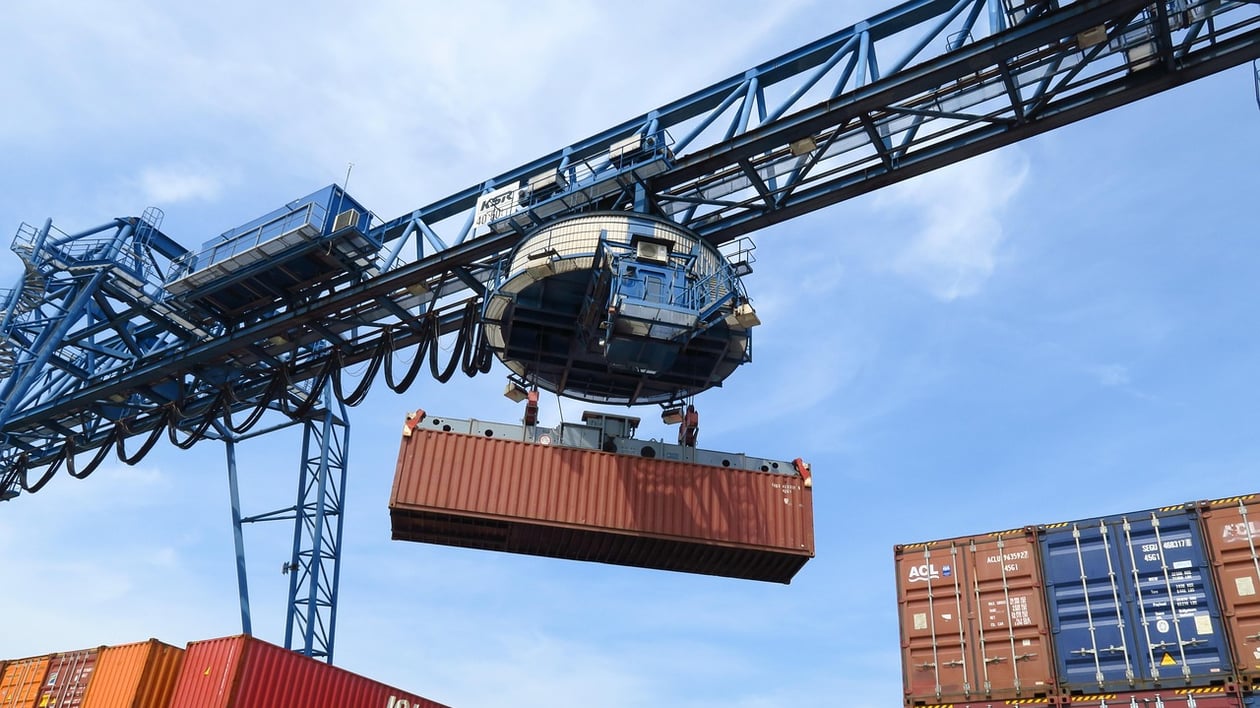
Cover image: Derks24 / Pixabay
Notes on content provided by authors
Comments
Loading comments …
Become a member to read and write comments. GAIA members read and write comments in the members' portal.
Become a member Already a member? Read the comments in the portal →