NET Journal Digital: paths to the energy future


The NET-Journal as a document of the energy transition
For decades, the NET-Journal has followed the development of alternative energy technologies. Today it is clearer than ever: the approaches documented in it point to a comprehensive transformation – technical and social.
Over many years, the NET-Journal has taken up developments that were often outside the mainstream. From early experiments with magnet motors to current approaches such as neutrinovoltaics or energy harvesting, a consistent picture emerges:
A growing field of research concerned with new forms of energy generation.
The digital annual editions offer a structured overview of this development. They bring together:
- technical concepts and prototypes
- scientific approaches and alternative models
- reports of experience from practice and research
This makes it possible to trace how ideas develop over the years – and which approaches turn out to be particularly relevant.
Digital PDF downloads from Jupiter Verlag All NET Journal annual editions and books as PDF
NET Journal Digital Annual editions of six issues as page-through PDFs.
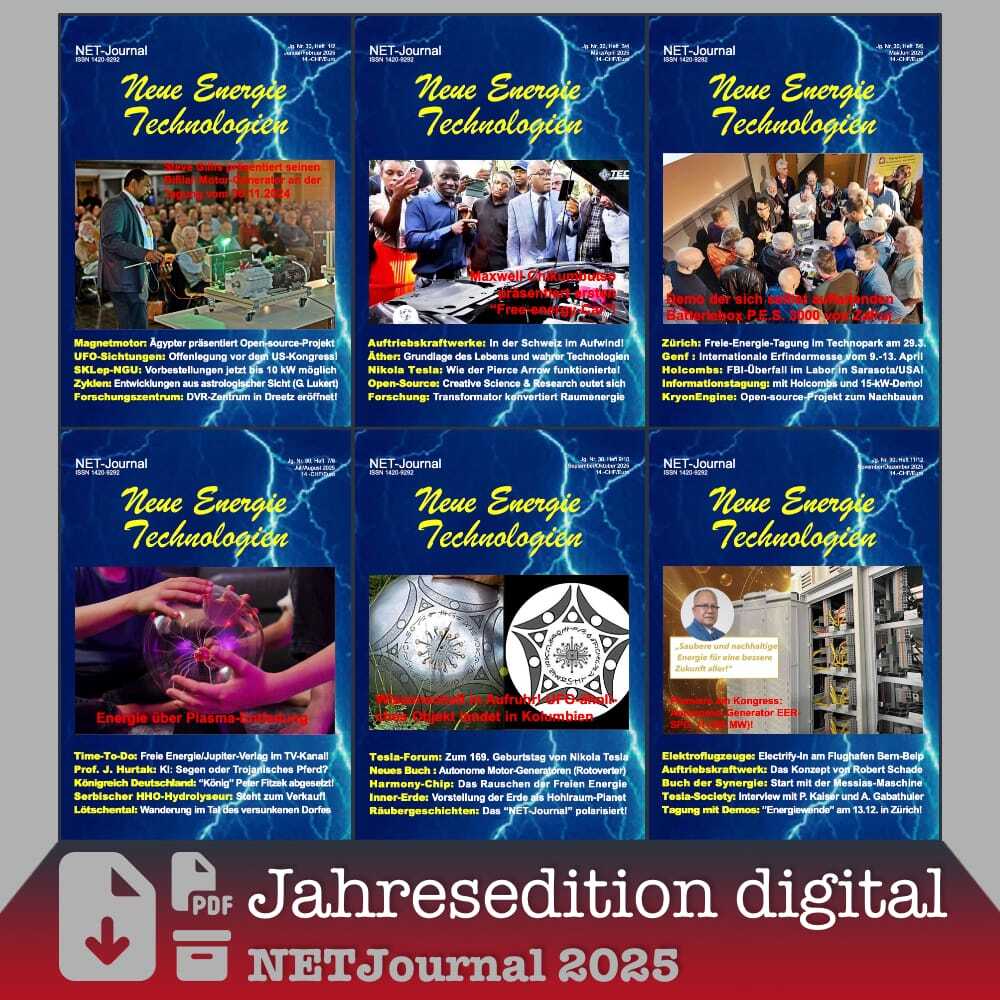
eBooks Digital Books from Jupiter Verlag as page-through PDFs.
Downloads at the GAIA Marketplace
Find all previous NET Journal issues and some books as print editions and eBook downloads at the GAIA Marketplace (in German). Also available is a free sample copy of a printed issue, sent by post by Jupiter Verlag:
Technologies in focus
The range of topics is wide but shows clear priorities:
- free energy and space energy as fundamental concepts
- LENR and cold fusion as alternative reaction models
- hydrogen and water technologies
- autonomous energy systems and decentralised supply
- resonance, frequency and field technologies
Many of these approaches aim to obtain energy no longer exclusively from classical sources, but from environmental or field structures that are already present.
Complementary perspectives from books and research
Downloads at the GAIA Marketplace
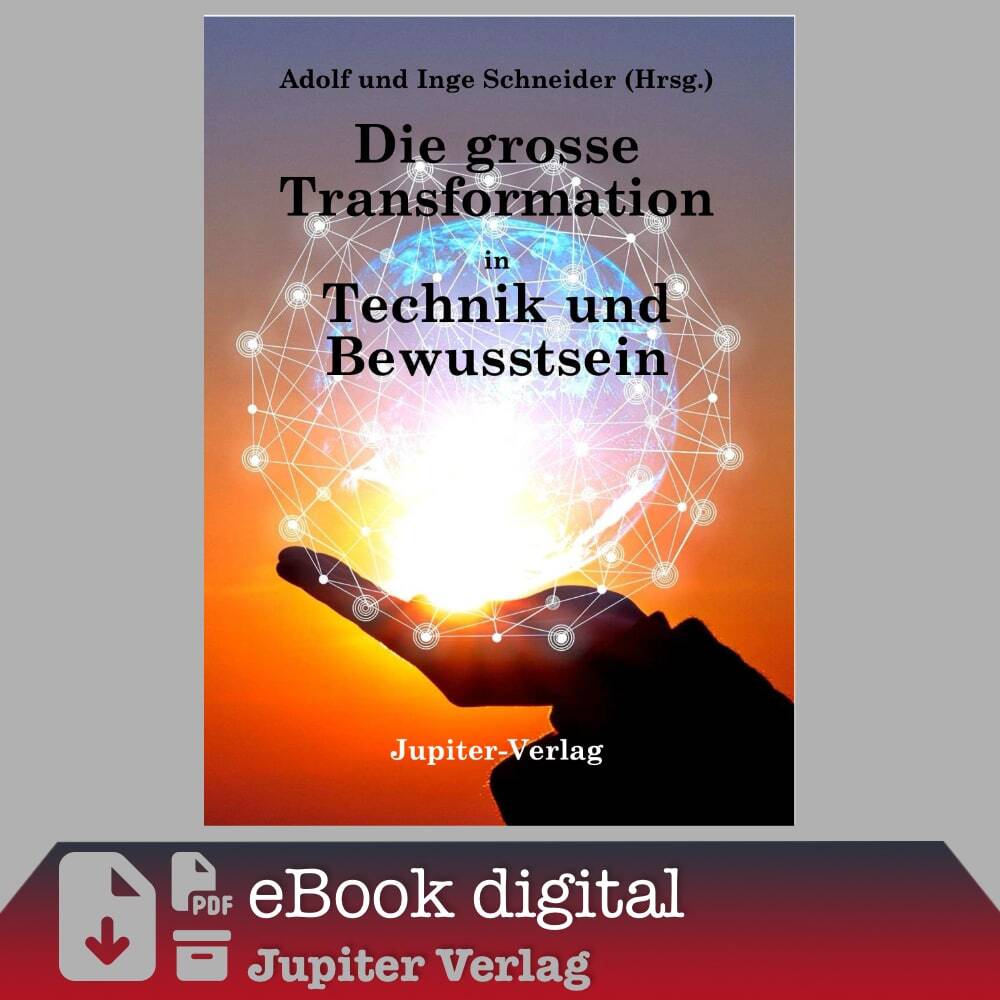
In addition to the journal issues, accompanying books offer more in-depth context. Works such as “Die große Transformation in Technik und Bewusstsein” (The great transformation in technology and consciousness) broaden the view to include social and epistemological aspects.
This makes it clear: the development of new energy technologies is closely linked to questions about:
- economic structures
- political frameworks
- and the underlying models of thought
Topics such as energy harvesting or the use of ambient energy are also systematically covered there and placed in a larger context.
Access via digital archives
A major advantage for those interested is direct access to this content. The digital downloads of the NET-Journal and the books make it possible to follow the development over the years.
Instead of isolated individual reports, the NET Journal issues thus form an overall picture. A continuously grown archive that documents research, experiments and ideas – often long before they were more widely discussed. Not every technology presented has been conclusively evaluated or fully established. The NET-Journal sees itself less as a final authority than as a platform for documentation and discussion. It is precisely this technological openness that makes it possible to make unique developments visible early on – and to follow them critically.
Conclusion Knowledge as the basis for independence
Engaging with the content of the NET-Journal shows: the energy transition is more than replacing existing technologies. It is a process that requires new perspectives – technical, economic and intellectual.
Access to the digital archives and books offers the opportunity to engage with these developments in a well-founded way. Independence does not come from new technologies alone, but from understanding their foundations. And freedom comes from the ability to put this knowledge into context and use it for one’s own decisions.
Notes on content provided by authors
Comments
Loading comments …
Become a member to comment publicly. GAIA members write comments in the members' portal — under their nickname, visible to everyone.