Phonophoresis – who knows it?

Ever since “The Physician” (Der Medicus) topped the bestseller lists in the late 1980s,
a broad European public has become aware of what until then only interested physicians and medical historians knew: the medicine of the medieval Arab world was centuries ahead of the healing arts practised in the West at the time. Building on the extensive medical knowledge of the Indians, Persians and Greeks, of the ancient Orient and of early Arab desert medicine, among others, the Arabs of the cultural and scientific golden age between the 8th and 12th centuries handed down and developed sound medical knowledge that remained unparalleled in its day. Western monks, the translators’ schools of Toledo (Spain) and the medical school of Salerno (southern Italy) made Arab medicine known in the West, until it gained Europe-wide importance as one of the foundations of modern European medicine.
 Besides an already sophisticated way of taking a patient’s history and an enormous knowledge of medicinal plants, Arab physicians were already familiar with the principle of the ward round in today’s sense, and with modern hospitals divided into wards by speciality. The use of a great variety of plants to heal the sick played a central role. Coffee as a heart remedy and, in powdered form, against tonsillitis, dysentery and slow-healing wounds; camphor to stimulate the heart; or senna leaves, tamarinds, cassia, aloe and rhubarb as mild laxatives are just a few examples of what was administered.
During operations, a sponge soaked in a mixture of hashish, henbane and mandrake induced an early form of general anaesthesia – something that was then completely forgotten for centuries, well into the European modern era …
 At the heart of every therapeutic approach was always the unity of body, mind and soul. It has thus also been handed down that music was used as a therapeutic means to help patients recover. In every 10th-century hospital between the Himalayas and the Pyrenees – the Arab empire had reached its greatest extent – the physician’s round through the various departments was the central starting point for every diagnosis, and, almost in the spirit of modern holistic methods, patients were asked not only about their physical but always also about their mental well-being. On this basis, the physician leading the round then determined the individual treatment and diet. The most famous of these physicians, the physician-philosopher Ibn Sina, became known far beyond his Persian homeland, in the West too, under the name Avicenna.
Today, pharmacologists and medical historians are trying to trace this lost knowledge. Television programmes such as the episode “Im Bann der grünen Götter” (Under the spell of the green gods) in the ZDF-Expedition series deal with the subject. In his “Canon of Medicine”, Avicenna said of frankincense that it helped and strengthened the mind – which Iranian pharmacologists have now impressively demonstrated in experiments. The “Monastic Medicine” working group at the University of Bayreuth is also trying to trace this lost knowledge with the help of Avicenna’s old writings.
So what is this phonophoresis?
Sound therapy is a general term for a wide range of (alternative) medical and wellness treatments that work with acoustic vibrations (tones, noises, music, or sound in general). The methods understood by the often interchangeable terms sound therapy and sound massage are neither clearly defined nor legally protected. They are usually classed as receptive music therapy and its practical side.
One motivation for using sound-therapy methods is that hearing can subliminally influence feelings and sensations. The sounds are meant to calm, harmonise and relax.
Sound-therapy applications are recommended, among other things, for stress. The vibrations are often meant to act not only on the sense of hearing but on the whole body or on particular regions of it. The teaching and theory of these methods is summed up under the term phonophoresis.

In body therapy, according to therapists, sound massage can support the processing of trauma. The sounds are said to penetrate into the body’s memory and so release the trauma. It is assumed that the effect of sound massage might be explained by the fact that the human body consists largely of water, which is set in motion by the sound waves. This effect would ultimately act like an inner massage of the body’s cells. Physical and emotional tension and blockages are thought to be released in this way. There is, however, no scientific evidence for this theory. Yet knowledge of the healing power of sound was already a tradition in many ancient cultures, so it is nothing new, merely forgotten. For the world is sound. And sound therapy is a method of treatment for the future too. Its wide-ranging effects in all areas are proven and now also measurable. The author Peter Hess holds the theory that the tones of singing bowls put the people being treated into a trance-like state, an effect similar, for example, to shamanic rituals; in this state, changes are said to be possible not only on the physical but also on the emotional and spiritual level.
Internal organs – tuning forks
The set of 15 tuning forks is tuned to the frequencies of the human organs. These were first measured and described by Barbara Hero & The International Lambdoma Research Institute. She sent sound waves through the organs and calculated their frequency on the basis of the speed of sound.
Table of the tones and frequencies of the internal organs

Possible areas of application for sound therapy
Medical and therapeutic fields:

- Pain therapy
- Muscle tension
- Neurological conditions
- Breathing therapy
- Occupational therapy
- Physiotherapy
- Psychosomatics
Wellness/relaxation:
- Sound massage for relaxation
- Sound massage for energising
- Sound therapy for chakra balancing
- Sound treatments in water
- Sound massage in beauty care and pedicure
- Sound journeys
- Sound meditation
- Sound therapy for expectant mothers
- Preparation for birth
- Into life with sound (“Einklang”)
- Sound massage for mother and child

Sound education:
- Sound therapy in nursery and school
- Sound therapy with people with disabilities
- Sound therapy for success at school according to Tomatis
Sound therapy for older people:
- Sound massage in the care of the elderly
Examples of sound therapy
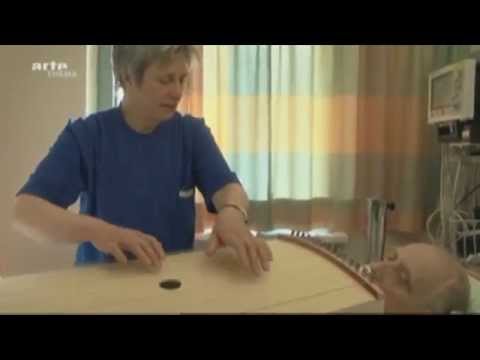
Video 1: Music therapy special (German)
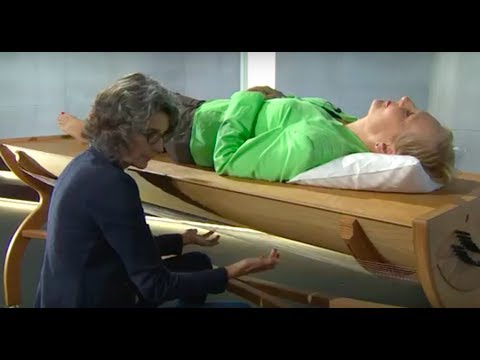
Video 2: Therapy with the body tambura (German)
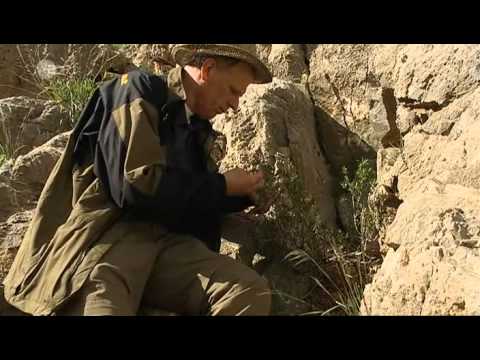
ZDF-Expedition: Im Bann der grünen Götter – Under the spell of the green gods (German)
To close, a poem by Goethe from the “West-östlicher Divan” (West-Eastern Divan), in the original German:
Herrlich ist der Orient, über’s Mittelmeer gedrungen. Nur wer Hafis liebt und kennt, weiß was Calderon gesungen.
Gottes ist der Orient! Gottes ist der Occident! Er der gütige Gerechte, will für jedermann das Rechte. Sey, von seinen hundert Namen, dieser hochgelobet! Amen. Mich verwirren will das Irren, doch du weißt mich zu entwirren. Wenn ich handle, wenn ich dichte, gieb du meinem Weg die Richte. Ob ich Ird’sches denk’ und sinne, das gereicht zu höherem Gewinne. Mit dem Staube nicht der Geist zerstoben, Dringet, in sich selbst gedrängt, nach oben.
Im Athem holen sind zweierlei Gnaden: Die Luft einziehn, sich ihrer entladen. Jenes bedrängt, dieses erfrischt, so wunderbar ist das Leben gemischt.
Nord und West und Süd zersplittern, Throne bersten, Reiche zittern, Flüchte du, im reinen Osten, Patriarchenluft zu kosten.
Unter Lieben, Trinken, Singen, soll dich Chisers Quell verjüngen. Dort, im Reinen und im Rechten, will ich menschlichen Geschlechten, in des Ursprungs Tiefe dringen, wo sie noch von Gott empfingen.
Himmelslehr’ in Erdesprachen, und sich nicht den Kopf zerbrachen. Wo sie Väter hoch verehrten, jeden fremden Dienst verwehrten.
Will mich freun der Jugendschranke: Glaube weit, eng der Gedanke, wie das Wort so wichtig dort war, weil es ein gesprochen Wort war.
Will mich unter Hirten mischen, an Oasen mich erfrischen, wenn mit Caravanen wandle, Schawl, Kaffee und Moschus handle.
Jeden Pfad will ich betreten, von der Wüste zu den Städten. Bösen Felsweg auf und nieder, trösten Hafis deine Lieder.
Wenn der Führer mit Entzücken, von des Maulthiers hohem Rücken, Singt, die Sterne zu erwecken, und die Räuber zu erschrecken.
Will in Bädern und in Schenken, Heil’ger Hafis dein gedenken, wenn den Schleyer Liebchen lüftet, Schüttlend Ambralocken düftet.
Ja des Dichters Liebeflüstern, mache selbst die Huris lüstern. Wolltet ihr ihm dies beneiden, oder etwa gar verleiden.
Wisset nur, daß Dichterworte, um des Paradieses Pforte, immer leise klopfend schweben.
(Goethe: West-östlicher Divan – West-Eastern Divan)


Notes on content provided by authors
Comments
Loading comments …
Become a member to comment publicly. GAIA members write comments in the members' portal — under their nickname, visible to everyone.