The multi-paradigm shift becomes visible, part XI: Manifesto of Systemic Science

We are currently witnessing a change in how science is seen in politics and in public life.
What only a few years ago was – or should have been – an open exchange of differing, factually grounded opinions has now, for everyone to see, degenerated into a tight corset of politically prescribed definitions (“pandemic”, “infection”, “illness”, “national emergency” etc.). Under the control of the normative “sciences” of economics, law, education and politics, medicine is now also becoming a normative “science”. For all of these subjects the following applies:
The possibility of normative science thus remains controversial. (Source, German)
The political intention behind the transformation of science emerges from the English Wikipedia entry:
“In the applied sciences, normative science is a type of information that is developed, presented, or interpreted based on an assumed, usually unstated, preference for a particular outcome, policy or class of policies or outcomes.” (Source)
Our conventional science is thus, for everyone to see, becoming a mere instrument of power for manipulating opinion. Under these conditions, free research and teaching are no longer possible. For these and a number of other reasons, I am trying, by founding a new kind of science, to launch an initiative for new forms of living and communicating which free thinkers in particular can join, in order to restore the former ideals of science in a contemporary, reflective form.
To this end I am now publishing the “Manifesto of Systemic Science” here. A manifesto is meant to be a “clarifying guideline” for a “proposed programme of implementation”. In history there have been political manifestos (such as the Communist one) as well as aesthetic ones. Even computer scientists have formulated their wishes for change in the form of a manifesto (such as “The Object-Oriented Database System Manifesto” by Atkinson, DeWitt, Maier, Bancilhon, Dittrich and Zdonik).
The aim of the “Manifesto of Systemic Science” is to reformulate science in a holistic, independent and contemporary form. I warmly invite everyone who feels addressed by these topics to cooperate and take an active part!
Foundations of Systemic Science
Manifesto
1. Starting point
Today the sciences are divided into many different fields, each of which uses its own technical language and special models that make communication with specialists from other fields difficult or impossible. The exchange of knowledge and experience often fails at the boundaries between disciplines, because different model structures and terminologies are used in each. Furthermore, practically all scientific disciplines are guided and dominated by the “sciences” of education (in the education system from kindergarten through schools to universities), economics (tight budgets of states and public institutions, research goals aligned with the interests of industry etc.) and law (legal norms as the framework within which research and teaching are carried out).
Education, economics and law, however, are not sciences in the true sense themselves. They are regarded as “normative sciences” whose methods are not defined and which, from the point of view of the philosophy of science, are therefore not to be classed as “real sciences” but only as “sciences in name only”. In fact, “normative science” is the umbrella term for intellectual constructions that serve a hidden political preference, i.e. they are instruments of power in the service of particular ideologies.
If the central axiom that necessarily underlies every hypothesis or theory may no longer, or can no longer, be questioned, sustainable progress is no longer possible and scientific development freezes. Since countless technical inventions have been and are being commercialised, and the owners of the companies concerned interpret this methodological knowledge as a static asset in whose development they have “invested” large sums, market revenues must be generated from it for as long as possible. Technical progress that would make these commercially used methods obsolete is therefore unwelcome, and is prevented or fought. The contradiction, well known in knowledge management, between “knowledge” (as a static, valuable stock of methods) and “learning” (as the flexible combination of “unlearning” old methods and “learning” new, more efficient, less harmful and more powerful ones) becomes clearly visible in all commercial areas where scientific findings are applied.
This dominance of the “normative ideological structures” of education, economics and law over the freedom of research and art has been hampering human development for more than 250 years, at least since the dawn of the “industrial age”.
2. Objective
Established natural science today assumes as its starting point a “Big Bang”, conceived by a Belgian theologian, in which “everything out of nothing” is supposed to have arisen. Natural science can therefore make no statements about its cause or about “the time before”. This arbitrary central axiom, which nevertheless necessarily underlies every theory, contains several implicit extensions that can certainly be questioned. First of all, it is assumed that “dead matter” was created, and that mind and consciousness are an “evolutionary epiphenomenon” that developed emergently, step by step, on several levels (quantum cosmos, atomic level, molecules, biomolecules, neurophysiological structures, bioelectrical signals in neural networks). Consciousness would thus arise “by itself”, evolutionarily (“by chance”), determined by structure and describable only quantitatively (number of network nodes, memory size). All of the most generously funded research projects in so-called “artificial intelligence” (AI) are based on this basic assumption, on this (arbitrary, unproven and unprovable) axiom. Anyone today who wants to study their own consciousness on a sound scientific basis must therefore first study quantum physics, then atomic physics, chemistry, biochemistry, neurophysiology and psychology, crossing – or first of all building – meaningful bridges between these fields. A single human life is obviously not enough for that. Scientific questions about consciousness, or the question of where we were “before birth” and where we will be “after our death”, cannot be asked at all within established science for precisely this reason. The arbitrary boundaries between disciplines and the arbitrary central axioms of the individual fields make this important research project impossible. But if a person does not know where they were “before birth” and where they will be “after death”, they naturally also lack a system of values for the time between birth and death. Such a person therefore becomes receptive to authoritarian (coercive) systems of rules, whether they stem from religions, political ideologies or technocratic norms! They will not only be receptive to them but (as a being searching for meaning) positively grateful for their own indoctrination – in the worst case a fanatical champion of an instrumentalised ideology who can thus also be misused for acts of violence (war, terrorism).
The meaningful and peace-making alternative is a new form of science based on a different arbitrary central axiom:
Consciousness is fundamental.
This sentence means that consciousness itself has no causal dependence on matter and energy, but that consciousness may, on the contrary, itself underlie the “forms of perception: matter, energy, space and time”. The axiomatically assumed fundamentality of consciousness also means that consciousness is “eternal”, since it was not assembled “from other parts” (did not arise in time) and cannot “fall apart into them” again. Fundamentality, understood in this way, therefore also implies eternal existence.
If we accept this axiom, a further sentence follows (as a logical derivation):
Everything else “is” communication.
If material building blocks and motion (energy) cease to be the “foundation” of modelling and “only consciousness as a building block” remains, then this consciousness can only act communicatively, not mechanically (like energetically moved matter, according to the laws of levers etc.). This means that every relationship known in today’s natural and social sciences can best and most simply be described and interpreted as a form of communication.
The rules and relationships established in the “normative sciences” (education, law, economics) will undoubtedly always be an application of communication. Communication therefore represents the meta-level of these regulatory areas. What does this application look like in medicine? In the human body, cells communicate with each other and with other single-celled and multicellular life forms (the microbiome). The role of light pulses in cellular communication (biophotons) seems to be just as revolutionary as the effects of mental techniques (meditation, hypnosis) on numerous illnesses (an application of communication between soul, mind and body). What relationships can be found in quantum physics? Entanglement phenomena, the “faster-than-light transmission of information” between particles (the famous “spooky action at a distance”, as Einstein called it) may serve as a popular example. In macrophysics, e.g. mechanics, we can think of resonance phenomena in moving apparatus, methods of “global scaling” and the like; it would even be possible to recognise in the concept of “resonance” itself a special case of communication. In biology we now know the “language of trees”, and we know that bees and flowers also communicate chemically and optically, so that communication across species boundaries seems to be not the exception but even the rule.
Consciousness is fundamental (and therefore eternal). and: Everything is communication.
These two simple sentences can become the starting point of a new, holistic form of science. What does this mean for us as human beings?
3. Every human being is a scientist
This makes sense because it makes Systemic Science applicable to itself: communication through and about communication. From childhood on, every person learns by trial and error (that is, empirically) to walk, to speak, and to understand the interplay of action and reaction between themselves and their environment.
Through the simple basic model of communication between conscious beings based on an underlying intention, we can gradually dissolve the boundaries between scientific disciplines and integrate the whole of thinking and feeling humanity into this learning and evolving global, or universal, network. In the course of this development, today’s internet can gradually be transformed into an open place of free encounter, peaceful cooperation and the co-evolution of valuable knowledge. Communication is the meta-level of all observable processes in the universe. From this level, even negative developments such as wars, devastation and exploitation make (historical, psychological) “sense”, insofar as their causes and courses are understood and can be avoided in future sustainably, truly causally and not merely symptomatically (“violence against violence”).
Systemic Science is therefore intended to contribute to a better understanding of individuals and groups in human society and thus also to the peaceful development of our species. Apart from that, it can also contribute substantially to raising the quality of life of all of us, since curiosity and its satisfaction are probably among the greatest motivating factors of our kind, and in an environment where we can research, discover and invent together to our heart’s content, we will enrich our individual biographies as well as our future communities, materially as well as mentally and spiritually.
4. Truth versus perception
As “natural systemic scientists”, however, we should resist the temptation to want to discover or lay down “eternal truths”. Since within Systemic Science we always see ourselves in dialogue with other thinking and feeling beings (fellow humans, animals, plants, but also beings whose physical appearance may remain hidden from us), postulating an “eternal truth” is an act of intellectual violence against our interlocutors. We can, however, try to describe our current perception in order to allow our partners in dialogue to empathise as fully as possible with our biography and situation. The “fixing of truth and reality” should always be understood as a consensual act, valid only for the beings party to this agreement and revisable or developable only by them together. In this sense we breathe new life into the old theological principle that “it is not given to man in his lifetime to recognise final truth”.
5. Laws of nature versus perceptible similarities
When we subject the conceptually invented “elementary particles” in the cosmos to so-called “laws of nature”, we not only turn them into “humans”, i.e. fall prey to the illusion of anthropomorphism (note: attributing human characteristics to animals, gods, natural forces and the like), but even into obedient citizens. Laws are passed by committees or absolutist rulers and can be changed or abolished by them at any time. The so-called “eternal laws of nature” are thus probably the best-known yet least questioned oxymoron of our society. The very fact that this contradiction is obvious to any free-thinking person, yet seems to be completely ignored in the so-called “natural sciences”, makes it clear that these too can hardly be “real sciences”.
What we can actually perceive in our surroundings are certain regularities that can be recorded statistically as correlations. The inference from correlation to causality, however, can never be made purely mathematically or statistically. It requires a separate model of causal relationships, which is often itself presupposed axiomatically. Einstein already pointed this out to us in his quotation: “It is the theory that decides what we can observe.” This brings us to the importance of models.
6. The importance of models
Models are causal interpretations of observable processes. As such, they mostly stand in a linear temporal relationship to observed events and phenomena. In Systemic Science, all researchers and observers are always aware that they themselves, as perceiving subjects, are part of the experimental set-up – just as a “colour” does not exist as a mere light frequency, and cannot be adequately described, without the physiological structure of our retina and our subjective sensation and experience (biographical imprinting through sentences such as “The sky is blue.”). Models are thus no longer instruments for establishing the “sole valid objective truth of the world” but merely formal languages that serve communication between thinking and feeling beings (observers, researchers, teachers and pupils). In this interpretation, models (hypotheses, theories) can therefore not be “verified” or “falsified” either. We can and should, however, first disclose their purpose, the axioms on which they were built, and the exact definitions of the terms and descriptions used in them. The success of applying such a systemic model within precisely defined limits (in space and time, but also in relation to axiom and definitions) can then be measured and communicated. Different models start from different basic assumptions and are used for different purposes, each with different success in relation to the practical purpose of their application. This alone ultimately decides their practical usefulness. There is no longer any need for different models to compete for the “correct representation of the one true reality”. The diversity and dynamism of intellectual development in research and teaching are preserved.
7. Data versus information
We should understand data as “syntactically correct strings of characters” and information as “data relevant to solving a problem”. This makes it clear that a “correct syntax” and a “permissible character set” are already a fundamental prior assumption (axiom, consensus) for the existence of “data”. The communication process therefore does not begin with “sending data” but with agreeing a character set and a set of rules (syntax) between thinking and feeling beings. We call information only those data that are helpful for a particular (axiomatically agreed) problem. This shows clearly that this attribution is likewise the decision of thinking and feeling beings, not the result of a measurement, nor a “law of nature”. Terms such as “automated information processing” should therefore be fundamentally questioned or, on the basis of these insights, preferably avoided in future. Only conscious decisions, in which the deciding subject (decision-maker) is fully aware of the consequences of acting as well as of not acting, are actually “decisions”. In cases where this conscious knowledge is absent, it is a matter of carrying out orders, not of a decision. This leads to the question of ethics and morality.
8. Ethics and morality
Whereas morality is a collection of ethnic, social and religious sentiments whose origins can be described and understood psychologically and sociologically, ethics claims to be able to decide questions of morality “normatively” and thus “universally”. How this claim could be justified logically, from which “supreme authority” such rules could be derived, or who should formulate the “values” underlying the “assessment of moral action”, remains open. The findings of this discipline are therefore mostly limited to tautologies such as: “Do not do to others what you would not have done to you!” Ethics too (like economics, law, education and politics) belongs to the “normative sciences” (sciences in name only) and should therefore likewise be regarded as “local folklore” and not as a legitimate science.
Holistic resonance as part of an empathetic dialogue offers better orientation in the mindful process of communication. In compassionate communication, for example, pleasure and pain are shared in the same way, even to the point where these two sensations can transform and it can be decided together whether they should then be enjoyed or avoided. Moral rules in an ethical interpretation are more of a hindrance than a help here.
9. Power and dogma
Power, as the ability to move people to actions they would not carry out of their own accord, is often interpreted as immoral, dangerous or even seductive. Here we should first take a closer look at the “instruments of power”, such as violence versus seduction. How is “power” to be assessed at all when it works by changing the convictions of the beings to be manipulated, as with seduction or propaganda? As long as we only have the instruments of “morality and ethics” at our disposal for this description and analysis (pseudo-sciences that are themselves based on axiomatic value systems), we will not arrive at a conclusive explanation.
But if we recognise that power can only exist when a dogma exists at the same time, i.e. one or more axioms that cannot or may not be questioned, then we also see how we can prevent this power quite simply: by consistently questioning all old dogmas and preventing new ones from arising. The “lust for power” probably only arises through corresponding role models (literature, films, legends) in societies where hierarchies and dogmas have a long tradition and have never been seriously questioned. In open, dynamic societies that practise mindful communication, on the other hand, the “lust for power over oneself (body, mind, soul)” quite naturally replaces the “lust for power over others”, because one’s own abilities and expanded forms of perception can be experienced far more intensely than the obedient execution of one’s orders by others. Eternal security in the cosmic web of life is probably the most intense feeling of happiness that thinking, feeling beings are capable of.
10. The eternal mystery
If we understand “knowledge” as a subjective, relative state of insight in dynamic exchange with other feeling, thinking beings (knowledge as social co-construction), it follows that we cannot attain “final knowledge” for as long as we ourselves move along a time axis. The future thus always remains open; all theories and the axioms on which they are based can be changed at any time, and our own perception and our physical and mental abilities can be developed further at any time. Knowledge is not a static stock, not a financial asset, but itself a dynamic process of communication that changes the participating beings, so that they themselves become dynamic processes of change, or can best be described as such.
We invite you to accept and embrace “wonder” once again within the circle of (systemic) science, as what it should have been from the beginning: a reminder of our open mind, that the unknown and the not-understood still exist and that our intellectual journey is therefore not yet over. In fact, the act of “wondering” is also a key trigger of humanity’s greatest motivation, the urge to explore. We need a science that encourages inquisitive, searching explorers to continue this intellectual journey and to tell “those who stayed behind” about their exotic adventures – as competent teachers at the core of what has been understood, but at the limits of their knowledge in the form of personal perceptions, legends or myths. These researchers, seeking new experiences and new knowledge, will also always be received more kindly by the thinking and feeling beings native to the regions they visit than the greedy, plundering traders who “subjugated” foreign lands together with their inhabitants in order to enrich themselves materially at their expense. (An allusion to the “Age of Discovery” and the genocide of the native peoples of America, Africa and Asia.) Commissioned researchers who do not strive for knowledge openly, guided by their own thirst for knowledge, but owe their (private or state) funders a financial asset as a result, are therefore like the colonisers of earlier centuries, whose raids always ended in destruction and misery. They too were “motivated to deliver the desired results” by financial debts – at that time precious metals and mineral resources, at the price of the blood toll of the native population. But if intellectual insight through open, honest and empathetic communication is the goal, then the gates to all known and unknown civilisations are open to us, and humanity’s search can become an exploratory dialogue, a cooperation with all thinking and feeling beings we may yet encounter.
The way to this new form of science is shown to us by those “giants on whose shoulders we stand” – if only we become aware of this once again:
“Miracles are not contrary to nature, but only contrary to what we know about nature.” (Augustine of Hippo)
Conclusion
The dominance of economics and law, based on historical dogmas that in turn led to social hierarchies of power, has meant that intellectual freedom has been increasingly restricted over the course of human history. From the point of view of “those in charge”, however, this happened of necessity: since they never had sufficiently comprehensive and up-to-date information to “steer diversity”, they could only exercise their rule by restricting the freedom of choice of the “ruled”. The “materialistic, industrial democracies” were and are not governed through parliaments:
“The conscious and intelligent manipulation of the organized habits and opinions of the masses is an important element in democratic society. Those who manipulate this unseen mechanism of society constitute an invisible government which is the true ruling power of our country.” (Edward Bernays, “Propaganda”, 1928, Source)
We can take the burden off the shoulders of the (apparent) rulers, as well as of the “expert advisers” who (allegedly) advise them, if we change the basis of our communication – from “leaders and the led (or misled)” to thinking and feeling beings who deal with each other honestly and as equals, for the good and the best development of all individuals and of our communities.
I look forward to lively participation from all those who have always wished from the bottom of their hearts for open science in an open society!
With warm regards, Franz Hörmann
WHO I AM
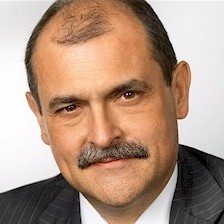 Franz Hörmann, born 1960, Univ.-Prof. Mag. Dr.
Employed since 1983 at the Institute for Auditing, Trust and Accounting of the Vienna University of Economics and Business, and a licensed management consultant since 1997.
- 1995–2015: corresponding member of the Data Processing Senate of the Austrian Chamber of Chartered Accountants
- 2001–2010: visiting professor at the Institute of Business Informatics (Communications Engineering) at the University of Linz
- 2001–2010: lecturer at the FHW (University of Applied Sciences of the Vienna Chamber of Commerce)
- 2001–2015: examiner in the training of chartered accountants at the Austrian Chamber of Chartered Accountants
First came to public attention in 2011 as a critic of interest-bearing debt money with his work “Das Ende des Geldes” (The end of money, German); he developed the new form of money “Informationsgeld” (information money, German) and is bringing it to market as OSBEEE:Money with the OSBEEE cooperative. Co-founder of the “Interdisciplinary Research Institute for Systemic Sciences” (IRISS). Franz Hörmann is married and the father of two children (daughter Sophie, born 1996; son Leonhard, born 1999).
CONTACT BY EMAIL MY WEBSITE (German) SUBSCRIBE TO MY NEWSLETTER (German)
In many areas, GAIA pursues the same goal as I do. So in December 2017 we decided to use GAIA as an information platform and to contribute a series of articles. I look forward to interacting actively with readers and interested people through GAIA and its network.
Notes on content provided by authors
Comments
Loading comments …
Become a member to comment publicly. GAIA members write comments in the members' portal — under their nickname, visible to everyone.