The multi-paradigm shift becomes visible, part IV: What if… ?
The multi-paradigm shift becomes visible, part IV: What if… ?
Many unquestioned basic assumptions shape our world view. They come from our culture, the formative environment of our childhood, religions, political convictions and so on. Since these thought patterns are not scientific hypotheses or theories, they are not tested in the way a science tests them either. From a scientific point of view, then, they are axioms (unproven or unprovable assumptions on which scientific hypotheses and theories can nonetheless be based).
One such basic assumption is “materialism”, i.e. that everything we can perceive through our five electromagnetic senses also “really exists”, i.e. is materially present. But since our five senses consist merely of electrical crackling along our nerve pathways, it would be quite conceivable to “deceive” a person “electrically”, i.e. to send artificial signals along the nerve pathways which could then create, for all five senses, a “real image” of a merely virtual reality. Since quantum physics recognised as early as the beginning of the twentieth century that “matter does not exist” – i.e. that an apparently universal “field” with its “vibrations” merely “produces particle effects for an observer” – one can quite reasonably assume such a form of “deception”, and with justification from quantum physics.
The American physicist Leonard Susskind advocates the hypothesis that our universe is in fact a “hologram”, i.e. that only information is real, while “material objects” are a “simulation”.
TALK (ENGLISH): THE WORLD AS A HOLOGRAM
He did not simply make this idea up, however; he compares his approach with that of the fictional detective Sherlock Holmes: “When you have eliminated the impossible, whatever remains, however improbable, must be the truth.” According to Susskind, interpreting the universe as a hologram is the only model capable of explaining all quantum-physical observations in a logically consistent way.
As early as 1991, the science journalist Michael Talbot meticulously collected historical evidence in his book “The Holographic Universe” suggesting that our “material reality” can be interpreted as a hologram rather than as a collection of solid, dead objects. Miraculous healings and proven invulnerability are part of it, as is the movement of “solid objects” in ways that school physics can hardly explain.
LINK TO THE BOOK GERMAN EDITION AS AN E-BOOK (German)
In talks and workshops, Michael Talbot afterwards tried to present this very unusual view in a more generally understandable way, so as to enable people to get used to a different picture of “reality”.
VIDEO EXAMPLE 1 VIDEO EXAMPLE 2 VIDEO EXAMPLE 3
In his work “The Source Field Investigations”, the author, film-maker and researcher of antiquity David Wilcock conveys very similar views, additionally assuming that many thousands of years ago there were more highly developed civilisations on our planet that knew this knowledge and already had technologies based on it in use. Many unsolved riddles of archaeology could thus be “explained” – albeit in a somewhat fantastic way.
TALK (ENGLISH): DAVID WILCOCK – THE SOURCE FIELD INVESTIGATIONS
If we as human beings consist of various (including, for example, “subtle”) bodies, not all of which are mortal, so that in a certain form we “live” for ever… and if the universe does not consist of matter and energy but perhaps of vibrations of an omnipresent “basic substance” (ether?), which produce “particle effects” only for certain observers… if, then, we are prepared to question really everything… is the earth perhaps flat?
In fact, this is exactly what an apparently growing number of people claim – that is, they question even the spherical shape of our earth (and with it that of all other “planets”). One source of these ideas is the “Flat Earth Society”, which bases its theories on old biblical texts and whose followers are convinced that “gravity does not exist” and that the earth resembles the official UN emblem (a disc of the earth with the North Pole at the centre, surrounded by a wall of ice that is then interpreted as the “South Pole”). Some arguments sound quite interesting, for example the fact that the “artificial horizon” in aircraft supposedly always stays unchanged and horizontal, although, if the aircraft followed the curvature of a sphere, this ought to become visible here.
FLAT EARTH SOCIETY WEBSITE 2 PILOTS SPILL THE BEANS
The “proof of Eratosthenes” – namely that at the same (midday) time the sun’s rays fall vertically into a well at one place while an obelisk casts a shadow at another, distant place – is explained by the “flat earthers” by the scattering of light in the atmosphere. They also explain the curvature of the earth visible from space as a lens effect, and indeed the massive change in the “curvature” of the earth (from convex to horizontal to concave) simply by panning the lens raises certain doubts here too.
While one could certainly let these “thought experiments” rest as “theoretical games” up to this point, alleged “scientists” of the “Dakila Institute” now make one sit up and take notice: over seven years (in a total of 15,000 working hours) they measured the curvature of the earth and came to exactly this unusual result – it does not exist!
A 92-minute video documentary, published on the website in Spanish, Portuguese and English, shows seven different surveys that were intended to prove or disprove a spherical shape. A geographer who was a member of the team states explicitly that he had always been convinced of the spherical shape of the earth and was sure that this shape would also be confirmed by the surveys (min. 2:50). Using a telescope, however, the researchers were able to see more than 100 km across horizontal water surfaces, which ought to be impossible on a spherical earth, since a bulge 237 m high would have to prevent it (min. 41:40).
In cooperation with a state surveying institute, the distance between the bases and between the tops of two equally tall high-rise buildings standing 3,050 km apart was measured with the most precise GPS surveying equipment (min. 44:08). If the earth’s surface were a sphere, the tops of the buildings would have to be further apart than their bases. The distance of 3,050 km is, after all, almost half the earth’s radius (6,371 km). Beforehand, the INCRA surveyor expresses his conviction that the tops of the buildings would certainly be further apart than the bases, since the earth’s surface is a spherical shell (min. 45:00). To his own surprise, however, the two distances were exactly the same, which is impossible on a spherical surface (min. 45:30). At Lake Titicaca and at a reservoir, a horizontal connection (1 m and even 10 cm above the water level) over 110 km and 70 km respectively was demonstrated using GPS, ordinary light and laser light, which would be impossible if the earth were curved (because of the “curvature bulge” in between).
So a group of researchers has now published empirical measurements that make the spherical shape of the earth’s surface appear impossible. The reactions that follow (from the media, the public, the scientific community) will show us whether we really are living in a “scientific age” or in the intellectual Middle Ages of quasi-religious dogmas – whether, that is, there really was an Enlightenment in the 18th century, or only the beginning of an even greater darkening. As early as 1935, Ludwik Fleck showed us (“Entstehung und Entwicklung einer wissenschaftlichen Tatsache”, published in English as “Genesis and Development of a Scientific Fact”) that science is not a formal construct but the activity of communities of researchers.
“Cognition as a social activity is therefore bound to the social preconditions of the individuals who carry it out. (…) The ‘truth’ that is recognised is therefore relative to the intended purpose of the knowledge. But not only is cognition bound to its cultural and social preconditions; conversely, it also acts back on social reality: … Neither subject nor object has an independent reality; every existence rests on interaction and is relative.” (ibid., p. XXII f.)
Fleck further reminded us that, as scientists, for linguistic reasons alone we cannot escape the elementary tension between (established) “knowledge” and (first, or questioning) “discovery”: “The results can no more be expressed in the language of the first observations than, conversely, the first observations in the language of the results. Every statement about the ‘first observations’ is a presupposition; if one wants to make no presuppositions and writes only a question mark, even this is already a presupposition of questionability and a classification among scientific problems, and thus also a presupposition in keeping with a thought style.” (ibid., p. 118)
Shortly before his mental breakdown, Friedrich Nietzsche turned to the subject of “forbidden knowledge”, but he never wrote the planned book. The Austrian philosopher Konrad Paul Liessmann tried to fill this gap in his work “Philosophie des verbotenen Wissens” (Philosophy of forbidden knowledge), published in 2000 (Paul Zsolnay Verlag, Vienna):
“The original knowledge of priests and shamans, the knowledge of magicians and wise women, was esoteric knowledge, not accessible to everyone, a corruption for the unauthorised. Wanting to know too much, penetrating secrets and mysteries without being called to do so, was regarded – and not only in Christian culture – as hubris, presumptuous and ultimately harmful. That in Paradise only eating from the tree of knowledge was forbidden actually tells us something about the primeval history of knowledge: it was the forbidden as such.” (ibid., p. 15)
Conclusion
Let us now speculate a little about a scenario in which we combine the “holographic universe” (in which spiritually mature people can make the “particles” of their electromagnetic body vibrate at a higher frequency in order to become “lighter than air” and “permeable”) with a “flat earth” (a disc of the earth as one of many “ponds” in a boundless expanse of ice, enclosed by a cupola – the “dome”). What would be the aim of a “creator god” who places spiritually aspiring communities in such an environment? Might it be an incentive for the “spiritually ascended” to ascend with their “physical body” too, to penetrate the dome (thanks to the permeability of their electromagnetic body) and then to sit “beside the creator” (in an “upper world” that is physically upper, too)?
From the point of view of Systemic Science, such thought experiments (scenarios) can first become subjective, individual convictions and then, perhaps through personal experiences, subjective “realities” (world views). Only when several people exchange views about these experiences, in order to recognise similarities and differences, does a “collective reality” emerge, which can later become the basis for shared convictions and world views. But we should always be prepared to communicate such views openly and honestly, even if they pose great challenges for many of us (which may also lead to cognitive dissonance), and to let different views coexist here.
Labelling “flat earthers” or “globe earthers” as “stupid people”, “uneducated” or “indoctrinated” therefore misses the heart of the matter. This very subject (“flat earth vs. globe”) can thus serve as a touchstone of the scientific maturity of our society: how do we deal with different views and provocative measurement results? Do we take them seriously, do we try to reproduce them (and indeed to refute them), and do we remain respectful and impartial with regard to the possible outcome while doing so? Whether my dear readers appreciate this article with “open-minded scepticism” or take it as an April Fool’s joke is, as always, for them to decide.
In any case, I wish you a happy and blessed Easter!
Franz Hörmann
WHO I AM
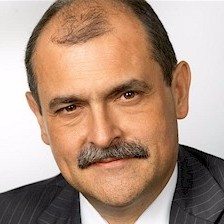 Franz Hörmann, born 1960, Univ.-Prof. Mag. Dr.
Employed since 1983 at the Institute for Auditing, Trust and Accounting of the Vienna University of Economics and Business, and a licensed management consultant since 1997.
- 1995–2015: corresponding member of the Data Processing Senate of the Austrian Chamber of Chartered Accountants
- 2001–2010: visiting professor at the Institute of Business Informatics (Communications Engineering) at the University of Linz
- 2001–2010: lecturer at the FHW (University of Applied Sciences of the Vienna Chamber of Commerce)
- 2001–2015: examiner in the training of chartered accountants at the Austrian Chamber of Chartered Accountants
First came to public attention in 2011 as a critic of interest-bearing debt money with his work “Das Ende des Geldes” (The end of money, German); he developed the new form of money “Informationsgeld” (information money, German) and is bringing it to market as OSBEEE:Money with the OSBEEE cooperative. Co-founder of the “Interdisciplinary Research Institute for Systemic Sciences” (IRISS). Franz Hörmann is married and the father of two children (daughter Sophie, born 1996; son Leonhard, born 1999).
CONTACT BY EMAIL MY WEBSITE (German) SUBSCRIBE TO MY NEWSLETTER (German)
In many areas, GAIA pursues the same goal as I do. So in December 2017 we decided to use GAIA as an information platform and to contribute a series of articles. I look forward to interacting actively with readers and interested people through GAIA and its network.
Notes on content provided by authors
Comments
Loading comments …
Become a member to comment publicly. GAIA members write comments in the members' portal — under their nickname, visible to everyone.