100 per cent wind power 140 years ago: renewable energy in history
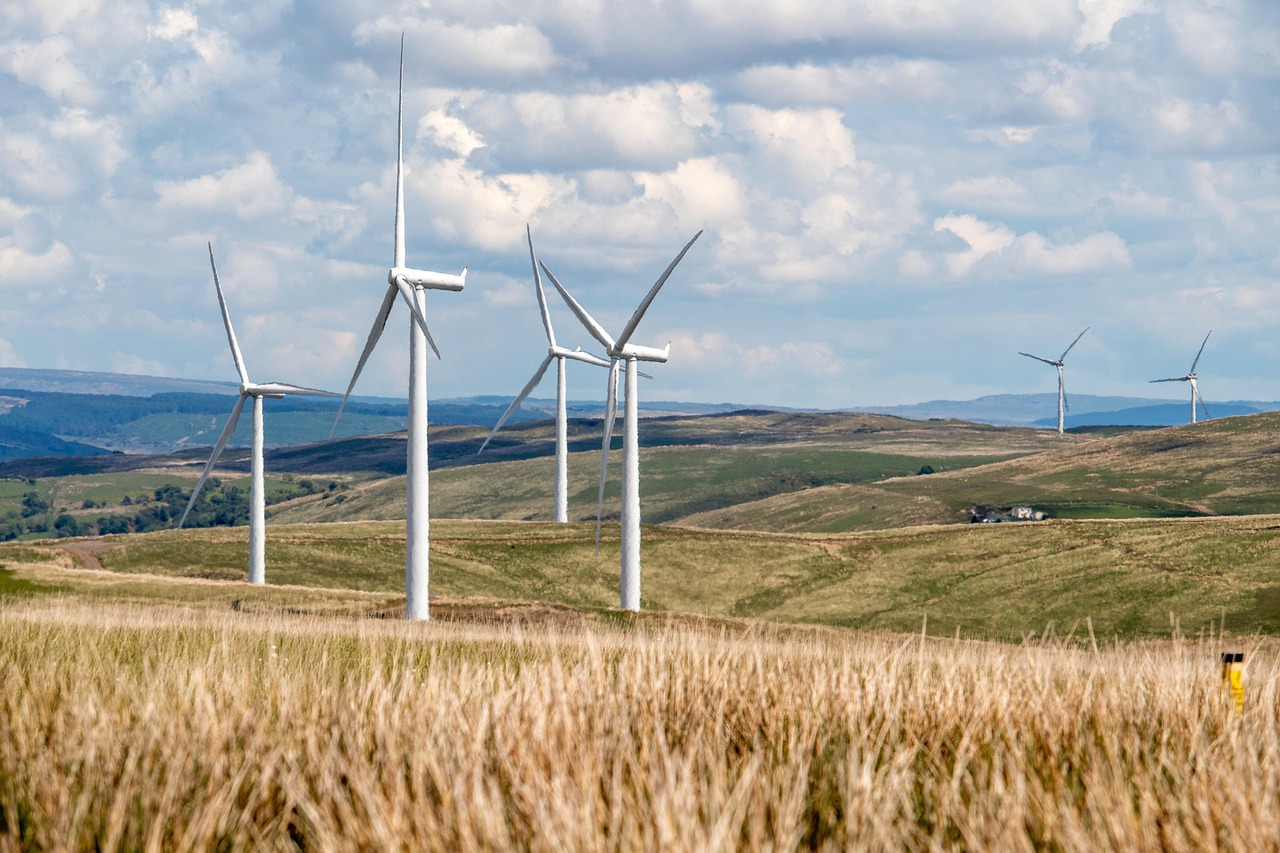
Maurice Forgeng, Epoch Times
In brief:
- With the invention of the generator in the 19th century, renewable energy began to be used to generate electricity.
- People had been using the energy of nature thousands of years earlier.
- Wind and water power drove sailing ships and irrigated fields then, just as they do today.
- Before the first photoelectric solar cell, sunlight was used passively or directed with mirrors and lenses.
- By far the oldest form of renewable energy is the deliberate burning of biomass.
When we hear the term “renewable” energy, we automatically think first of photovoltaic or wind power plants. These convert sunlight or the energy of the wind in the atmosphere into electrical energy. These modern forms of energy generation have existed for a few decades – or so one might think. In fact, their history goes back much further.
Wind power in 1887
The first time wind energy was converted into electrical energy dates back at least to 1887. This pioneering work was done by the Scotsman James Blyth, an electrical engineer and scientist at Anderson’s College, today the University of Strathclyde in Glasgow.
At that time, Blyth built a kind of wind turbine with four arms, each about four metres long, fitted with cloth sails. The central axis drove a dynamo, which generated electricity and charged a battery directly. With it he lit his holiday cottage – the first house in the world to be supplied with wind power. According to his description, in a “moderate breeze” the turbine generated enough electricity to run ten 25-volt light bulbs. He was also able to use it to drive a small lathe.
Other sources see the first electric wind turbine as the work of the Austrian inventor Josef Friedländer. He is said to have presented a wind wheel for generating electricity at the International Electrical Exhibition in Vienna as early as 1883.
The principle here is broadly the same: a Halladay-type wind wheel – also known as a Western windmill – with a diameter of 6.6 metres drove a dynamo, which fed the electricity generated into batteries. The first use of wind, however, goes back even further. The wind wheel, too, is considerably older.
Before the wind wheel came the sail
A well-known early use of wind power is also the windmill for grinding grain. The oldest ones come from Nashtifan, Persia. They demonstrably date back to the 7th century and still work today.
From about 200 BC, farmers in China used wind-powered water pumps to irrigate their fields better. In the following centuries, other nations also used wind-powered water pumps. Worldwide, an estimated more than one million such pumps are still in use.
Even before the first wind-powered machine, people used wind energy for sailing. For at least 7,000 years, people have hoisted sails to propel their boats. This makes wind energy one of the oldest forms of renewable energy. Although most ships today are powered by various kinds of engines, numerous small and large sailing ships still exist that are driven directly by the wind.
Why are renewable energies called renewable energies?
From a physical point of view, energy can neither be consumed nor generated, only converted. Since it cannot be lost, it cannot be renewable in the literal sense of the word either. The term rather includes a time component.
*Renewable energy sources are therefore those that, measured against the human time horizon, are available practically inexhaustibly. They renew themselves naturally and are available – albeit partly with interruptions – without human intervention.These energy sources includesunlight,**wind,**water (from rain, lakes and rivers),*renewable biomass,geothermal heat andtides.
In contrast to these stand fossil energy sources, which are considered limited and finite. This is not technically correct, because crude oil, natural gas, coal and peat are formed by the deposition of dead plants and animals in sedimentary layers of the earth. As long as plants and animals live and die, fossil energy sources are also formed anew.
However, since this process extends over a period of millions of years and human use exceeds the rate of new formation, they are not described as renewable. Since trees, too, sometimes take generations to grow, their sustainability in the energy sector is disputed.
How sunlight puts the world under tension
Today we know the blue solar modules with their large cells on rooftops or in fields. Photovoltaics, that is, the generation of electricity from sunlight, is currently the fastest-growing energy source on the planet – and a very young one. It has only been spreading on the mass market for around 30 years.
However, the origins of turning light into electricity also go back to the 19th century. The first working solar cell was built by the American inventor Charles Fritts in 1883. While today’s solar cells mostly consist of silicon, Fritts used a layer of selenium and a thin gold coating.
At around one per cent, its efficiency was far lower than that of today’s solar cells, which exceed 20 per cent. Multi-junction cells in the laboratory already reach up to 47.6 per cent, and the calculated theoretical limit was recently raised to 66 per cent.
The scientific basis for the first solar cell is in turn almost 50 years older and goes back to the formulation of the photoelectric effect in 1839 by Alexandre Edmond Becquerel. The French physicist made this discovery at the age of just 19. He found that certain materials generate an electrical voltage when light falls on them. The first usable silicon solar cell was developed by researchers at Bell Labs in 1954.
Before the solar cell, people used sunlight either passively or with the help of mirrors. Passive use means deliberately orienting a building to the south so that the sun’s rays can warm the living spaces in spring, autumn and winter. The high summer sun, however, is not meant to enter the living spaces, which can be achieved through the design of the building.
Mirrors were used to direct sunlight into interiors. Several mirrors or lenses were also used to heat or to light a fire with concentrated sunlight.
Today, electric light has replaced this technique almost everywhere, as it is permanently available. It is also easier to light a fire with a lighter or a match. Concentrated sunlight, however, still has applications today – above all in solar thermal plants.
From river to current
Hydropower must not be missing from any account of renewable energy use. A handful of countries today supply themselves 100 per cent or largely from it, mostly by letting dammed river water flow through a turbine that can generate electricity continuously. These include Norway, Iceland and Bhutan.
The historical origin of hydroelectric generation takes us once again to the second half of the 19th century. The Victorian inventor and engineer William Armstrong built the world’s first hydroelectric power plant in 1870. It was built directly at his family estate, Cragside, near the British town of Rothbury. Water from an artificial lake drove a turbine and a dynamo, which generated electricity. In 1878 this supplied various electrical consumers on the estate, such as carbon arc lamps.
Just ten years or so later, the first hydroelectric plants also went into operation on the other side of the Atlantic. Around 1880, a dynamo driven by a water turbine in the city of Grand Rapids in the US state of Michigan generated electricity for a theatre and a shop front. The following year, a dynamo connected to the turbine of a water mill supplied power for street lamps in the city of Niagara Falls in the US state of New York. Over time, more and larger plants were built.
Long before the electrification of hydropower, flowing water was used to convert kinetic into mechanical energy. More than 2,000 years ago, people used hydropower in agriculture in the form of water-driven scoop wheels. Chains of buckets or wheels lifted river water to higher levels, for example to irrigate fields more easily.
Later, people developed water wheels and water mills to grind grain into flour. Of the roughly 50,000 wind and water mills that once existed, only about 50 in Germany are still in operation today, according to the German Commission for UNESCO, preserving the traditional craft of milling. At many historic sites, too, electrically powered machines now do the work.
The oldest renewable energy
As already mentioned, people have been using water and wind power for millennia. When it comes to the oldest renewable energy, however, both are clearly ruled out. For the use of biomass, which also counts as renewable energy, is many times older.
Today’s biomass power plants, like all thermal power plants, apply the steam principle. First, the operators of such plants burn organic material. The resulting heat produces steam, which drives a turbine. This sets a generator in motion, which produces electricity that can be fed into the grid. In 2023, biomass accounted for eight per cent of global electricity generation. In Germany, biomass accounted for 8.7 per cent of public electricity generation last year.
This way of generating electricity also dates back to the 19th century. From 1889 at the latest, people also used biomass such as wood waste to generate electricity. This took place with a steam-powered electric generator in the Canadian city of Calgary. The businessman Peter Prince realised that the waste products of his sawmill could be burned to power a steam-driven electric generator. He therefore installed a 75-kilowatt (kW) steam generator, which supplied the sawmill and the surrounding lighting in the town.
However, humans have been burning wood and other biological materials for at least tens of thousands of years. Fire brought light and warmth and could be used to cook food. This controlled use is regarded as one of humanity’s most important early discoveries and as the oldest use of renewable energy.
According to archaeological finds, even the Neanderthals, who lived long before our civilisation – some 40,000 to 400,000 years ago – were able to use fire by burning wood. A find from Israel dates deliberately burned wood to as long as 790,000 years ago. Mastery of fire thus goes back to even earlier humans.
Other renewables
Renewable energy also includes geothermal energy, that is, heat from the earth as well as cool from the earth, and marine energy from tides and waves. These energy sources contribute hardly anything to electricity generation.
Worldwide there are currently only two tidal power plants – in France and South Korea – with rated capacities above 200 megawatts (MW). A long way behind comes a now decommissioned 20 MW plant in Canada; all the others are smaller. Projects with a rated capacity of up to over 80 gigawatts were planned in the past but have so far not been realised because of uncertain environmental impacts.
The “Moinho de Maré de Corroios”, at the mouth of the Tagus in Portugal, is one of the best-preserved tide mills in the world. It was built in 1403 and was in commercial operation until the end of the 1970s.
Geothermal power plants, too, generally have rated capacities in the two-digit or low three-digit megawatt range. Their locations, however, are not restricted to the coast. In 2025, geothermal energy accounted for around 0.5 per cent of global electricity production. In individual countries, including Kenya, Iceland and New Zealand, its share of electricity generation is 15 to 45 per cent.
The first geothermal power plant was built in 1904 in the Italian district of Larderello and initially powered only five lamps; it ran commercially from 1913 with an output of 250 kW.
Geothermal heat, that is, the heat below the ground, is still used as a heat source today. Especially in the colder months, it is a few degrees Celsius warmer underground than at the surface. Today this heat is used by heat pumps with a borehole heat exchanger or ground collectors. But as early as the beginning of the 20th century, people were using geothermal heat to heat their buildings. The oldest known geothermal district heating system has been in operation since 1332 in Chaudes-Aigues (“hot waters”) in France.
Long before its electrification, geothermal energy also heated people’s bathing places, and settlements sprang up directly at the hot springs. These places have delighted people since at least the Iron Age. The Romans made thermal baths an integral part of their culture. Today, too, thermal baths are in operation in many places around the world.
Geothermal energy includes any use of the earth’s heat – and coolness. Analogous to the direct use of near-surface geothermal heat for heating in winter, buildings can be cooled when the ground is cooler in summer. Ground temperature is often stable between 10 and 18 degrees Celsius. For this reason, people have been sinking their huts or other dwellings (partly) into the ground since the Stone Age.
This article first appeared in German on Epoch Times – with kind permission of Maurice Forgeng.
Cover image: EdWhiteImages / Pixabay
Notes on content provided by authors
Comments
Loading comments …
Become a member to comment publicly. GAIA members write comments in the members' portal — under their nickname, visible to everyone.