AI: humanity as the sorcerer's apprentice

Why we can hardly imagine the future with AI
Hardly anyone still takes the existential risks of AI seriously. The reason could be that we simply cannot imagine them. These are the opening words of the description of a video with a title similar to this headline. The explanations in that video prompted me to write this article.
The term “artificial intelligence” (AI) is widely used, but for what? Here are some use cases:
- intelligent search engines (“chat AI”)
- interactive computer games
- software for 2D and 3D creative design (texts, images, videos, objects, …)
- software for carrying out simulations and developments
- automation technology with self-learning functions
- humanoid robots
Behind these terms lies high technology that has existed for many years and is now finding its way into our everyday lives. Few people, however, can imagine how such technologies work.
I had an IT student explain the technical basics to me. For example, in a “chat” query, the words and letters are converted into numerical codes and used to search for corresponding information on the internet.
The content found is put together according to predefined algorithms. Put simply, texts are designed to match the input and are additionally formulated in line with the programmed “rules of etiquette”.
So you get the result you asked for. And in a form specified by the creators of the respective software. For example, the AI will always answer politely.
On this “polite manner”, an IT student gave me the following comment: “What is new here is that AI bots can be ‘sycophantic’, i.e. will always agree with the user.
OpenAI itself has publicly regretted this, and a recent update has greatly reduced this sociable and conformist manner.”
AI is therefore fundamentally only as intelligent as its creators have designed the software. However, the speed at which the processing takes place is many times faster than the thinking of an average person. So if we are impressed by the capabilities of an AI, our admiration should be directed at the creators of this technology.
On the abilities of the developers of this technology, I refer to the following analogy from measurement technology: a measuring instrument is usually a power of ten more accurate than what is to be measured. If you apply this assumption to AI technology, these must be truly clever minds to be able to create something like this.
So we know rather little about the technology that is used almost as a matter of course in everyday life. That is why we can hardly assess the existential risks of this innovation for us. In this context, the similarity with the sorcerer’s apprentice from Johann Wolfgang von Goethe’s ballad came to mind.
Der Zauberlehrling (The Sorcerer’s Apprentice), Johann Wolfgang von Goethe, 1797 – original German text; English translations of the ballad are widely available.
Hat der alte Hexenmeister sich doch einmal wegbegeben! Und nun sollen seine Geister auch nach meinem Willen leben. Seine Wort’ und Werke merkt’ ich und den Brauch, und mit Geistesstärke tu’ ich Wunder auch.
Walle! walle Manche Strecke, dass zum Zwecke Wasser fließe, und mit reichem, vollem Schwalle zu dem Bade sich ergieße!
Und nun komm, du alter Besen! Nimm die schlechten Lumpenhüllen! Bist schon lange Knecht gewesen: nun erfülle meinen Willen! Auf zwei Beinen stehe, oben sei ein Kopf! Eile nun und gehe mit dem Wassertopf!
Walle! walle Manche Strecke, dass zum Zwecke Wasser fließe, und mit reichem, vollem Schwalle zu dem Bade sich ergieße!
Seht, er läuft zum Ufer nieder! Wahrlich! ist schon an dem Flusse, und mit Blitzesschnelle wieder ist er hier mit vollem Gusse. Schon zum zweiten Male! Wie das Becken schwillt! Wie sich jede Schale voll mit Wasser füllt!
Stehe! stehe! Denn wir haben deiner Gaben vollgemessen! – Ach, ich merk’ es! Wehe! wehe! Hab’ ich doch das Wort vergessen!
Ach, das Wort, worauf am Ende er das wird, was er gewesen! Ach, er läuft und bringt behende! Wärst du doch der alte Besen! Immer neue Güsse bringt er schnell herein, ach, und hundert Flüsse stürzen auf mich ein!
Nein, nicht länger kann ich’s lassen; will ihn fassen. Das ist Tücke! Ach, nun wird mir immer bänger! Welche Miene! welche Blicke!
O du Ausgeburt der Hölle! Soll das ganze Haus ersaufen? Seh’ ich über jede Schwelle doch schon Wasserströme laufen. Ein verruchter Besen, der nicht hören will! Stock, den du gewesen, steh doch wieder still!
Willst’s am Ende gar nicht lassen? Will dich fassen, will dich halten, und das alte Holz behende mit dem scharfen Beile spalten.
Seht, da kommt er schleppend wieder! Wie ich mich nur auf dich werfe, gleich, o Kobold, liegst du nieder; krachend trifft die glatte Schärfe. Wahrlich, brav getroffen! Seht, er ist entzwei! Und nun kann ich hoffen, und ich atme frei!
Wehe! wehe! Beide Teile stehen in Eile schon als Knechte völlig fertig in die Höhe! Helft mir, ach, ihr hohen Mächte!
Und sie laufen! Nass und nässer wird’s im Saal und auf den Stufen. Welch entsetzliches Gewässer! Herr und Meister, hör mich rufen! – Ach, da kommt der Meister! Herr, die Not ist groß! Die ich rief, die Geister werd’ ich nun nicht los.
„In die Ecke, Besen, Besen! Seid’s gewesen. Denn als Geister ruft euch nur, zu seinem Zwecke, erst hervor der alte Meister.“
Wikipedia offers a good summary of this classic of literary history. Only instead of the broom fetching water, today we are dealing with a technology that significantly influences and changes our lives.
As sorcerer’s apprentices, we use this technology without, however, knowing the masters we could call if the spook gets out of hand. Just as we have so far failed to question technologies and to know how they function. SMART phones and much more are everyday examples. Most people are not aware of the threatening effects of this behaviour, and we are already struggling hard with undesirable side effects in our society.
I am repeatedly told that I am “thinking negatively” when I make such considerations. To this I would note the following: my intention, before I do something, is to weigh the pros and cons of the effects of my actions. The technical term for this is risk analysis. Only then can I get going with a clear conscience. Let the mindset of risk analysis find its way into our education system!
Practice examples for analysing risks
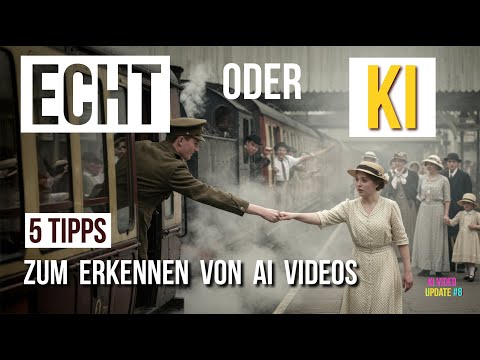
Can you tell real videos from AI fakes? AI film and video update #8 (German)
Micro-drone killer weapons – autonomous artificial intelligence – a warning
Short film showing life as a consequence of all this: UTOPIA | Omeleto
Total surveillance with WiFi sensing
My conclusion on this extensive topic: AI software is a very powerful instrument. Before using it, I therefore need to clarify the following points:

- What is the intention with which the respective software program was designed?
- How does the program to be used work?
- What benefit does the user want to achieve with the application?
- How well has the user prepared for its use through careful consideration?
These are some of the questions that need to be answered in order to use an AI responsibly. In this way we can avoid AI getting out of control, as described in Johann Wolfgang von Goethe’s ballad.
I wish us every success in this test of mastery.

Notes on content provided by authors
Comments
Loading comments …
Become a member to comment publicly. GAIA members write comments in the members' portal — under their nickname, visible to everyone.