Your mind is yours – online too

We talk a lot about independence. About where our energy comes from, who controls it and how we can take responsibility for our lives. I think there is one more question that belongs here: who actually decides what fills our minds every day?
A phone is quickly to hand. A news alert, a video, a comment – and suddenly we are occupied with something that was not an issue at all a minute ago. There is nothing inherently wrong with that. But I want to decide for myself which questions shape my day. That decision deserves more attention than we often give it.
Whoever selects influences our view
Social networks can bring people together, make knowledge accessible and give small initiatives a public voice. For a platform like GAIA, that is valuable. We reach people who might otherwise never have heard of one another.
Nevertheless, we should understand how the selection on our screens comes about. TikTok, for example, states itself that, among other things, content that has been viewed, shared and commented on, as well as viewing time, feed into its recommendations. So what we see also depends on how we have used a platform so far. I can imagine that it works similarly on other social networks.
For me, a simple rule follows from this: My news feed is an excerpt, not an overview of the world. If a particular view keeps coming up, that tells me something about my choices and the platform’s recommendations in the first place. Whether the view is correct is something I should check separately.
Agreement deserves a counter-question too
We find it particularly easy to scrutinise statements that annoy us. It becomes harder with a piece of news that fits our convictions exactly. We want to agree quickly, forward it and say: “See, that’s exactly what I mean!”
That is precisely when a pause is worthwhile. Where does the claim come from? Is there a complete conversation rather than a short clip? Does the linked study actually prove what the headline promises? And could I also explain the matter to someone who disagrees?
This applies to large media houses just as much as to alternative channels, to companies and, explicitly, to our own articles too. Credibility comes from verifiable statements and a willingness to correct mistakes. A familiar logo or a likeable sender alone is not enough.
A person is more than their visible achievements
Online, we often encounter only finished results: a successful project, a lovely holiday, a convincing talk. What was arduous beforehand, or failed along the way, often stays outside the publication.
I consider it a poor yardstick to measure one’s entire life against such excerpts. A quiet conversation, a repaired object or help for a neighbour need no public rating to be valuable. A good idea may also need time before it is presentable. We should defend this space – for ourselves and for young people who are still finding out who they want to be.
Small decisions that belong to us
Digital self-determination does not have to be a big project. A start can be made today:
- Before opening an app, pause briefly: what do I actually want to do here?
- Trace an important piece of news back to its original source before passing it on.
- Deliberately read a well-reasoned opposing position as well.
- Limit notifications and keep free times in which nobody may expect an immediate response.
- Occasionally explore a topic in direct conversation instead of opening the next comment section.
These steps are invitations to experiment. Every daily life is different. What matters is whether our use fits what is important to us.
Conclusion: independence needs its own standards
For me, intellectual self-reliance is part of the idea of self-sufficiency. We can take in information openly and at the same time carefully choose which statements we trust. Freedom is also shown in leaving a question unanswered for the time being, admitting a mistake or putting the phone aside. Our thinking needs time, encounters and the possibility of developing our own standpoint further. We should give it that space.
Sources
- How TikTok recommends content, TikTok Help Centre, 9 November 2026
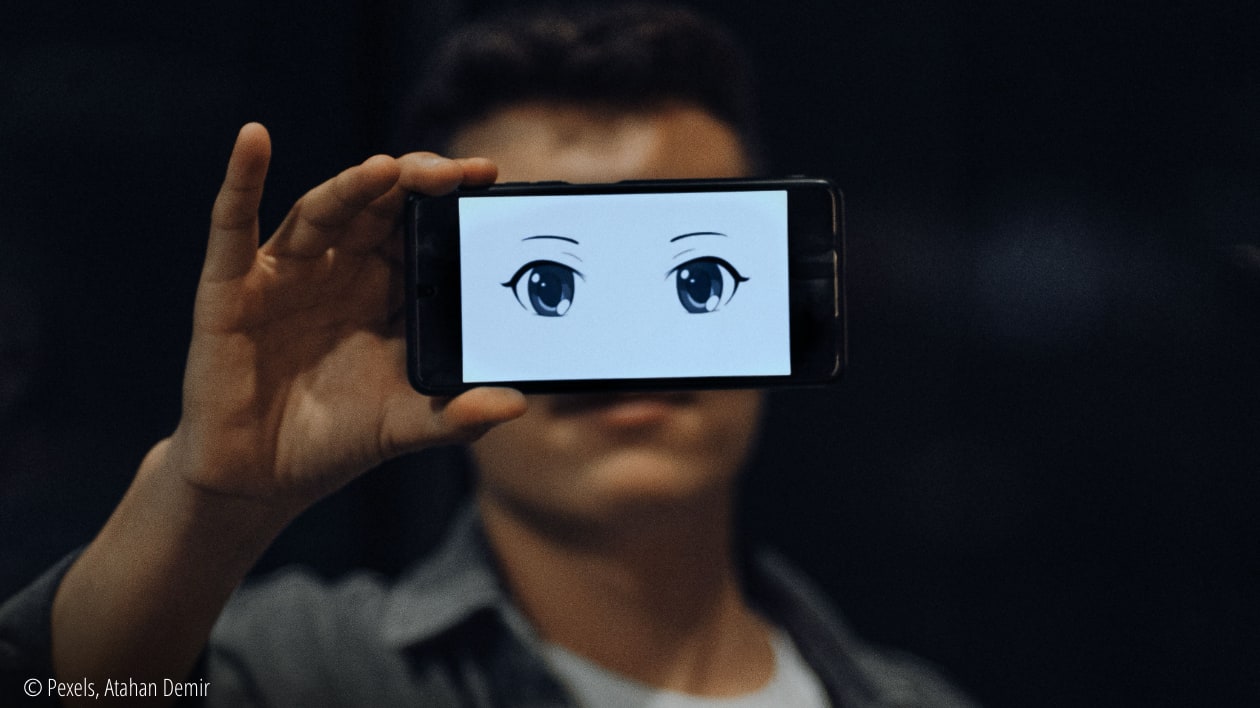
Cover image: Atahan Demir / Pexels
Notes on content provided by authors
Comments
Loading comments …
Become a member to read and write comments. GAIA members read and write comments in the members' portal.
Become a member Already a member? Read the comments in the portal →