Autarkie & Me • Episode 20 • Maturity reflection
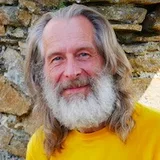

Maturity reflection at the Slovenian ceremony day
In the current edition of “Autarkie & Me” of 16 July 2025, we turn in the area of knowledge and education to a special topic: the maturity reflection (Reifegrad-Reflektion) – and its lively application at an international ceremony day in Slovenia. Under the title “The maturity reflection at the international ceremony day in Slovenia”, we talk to our guests Alenka and Alexandra about their experiences and the significance of this unique educational format, which has now existed in Austria for 4 years.
What is the maturity reflection?
The maturity reflection is a consciously guided process of self-knowledge in which young people assess and reflect on their competences, attitudes and development potential – not on the basis of standardised tests, but in dialogue with themselves and others. The process emphasises personal responsibility, authentic feedback and social maturity. Anyone who wants to learn more about the basics is welcome to listen to our earlier broadcast on the maturity reflection.
Reflection instead of examination – what makes the difference?
Particularly exciting: in Slovenia, this reflection process was designed not as an examination but in conversations and as part of a festive ceremony – with international participation and a strong sense of community. Unlike classical examinations, the ceremony is about consciously recognising and reflecting on inner growth, not merely testing knowledge. The festive setting, the involvement of family, mentors and companions, and the connection with cultural elements made its application in Slovenia – now following Austria – a powerful experience that builds bridges between countries, people and understandings of education.
Preparation and atmosphere
The preparation for this special day was marked by intensive cooperation, clear exchange and a lot of passion. Together with local actors from the Lada Center, not only the ceremony day but also the accompanying app was developed further. The atmosphere during the event was joyful, encouraging and deeply moving – with numerous highlights and also valuable insights for future directions. It became clear: when young people are perceived in their dignity and maturity, real transformations happen – individually and socially.
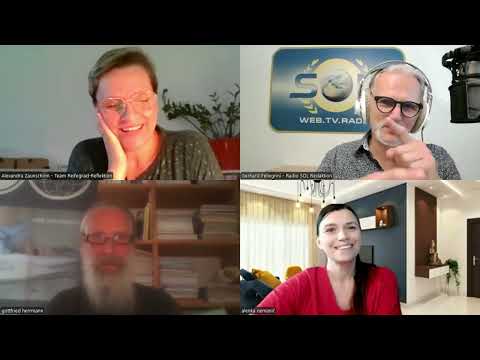
Transcript of the episode
Radio SOL – Talk of Town: People with a message
Gerhard (Gerhard Pellegrini): Welcome to Talk of Town – People with a message. My name is Gerhard Pellegrini. Today, too, we have exciting guests with us in our Zoom meeting room – and it’s getting international!
I’m pleased that we have another edition of Autarkie & Me today. First with us is Gottfried Herrmann – hello Gottfried, nice to have you here!
Gottfried Herrmann: Hello, greetings to you all!
Gerhard: You’ve also brought two guests – two ladies. Would you like to briefly tell us who they are and why they’re here today?
Gottfried Herrmann: Gladly. Today I’ve invited Alexandra and Alenka. We’ll learn more about their roles in a moment. On the topic: today is about new paths in education – a topic we have discussed several times in this format. What is particularly pleasing is that these new educational approaches are now also spreading internationally.
One of these initiatives comes from Slovenia – and Alenka is here today as its representative. It’s a special pleasure for me that we can report on it today.
Gerhard: Wonderful! And because we may also have listeners from Slovenia today, a quick overview: Radio SOL broadcasts throughout Austria via DAB+, in the south of Vienna on FM 105.1, and of course internationally via our Radio SOL platform on the internet. We stand for a positive view of the world – for constructive, life-affirming topics. Education plays a central role for us.
I find it particularly exciting that in recent years a strong movement has developed to rethink the education system – beyond classical school. Today there are alternatives such as home education, and groups have formed that are already actively living these paths.
At this point I’d like to hand over to Alexandra Zaunschirm – hello Alexandra!
Alexandra Zaunschirm: Hello, greetings! I’m from Styria.
Gerhard: Exactly – and you were on a programme with Gottfried once before on the topic of the maturity reflection. You can listen to it again, by the way. But perhaps you could give us a brief overview: what actually is the maturity reflection, and how does it fit into the international context – for example in the exchange with Slovenia?
Alexandra Zaunschirm: Gladly. With the Reifegradreflektion – deliberately spelt with “KT” – we are not concerned with reflexes but with genuine reflecting. That is our main concern.
The project has now existed for four years. We are at the end of the fourth educational year. It is aimed above all at families taking new educational paths – outside the classical school system, especially in home education.
The aim is to consciously reflect on and document what has been learned over a year: What have I learned? What can I do? What can I (not yet) do?
Unlike classical examinations, which usually only ask whether you know something at that moment, we ask: have you really understood it? We want to promote this process of reflection, strengthen personal responsibility and create a new awareness: those who know what they can and cannot do go through life with a completely different attitude.
We have now carried out this project in Austria for four years – with many wonderful closing ceremonies all over Austria.
Alexandra Zaunschirm: This year, for the first time, we held our closing days in cooperation with the Lada Center in Slovenia. We travelled to Slovenia for this and reflected the whole day in English – with partial translation. It was a very exciting day for us.
It’s really something special when you look beyond borders and realise: the need is there. Families are looking for new ways – and we are allowed to accompany and support them on this path.
Gerhard: A few more words on the maturity reflection: it is a special kind of examination – because in the classical school system, too, examinations are needed to complete a school year or obtain a qualification.
Just as in the traditional system there is the Matura (school-leaving exam), in home education you usually need a so-called external examination. That means you have to prove that the children have really learned the curriculum – taught on their own responsibility by the parents or companions.
This is where the maturity reflection comes in. It is particularly popular as preparation for such examinations. It gives orientation and shows whether you are on the right track. And it is very well received.
I’d say we take a music break now. Afterwards we’ll look at the perspective from Slovenia – with Alenka.
You requested a song by Wolfgang Ambros today: Ein Mensch möcht’ bleiben (I want to stay human). Why this song in particular?
Alexandra Zaunschirm: Because it is simply so important that people remain human. That they don’t let themselves be bent – just to meet some social expectations. For young people in particular, this is essential. It is a matter close to my heart to tell them – and their families – show your edges, show your uniqueness! We need originals – not lots of identically polished, round people. Otherwise the world would be pretty dreary.
[Music: Wolfgang Ambros – “Ein Mensch möcht’ bleiben”]
Gerhard (after the song): That was Wolfgang Ambros with Ein Mensch möcht’ bleiben – from the year . So years old, but still highly topical. Perhaps more topical than ever.
For today we recognise much more how individual and different children are. And that the education system may also become more diverse. One example of this is the maturity reflection. For the first time it has now taken place in an international cooperation between Austria and Slovenia.
You can think of this reflection as an examination – but we call it a “ceremony”. So it is examination and celebration at the same time.
Gerhard: Alenka Nemanič is with us – originally from Slovenia, but you live in Austria. Tell us something about yourself and how you came to this project.
Alenka Nemanič: Yes, I’m Alenka. I’ve lived in Carinthia for a long time. I work between Slovenia and Austria and support people who want to take alternative educational paths.
My role here is that I work in the maturity reflection team – in cooperation with the Lada Center in Slovenia.
Gerhard: What exactly is the Lada Center?
Alenka Nemanič: The Lada Center is a private democratic school in Slovenia. It is based on the principles of children’s rights. “Lada”, by the way, is the name of a Slavic goddess – she stands for the protection of the family. That’s why the name was chosen.
Gerhard: And the ceremony in Slovenia took place within this framework?
Alenka Nemanič: Exactly. We had a maturity reflection in Slovenia with many different groups of children. Some were regularly enrolled in schools and took part in the maturity reflection in addition to the external examination. Others were exclusively in home education. There were really very different constellations.
Some children follow a classical educational path and do the reflection voluntarily in addition; others use it as alternative support – both are possible.
Gerhard: You’ve also brought us a Slovenian song today – by Adis Mola. How do you pronounce it correctly?
Alenka Nemanič: “Adis Mola” – and the song is called Ne se bat.
Gerhard: What does “Ne se bat” mean?
Alenka Nemanič: It means: “Don’t be afraid.” The first verse is addressed to people who give up easily when things get difficult. The song shows that with courage you can lead a more fulfilled life.
Gerhard: Then let’s listen…
[Music – Adis Mola: “Ne se bat”]
Gerhard: That sounds very interesting. The language and the mood – it has almost something folkloric about it, doesn’t it?
Alenka Nemanič: Yes, it’s a very symbolic song. Two friends are at the centre of the story – they symbolise two different attitudes to life. One stays lying in the mud and gives up, the other gets up again – with hope and determination. The song encourages you to carry on with a smile despite your worries. It calls on you to love yourself and to move forward courageously, step by step.
Gerhard: A beautiful message – and you yourself are someone who encourages others. Do you support people professionally or as a volunteer?
Alenka Nemanič: I’m self-employed and also work as a counsellor at the Lada Center. People come to me when they no longer know what to do – when they are, so to speak, at rock bottom. I help them find new perspectives. It’s something like social counselling – with a holistic approach.
…different combinations?
Alenka: Yes, exactly. Every person is different – and that’s why educational paths may also be different.
Gerhard: Today you also suggested a Slovenian song – by Adis Mola. We said we’d play the first verse briefly. Can you pronounce the title?
Alenka: Yes, the song is called “Nesebat”.
Gerhard: And what does “Nesebat” mean?
Alenka: It means: “Don’t be afraid.”
Gerhard: Lovely! And what’s the song about?
Alenka: The first verse is addressed to people who want to give up quickly when things get difficult. It shows that courage can lead to a more fulfilled life.
Gerhard: Then let’s listen.
[Song is played]
Gerhard: A very beautiful language – almost folkloric, I’d say.
Alenka: Yes, and the lyrics are symbolic too: two friends wander through the night. One falls down and stays lying in the mud because he no longer sees any point. But the other gets up, straightens himself and carries on – with hope and determination. That’s exactly what it’s about: carrying on despite worries and low points – with courage and a smile. The song calls on you to love yourself and to master life step by step.
Gerhard: A strong message! And you are also someone who encourages others. You give people opportunities to reorient themselves. Do you do that as a volunteer or professionally?
Alenka: I’m self-employed – as a counsellor at the Lada Center. People come to me when they’re really at rock bottom and don’t know what to do. Then together we try to find new perspectives, gather courage and take the next steps.
Gerhard: So a kind of social counselling?
Alenka: Something like that, yes – but in a very personal and individual way.
Gerhard: So is that something like social counselling?
Alenka: Yes, it’s similar. You could say it’s a form of social counselling, but very individual and on an equal footing. It’s really about accompanying people in difficult moments – when they’re at rock bottom, don’t know what to do, don’t know how things can go on. Then we stand by them and help them find new perspectives. And for me that is truly work from the heart.
Gerhard: You can feel that! You also told us that you accompany people who don’t get on well with the classical education system. Have you experienced that yourself, or where does your approach come from?
Alenka: Yes, actually. I’ve experienced a lot myself, including with my children. I’ve seen how difficult it can be when you don’t fit into the system. Over time you develop a feel for it – for people, for their potential and for their crises. And I believe that it is precisely these experiences that are the greatest treasure in my work today.
Gerhard: That’s a very valuable approach. What do you wish for the future when you think about education?
Alenka: I wish that education becomes more diverse. That it puts people back at the centre – with all their strengths and weaknesses. That children are seen in their uniqueness and that there may be different ways to learn and develop. Not just the one standard path.
Gerhard: And that’s exactly what you stand for. Thank you, Alenka, for being with us today. It was a very enriching conversation. And perhaps we’ll be able to welcome you back soon!
Alenka: Thank you! It was a pleasure.
And what happens next?
At the end of the broadcast we warmly invite everyone interested: become part of the new educational landscape in Austria and beyond! Whether as a contributor, host of your own ceremony day or supporter behind the scenes – the WirkWerk association, with its great pioneering project the maturity reflection, offers many opportunities to help shape it. We need spaces in which young people can grow, a society that tolerates new ways of educating and developing young people – and communities that accompany this growth.
Association / institute
WirkWerk
WirkWerk – institute for promoting, researching and applying free and self-determined learning, living and human development.
Autarkie & Me
Radio SOL series
Archive of all broadcasts
Receive Radio SOL
- Greater Vienna on FM 105.1 MHz with any conventional radio receiver
- DAB+ throughout Austria with any DAB+ receiver, including DAB+-capable car radios
- via the internet worldwide as a stream on radiosol.at
- via Spotify worldwide on all devices that support Spotify (Amazon Alexa, web browsers, etc.)
- via Audible worldwide, even without a subscription
- via TuneIn worldwide on all platforms that support TuneIn (Amazon Alexa, web browsers, etc.)
Radio SOL is a radio station from Austria offering a varied programme focused on positive content. It concentrates on topics such as health, sustainability, culture and awareness. The station aims to spread inspiring content and offers a platform for discussion and information that promotes the well-being and quality of life of its listeners. Radio SOL is known for its commitment to the community and its support of projects and initiatives that promote a sustainable and conscious way of life.
GAIA and Radio SOL have been closely connected for years. Both organisations are committed to informing readers and listeners about important topics such as renewable energy, healthy living and ecologically sustainable approaches.
With the series “Autarkie & Me” (Self-sufficiency & me), Radio SOL opens up the messages and projects of the Society for Self-Sufficiency (GAIA) to a wide audience. Together we promote innovative solutions and practical approaches that help people lead a self-sufficient and sustainable life. The broadcasts are in German.
Notes on content provided by authors
Comments
Loading comments …
Become a member to comment publicly. GAIA members write comments in the members' portal — under their nickname, visible to everyone.