The background to Varoufakis's dismissal


In 2015 a new bailout package was up for debate for the Greek government, which was up to its neck in debt.
Of course, this was not about rescuing Greece but about rescuing the creditors. Various major European banks exploited Greece’s miserable credit rating to buy government bonds at exorbitant interest rates (up to 18%).
Before the debt crisis, a great deal of fast money flowed, and later the broken pieces were swept up with the public money of EU citizens. Profits were privatised and losses socialised. The height of this deceitful rescue operation, however, was that most of the bailout money did not benefit Greece but the speculators who had caused the financial crisis.

In hindsight, more or less everything came to light, and Goldman Sachs was at the centre of the scandal. One of the string-pullers was Mario Draghi, who, far from being in jail, now sits at the head of the ECB.

“How stupid can you be?” many well-informed observers asked themselves in 2015, when the Troika – the questionable cooperation of the European Central Bank, the International Monetary Fund and the European Commission – wanted to go one better with a new “bailout package”. But the Greeks fought back with legitimate democratic means. Yanis Varoufakis, the charismatic economics professor, put his good reputation on the line to lead the referendum courageously, and at the ballot box the Greeks voted loudly and proudly for an Oxi (No).
Sadly, the euphoria did not last long, for only hours later came the bad news. Varoufakis unexpectedly threw in the towel, and the courageous popular vote vanished into thin air. What exactly went on behind the scenes was never fully cleared up. And why should it be? After all, the Brussels bureaucrats had successfully muddled through by once again trampling on democracy, and the Greek people had to pay the price. Disillusioned but not resigned, Varoufakis opened his farewell with a powerful sentence:
“The referendum of 5th July will stay in the annals of history as a unique moment when a small European nation rose up against debt-bondage.”

Having been dragged through the mud with fake news by the Bilderberg media before the referendum, he now also had to be portrayed as a coward because Tsipras stabbed him in the back.
But on 29 October 2018 he broke his silence and explained in an explosive interview on Skai (Greek) that George Soros had had him sacrificed at the time: “Soros called Tsipras in 2015 and demanded my dismissal.” In response to the accusation by Defence Minister Panos Kammenos that Varoufakis had had questionable ties to Soros, he replied: “The extent of my relationship with Soros is limited to that phone call.”
Conclusion: Assuming that Varoufakis is telling the truth, we see once again the appalling influence and the mendacity of the dubious billionaire George Soros. An ethical hacking attack in 2016 revealed that within a relatively short time he had poured at least 18 billion into social engineering. His Open Society Foundation comprises a huge network of NGOs that also supports violent organisations such as Antifa and people smugglers. In 2015, with his improper interference in Greek politics, he showed unmistakably how much he really thinks of popular sovereignty.
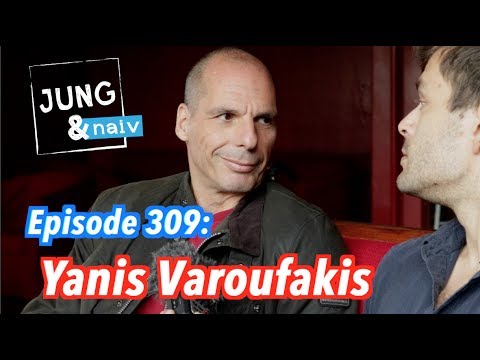
Tip: In 2017, in an explosive interview, Varoufakis spoke plainly and explained that it is not the citizens but the politicians who should be monitored.
Notes on content provided by authors
Comments
Loading comments …
Become a member to comment publicly. GAIA members write comments in the members' portal — under their nickname, visible to everyone.