Esbjerg: how energy self-sufficiency can work

Energy-self-sufficient communities are not a utopia
While in many countries we are still debating whether energy-self-sufficient communities are possible at all, elsewhere they were built long ago. Not as theoretical models, but as systems that work in everyday life. The Danish city of Esbjerg is one of the most impressive examples – and at the same time a clear signal: the energy transition is not a technical problem. It is a question of will.
Esbjerg in Denmark began to rethink consistently decades ago. Today, the world’s largest seawater heat pump there replaces a former coal-fired power plant. Instead of fossil combustion, the city uses the ambient energy stored in the sea to supply hundreds of thousands of households with heat almost CO₂-free. That is not a vision of the future – it is the present, lived.
What makes Esbjerg so special is not a single technology but the systemic interplay:
heat generation, peak-load coverage and grid stabilisation are thought of together.
Systemic interplay
What makes Esbjerg so special is not a single technology but the systemic interplay:
- heat generation
- peak-load coverage
- grid stabilisation
That is exactly the core of an energy-self-sufficient community.
Heat is generated primarily from wind and solar energy, which are plentiful in Denmark. Surpluses are not wasted but used intelligently – for heat production or storage, for example. For times of low generation, biomass serves as a natural energy store. Not as a permanent solution, but as a balancing element that guarantees security of supply.
This debunks another myth: that renewable energies are unreliable. In truth, they are only unstable if you look at them in isolation. In a well-planned overall system, they complement each other perfectly.
The role of biomass is particularly important. Used correctly, it is not a climate problem but a central component of a stable, regional energy supply. It enables peak-load coverage, stabilises grids and creates resilience – without coal, without gas, without geopolitical dependencies.
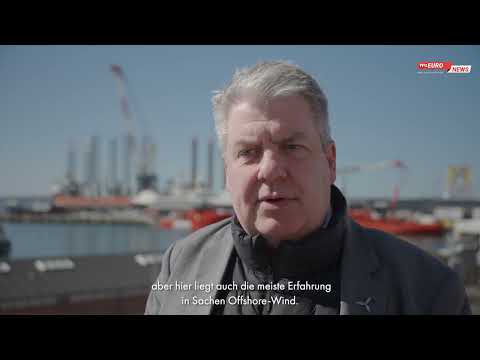
Esbjerg also shows that completely replacing coal and gas power plants is not only technically feasible but economically sensible. Value creation stays in the region, energy prices become more predictable, supply more independent. And, incidentally, people’s quality of life rises.
Source:
“If we are honest, today we are no longer facing the question of whether the energy transition will succeed. Only of how quickly we are prepared to follow it. Esbjerg has already gone down this path. Others could start tomorrow.”
Wolfgang Löser, energy pioneer
Who am I?
“Austria’s first energy-self-sufficient farm” since 2002, with talks and seminars
Address: Untere Dorfstrasse 23, 2004 Streitdorf Austria
Phone: +43 (0)2269 2317 Mobile: +43 (0)680 1113363 Email: w.loeser@aon.at | www.energiebauernhof.com
Link to the book (German): Wolfgang Löser – Der Energierebell (out of print, used copies at Bookbot)
Link to the film: Enerkey – Who holds the key to the energy transition?
Think about it today: wind, solar and photovoltaics with POWER STORAGE, e-mobility and combined heat and power as balancing energy
Other posts by me

Why power grids need to think decentrally

Energy self-sufficiency in practice

Energy sovereignty begins locally

Esbjerg: So kann Energieautarkie funktionieren
Notes on content provided by authors
Comments
Loading comments …
Become a member to comment publicly. GAIA members write comments in the members' portal — under their nickname, visible to everyone.