Introduction to: "UNCONDITIONAL LEARNING"
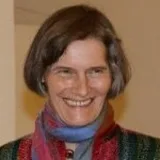

Daniel Häni is the main organiser of the Swiss referendum on an unconditional basic income (UBI).
His film „BGE – ein Kulturimpuls” (UBI – a cultural impulse) made me realise that our concerns are closely related: free learning could just as well be called unconditional learning. In January I wrote to him with my thoughts on this; nine months later I may now put them up for public discussion at the basic income congress in Carinthia from 19 to 21 September 2018. I would be very grateful for comments!
Dear Daniel Häni,
first of all, a very big THANK YOU for your socio-political commitment and your wonderful film “BGE – ein Kulturimpuls”!
I study LEARNING as deeply and passionately as you study the basic income. Until now I have called what in my experience is its only form worthy of human beings self-directed learning, or FREE LEARNING, but it now seems to me that the term unconditional learning would be more fitting and also strategically better, because it highlights its inner kinship with the UBI: in my view, both concerns spring from the same spirit, are “in the air” and could also promote each other extremely effectively! These and similar thoughts came to me while watching some videos by or with you on YouTube :-)
So it does not surprise me, for example, that in the USA – as probably in other English-speaking countries too – you met with less fundamental resistance to the idea of a UBI: in many US states, Canada, Australia and the United Kingdom, parents are free to send their children to a state school, a private school or no school at all. This right is granted unconditionally – that is, the state does not require so-called unschoolers to follow curricula and sit exams on them. To rule out misinterpretation by overzealous officials, the British education ministry has even published its own guidance protecting the civil right to education outside school.
The Germans, by contrast, have been the only ones with a rigorous compulsory school attendance since 1938 – strictly speaking, German children are thus regarded and brought up as subjects, not to say serfs, of the state! In Austria and other European countries, and to my knowledge in Switzerland too, there is compulsory education that has to be demonstrated through annual exams on the school curriculum: to people who were socialised in nurseries and schools, that sounds reasonable. They cannot imagine that a child learns anything without compulsion and pressure, even though brain research proved long ago that learning in the true sense CANNOT work under pressure at all, while learning WITHOUT pressure simply cannot be stopped :-)
The question “Would you stop learning if you no longer needed school reports?” would probably provoke very similar reactions to the question “Would you stop working if you no longer needed an income from work?” – most of those asked would be convinced that most children would then just get up to mischief … Yet in truth it is exactly the other way round: every child develops undreamt-of potential as soon as it is allowed to do what it itself feels to be MEANINGFUL!! And every young person feels that precisely what is on their own inner development plan is meaningful (which only very rarely matches the school curriculum) …
Children, however, depend on their parents or guardians. Practically all adults today have been lastingly shaped by the school system – they consider it “normal” to suppress their own questions and impulses in order to meet other people’s demands. Competition and rivalry have become “second nature” to them. A life without constant comparisons, assessments and judgements is quite unimaginable for most of them.
Only a few especially alert and mindful parents have managed to resist social pressure and have the courage to defend their children’s freedom despite being reported to the authorities and fined. What comes of this can be seen in the example of the musician, instrument maker, editor, author, speaker and father André Stern. His example inspired me many years ago to give up all attempts at school reform. Since then I have supported alternatives to school-based learning by working for the spread and legalisation of unconditional learning.
„Lernen ist wie Atmen” (Learning is like breathing) is the title of a book that two free-learning mothers and I published together, to shed light on the PRACTICE of free learning from many different perspectives and to make it unmistakably clear that it is not a method but a changed ATTITUDE TOWARDS THE CHILD – and thus towards BEING HUMAN! I would be very pleased if we could find a way to perhaps join forces somehow. You can find more information at www.freilerner.at (German) and on my website www.schole.at (German)
Warm regards from Vienna to Basel Alexandra Terzic-Auer
Notes on content provided by authors
Comments
Loading comments …
Become a member to comment publicly. GAIA members write comments in the members' portal — under their nickname, visible to everyone.