Scholé News – July 2024

Parties and our so-called democracy
Do you still remember the president of El Salvador I told you about in the June news? During his first term in office, with God’s help and the support of upright comrades-in-arms, he managed to restore peace in his country by bringing 70,000 criminals to court and putting them behind bars. He cannot explain this success logically. “It was a miracle,” he says himself. A reader drew my attention to how this story continued. Re-elected with 85% of the vote, President Bukele recently began his second term with a speech before the general assembly of all members of parliament.
He was aware of the finiteness of human existence, he stressed right at the start of his address. His life was in God’s hands, so he was not afraid, but would continue to serve his country uncompromisingly and do everything to restore El Salvador’s economy. Above all, he wanted to avoid the mistake of one of his predecessors, who had the best intentions but could not put them into practice because he was surrounded by corrupt criminals. For this reason, the young president announced, he would now have the personal integrity of every member of parliament, every minister and every senior state official strictly vetted in advance. Embarrassed silence among the deputies. The very next day saw the first arrest.
To understand how extraordinary such open-visored action is, you have to bear in mind what politicians in leading positions “normally” do. Since they rightly consider the most corrupt colleagues in their own camp dangerous, they handle precisely these people with kid gloves in order to secure their favour. If that does not get them anywhere, they may have them watched by the secret services. And if they stand too much in the way of them and their plans, the corrupt colleagues are simply kicked upstairs by being offered well-paid posts abroad, in business or in the administration that they can practically not refuse.
If it wants to win supporters, every party first needs real, tangible ideals. Left-wing parties stand up for the rights of working people, right-wing parties for those of farmers and business people, the Blues for the preservation of culture and tradition, the Greens for the protection of nature. To stick to the truth, however, one would have to admit that each individual party represents only part of the truth – as the word party already says: it simply means a part. Only all the parts together make a viable whole: entrepreneurs depend on workers and vice versa. Without farmers we would starve. We cannot even imagine a life without tradition and culture. And because nature is the basis of all life, we cannot harm it without harming ourselves.
As long as parties are allowed to work against each other, as long as no one in charge has to fear being taken at their word after the election, as long as most people don’t care where our tax money goes, as long as hardly anyone dares to ask who is actually behind the parties and whose interests our representatives really represent (demonstrably not those of their voters), this means consent to the ruling system – even though almost everyone has long known or sensed that it is built on lies and therefore on sand…
For people to live together peacefully and well, we do not need parties but committed, upright and prudent people who work together and always keep the whole in view. Whether someone is suited to serving their fellow human beings is therefore really not a question of party membership, ideology, religious affiliation or personal charisma, but depends solely on their human and moral qualities. That applies to doctors, teachers, domestic workers, innkeepers or craftspeople just as much as to company bosses, ministers and heads of state!
At present, however, our so-called democracy is so riddled with lies in the form of advertising and political propaganda that this simple truth has become foreign to many. Before the EU elections, for example, the Greens’ candidate campaigned with the slogan “Heart instead of hate”. But embarrassingly, the “Standard” made public that the young woman, who looked so angelic on the posters, had several times badly slandered friends and journalists. In an ORF discussion of this scandal, the editor-in-chief of the weekly “Falter”, known as one of the nation’s leading moral preachers, seriously expressed the view that the candidate’s private affairs had nothing whatsoever to do with her political function and should therefore not be made public at all…
Meanwhile the young lady, whose monthly salary is said to be at least 18,000 euros, represents Austria in the European Parliament. Did her party want to get rid of her? And the highest office in the EU has just been entrusted for the second time to a woman against whom several court cases are pending for serious corruption and the misappropriation of billions in taxpayers’ money… Negative examples of this kind are as plentiful as sand on the seashore. The ordinary citizen has learned to accept them with a shrug, because “it was never any different”.
That is debatable – in any case, the example of President Nayib Bukele proves that it does not have to go on like this for ever! The mass media are still outdoing each other in giving harmless windbags and dangerous demagogues a stage for their depressing doomsday fantasies and their unrealistic theories on saving the world climate, world health or global security, while concrete positive examples continue to be hushed up or scornfully questioned by “quality journalism”. Since the C crisis at the latest, however, alert, interested people know very well in which alternative media they can find useful, inspiring information.
Concrete positive examples are the first important impulse for overcoming lethargy and fears about the future without falling for the demagogues’ castles in the air. For things to really change for the better, however, many more learning steps are needed, and we find them hard because we have been brought up to be passive from childhood. Now we have to learn again to become active. To say no. To ask questions instead of obeying. To believe in ourselves and our power instead of feeling helpless and unworthy. Classic virtues such as love of truth, reliability, public spirit, personal responsibility and initiative come back to life as a result. They need to be practised every day so that we do not fall back into the comfortable role of victim out of inertia.
The old saying GOD HELPS THOSE WHO HELP THEMSELVES has lost none of its validity. President Bukele, too, first had to prevail against the fiercest resistance, eliminate seemingly overpowering opponents and make dramatic mistakes before God visibly came to his aid and the miracle he had prayed for happened.
No, miracles are nothing supernatural, because life is multidimensional. But miracles only occur naturally once a person has recognised that they are a multidimensional being, resolutely shakes off their fears and mobilises all the forces at their disposal to follow their inner calling with enthusiasm. At the point where they turn trustingly to a higher power because their human strength is no longer enough, they grow so far beyond their previous limitations that they can experience and work miracles. Many of us have experienced this more than once…
Warmest summer greetings Alexandra
2nd edition of “Lernen ist wie Atmen” (Learning is like breathing)
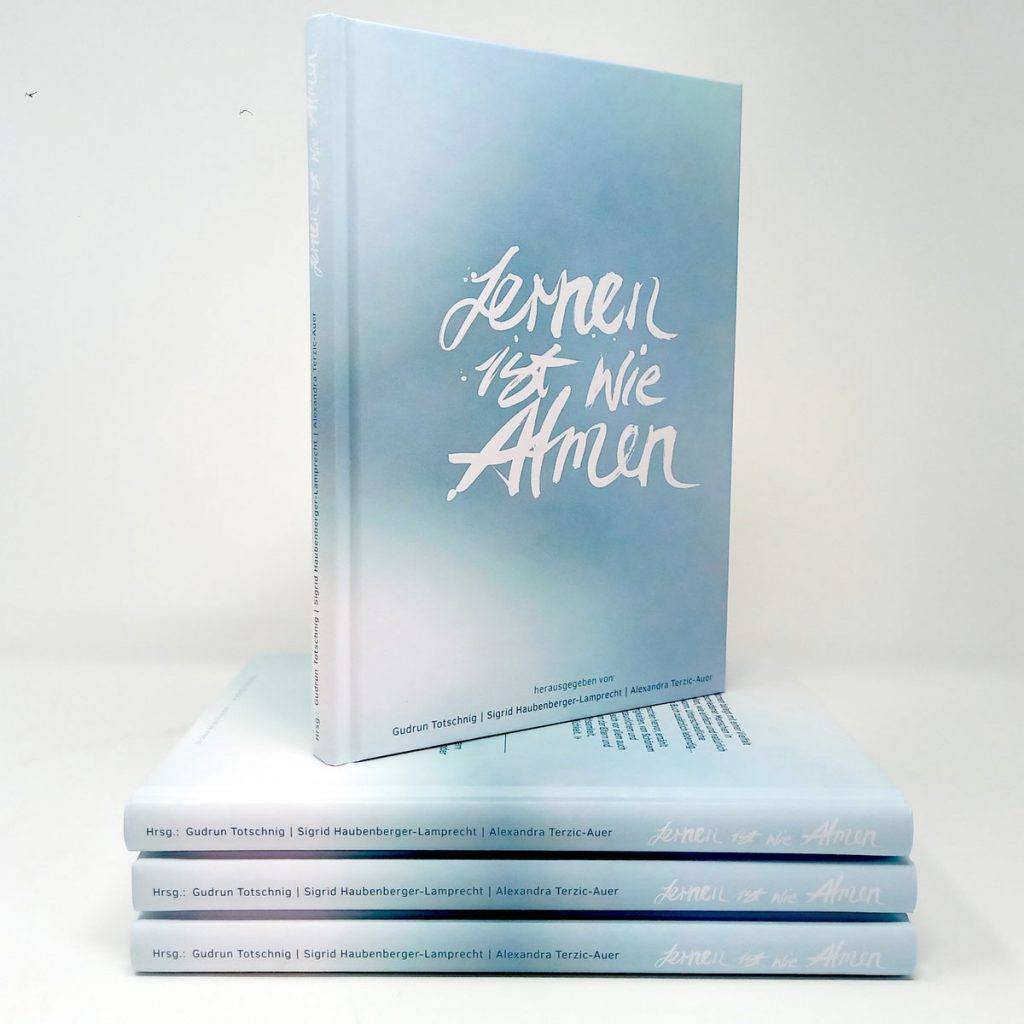
The 2nd edition of our book meets a completely changed readership.
In 2017, the idea that learning outside school was possible at all was considered the eccentric notion of a few outsiders. Since then, all parents, whether they wanted to or not, have had to deal with forms of learning outside school.
The number of children withdrawn from school has exploded since then, and alternative learning projects are springing up like mushrooms.
Buy the book (2nd ed., German)
Notes on content provided by authors
Comments
Loading comments …
Become a member to comment publicly. GAIA members write comments in the members' portal — under their nickname, visible to everyone.