Scholé News – November 2025

Dear friends of Scholé
When my friend Gudrun, the editor of TAU Magazin, invited me to write a piece about thinking for the next issue, I was amazed at how many objections immediately occurred to me. And yet mental sport has been my favourite sport since childhood. Ever since I taught myself to read at the age of 4, there has not been a day without books for me.
Reading/thinking is an adventure in the head – I can only agree with this advertising slogan. So where do the objections to the joy of thinking come from? They can only be explained by the abuse of thinking that is currently everywhere.
The good old rules of logic have evidently been forgotten. On many current topics of discussion, positions are so entrenched that one can spare oneself logical counter-arguments from the outset. The lofty goal of the Enlightenment, the liberation of people from the tutelage of church and state, has lost its radiance – why? Because the intellect only becomes reason in combination with free will, the main characteristic of the human being that distinguishes them from other living creatures.
Reasonable, that is free, thinking is a joy. It has produced the scientific, technical, legal and political progress whose fruits we enjoy today. Free thinking is individual by nature, but follows binding rules in order to facilitate communication with other individual thinkers. Groupthink does not actually exist; it is just that, unfortunately, people often delegate their natural right to free individual thought to authorities out of fear, laziness and/or cowardice.
Have the courage to use your own understanding
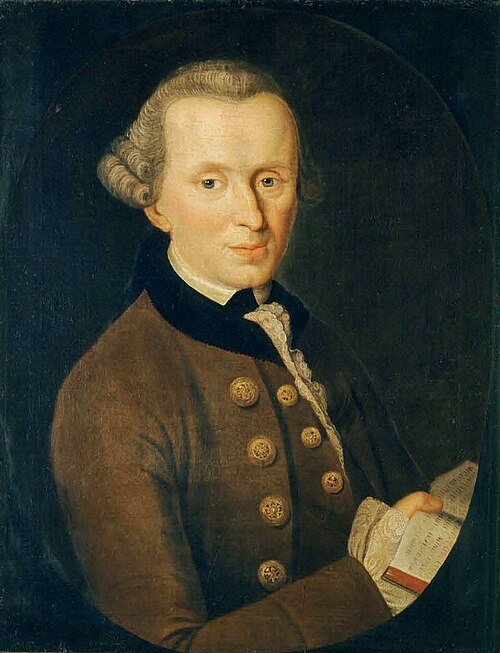
Immanuel Kant
Critic of knowledge
“Have the courage to use your own understanding,” the great critic of knowledge Immanuel Kant therefore urged, knowing full well that knowledge and morality exist only in the singular. Responsibility for one’s thinking, speaking and doing can only be borne by the individual, provided their thoughts, words and deeds were based on a free, informed decision.
The four basic rules of thinking
When did we lose free thinking? When did we forget that the language game, like every game, loses its meaning when the players no longer keep to the rules?
-
Rule 1: the precise definition of terms. How useful and helpful it is for us that generations of conscientious researchers have systematically described and classified almost all the plants and animals on this earth and given them Latin names!
How annoying, by contrast, that a substance that has all the characteristics of a gene therapeutic was called a vaccine – worse still, an mRNA vaccine, although it contains no natural messenger RNA but artificially altered, i.e. modified, modRNA. Producing it requires a complicated technical process, which also makes any debate superfluous about where the “novel virus” may have come from – from the wildlife market in Wuhan or from the high-security laboratory just 300 metres away. (Incidentally, Chinese, American and European researchers work together there.)
-
Rule 2: these are the rules of grammar that make it possible to put complex thoughts into a clear linguistic form.
-
Rule 3: the rules of logic.
-
Rule 4: to be able to understand a process or an event comprehensively, it is necessary to know its history. Prospective, computer-generated model calculations are no substitute for empirical faithfulness to facts; rather, they are a serious foul in the game of thinking and language!
The Age of Enlightenment
So let us go back to the historical beginnings. Around 1700, highly talented people all over Europe were gripped by a common idea: all people should have equal rights and everyone should have access to knowledge.
Polymaths such as Descartes, Voltaire, Leibniz and Newton campaigned for the enlightenment of the population, for its liberation from the tutelage of church and state. Together with many like-minded people, they worked on a great encyclopaedia, a collection of the world’s knowledge. This project, which still seemed impossible to fulfil at the time, has been realised at the latest with the invention of AI by their successors in the 21st century. So perhaps it is now time to pay attention to those important researchers who could not yet prevail 300 years ago.
Why should faith and knowledge exclude each other?
A contemporary of the early Enlightenment thinkers was, for example, the devout mathematician, inventor and philosopher Blaise Pascal. “We know the truth not only through reason, but also through the heart” is one of his best-known quotations; “All is one and all is different” is another.
We know the truth not only through reason, but also through the heart.
All is one and all is different.
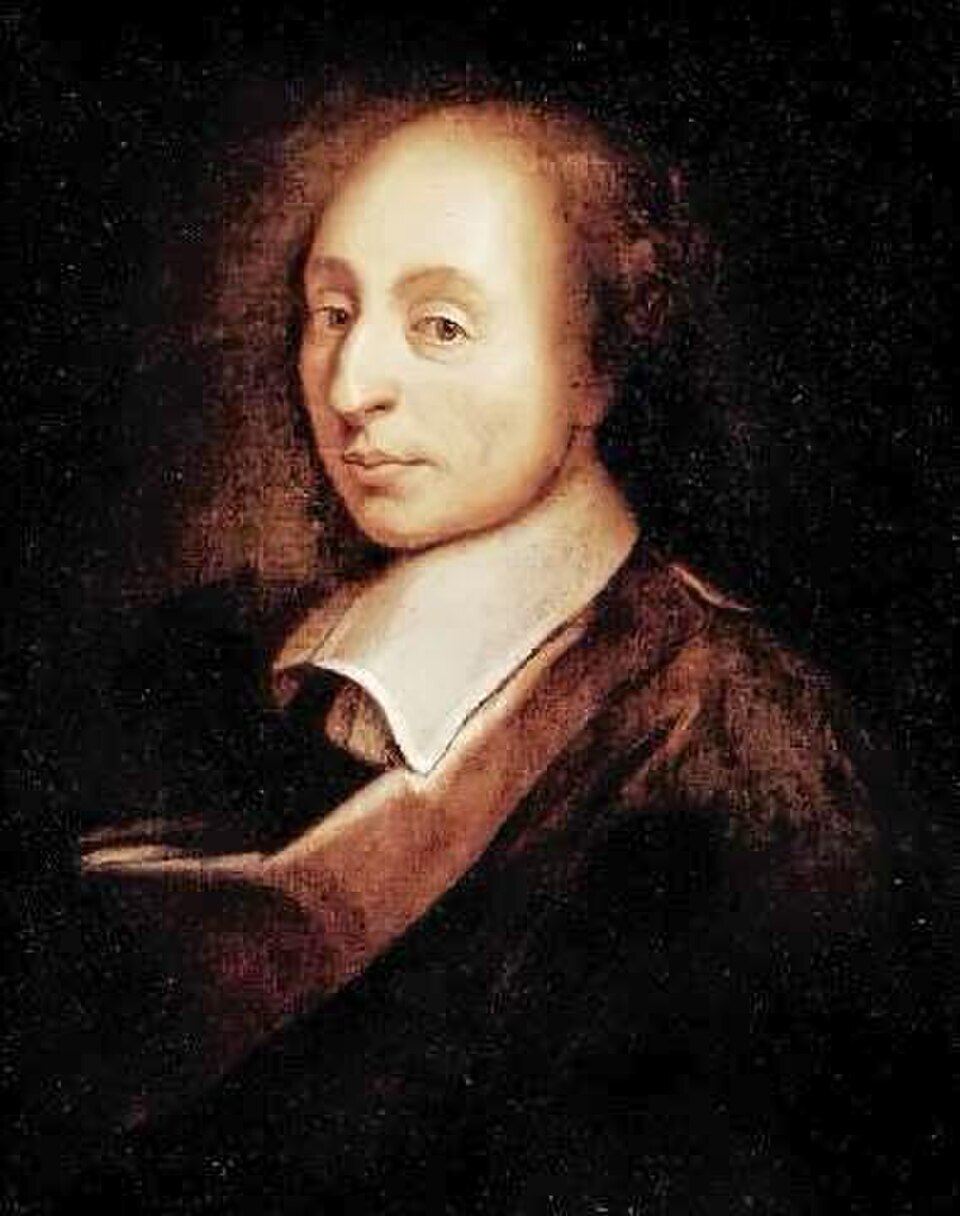
Blaise Pascal
Mathematician, inventor and philosopher
Starting from Pascal, we could certainly discover a long line of important poets and thinkers who blossomed and bore fruit away from the main road of materialism. Among physicists, chemists, biologists or geologists, too, there are quite a few who could tell us something that is still missing from the electronic encyclopaedia. What fascinated these authors was not the counting, measuring and calculating analytical mind, but consciousness, which connects outer and inner. Without wishing to diminish or negate the merits of the Enlightenment thinkers, I think and believe: the exploration and expansion of consciousness is the next and probably most important stage on the adventurous path of human reason.
I wish you all much joy and success with this delightful new task, from the bottom of my heart, Alexandra
More Scholé news
2nd edition of “Lernen ist wie Atmen” (Learning is like breathing)
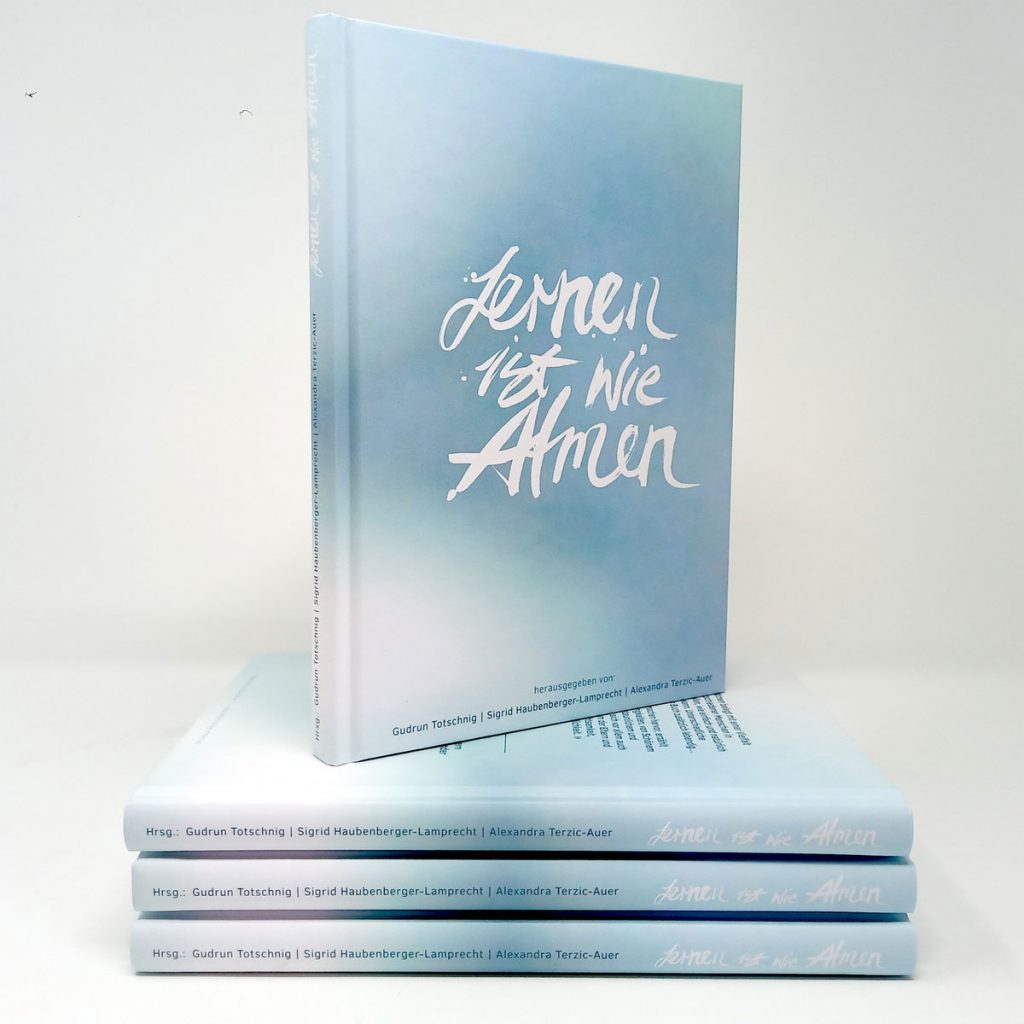
The 2nd edition of our book meets a completely changed readership.
In 2017, the idea that learning outside school was possible at all was considered the eccentric notion of a few outsiders. Since then, all parents, whether they wanted to or not, have had to deal with forms of learning outside school.
The number of children withdrawn from school has exploded since then, and alternative learning projects are springing up like mushrooms.
Buy the book (2nd ed., German)
Notes on content provided by authors
Comments
Loading comments …
Become a member to comment publicly. GAIA members write comments in the members' portal — under their nickname, visible to everyone.