TEWARI Generator: Energy Breakthrough
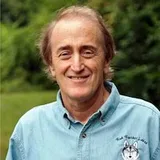

Let’s build Tewari RLGs together
A reactionless generator (RLG) was invented by Paramahamsa Tewari, an electrical engineer and former executive director of the Nuclear Power Corporation of India. Among other things, he worked in project management for the construction of nuclear power plants and as head of nuclear power plants.
Tewari spent many years developing a theory to explain the properties of the electron, which he called the Space Vortex Theory (SVT). The RLG system is an invention that provides experimental proof of the SVT. The theory describes the vacuum vortex structure of electrons and atoms. The true nature of electric current was revealed while formulating the SVT, which led to the invention of the RLG system.
In November 2014 I again visited Paramahamsa Tewari’s laboratory in India. I had seen the basis for the RLG design a few years earlier. Tewari showed me a rigid conductor about 30 cm long, pivoted in the middle and connected at each end to a thin wire (approx. 20 AWG) that allowed the conductor to rotate with very little force. Beneath the conductor was a magnetic circuit. When current flowed through the conductor, it rotated because of a torque acting on it, according to the standard theory verified by experiments at the beginning of the electrical age. With a simple redesign of the magnetic circuit, the same current produced no rotation. The torque was cancelled. Later I rebuilt the arrangement and experimented on my workbench.
It is ingenious and led to his breakthrough: the invention of a reactionless generator with greatly improved efficiency.

Reactionless generator with close-up of rotor and stator
The patent application has lapsed because of the inventor’s death, and the patent is now in the public domain. The technology is not protected and belongs to no one! It can be used by anyone!
Here is the patent:

Reactionless generator in Tewari’s laboratory, November 2014, by Toby Grotz
In building a reactionless generator, Tewari rearranged the standard parts used in synchronous generators to build a generator with astonishing efficiency. This could be compared with the Wright brothers’ rearrangement of common materials to create a lifting surface that led to manned flight, at a time when many, including scientists, thought it impossible.
On my last visit I witnessed efficiency tests of the new RLG model in Tewari’s laboratory. With an input power of 2.780 kW, the output power was 6.616 kW, an efficiency of 238%. A second set of coils had not yet been connected but should increase the output to 300%. It is a three-phase, star-wound machine with a 248-volt AC synchronous generator operating at 50 Hz.
 The meters at the input and output, measuring kW, kVA and power factor, confirmed the readings of the meters we supplied last spring, which measure the same parameters.
During the same trip to India I was able to visit a 130-acre factory site of one of the leading manufacturers of electrical equipment. At this site the company manufactures rotating electrical machines, including generators. When the chief electrical engineer first saw the drawings and design of the RLG, he immediately knew what this meant for efficiency!
Because of their confidence in the design and in the results of the tests on the smaller model, the company has assembled a self-excited machine rated at 100 kVA.
On our arrival at the factory we were welcomed by the company’s vice president, the factory’s managing director and the chief engineer. We then inspected the new machine and met the engineering team responsible for this project. I suspect they are electrical and mechanical engineers, the best of the best in India. They are very enthusiastic and understand the breakthrough. I asked one of the younger team members whether a finite element analysis had been carried out, and he beamed at me with a knowing “of course” and confirmed that they had done the FEA for the design. When I asked him the value of the flux density between rotor and stator in the 3 mm air gap, he replied 9,000 gauss.
This machine is ready for licensing to companies that manufacture rotating electrical machines. In fact, talks are already under way with companies on three continents.
I believe, as do the engineers in India, that this is the biggest breakthrough in rotating electrical machine design since Faraday’s invention of the electric motor in 1832.

Toby Grotz
You can find the theory and the mathematical models that led to the invention of the reactionless generator linked here on the tewari.org website:
To better understand what happens in the machine, we carried out an experiment in 2010. My notes on it are available for download here:
The books he wrote on the theory of space vortices are:
- The Substantial Space and Void Nature of Elementary Material Particles (1977)
- Space Vortices of Energy and Matter (1978)
- The Origin of Electron’s Mass, Charge Gravitational and Electromagnetic Fields from “Empty Space” (1982)
- Beyond Matter (1984)
Background: Paramahamsa Tewari

Paramahamsa Tewari was born on 1 June 1937 and graduated in electrical engineering from Banaras Engineering College in India in 1958. He held responsible positions in large construction organisations, mainly in nuclear projects of the Department of Atomic Energy in India. He was also seconded abroad for one year to the Douglas Point Nuclear Project in Canada. He is currently a retired senior nuclear director of the Nuclear Power Corporation, Department of Atomic Energy, India, and former project director of the Kaiga Atomic Power Project.
The fundamentals of physics stimulated Tewari’s imagination even in his early school and university years. Over the past two decades, his new ideas on the fundamental nature of space, energy and matter have solidified into a concrete form from which a new theory (Space Vortex Theory) has emerged. The theory reveals the most fundamental problem of the relationship between space and matter and shows precisely that space is a more fundamental entity than matter. The physical meaning of mass, inertia, gravitation, charge and light is revealed by extending the analysis in the theory beyond material properties into the substratum of space, which in turn is divided into fieldless voids, thereby showing the limit to which a physical theory can possibly reach.
The real universe stands in contrast to current concepts of concrete matter and empty space. He has spoken as a guest speaker at international conferences in Germany, the USA and Italy on the newly discovered phenomenon of space energy generation. As a practical demonstration of generating electrical energy from the medium of space, Tewari built THGs that operate with an efficiency of over 100%, showing that the medium of space is indeed the source for generating fundamental forms of energy.
I look forward to comments from members (after logging in) – preferably in English – and am happy to answer questions and suggestions. Enquiries via the contact form will also be forwarded to me.
The source for this text is the English original report.
Notes on content provided by authors
Comments
Loading comments …
Become a member to comment publicly. GAIA members write comments in the members' portal — under their nickname, visible to everyone.