Autarkie & Me • Episode 23 • Windischbauer.nHOF

Year-round self-sufficiency with preserved vegetables & fruit
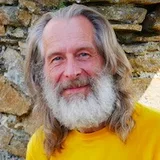
In the “Autarkie & Me” broadcast of 26.11.2025 we go one step further along the value chain of self-sufficiency in the area of health and nutrition – and thus also economy and finance. Bettina Windischbauer, farmer and founder of the association “Windischbauer.nHOF”, gives us valuable information in this broadcast on preserving home-grown vegetables and fruit.
Grew up on a farm
“For me, year-round self-sufficiency in fruit and vegetables is something completely “normal”, because I grew up on a farm. Now I’m an adult and a farmer myself. Although I don’t see myself as a farmer. But that’s what people know. The term “farmer” probably sums up best all the tasks I do on the farm, for the family and for the association community.
I see myself more as a networker, pioneer or keeper, awareness-raiser, proud self-supporter, vegetable gardener/preserver, organiser, mother, association “manager”; I stand up for growing vegetables naturally and for preserving vegetables/fruit naturally and traditionally, and I like to pass this knowledge on.”
Bettina Windischbauer, Windischbauer.nHOF
Motivation for self-sufficiency
“As an adult I realised that self-sufficiency is a “lifestyle” that you decide on. Either you go to work and use the money you earn to buy the food you need or want, or you produce the food yourself (= more direct, high quality, I work for what “nourishes” me).
Supplying yourself is far more than “just” producing your food. It nourishes “body, mind and soul”. It is meaningful work, and you know what you have at the end of it. When planting, tending and harvesting, I feel much closer to creation, because you experience the cycle of growth and decay year after year. It is a rhythm that does us humans good – that keeps us healthy. When I supply myself, I automatically live seasonally, and in my opinion that is the best thing for the body, as different vegetables and fruit affect our body differently. Some cool, some warm, and so on.
Fruit and vegetables from self-sufficiency also need no plastic packaging. I am proud when I can stroll past the fruit and vegetable shelves in the shop. I am proud because I manage to feed myself and my family with my own hands and knowledge. That gives me security.”
Bettina Windischbauer, Windischbauer.nHOF
The challenges
“Back then we simply jumped in at the deep end when we started gardening. Learning from nature is slow, because it always takes a whole year before you can do something differently/better/… AND you never stop learning, because every year you face new challenges.
You have to eat what is there, what needs to be “used up”. Some things fail completely in a given year, for example, but then you have loooots of something else. Creativity is called for.
AND things “MUST” be tended/harvested when the plants need care or the fruit is ripe – even if you would rather be lying by the lake.
Planning needs is only approximately possible, because so many different parameters come into play: whether the harvest succeeds or not depends on good seeds, suitable weather, correct soil cultivation, as well as fertilisation, pest and weed pressure. Another challenge is finding the right storage place, e.g. for pumpkins, apples, leeks, … and preserving “correctly / cleanly” so that things keep.”
Bettina Windischbauer, Windischbauer.nHOF
Planning what to grow
“Planning needs is only approximately possible, because so many different parameters come into play: whether the harvest succeeds or not depends on good seeds, suitable weather, correct soil cultivation, as well as fertilisation, pest and weed pressure. Another challenge is finding the right storage place, e.g. for pumpkins, apples, leeks, … and preserving “correctly / cleanly” so that things keep.”
Bettina Windischbauer, Windischbauer.nHOF
Notes on the term logistics
Logistics means far more than we mean by it in everyday language. Here are two links to illustrate:
Preserving: advantages and special features
“I can harvest fruit/vegetables at the highest “degree of ripeness” and preserve them. It doesn’t get any riper or sweeter! You can taste that, of course.
I decide which additional ingredients go in (which salt, which sugar and how much, which oil, …) – without artificial preservatives and colourings! There is a minimum of waste, above all of plastic, as many things, e.g. preserving jars, can be reused for many years.
Buying vegetables/fruit of this quality and in this quantity would cost a lot over the year. My own time costs me nothing. Although I believe that you can hardly buy vegetables/fruit this ripe and of such high organic quality, even if you wanted to. It doesn’t get more direct than this: from the garden to the plate.”
Bettina Windischbauer, Windischbauer.nHOF
Description of the basics
Here is the list of the different processing methods and procedures Bettina uses for preserving at the Windischbauer.nHOF:
- Bottling, preserving in screw-top jars, partly pasteurised (e.g. tomato sauces, cucumber salads, various pickled vegetables such as courgettes pickled Indian or Italian style, mustard gherkins, turmeric-courgette vegetables, warm cabbage salad with bacon, ready-to-serve red cabbage, … )
- Stews and soups (e.g. pumpkin curry, grandmother’s lentil stew, courgette and potato soup, … )
- Processing into jam or purée (e.g. various types of fruit or mixtures of them, … )
- Preserving with sugar (e.g. syrup, jams, … )
- Preserving with salt (e.g. soup seasoning, … )
- Preserving in vinegar (e.g. mustard gherkins, … )
- Preserving in oil (e.g. herbs, garlic, carrots, chilli, … )
- Lactic acid fermentation (e.g. sauerkraut in a fermentation crock, … )
- Making vinegar (e.g. from apple or mixed cider with a “vinegar mother”, … )
- Storing vegetables in a root cellar (e.g. potatoes, … )
- Storing in troughs with a soil/sand mixture (e.g. beetroot, carrots, celeriac, parsley root, horseradish, … )
- Heeling in in the garden soil (e.g. leeks, … )
- Storing in dry, airy, frost-free rooms (e.g. white & red cabbage, pumpkins, onions, garlic, apples, pears, … )
- Storing in sealed containers, e.g. in an old freezer / a barrel (e.g. grain/flours, spelt rice, lentils, … )
- Juicing & pasteurising (e.g. pressing apples/pears with our own fruit press into apple juice – preserving by heating -> filling into 5-litre bags)
- Leaving winter vegetables in the garden (e.g. parsnips, sugarloaf chicory, kale, … )
- Drying (e.g. various herbs, quince leather, dried plums, chilli, dried beans, … )
- Freezing, partly blanched first (e.g. various vegetables – courgettes, broccoli, peas, green beans, peppers, fennel, … and fruit – rhubarb, cherries, berries, …)
- Vacuum-sealing + cool storage (e.g. cooked beetroot, ground nuts, bacon, sausage, … )
- Pressing oil (e.g. walnuts, sunflower seeds, … )
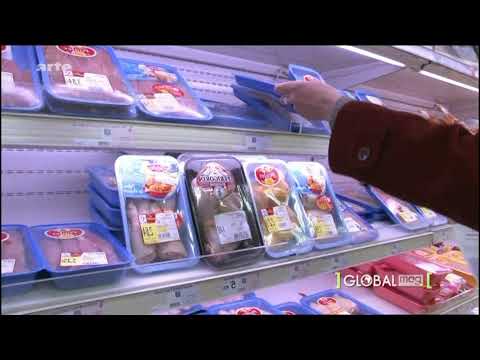
The food industry also uses other preservation methods, such as irradiation with X-rays and gamma rays.
German Federal Office of Consumer Protection (German)
Outlook: development & vision
Does the term community-supported agriculture (SoLaWi) apply to your association?
“We are not a SoLaWi, but the idea of solidarity is part of our concept. Most SoLaWis, I think, are not associations; we are. SoLaWis have “harvest sharers” (the whole harvest produced in a year is divided among them). We have association members for whom it is important to preserve small-scale farming structures by supporting and using them.
We also don’t draw up an annual budget or collect money at the beginning of the year to manage over the year.” So there are some differences in how a SoLaWi and our Windischbauer.nHOF work.
We want to help build up regional, high-quality and sustainable networks for (self-)supply, and to maintain and expand them. Producers and consumers must come together again and join forces, pull in the same direction, hold associative conversations (who needs what? And how can we manage/implement it “together” – rather than just demanding and criticising).
Ideally, the “producer/consumer” structure will largely dissolve in the process. Ideally, people will also lend a hand themselves for their daily food (where it makes sense) and thus support the farmer or gardener. That creates much greater appreciation of our food – our “means of LIFE”. Not so much would be thrown away, people would recognise the difference in quality and also notice that a crooked carrot or cucumber tastes mega good.
Feeding the people cannot and must not be the concern of farmers alone. It should not be a confrontation – producers here, consumers there – but merely a division of tasks in the matter of supply. Farmers should once again be able and allowed to concentrate fully on their tasks/competences (quality production).”
Bettina Windischbauer, Windischbauer.nHOF
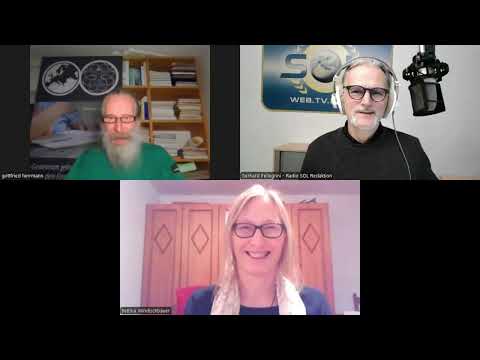
Radio SOL The broadcast with our guest: Bettina Windischbauer
 The non-profit association Windischbauer.nHOF is entirely dedicated to preserving the small-farming tradition, to nature conservation and to research into animal and
human welfare.
We are convinced that only when there is once again a living connection between people, animals and nature will people be ready to commit themselves actively to protecting
nature and to more animal welfare.
The non-profit association Windischbauer.nHOF is entirely dedicated to preserving the small-farming tradition, to nature conservation and to research into animal and
human welfare.
We are convinced that only when there is once again a living connection between people, animals and nature will people be ready to commit themselves actively to protecting
nature and to more animal welfare.
Bettina Windischbauer
Windischbauer.nHOF – association for promoting the connection between people, animals and nature
Rührndorf 29 4551 Ried i. Traunkreis Austria
Phone: +43 699 81883179
Email: verein@windischbauernhof.at
Inspiration & natural treasures
Autarkie & Me
Radio SOL series

Archive of all broadcasts
Receive Radio SOL
- Greater Vienna on FM 105.1 MHz with any conventional radio receiver
- DAB+ throughout Austria with any DAB+ receiver, including DAB+-capable car radios
- via the internet worldwide as a stream on radiosol.at
- via Spotify worldwide on all devices that support Spotify (Amazon Alexa, web browsers, etc.)
- via Audible worldwide, even without a subscription
- via TuneIn worldwide on all platforms that support TuneIn (Amazon Alexa, web browsers, etc.)
Radio SOL is a radio station from Austria offering a varied programme focused on positive content. It concentrates on topics such as health, sustainability, culture and awareness. The station aims to spread inspiring content and offers a platform for discussion and information that promotes the well-being and quality of life of its listeners. Radio SOL is known for its commitment to the community and its support of projects and initiatives that promote a sustainable and conscious way of life.
GAIA and Radio SOL have been closely connected for years. Both organisations are committed to informing readers and listeners about important topics such as renewable energy, healthy living and ecologically sustainable approaches.
With the series “Autarkie & Me” (Self-sufficiency & me), Radio SOL opens up the messages and projects of the Society for Self-Sufficiency (GAIA) to a wide audience. Together we promote innovative solutions and practical approaches that help people lead a self-sufficient and sustainable life. The broadcasts are in German.
Notes on content provided by authors
Comments
Loading comments …
Become a member to comment publicly. GAIA members write comments in the members' portal — under their nickname, visible to everyone.