Hermann Scheer: Energy is not just energy
In his book “Der energethische Imperativ” (The Energetic Imperative), Hermann Scheer spoke of a structural conflict between two fundamentally different energy systems. A renewable energy system is fundamentally different from the conventional supply based on fossil and nuclear energy. Anyone who wants to understand the energy transition must therefore look at more than power plants, electricity grids and storage.
A structural conflict
Although the energy transition has been decided politically, its course is by no means fixed. The old, predominantly centralised energy supply and the new, potentially decentralised energy generation differ in more than technology. They are associated with different economic interests and corporate structures.
Hermann Scheer, one of the pioneers of the energy transition, pointed to this conflict early on. He warned against confining the energy debate to ecological and technical aspects alone and thereby depoliticising it. Scheer died on 14 October 2010. His fundamental question remains: how can a new energy system emerge if the structures of the old one are to be preserved at the same time?
The false impression
One can gain the impression that the energy transition is not progressing mainly because technical components are not yet mature or sufficiently available. Missing power lines, storage or the fluctuating generation from sun and wind are often at the centre of the debate.
Yet this does not explain everything. Technical tasks have to be solved. At the same time, it is a matter of political decisions and economic interests. Those who have invested in existing power plants and the associated infrastructure often have an interest in using these facilities for as long as possible.
The question of the speed of the energy transition is therefore also a question about the actors who shape it. Climate change makes this time factor all the more significant.
Hermann Scheer and the energy system conflict
In many of his committed lectures, Hermann Scheer explained the foundations and consequences of our energy system. His starting point was simple: energy is not just energy.
The choice of energy source affects not only the environment. It also shapes economic development, industrial organisation and international politics. Anyone who compares fossil, nuclear and renewable energies only by their energy yield overlooks these differences.
Scheer’s argument can be summarised like this: fundamental change is often driven by new actors. Those who live off the existing system will not naturally make its replacement their own task. A successful energy transition therefore needs people, companies and municipalities who are able to break new ground.
The energy source shapes the system
Behind this seemingly simple statement lies a far-reaching connection. The choice of energy source largely determines which technical and economic structures are subsequently needed.
With crude oil, it begins with extraction rights and extraction technology. Processing, pipelines, tankers, refineries and an extensive transport and distribution infrastructure follow. All of this requires large investments and influences the forms of company that take on these tasks.
This creates long supply chains and strong economic concentration. The conventional energy system has made technical progress possible and at the same time helped shape the form of our industrial development.
Sun and wind have different prerequisites. They do not have to be extracted as a fuel and transported to a power plant. Their energy can be used in many places – including close to where it is consumed. This opens up different possibilities for supply and economic participation.
Resources and dependencies
Using fossil and nuclear energy sources ties supply to deposits, extraction companies and transport routes. This creates economic and political dependencies. Access to resources can aggravate international conflicts.
Scheer’s conclusion was therefore more far-reaching than the mere replacement of individual power plants: an accelerated expansion of renewable energies opens up the possibility of reducing such dependencies and organising supply in a more decentralised way.
A renewable energy system also needs raw materials, installations and infrastructure. What matters is the difference between manufacturing a plant and the continuous procurement and transport of its fuel.
Serious consequences
Anyone who believes the existing energy system can be maintained unchanged and that only its energy sources need to be swapped underestimates the change. Renewable energy sources can be used decentrally in many places. This allows new actors to take responsibility for energy supply.
For electricity, this means that consumers can also be producers – so-called prosumers. Households, farms, businesses and municipalities can generate electricity themselves and use part of it directly.
The role of the existing energy companies changes as a result. Existing business models and power relations are called into question. Grids, storage and the coordination of generation and consumption remain important tasks; they must be geared to the changed supply.
For a successful strategy, we must understand this connection. The energy transition is not just a change of technology. It also changes who generates energy, who decides about it and who can share in it economically.
Further viewing: Power to the people
Hermann Scheer’s lecture “Power to the people” takes up these connections. It invites us to understand the energy transition as a social and economic task – and not merely a technical one.
https://www.youtube.com/watch?v=575kzHyJT9g
Sources
- Basis of the text: the compilation “Zitate Scheer” (Scheer quotations) provided by Wolfgang Löser, with reference to “Der Energiesystemkonflikt” (The energy system conflict), Energiewende rocken. The ideas and longer passages of speech are reproduced here in substance.
- Hermann Scheer: “Der energethische Imperativ. 100 Prozent jetzt: Wie der vollständige Wechsel zu erneuerbaren Energien zu realisieren ist” (The Energetic Imperative. 100 per cent now: how the complete switch to renewable energies can be achieved), Verlag Antje Kunstmann, 2010.
- About Hermann Scheer, EUROSOLAR, biographical details.
- “Power to the people”, lecture by Hermann Scheer.
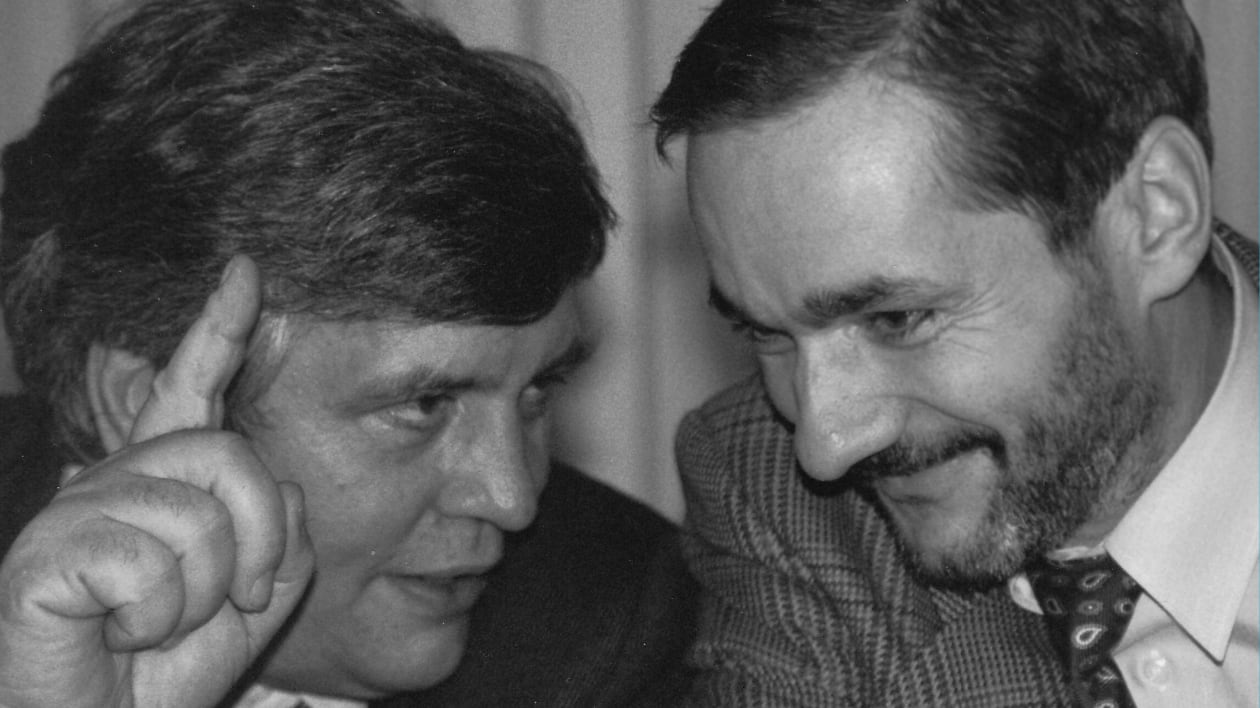
Photo: Claude Lebus / Wikimedia Commons, [CC BY-SA 3.0] (https://creativecommons.org/licenses/by-sa/3.0/).
Notes on content provided by authors
Comments
Loading comments …
Become a member to comment publicly. GAIA members write comments in the members' portal — under their nickname, visible to everyone.