Nature as a model: why decentralisation and diversity will save the systems of the future
Herbert Saurugg, saurugg.net
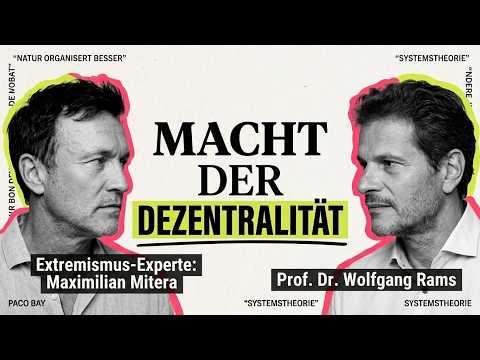
A highly recommended conversation from which you can learn a good deal about systems science and its practical relevance. Here is an AI-assisted summary:
At a time of growing complexity and global crises, our conventional, often centralist thinking is reaching its limits. The conversation with Wolfgang Rams shows how, by applying principles from the natural sciences, we can create more stable and more adaptable social and economic systems.
1. The failure of centralism
In times of crisis, human systems tend to call for “strong leadership” and central planning. From the perspective of systems theory, however, this is often the wrong reflex:
- Lack of information at the centre: centralist systems inevitably fail because the necessary information cannot be pooled efficiently in one headquarters; it is found in the periphery instead.
- Decision-makers are overwhelmed: politicians and executives often act in a state of total overload because they try to control complex dynamics through micromanagement – something that does not happen in nature.
2. The power of decentralisation (the swarm principle)
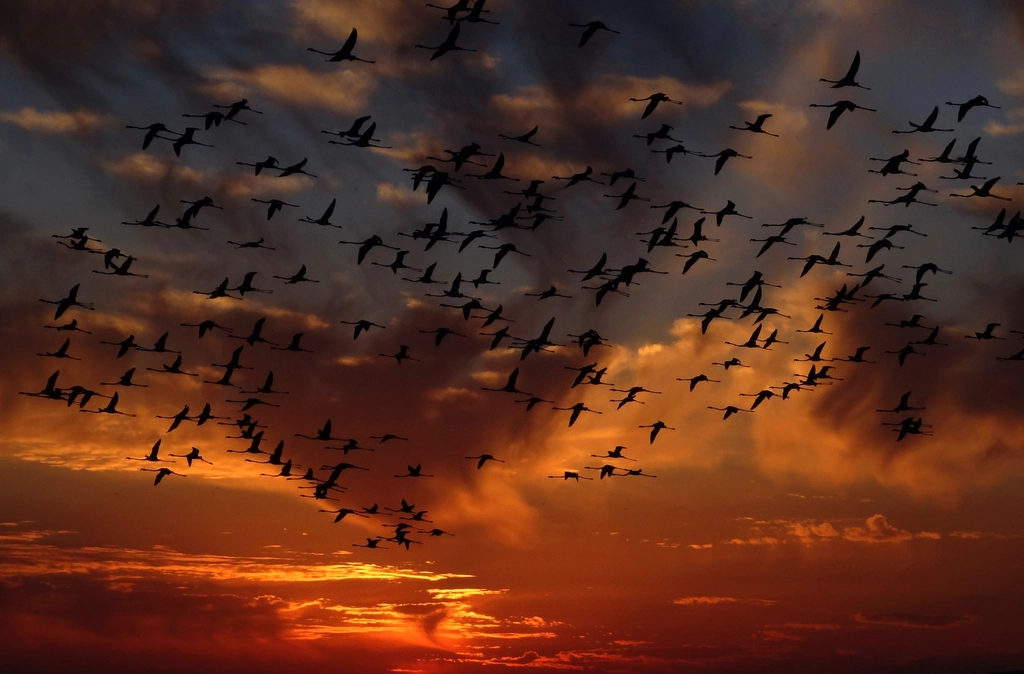
Nature organises itself in a decentralised way. A flock of birds has no command centre; each bird reacts to its immediate surroundings and follows physical context fields such as aerodynamics.
- Decisions in the periphery: real intelligence means giving decision-making power back to where the context is known – to the people on the ground.
- Subsidiarity as a survival strategy: personal responsibility is the smallest unit of system stability. Only those who can manage their own environment can also take responsibility for the bigger picture.
[But see also Schwarmdumm – So blöd sind wir nur gemeinsam (“Swarm-stupid – we are only this dumb together”, in German)]
3. Resilience through diversity instead of an obsession with efficiency
For centuries we have been tuning our world for global efficiency (division of labour according to Adam Smith), but in doing so we have forgotten resilience.
- Monocultures vs. flower meadows: centralist standards create monocultures. If an error or a disease gets in, the entire system collapses.
- Diversity as a shield: nature builds colourful flower meadows because they are more resistant to disturbances. Diversity is not a luxury but a necessary principle of nature for the survival of a system.
4. Disrupted feedback loops
A system can only regulate itself if information flows back unfiltered (feedback).
- Price manipulation: in the economy, price is the most important information signal. If it is manipulated, the feedback loop is disrupted and the system steers towards the abyss on the basis of false data.
- Corruption as a system killer: corruption ends the search for the best solution and leads to sub-optimal results because it destroys the natural feedback mechanisms.
5. Humans as “disruptors” and creators
From the point of view of systems theory, a perfectly stable system in equilibrium is “dead”, because it no longer allows any creative development.
- Unpredictability as a mission: the human ability to make mistakes and to be unpredictable is essential. We constantly throw systems out of balance and thus ensure the continuation of life and the formation of new patterns.
- Ethics decides the future: while nature determines which systems can exist, humans must use ethics to decide which systems should survive.
Conclusion: we will not achieve real sustainability through even more control from above, but through the courage to let go [see also Exnovation und Innovation: Synergie von Ende und Anfang in Veränderungen (“Exnovation and innovation: the synergy of ending and beginning in change”, in German)]. We have to create structures that are small enough to remain human and diverse enough to weather storms. Personal responsibility and decentralised networking are the laws of nature we must rediscover.
This article first appeared in German on saurugg.net – with kind permission of Herbert Saurugg. Licence: CC BY-NC-SA 4.0, Herbert Saurugg. Translated from German by GAIA.
Cover image: rawpixel, CC0
Notes on content provided by authors
Comments
Loading comments …
Become a member to comment publicly. GAIA members write comments in the members' portal — under their nickname, visible to everyone.