Uncomfortable questions in unstable times
Herbert Saurugg, saurugg.net
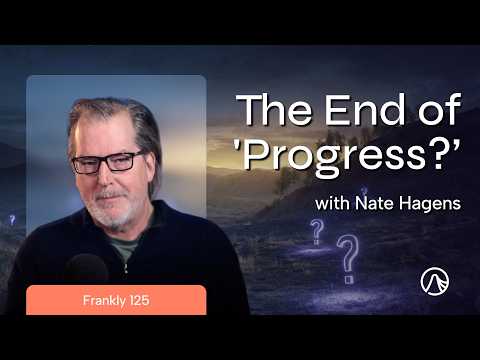
This episode of The Great Simplification is less about ready-made answers than about the questions we need to ask in the face of an uncertain future. The author, Nate Hagens, argues that good questions are a form of preparation: they help us perceive change, question assumptions and recognise options for action.
Core idea
The podcast does not argue for a particular political or technological answer. Rather, it calls for a more conscious discussion of the great transitions of our time:
- from growth to stability,
- from abstract system problems to concrete responsibility,
- from comfort and connectivity to the search for meaning,
- from national identity to responsibility for social signals,
- from uncritical AI enthusiasm or blanket rejection to a responsible handling of power.
The central message is: in unstable times it is not enough to look for quick solutions. We first need to understand better which questions really matter – and what responsibility follows from them for our own actions.
Summary
Society has long been shaped by growth and expansion as a self-evident guiding principle. With increasing strain on supply chains, power grids, food systems and state institutions, however, the central question could shift: no longer “How much can we grow?” but “How can we remain stable?” Such a shift from growth thinking to stability thinking would fundamentally change personal life planning, political priorities and social models. At the same time, the question arises of what should be protected – and what a society might have to do without.
Particular attention is paid to the unequal distribution of crises. People with financial, social or material reserves can cushion systemic strain for longer, while people without such buffers experience the future earlier and more directly. This gives rise to a moral responsibility: what obligations do those who are still sheltered have towards people who are already suffering today from developments that will only reach others later? This question is also extended to ecosystems and other species.
Another focus is the question of meaning and purpose. Technical, economic and political problems are only one level of the current crises. Many people live comfortably and are constantly connected, yet at the same time feel lonely, restless or without deeper purpose. A lack of meaning can encourage addiction, scapegoating and authoritarian tendencies. Meaning and connectedness are therefore not mere personal add-ons but stabilising factors for society. The central personal question is: what would have to change in one’s own life for it to be filled more strongly with meaning and purpose again?
Next, the effect of large social scales is discussed. In small groups people often behave more cooperatively, while large social systems create other incentives: visibility, conflict, uncertainty and a focus on winning are rewarded. As a result, particularly assertive or strategically acting minorities can influence the public course disproportionately. The speaker therefore asks what responsibility ordinary citizens have for the image their country conveys to the outside world – and where this responsibility ends. For the United States there is the additional question of what the country could stand for in a less expansive era focused more on stability.
Artificial intelligence as a turning point
The final questions concern artificial intelligence. The speaker expects a growing gap between people who really understand AI tools and can use them confidently and those who reject them or engage with them only superficially.
At the same time, AI could continue to be expanded despite growing unpopularity. The build-out of data centres and AI infrastructure requires large amounts of electricity, water, land, copper, chips and grid capacity. In an economically and materially tighter world, these demands could become increasingly visible in everyday life – for example through higher electricity costs, rising grid expenditure or local conflicts over new data centres.
This creates a political and ethical tension: what happens when a technology that many people view critically is indirectly co-financed by the general public through higher household costs? And according to which rules should scarce resources be allocated between AI applications, private households and basic public services?
The speaker also considers a possible “AI winter” phase likely. This does not mean an end to technical development, but a sobering of expectations, valuations and investment. Physical infrastructure could develop more slowly than the financial and political promises. Bottlenecks in chips, data centres, power grids, water, copper and other raw materials could limit the build-out. Such a pause would at the same time be an opportunity to develop rules, standards and social guard rails before the next wave of growth sets in.
Integrity or self-disarmament?
Finally, it is about dealing with powerful technologies. New tools are often morally charged: people form camps, declare their use an expression of personal identity and divide others into supporters or opponents. In the speaker’s view, this now applies especially to artificial intelligence.
The problem is that restraint is not automatically effective. Actors focused on control, concentration of power and short-term advantage will probably use all available tools – early and consistently. Those who, for ethical reasons, do without these tools altogether, on the other hand, could weaken themselves politically and organisationally.
This raises the decisive question: where does integrity end and self-disarmament begin? Must people and movements that want to promote life-affirming and resilient models for the future also learn to use powerful technologies – but with clear limits and different goals? And how can they avoid adopting, in using them, the very logics of power they actually want to overcome?
This article first appeared in German on saurugg.net – with kind permission of Herbert Saurugg. Licence: CC BY-NC-SA 4.0, Herbert Saurugg. Translated from German by GAIA.
Cover image: jplenio / Pixabay
Notes on content provided by authors
Comments
Loading comments …
Become a member to comment publicly. GAIA members write comments in the members' portal — under their nickname, visible to everyone.