Synhelion and Empa develop plant for solar fuel


Synhelion and Empa are working together to further develop a high-temperature energy store
It is central to the production of solar fuels. The innovation agency Innosuisse is funding the project.
Synhelion will in future work with the High Performance Ceramics laboratory of the Swiss Federal Laboratories for Materials Science and Technology (Empa) on its solar storage technology. Together they want to further develop Synhelion’s high-temperature energy store. According to a press release from the Lugano-based start-up, which was also published by Empa, the project will “for the first time in the world enable the low-cost and scalable storage of high-temperature solar heat of over 1,000 degrees Celsius”.
The store will be a central component of the first industrial plant for solar fuel. Its design is also being developed by Synhelion together with Empa. It is due to be built in 2022. The Swiss innovation agency Innosuisse is funding the project.
Synhelion uses high-temperature solar heat to produce synthetic fuels such as solar petrol, solar diesel and synthetic jet fuel from CO2 and water. All of them are compatible with conventional combustion engines. For their production, the company, spun off from the Swiss Federal Institute of Technology in Zurich in 2016, has developed a solar thermochemical process based on process heat from concentrated sunlight. So that the necessary chemical reactors can also operate at night and in cloudy weather, a cost-efficient thermal energy store (TES) is needed. This would increase the plant’s utilisation and “drastically” reduce capital expenditure.
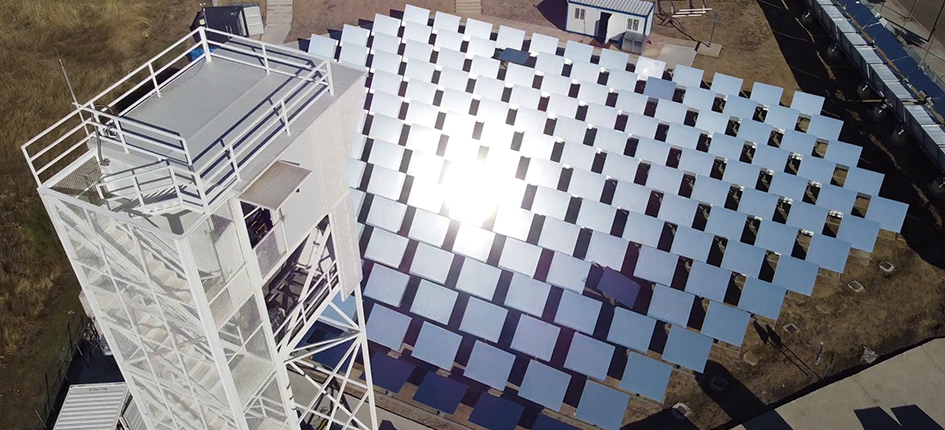
Such thermal energy stores are not yet available on the market. They are much cheaper and more environmentally friendly than battery storage, explains Dr Lukas Geissbühler, head of the Thermal Systems department at Synhelion. “Further developing our TES solution is crucial for producing synthetic fuels cost-effectively and continuously.”
“With this research project, we are building on numerous Swiss cleantech innovations of recent years and, with our know-how in developing and using technical ceramics under extreme temperature and corrosion conditions, we are creating added value for Swiss industry,” says Thomas Graule, head of Empa’s High Performance Ceramics laboratory.
This post is presented in cooperation with Next Generations, Plus4 and Cafe Europe.


Notes on content provided by authors
Comments
Loading comments …
Become a member to comment publicly. GAIA members write comments in the members' portal — under their nickname, visible to everyone.