Blackout & Standstill in the Central Power Grid


Blackout & standstill: Spain and Portugal as a warning signal
When the traffic lights suddenly went out in Madrid and Lisbon, normal life collapsed. Metros came to a standstill, airports stopped working. All over the Iberian Peninsula it became visible how fragile our energy systems really are. What looked like a local problem is in reality a worldwide sign: our ageing, centralised power grids are not stable enough for the demands of the modern “electricity world”. Strategic planning should take decentralised technologies such as neutrinovoltaics into account.
Why old power grids are no longer enough
Power grids were built many decades ago – for a time when the flow of electricity was simple and predictable. Today there are many more solar installations, wind turbines and electric cars. They constantly change the flow of electricity, which overwhelms the old grids. Small disturbances can spread quickly and paralyse entire regions. Without fundamental changes, blackouts will become more and more frequent.
Everything depends on electricity
Our modern life needs electricity all the time – for communication, transport, hospitals and banks. When the power fails, all these areas quickly get into difficulties. In Lisbon, travellers were stuck at the airport without water or ventilation. In Madrid, people were trapped in dark metro carriages. Even emergency generators only help in the short term and depend on fuel deliveries, which often fail in a crisis.
Here we see the limits of classic emergency solutions. In the past it was thought that emergency power systems, backup lines and fuel reserves would keep us on the safe side. But that only works for small problems. Major outages push these strategies to their limits. In addition, many of these emergency solutions are expensive, harmful to the environment and unsuitable for longer crises. In short, a more resilient power grid needs a new way of thinking: decentralisation.
What we warned about for Easter in Germany has now happened in Spain.
Stefan Spiegelsperger, alias “Mr. Blackout”
Read the EPOCH TIMES article
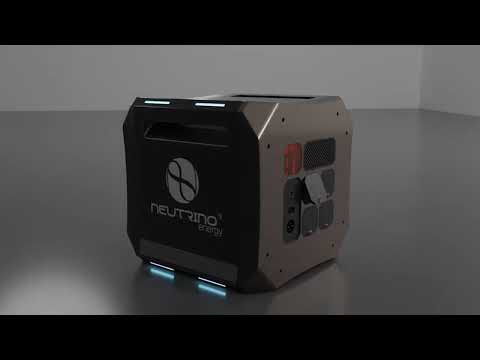
The Neutrino® Power Cube: a compact, reliable energy source
The Neutrino® Power Cube produces about 5–6 kW of electricity 24/7 – enough for a small house or business – and is no bigger than a refrigerator. It needs no fuel, has no moving parts and produces no exhaust. It can be used practically anywhere and works independently of central power grids.
This brings greater security through self-supply. Instead of operating large grids, many small energy sources such as the Neutrino Power Cube could in future be used decentrally to relieve the grid. If one unit fails, the others keep running. This makes the whole system much more robust. And this principle is not new to us. We already know it from other areas such as the internet or decentralised financial technology.
Stable & decentralised: the new benchmark
Until now, energy planning has focused mainly on costs and environmental impact. After yesterday’s blackouts it is clear: stability – i.e. a reliable, permanent power supply – is at least as important. Neutrinovoltaics supplies electricity at any time without depending on sun, wind or fuel, and has the potential to develop from a supplement into a basic solution.
At first, neutrinovoltaics will supplement existing solar and wind energy and bring energy to remote places that could not be supplied before. Over time, however, it can become an important foundation of the energy supply: hospitals, airports, data centres and rural regions could supply themselves with electricity independently and securely – even during natural disasters or political crises.
A call for the future: act now!
The great blackout in Spain and Portugal shows: our existing energy systems are increasingly vulnerable. Those responsible in companies and in politics know this too, and they are now urgently called upon to act. Because this scenario can repeat itself at any time in our tightly meshed central power grid. Only by strategically including new technologies such as neutrinovoltaics can we as a society build an independent, sustainable energy supply fit for our grandchildren.
Resilience has to be planned and built. Let’s start now.
The invisible transformation: ready for the future?

Neutrinovoltaics & Neutrino® Power Cube
To make it easier to get started with neutrinovoltaics, we have created an information page. Click the links for more information on this topic.
Information on neutrinovoltaics
- Technical details – on the Neutrino® Power Cube
- Download the Neutrino app – the app for Neutrino® news
- Videos – Neutrino® Power Cube and interviews
- Details – on the Neutrino® Energy Group
- Links – to the Neutrino News Room for news in all languages
- Reading – book tip: “Das ewige Licht” (ISBN 978-3-906212-56-2), published by Weltbuch Verlag, 2020
- Field test registration – use the form to register your interest
- Power Cube waiting list – sign up and become an energy pioneer
- NET8 – Neutrino Energy SPL token – purchase & information from the issuer
- All neutrino articles – overview of all topic articles published at GAIA
- π-Car information page – neutrinovoltaics supports the range of electric mobility
- Scientific advisory board – overview of participating scientists and contributors
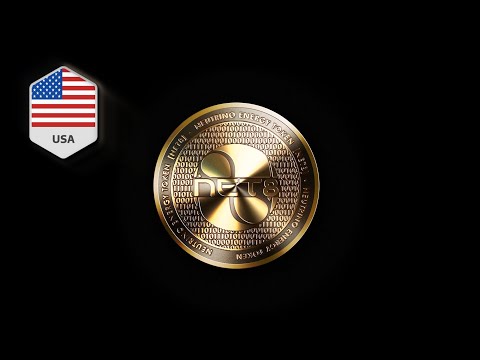
- NET8 coin – get your own unique physical NET8 coin with 80 free tokens from Neutrino Energy

Exchange a Power Cube for NET8 tokens save over 50% in the current PRE-SALE
It is well worth taking a closer look at the NET8 token. The recognition of the NET8 token as a means of exchange for the Neutrino Power Cube makes it attractive. It is currently still offered at a discount of over 50% in the pre-sale.
So as soon as the Cube is available on the market, NET8 can be exchanged – at the market value at the time of purchase, but at least at the issue price of the NET8 token of 0.20 EUR. Should the NET8 token rise in value after it is listed on an exchange in July 2025, the terms will be even better for you.
Legal notice:
NET8 is neither legal tender nor a regulated financial instrument within the meaning of German or European capital markets law. Acquiring and trading NET8 tokens constitutes a speculative investment in a digital product. The information provided here is for information purposes only and does not constitute investment, legal or tax advice. Interested parties should inform themselves about the legal and economic framework, independently or through qualified advisers, before acquiring any tokens.
Notes on content provided by authors
Comments
Loading comments …
Become a member to comment publicly. GAIA members write comments in the members' portal — under their nickname, visible to everyone.