The multi-paradigm shift becomes visible, part VI: News on the monetary system

The multi-paradigm shift becomes visible – part VI: News on the monetary system
After a longer summer break (June, July and August), I would like to turn again in the coming newsletters to my original core subject, the monetary system. As early as 2009, the book “Die Finanzkrise als Chance” (The financial crisis as an opportunity), which I wrote together with five other honest scientists, pointed out that so-called financial crises are a systemic phenomenon that can by no means be reduced to a single discipline (“finance” or “legal norms”) if sustainable solutions are to be achieved.
The symptoms (bursting price bubbles, falling employment, a credit squeeze and the resulting deflation, possibly followed by (hyper)inflation) are always similar in most historical crises and in many cases were even triggered artificially (German). In an interview with the online edition of Der Standard (German) I finally spoke openly about one of the core problems: “credit money creation out of thin air” (i.e. by a mere booking entry which, at first, is not backed by any real assets on the part of the bank). As I had expected, there were extremely fierce reactions from politicians and the establishment, with some unpleasant consequences for me personally, too. Bankers (even board members!) continued to insist, in public discussions as well, that as “honest business people” they were only “lending the savers’ money to entrepreneurs” when granting loans. This statement was false and refuted then as it is now. At the time, however, the evidence was known to only a few experts; since then, large institutions (the Bank of England, Standard & Poor’s, the Deutsche Bundesbank) have also openly acknowledged the truth, and those responsible in commercial banks and national (central) banks should think carefully about the legal risk they are taking by publicly presenting a demonstrably false process as the basis of their business model.
BOOK: Die Finanzkrise als Chance (German)
So that laypeople, too, can better understand these connections, I am devoting this newsletter first to a basic introduction, then to the public statements now available on “credit (thin-air) money creation” and, finally, to a few alternatives for sustainable, systemically positive “monetary systems” that receive too little attention in today’s debate.
The basics of double-entry bookkeeping
Double-entry bookkeeping works on the basis of two-sided accounting fields (“accounts”): with every entry, the same amount is recorded on the different sides (“debit” and “credit”) of two different accounts. One and the same amount therefore always appears (in a so-called “booking entry”) both on the debit side of one account and on the credit side of another account addressed by the same booking entry.
Example: Cash to sales revenue: €100
This is how, for instance, the sale of merchandise in a shop for cash would be booked: the cash account increases by the amount received (as notes or coins), and the income is recorded as “sales revenue” (separated in each case by VAT rate). In addition (in a separate step), the merchandise must then also be “booked out” (booking entry “cost of goods sold to inventory”, again separated by VAT rate), using the information from the scanner till, which enters the bookkeeping system when the barcode is read at the department store checkout. The difference between the cost of goods sold (expense) and the sales revenue (income) then gives (after deducting staff costs and all other expenses of the accounting period) the profit of the department store company.
Ultimately, all accounts are either summarised directly in the balance sheet (in which case one speaks of asset and liability accounts, i.e. balance sheet accounts) or they serve to determine profit or loss in the profit and loss statement (these are the so-called income statement accounts), whose overall result, profit or loss, increases or decreases the company’s equity. So what we have here is a purely mathematical formal language in the form of a zero-sum game: one and the same amount always appears both as a debit and as a credit (in two different accounts).
 Fig. 01: Basic structure of a balance sheet, with fixed assets (AV) and current assets (UV) on the assets side and equity (EK) and debt capital (FK) on the liabilities side. The totals of all assets and of all liabilities always give the same amount (the balance sheet total or “balance sheet length”), which is automatically ensured by the double recording of one and the same amount (as debit and credit in two different accounts) in the booking entries.
Since there are two different kinds of balance sheet accounts (asset and liability accounts, depending on which side of the balance sheet the account’s closing balance ends up on at the end of the accounting period), and since every account has two sides for entries (“debit” and “credit”), there are, from the point of view of the balance sheet, mathematically (2 x 2 = 4) exactly four possible types of entry: an asset swap (one asset account increases, another asset account decreases: no effect on the balance sheet total), a liability swap (one liability account increases, another liability account decreases: no effect on the balance sheet total), a balance sheet extension (both an asset account and a liability account increase: the balance sheet total rises) and a balance sheet contraction (both an asset account and a liability account decrease: the balance sheet total falls). For illustration, see figures 02–05.
 Fig. 02: An asset swap, illustrated by the purchase of merchandise for cash. The stock of merchandise increases by the same amount by which the cash balance decreases. The balance sheet total therefore remains unchanged (the amount “moves” from cash into the stock of merchandise).
 Fig. 03: A liability swap, illustrated by the repayment of a (company) bank loan out of the entrepreneur’s private assets. The bank loan decreases and the contribution (the equity) of the company increases, again by the same amount. Here, too, the balance sheet total remains unchanged (the money “moves” from the bank loan into the company’s equity).
 Fig. 04: An entrepreneur’s cash contribution to his company. Both the cash balance and the equity increase by the same amount, and so does the balance sheet total (“balance sheet extension”).
 Fig. 05: Payment of trade credit by bank transfer. Both the debt capital (trade credit) and the company’s bank balance decrease by the same amount. The balance sheet total falls by this amount as well (“balance sheet contraction”).
To understand what this basic booking system has to do with “thin-air money creation in bank lending”, let us first look at the fictitious example of two entrepreneurs who are friends and who both use double-entry bookkeeping in their companies (which is mandatory in certain cases, depending on legal form or company size, but can otherwise also be done voluntarily). Entrepreneur A lends his friend, entrepreneur B, a sum of money which he simply takes from the company cash box and hands over to him. This transaction then has the following effects on the two entrepreneurs’ balance sheets:
 Fig. 06: Entrepreneur A lends his friend, entrepreneur B, a sum of money in cash from the company cash box. In the creditor’s balance sheet an asset swap takes place, since lending assets means that a certain asset (here the cash balance) decreases, while a receivable (from entrepreneur B) increases by the same amount. As an asset swap, this transaction has no effect on the balance sheet total.
 Fig. 07: For the debtor, entrepreneur B, by contrast, the balance sheet shows an increase in the cash balance and likewise in the liabilities to creditor A, again by the same amount (any interest would be income for A and an expense for B). For the debtor, therefore, the overall result is a balance sheet extension (the cash balance and the liabilities each increase by the same amount).
What do these basic insights of double-entry bookkeeping now mean for lending by commercial (and national) banks?
Credit money creation out of thin air – a balance sheet extension
When a commercial bank grants a loan to an entrepreneur (or a private individual), then for an entrepreneur who keeps a balance sheet (who uses double-entry bookkeeping) this is, as debtor, the same balance sheet extension as the one for “entrepreneur B” in our example above (see fig. 07). What interests us now, however, is how the bank books this transaction (banks, because of their legal forms, are all obliged to use double-entry bookkeeping):
 Fig. 08: Lending by a commercial bank as it appears in the bank’s balance sheet. Both the receivables and the sight deposits (the “giro money” or deposit money) in the customer’s loan account increase. But these (sight deposits) are shown in the bank’s balance sheet under debt capital, so they are liabilities! Who owes what to whom here, and for what?
Banks book the granting of a loan as a balance sheet extension (“receivable to liability”), because all of a commercial bank’s book money (“giro money”) – both the money that arises from savers’ deposits and the money newly created by a booking entry when a loan is granted – is for the bank merely a liability payable in cash. This produces an “extension” of the bank’s balance sheet, i.e. a debtor’s entry (analogous to entrepreneur B in fig. 07). A loan, however, requires a creditor to hand over assets of monetary value. In the balance sheet this presupposes an asset swap! But if both business partners (borrower and bank) record debtors’ entries in their books (i.e. balance sheet extensions against debt capital), then in the lending transaction it is not a creditor and a debtor who face each other, but two debtors. In that case, either the granting of the loan cannot legally be a loan at all – or the bank is falsifying its balance sheet, because it does in fact hand the borrower an “asset of monetary value” but shows this not as an asset swap but (then wrongly!) as a “balance sheet extension against debt capital”.
But what other transaction could the granting of a loan then be? What transaction could two debtors (according to the balance sheet) enter into with each other? The only possibility would be an exchange of IOUs! When two entrepreneurs exchange IOUs of the same amount with each other, their balance sheets, too, are initially extended by the same amount. Naturally, these two equal liabilities would then also have to be offset against each other and booked out immediately, provided they are equally well secured and have the same terms.
But what does this look like in the case of a bank loan? The borrower’s IOU (the “loan agreement”) is usually well secured (otherwise the bank would refuse the loan). What does the security for the bank’s IOU look like (“giro money” = an IOU payable in cash)? Can the banks pay out their customers’ account balances in cash at any time? This is not the case: the simultaneous demand of all bank customers to withdraw cash is called a “bank run” and is the worst-case scenario for banks of all times. The term of the loan agreement (= the borrower’s IOU) is meticulously regulated, and any changes over time are highly complicated and costly. The term of the bank’s IOU (“giro money”), on the other hand, is initially unlimited, i.e. as long as bank customers do not withdraw their account balances, the bank’s IOU itself simply becomes a “means of payment” (by “circulating among the public”). The banks themselves call this asymmetry in the quality of the IOUs “maturity transformation” and even “sell” it to their customers (in the literal sense!) as a service. All book money is therefore an “IOU of the bank” (payable in cash). Initially, of course, this has nothing to do with the (lack of) morals of bankers, but is explained as a historical anomaly dating back to times when coins with intrinsic (precious metal) value still circulated, rather than intrinsically worthless pieces of cotton and metal discs (“fiat money”, i.e. unbacked money whose only “value” lies in authorisation by certain authorities – after the divine utterance “fiat lux”, “let there be light”). But since precious metal coins are hardly used anywhere as legal tender today, classifying a bank loan in the balance sheet as a “liability of the bank” is extremely questionable. We will come back to this later.
Bank customers who take their (cash) money to the bank and pay it into their account thereby lose their ownership of this (cash) money in legal terms! All that remains is a claim against their bank (for cash!). None of a bank’s holdings of book money (and most banks hardly have any cash, mostly only book money) are themselves legal tender either. Under the currently applicable Euro Act (Section 1), in Austria (and the other states of the euro area) there are at present only the following forms of legal tender (German):
- banknotes denominated in euros,
- coins denominated in euros or cents,
- collector coins denominated in euros or cents,
- banknotes denominated in schillings and coins denominated in schillings or groschen.
This fact is interesting not only with regard to the giro money created by the banks themselves through booking entries, but also with regard to the increasingly popular “cryptocurrencies”, which, like the banks’ book money, are often accepted as a “means of payment” even though they are not legal tender. We will look at cryptocurrencies in detail in one of the coming newsletters.
But commercial banks do not create “new (giro) money” only when granting loans; they also do so whenever they “buy” something, since they never pay in cash but simply “credit” the corresponding amount to the payee’s current account (thereby creating a liability of their own in the balance sheet). Let us take the purchase of a property by a bank as an example (fig. 09).
 Fig. 09: Purchase of a property by a commercial bank. The bank credits the purchase price to the seller’s current account. Once again a liability of the bank and a corresponding balance sheet extension arise. Once again the bank has “remained in debt”. Unbacked cash (so-called fiat money), perhaps?
Credit (thin-air) money creation from today’s perspective
As can still be read today in the (more than 3,000) comments on my interview critical of the system (German), opponents of my interpretation mostly argued with “conspiracy theory” or “missing figures”. This situation, however, changed relatively quickly.
As early as August 2013, Standard & Poor’s published a correct account of credit money creation by commercial banks under the title “Repeat after me: Banks Cannot And Do Not ‘Lend Out’ Reserves”.
In its first Quarterly Bulletin of 2014, the Bank of England (BoE) very openly and honestly described the accounting process of credit money creation exactly as it is actually practised (and as I have always described it in my lectures and interviews).
Norbert Häring – an economist with a doctorate whom I hold in high regard, a former press spokesman of Commerzbank and a very successful author (for Börsen-Zeitung, Financial Times Deutschland and Handelsblatt) – has devoted a very extensive part of his blog (German) (from 2015 onwards) to the oddities and traps of our (interest-bearing debt) monetary system:
In his article of 1 May 2017 (German) he refers to a recent publication by the Deutsche Bundesbank: “Die Bundesbank versucht über Geldschöpfung aus dem Nichts aufzuklären – vergeblich” (The Bundesbank tries to explain money creation out of nothing – in vain). In it he shows not only that the Deutsche Bundesbank, too, has now (three years after the Bank of England) correctly published how commercial banks actually create (credit) money, but also that this fact is met with astonishment and incomprehension in the business press (which can be seen, among other things, from the use of the terms “conspiracy theorists” and “radical ideas”).
Finally, in 2018, even individual commercial banks are disclosing credit (thin-air) money creation to their customers, such as the Freie Gemeinschaftsbank Basel in one of its customer publications. This excellent account even goes into credit money creation when a bank buys something (p. 9) and into the “interbank clearing circuits of the central bank”, through which, at the end of the day, the banks merely settle the daily balance of their mutual transactions with a balancing entry (“in central bank money”) (p. 12 ff.).
CUSTOMER PUBLICATION OF THE GEMEINSCHAFTSBANK BASEL (German)
In Austria, the KOV Kreditordnungsverein (German) in particular deals with this subject, and I can also warmly recommend its publications and information material for further study. Among other things, its website also offers the German translation of a summary of the publications of my colleague Richard Werner (German). In 2014, Werner published the results of an experiment on himself in a recognised English-language journal: he took out a loan at a small bank, transferred the amount to another bank and transferred the entire amount back again on the same day. Before and afterwards, he had the balances of all the accounts of the bank branches concerned printed out, which made it possible to prove the result of book money creation empirically. Since the publication of this memorable experiment, “credit money creation out of thin air” is in any case no longer a “conspiracy theory” but an (empirically proven!) scientific fact.
Conclusion
Despite years of resistance from politicians and the banking lobby, over the last 8 years “credit money creation out of thin air” (by booking entry), which was at the time still branded a “conspiracy theory”, has been scientifically proven and publicly confirmed by the relevant institutions.
In the October newsletter we will turn to the fact that these facts still find no way into the most important educational institutions, and to the damage that can arise – and demonstrably will arise – above all from the misuse of this “book money creation” that it makes possible. There we will also get to know the most important alternatives to today’s worldwide “interest-bearing debt money system” and try to assess what consequences such changes to the system could have for all of us.
Until then, I wish you enlightening moments as you study the sources I have given here!
With warm regards, Franz Hörmann
WHO I AM
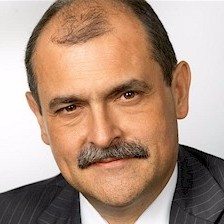 Franz Hörmann, born 1960, Univ.-Prof. Mag. Dr.
Employed since 1983 at the Institute for Auditing, Trust and Accounting of the Vienna University of Economics and Business, and a licensed management consultant since 1997.
- 1995–2015: corresponding member of the Data Processing Senate of the Austrian Chamber of Chartered Accountants
- 2001–2010: visiting professor at the Institute of Business Informatics (Communications Engineering) at the University of Linz
- 2001–2010: lecturer at the FHW (University of Applied Sciences of the Vienna Chamber of Commerce)
- 2001–2015: examiner in the training of chartered accountants at the Austrian Chamber of Chartered Accountants
First came to public attention in 2011 as a critic of interest-bearing debt money with his work “Das Ende des Geldes” (The end of money, German); he developed the new form of money “Informationsgeld” (information money, German) and is bringing it to market as OSBEEE:Money with the OSBEEE cooperative. Co-founder of the “Interdisciplinary Research Institute for Systemic Sciences” (IRISS). Franz Hörmann is married and the father of two children (daughter Sophie, born 1996; son Leonhard, born 1999).
CONTACT BY EMAIL MY WEBSITE (German) SUBSCRIBE TO MY NEWSLETTER (German)
In many areas, GAIA pursues the same goal as I do. So in December 2017 we decided to use GAIA as an information platform and to contribute a series of articles. I look forward to interacting actively with readers and interested people through GAIA and its network.
Notes on content provided by authors
Comments
Loading comments …
Become a member to comment publicly. GAIA members write comments in the members' portal — under their nickname, visible to everyone.