The multi-paradigm shift becomes visible, part X: "Debts do not exist"

The multi-paradigm shift becomes visible – part X
In times of excessive public and private debt, the claim that “debts do not exist” may seem implausible, provocative, downright fantastic. But in order to bring about a fundamental rethink, provocation is often the only means of waking people from the lethargy of everyday life. For this reason I am devoting this newsletter to precisely this claim, which I will explain below and, after disclosing the definitions I use, also attempt to justify scientifically.
The concept of debt – in German, “Schuld” means both guilt and debt – has religious or moral, legal, economic and psychological meanings. Let us begin by turning to these different dimensions.
The religious definition of “Schuld” (guilt)
The religious concept of guilt is mostly rooted in the violation of certain prohibitions and is therefore closely related to the concept of “sin”. While a more broadly defined moral “guilt” can also be forgiven by people, it is usually given only to God (and, as his representative, to a priest) to absolve sinners of their transgressions. It is interesting here that in certain historical periods the Roman Catholic Church also introduced “indulgences”, which allowed rich Catholics to “buy” their deceased relatives – or themselves – “free from their sins” by paying a sum of money. This was a major trigger for Martin Luther’s criticism and ultimately for the split of the Protestants, which in turn led to the violence of the Thirty Years’ War. Since “God sees everything”, no transgression of a sinner escapes him either, i.e. devout Catholics were (are?) allowed to feel permanently under surveillance with a view to sanctions, and should therefore also readily accept blanket surveillance by cameras, state spyware and possibly even implanted RFID chips. These totalitarian innovations are, after all, only the modern, technological variant of the “all-seeing, punishing God of the Old Testament”. Everyone may decide for themselves whether they want to accept a belief system that subjects them strictly to a sanctioned set of rules of conduct over whose design and interpretation they themselves have no influence whatsoever. There are, of course, many different “images of God”, above all also a loving, compassionate God. But the Old Testament surveillance variant is historically and culturally particularly deeply anchored in our psychology, and still determines our personal and collective behaviour in many areas today.
The legal definition of “Schuld” (culpability)
The normative concept of culpability in criminal law presupposes either negligence or intent, and is built on the premise of human free will. If I am “not in my right mind”, i.e. intoxicated, mentally confused or in a panic, then no legal accusation of guilt can be made against me. Negligence means lack of due care, a circumstance that has to be assessed differently depending on level of training and profession. Intent, on the other hand, means that I have harmed another person of my own free will and in full awareness of the negative consequences. In the case of negligence, a humane society should rather improve training, develop skills or use appropriate technology to avoid similar damage in future, instead of practising “deterrent punishment”. In the case of intent, on the other hand, it would make sense to question the motive of the person causing the harm: why did someone want to harm another person quite deliberately? Violence is usually the result of failed communication. Stubborn mental ideas or aggressive patterns of language can trigger it. Punishment is hardly beneficial in any of these cases, not even for prevention, because the perpetrators either think they are too clever to be caught or accept the threatened punishment quite deliberately.
The economic concept of debt
The economic concept of debt is rooted in its legal counterpart, but nevertheless has some special features. Economic “debt” (mostly used in the plural, “debts”) usually describes only a financial dimension and therefore represents a precisely quantifiable sum of money. Economic debts are regularly rooted in a contract of sale, exchange, loan or rental. In general, the recipient of a service provided in advance still owes the contractually agreed consideration – for example, the buyer of goods owes the purchase price, the tenant the rent, etc. In all these cases, the consideration usually consists of paying a sum of money. The most frequent (and at the same time largest) “debts” are found in bank loans on the one hand and in so-called national debt on the other. Since the statement “debts do not exist” uses the plural, it refers specifically to this financial, economic aspect of “monetary debts”.
To understand the “non-existence of financial debts”, it is first necessary to be clear about the nature of money. Money in the narrower sense, namely as legal tender, consists exclusively of “banknotes and coins denominated in euros” (see § 1(1) of the Austrian Euro Act, EuroG, for Austria e.g. here (German)). This means cash, which, however, is to be restricted or even abolished in the near future – something already clearly being promoted in the media (see for example here (German)). In everyday economic life, however, in over 95% of cases it is not cash that is used but deposit money, the “book money of the banks”. As demonstrated in the previous articles of this newsletter series, this is not legal tender but, in purely legal terms, merely a “claim to cash”. From a legal perspective, therefore, the “abolition of cash” is also an exciting idea: if book money is only a claim to cash, what would this book money be after cash had been abolished? Obviously a “claim to nothing”? Why then should anyone exchange concrete assets or provide a service for a “claim to nothing”? Politicians and so-called economic experts, for their part, always leave these questions unanswered.
If, however, we interpret the granting of credit by a commercial bank legally not as a “loan” (since there is no exchange of assets on the balance sheet, i.e. no “assets handed over” by the bank) but as an exchange of IOUs (the loan agreement as the borrower’s IOU and deposit money as the bank’s IOU for cash), then we immediately see that the debt asserted in the loan agreement cannot be legally proven.
But what about so-called national debt? Nor can politicians, economists or lawyers answer the question of why the state borrows from banks after having given them the monopoly on money creation – thus placing itself in dependence on those to whom it had previously granted this favour exclusively – instead of simply producing these means of payment itself for purposes that benefit the community (i.e. “creating money” itself), ideally also as income and thus not as interest-bearing debt. Ideological claims about “preventing the state from running up debts” (as if this were not happening under the regime of “autonomous central banks”!) and fear propaganda (painting a picture of an “inflation danger”, which was likewise always highest in times of private central banks!) are supposed to close the obvious gaps in knowledge here.
So if it is merely a question of bookkeeping technique whether a state “has to go into debt” or simply “values” the voluntary contributions of its population by consensus in the form of a scalar (one-dimensional) number, then a “tax claim by the state” cannot be rationally justified either, and therefore cannot be legally legitimised. What is particularly interesting in this context, however, is the fact that most states today accept their tax claims in the form of deposit money (i.e. in the form of electronic IOUs of private companies) and refuse the form of the only legal tender (cash!)! This fact alone is almost unsurpassable in its absurdity.
If we consult the short publication “Frequently asked questions on money creation” by the Deutsche Bundesbank on page 3 about the current legal situation, we find the following:
Question: “What is the legal basis for the creation of book money?” Answer: “There is no direct legal provision. The possibility of book money creation by banks is presupposed by German law. …” Source: Deutsche Bundesbank publication (German)
This answer is remarkable for several reasons. First, it obviously limits itself to “German law” and overlooks the fact that international legal norms such as the international accounting rules (International Financial Reporting Standards, IFRS) must also be observed, at least by listed commercial banks. But national accounting law should also be mentioned here, since “deposit money creation” ultimately takes place in the bookkeeping and therefore in the balance sheet. Are banks exempt from accounting rules? Would that not in turn violate a constitutional principle of equality? Or, to put it another way: if there is no legal basis in German law for the money creation of commercial banks in the course of lending, on what basis are proceedings brought against so-called credit fraudsters? Can judges pass a judgment at all without a legal basis? Are contract texts (and copies at that, when the loan agreement is a security representing a claim!) really sufficient to legitimise the “fictitious entries” made by commercial banks without a legal basis?
What is the relationship between law and legal money in the first place? Do other states – for example Switzerland, always highly praised everywhere as a democratic model – offer a better basis? Let us simply look at the referendum on sovereign money (“Vollgeld”) held there in June 2018 (see the website of the Sovereign Money Initiative (German)). What exactly did the initiative want to achieve? Its aim was to introduce a monopoly on the creation of book money for the central bank. Not the commercial banks, through lending, but only the central bank should be able to create its own electronic IOUs (deposit money) by booking them into sight deposits. This “electronic central bank book money”, which, precisely because it had been created by the central bank, would itself be legal tender, would be passed on to the commercial banks, which would then pass it on to their customers when granting loans. In other words, the situation would be the one that the majority of the population is convinced is reality anyway: the central bank would be the only legal place of money creation (not only for cash but also for book money). The commercial banks would then manage their customer accounts merely as trust accounts. For bank customers this would have the decisive advantage that their money would no longer be part of the bank’s balance sheet, i.e. if a bank went bust, customers’ money would never be at risk – not because taxpayers (i.e. ultimately the bank customers themselves, but in their role as taxpayers) would have to pay for it, but because in bookkeeping terms this would not even be possible: if a bank goes bankrupt, the customer accounts remain untouched and are simply taken over by another bank (another trustee). That is how simply and safely the sovereign money system could work. But it was not explained so simply to the Swiss electorate! Contrary to the legal provisions in Switzerland, untruths were spread about the Sovereign Money Initiative, and the arguments for and against were not given equal space in the official voting booklet (“Bundesbüchlein”), as required by law (see here (German) and follow the red link “Achtung! 20 Fehler im Bundesbüchlein” – Attention! 20 errors in the voting booklet). So even in highly praised Switzerland, the country’s own laws were broken where money was concerned!
From a legal point of view, bank (loan) debts, national debts and tax debts therefore only “exist” if we accept without question the absence of a legal basis for credit money creation by private, profit-oriented companies, as well as the voluntary borrowing from the owners of these companies instead of producing, on behalf of the population, the means of payment actually needed for purposes of public benefit. So is it the task of politics to create the legal and economic framework that such changes would require? Do we therefore have to vote for “the right party” (or first of all found it) to make all this possible? Is a “new politics” the solution, or is something still missing – a new basis on which this “new politics” can, for example, secure and make its decisions?
Could it be that today’s politics cannot make any changes in this area above all because it lacks the necessary foundations? Who advises politicians today? Experts from economics and law. In other words, precisely those people who have been immersed the longest and most completely in the ideology of competition and scarcity (“free market economy”) and its authoritarian enforcement under threat of punishment, and who have completely internalised these dogmas. Within their profit-oriented firms (i.e. again within the economic dogma, in the form of dependence), they currently advise politicians under the guise of science!
Economics and science
What exactly should science achieve in a society? First of all, it should presumably “create” new knowledge, i.e. discover, explore and experiment. Suspected connections should be testable by practical experiments in the course of this research (empirical method, Popper’s principle of falsification). In psychology and the social sciences, however, the subjective standpoint of an individual – their biography, their conditioning, limitations and “subjective truths” (beliefs) – must of course also be taken into account and valued. Let us now test these standards using the example of the “economic and legal sciences”:
In economics, the “free market” is revered, i.e. a high (the highest?) social value is seen in its unrestricted form. But how is a “market” defined in economics at all? A market is supposedly the place where a price comes about through “supply and demand”, i.e. through negotiation between a seller and a buyer. Mostly, the “rule of supply and demand” is tacitly (implicitly) assumed, i.e. the higher the demand, the higher the price rises, and with low demand it falls again. In real life, however, such a “market” does not exist at all! This term is demonstrably just an empty phrase without concrete meaning. What can be demonstrated in reality, and is therefore empirically testable, are only specific market forms, such as the monopoly (one market participant can dictate the price without restriction), the oligopoly (a small group of market participants determines the price) or – a case described mainly in textbooks and hardly to be found in reality – “perfect competition”, i.e. no market participant (neither seller nor buyer) can change the price, so all are so-called “price takers”. Monopolies, oligopolies and the rather theoretically interesting “perfect competition” each function completely differently as market forms. How can these completely contrary forms of organisation be called by one and the same term (“market”) within a “science”? Could the answer to this question lie in the fact that politicians would be embarrassed to tell the population the truth? Does the term “market” serve only as a cover? How would the population react if, instead of “the free market should decide”, politicians had to offer the phrase “the cartels should decide”?
Let us simply look at how the term “market” has developed over the last few decades. About forty years ago, the food trade still had the so-called “corner shops”. These were shops where the owner was present in person. As a customer you could therefore negotiate the price, perhaps buy bread and pastries from the day before more cheaply, etc. And the shop owner could simply give a loaf of bread or something else to someone in need at the shop door, precisely because he owned the goods on display. Then, however, an interesting development set in. Huge warehouses were built in the countryside (surrounded by equally generous car parks), all kinds of goods were offered for sale in them (not only food, but also everyday items, tools, office supplies, toys etc.), and employees were put at the tills. The sign “supermarket” was then put up on these buildings. The population promptly accepted both the name and the procedure, above all because the goods (owing to the large purchase volumes and better organised logistics) could at first be bought much more cheaply there than in the small corner shops. But has a customer ever tried to negotiate the price with the cashier there? Is price negotiation even conceivable if the owner of the goods is not even present in the shop? Can such a facility then still be called a “market” at all, or would the sign “super-extortion” not be better suited to describe what goes on there?
Let us now take a closer look once more at a common definition of economics: “The optimal use of scarce resources”. Scarcity is thus already dogmatically presupposed in this “science”. It is neither defined nor empirically investigated, but is an unquestioned part of the “definition of the science” itself, i.e. part of a dogma! What are the consequences of such a dogmatic definition? Should an economist ever explain to politicians or the public how we can globally leave scarcity behind and reach abundance, he would have to accept being reprimanded by his colleagues – rightly so, from their point of view! – because with these statements he would be leaving the ground of their shared science, since scarcity is, after all, the central part of its definition. It could therefore at most be his private opinion! Goods that are available in sufficient quantity or in abundance are, after all, not “economic goods”, as every student learns in the first semester. The “price laws of supply and demand” therefore do not apply to them either.
Since in “economics” scarcity is thus the “measure of all things”, money too, if we understand it as a “good”, as an object of exchange, must always be kept scarce. Households, private and public, must therefore “save”. This is, of course, a false way of putting it, because only those who have surpluses – and therefore do not suffer from a lack of money – can “save”, i.e. invest surpluses profitably. Nevertheless, this term (“saving”) too is used with a double meaning by politics, in the media, but also in teaching and in this so-called science. An excessive amount of money facing too small a quantity of goods and services supposedly “creates” inflation, i.e. rising prices, which is equated with a loss of purchasing power (i.e. of the “value of money”). In countless reports, lectures, discussions and statements, the absolute necessity of “controlling” this “money supply” is emphasised again and again. Indeed, “avoiding inflation” is the central task of the national and central banks in this remarkable political system. But since prices rise not only through expansion of the money supply, but can above all also be artificially forced up by making goods and services scarce, it is astonishing that the subject of the artificial scarcity of goods is never given any attention in politics, in the media, in lecture halls or in “scientific” publications! Making goods and services scarce has exactly the same effect as expanding the money supply. In fact, for lack of a suitable information system – after all, unsatisfied demand, or the scarcity actually experienced by the population, is not recorded in any database! – it is not yet possible today to prove such scarcity (possibly brought about deliberately by the seller!). If technical progress were allowed to unfold fully, deflation would actually have to occur: prices would have to fall (or the “value of money” rise), because more and more goods of better quality could be produced with less and less energy, human labour and resources. So if we cannot observe lasting deflation together with improved supply to the population, this is an indication that technical progress is either not taking place at all or is being withheld from the majority of the population!
As set out in great detail in previous issues of this newsletter, a “shortage of book money” is a purely technical impossibility: as long as enough storage capacity and energy are available, practically unlimited quantities of numbers can be recorded and managed in suitably sized databases. The only reason for “money shortages” and “austerity measures” (correctly: scarcity diktats!) is therefore the dogmatic pricing rule of “supply and demand” – a rule of the game which, if you think it through consistently, works as extortion from the very beginning. To understand this effect, let us imagine we had a friend who suffers from a bee venom allergy. And we, who are not allergic to bee venom, have a pack of a medicine that would save his life. What “financial value” would this pack of medicine have for us? Obviously no use value, at most an exchange value – unless we freely (because of the lack of use value) give the medicine to our friend straight away as a gift. If we now, above all as graduate academic economists, came up with the idea of wanting to “artificially increase” the “price” of this medicine, how would we have to proceed? Obviously we would have to choose the right moment for our sales offer: directly after our friend has been stung by a bee and no other medicines are within his reach. According to the doctrine of “homo oeconomicus”, that would be the optimal moment to begin sales negotiations with our friend. One could certainly even plot the optimal profit point on a curve with mathematical precision: when the symptoms are already very noticeable for him, but he will still survive long enough to pay us before taking the medicine.
The nature and function of normative science
Readers of my newsletter will also be able to judge competently the “nature of legal science”, above all with regard to credit money creation by commercial banks – an exchange of IOUs that banks, lawyers and judges nevertheless treat as a “loan”. If you bear in mind the Deutsche Bundesbank’s statement on this (“The money creation of commercial banks in lending has no legal basis; rather, German law presupposes this possibility for banks.”), it becomes clear that here too it cannot be what was originally understood by science. The supreme goal of a legal system, namely “objective justice” (in the sense of natural law), is already a contradiction in itself. “Justice” can also be interpreted as a socialised feeling (in the sense of justice research) that people adopt in their family, religious, cultural and social environment. That is why ethical solutions to problems by consensus are so difficult in specific individual cases, because the concept of justice unfortunately varies greatly from culture to culture, social class to social class, faith to faith and so on.
Where exactly, then, are the “legal and economic sciences” to be located from the point of view of the philosophy of science? They (but also others such as political science, education and others) are so-called normative sciences, “sciences of what ought to be”. What exactly the task of a “science of what ought to be” is, and by what method it researches and teaches, however, remains a mystery! With a “science of what ought to be”, it would first have to be clarified whose point of view is to be “standardised” here. Who is it that tells us what we “ought to ought” in economics, law, education and political science? If we then ask how this commander legitimises himself in turn (in the sense of a “legal basis” or a “democratic election”), we can easily see that this is circular reasoning: the meta-science of law cannot be “legally legitimised” at all, because it is itself what defines, for example, what laws are in the first place and what we can use them for. Such mental contortions usually end – depending on the religious or philosophical orientation of the person considering them – either with an almighty divine being (and thus in religion) or in the “right of the stronger” (as an expression of social Darwinism, and thus of another belief system).
How, then, are political advisers who are conditioned either to the doctrine of scarcity (making money scarce to avoid inflation) or to the dogma of “objective justice” supposed to advise their clients helpfully? The dogmatic definitions of their disciplines already set them narrow limits, and their perception filters, often trained over decades, prevent solutions to problems that deserve the name.
The philosophy of science, a branch of philosophy, is responsible for ordering and describing the sciences. So let us first look, quite naively and impartially, at the German-language Wikipedia under the term “Normative Wissenschaft” (normative science). First there is a short description of the aim of normative science: “The general answering of normative questions.” Once we have understood what “normative” means (the “science of what ought to be”), we immediately recognise the central problem: how is a “universally valid norm” supposed to be possible at all – for thinking and feeling beings, not for electronic interfaces or polluting engines? Quite consistently, the next heading follows: “Is a normative science possible?” After lengthy remarks on historical proponents of different opinions on the matter, the last sentence of this subsection immediately catches the eye: “The possibility of normative science thus remains controversial.”
GERMAN WIKIPEDIA: “NORMATIVE WISSENSCHAFT” (German)
Please note the wording here: it is not individual aspects or methods that are questioned, nor are well-founded arguments for and against weighed up – no, the mere possibility of generalising normative statements within a science is simply classified as “controversial”. The leading sciences of our Western culture – the competitive economics of free markets, together with the all-problem-solving, beneficial democratic legal systems as products of a “science” – are described as “controversial”. Perhaps these “normative sciences” are not sciences at all! At any rate, they are not empirical sciences, within which statements (hypotheses, theories) can be refuted (falsified) by concrete experiments. Since such an experimentum crucis on the validity of economic theories has never yet taken place, and obviously cannot be carried out at all, some people within these “sciences” claim some things and many claim many things. Their statements are then called “theory”, but belong more to the realm of ideology and propaganda – and thus to the realm of maintaining social power – than to that of an empirical (perhaps even exact) science.
How do our friends in the English-speaking world see the position of “normative science”? Here too, we can first quite impartially consult the English Wikipedia on this very keyword. The very first sentence is striking in its openness, its simplicity, but also the scope of its meaning: “In the applied sciences, normative science is a type of information that is developed, presented, or interpreted based on an assumed, usually unstated, preference for a particular outcome, policy or class of policies or outcomes.” Here the close relationship to propaganda and social power becomes very clear and is even stated quite openly!
ENGLISH WIKIPEDIA: “NORMATIVE SCIENCE”
Prosperity through technical progress
Change of scene: let us imagine the thousand-strong crew of a multi-generation spaceship that set off into space several decades ago to found a new civilisation on another, Earth-like planet (Earth 2). Everything needed is on board: sufficient greenhouses with closed-loop fertilisation, water supply and treatment, reactors for practically unlimited energy supply, the latest technology for building sustainable settlements with a circular economy, and much more. Then the big day comes: an Earth-like planet free of predators, pathogens, hostile neighbours and poisonous gases is reached, and the first landing teams board their shuttles to prepare everything for founding the first settlement. What will these pioneers of civilisation probably do next, right after they have taken care of housing, water, energy, clothing and their mobility on site? Will they build churches, mosques and temples in order to worship the same God with different rituals in different communities? Will they found several political parties in order to form a parliament and elect a government? Will they set up money presses to put paper notes (as IOUs) into circulation, and make sure that these are always as scarce as possible, so that their “value” does not fall and everyone can “buy” something with these slips of paper?
Anyone who, in view of these technological and ecological possibilities, thinks of the enormous amounts of time and vitality that have been senselessly wasted in human history on these “achievements of civilisation” will immediately recognise the absurdity of this idea. A society that has sufficient, sustainable (and thus ecologically harmless!) technology needs, beyond that, neither a monetary nor a legal system, neither political parties nor sophisticated voting processes. But as long as we are still on “Earth 1”, surrounded by powerful institutions that ultimately owe their existence only to these “historical pseudo-problems” – and which, in the existing monetary system, therefore also feed their creators and administrators and give them prestige and status! – it is obvious that we will not be able to change anything with the “sciences” of economics, law, politics and education either. For these efforts at transformation we therefore need a different form of science: the “meta-science” of economics, law, education and political science. I call this science “systemic social science”.
A new idea of science
Systemic social science (SSS), as a systemic science (SS), is always aware of its role in the communication and learning processes of individuals and communities. It models societies on the basis of the communications between individuals and groups within that society. Changes in the individuals and in the society itself, as well as in the rules set for this (by whomever), are also taken into account. Since every autonomous community can also change its rules itself, we can also use the abstract concept of a “game” (following game theory) for them. Here, however, precisely because this is a systemic science, it will be important also to look at those players who are able to determine or change the rules – the so-called meta-players. If we assume within our games that meta-players have already predetermined a counting and scoring system, then we can speak here of zero-sum and positive-sum games. Autonomous communities can decide for themselves whether they want to use a linear scale with uniform units for counting in their game at all. Alternatively, they could use several different units of counting with varying scales, or no scoring at all. To us, as mathematically educated people, societies that do without explicit scoring seem primitive. We usually automatically project all the technical progress that we really do owe to the mathematical representation of mechanical and optical relationships onto the field of economics too, when we encounter equations and other mathematical constructs there.
Zero-sum games are those in which the sum of all gains and losses per round always equals zero. In positive-sum games, by contrast, all players can also win or lose together; the total of gains and losses fluctuates, and the size of the gains does not depend on the size of other players’ losses.
Let us first consider a simple barter economy. An example goes back to David Ricardo, in which he sets out to show that international (exchange) trade is always worthwhile for everyone involved, even regardless of the price actually negotiated. To this end, we imagine two fictitious countries: in one there are many south-facing slopes and far more wine is produced than the population can consume, but there is no cloth. In the neighbouring country there are a great many flax fields and cloth production makes more cloth than the country needs, but there is no wine. Ricardo concludes that trade can increase the prosperity of both countries, because each receives, in return for something it can produce in abundance (and which therefore has a use value of zero for it), something it did not have at all before (and which therefore has a very high use value). If people in real communities wanted to increase their prosperity, they would presumably hit upon the idea of trade, or would have done so – but it is questionable whether they would have needed the concept of a “use value” or an “exchange value” to do so. Apart from that, in this example the possibility of producing cloth (flax) and wine (grapes) is made to depend exclusively on the landscape (“fields”, “south-facing slopes”). If knowledge and technology were also to play a role (perhaps even the decisive one!) – think of greenhouses, automated cultivation and harvesting machines – then the inhabitants of these countries could perhaps learn from each other, then each produce enough cloth and wine for themselves, and would again be completely independent of trade. But the moment we try to extend this example to today’s conditions, where money, regulated prices, taxes and customs duties, trading licences, legal forms with their own financing and size advantages etc. are relevant, we see that it is probably no longer “the producer” or “the country” that gains an advantage. Rather, it is certain institutions and their representatives (banks, authorities, regulators, shareholders etc.) who, because they play the role of a meta-player in small areas of today’s excessively complicated economic world, gain an advantage for themselves. But since our current monetary system is a zero-sum game (someone else receives a certain sum of money from me only if I pay exactly this sum, i.e. inflows and outflows always add up to exactly zero), these advantages are gained at the expense of the other players. We recognise David Ricardo’s example, which is still presented and taught in this way today, as propaganda for the following reasons: the underlying axioms (landforms as the only relevant factors of production, which therefore cannot be changed; exchange ratios that themselves depend only on the unchangeable landforms) are arbitrary and cannot be questioned, and are therefore dogmas. The conclusion drawn from them (“international trade is always an advantage for everyone”) is, based on this dogmatic pseudo-argument, a mere instrument of propaganda and scientifically completely irrelevant.
In a simple money-based economic system, someone must therefore first produce the symbols (coins, banknotes) (money press, mint). There should be a controllable rule for this. In addition, someone must determine the respective prices. Today’s economic mainstream leaves this task to a “market”, i.e. it commits itself neither to whether the market takes the form of a monopoly, an oligopoly or whatever, nor to who exactly should set these prices – so here, too, it works with dogmas and not with falsifiable theories. Price setting is hidden in a “black box” and called a “market”. Conversely, however, we can see very precisely who determines how the goods in the economy (“economic goods”) are valued financially: this is the responsibility of auditors, who have the internationally valid rules for listed companies (International Financial Reporting Standards, IFRS) developed and administered as a monopoly by a small private association in London (the International Accounting Standards Board, IASB). The conflicts of interest are overwhelming, which can be seen above all from the fact that, for example, all the banks “rescued” with taxpayers’ money in the last financial crisis were still able to present balance sheets with unqualified audit opinions (i.e. certified as “flawless” by auditors!) only a few weeks before their financial collapse! This has also been researched and published scientifically (see for example here); only politics, and the professional associations that steer it, still take no notice of these facts.
From “The end of money” to “The end of banking”
In this context, a publication that appeared in the English original in 2014 and in German translation in February 2018 is highly interesting: “The End of Banking” by Jonathan McMillan. Several aspects of this highly recommended book are very interesting, above all for me as the author of the work “Das Ende des Geldes” (The end of money). First of all, it should be noted that the author’s name is a pseudonym. The book was written by two authors: the economist Dr Jürg Müller, business editor of the “Neue Zürcher Zeitung”, and his former fellow student, a banker working in New York, London and Zurich who prefers to remain anonymous, which is why the two chose this pseudonym. If we now look at what exactly, according to the subtitle, they think is “no longer needed”, it is “banking”, defined by the authors as “money creation through credit”. With this they describe exactly what I too described as “worth abolishing” in my work “Das Ende des Geldes”: interest-bearing debt money, money that is created as “debt” from the very moment of its creation (precisely: as a contra entry in the bank’s liabilities). The simple, logical alternative is “positive money”, money that has a positive intrinsic value from the moment of its creation. The only “money” described today as having “positive value” is gold, a precious metal which, however, under the dogma of “supply and demand”, again owes its positive value only to its scarcity and is thus itself subject to the diktat of scarcity. Passing it on as a means of payment also remains a zero-sum game (the gold coins I pass on are the ones I then lack). Deception and lies – academically dressed up as “information asymmetry” – will remain the central building blocks of our society in this system in future too.
THE END OF BANKING – WEBSITE PDF OF THE BOOK: DAS ENDE DES GELDES (German)
What does “Jonathan McMillan’s” alternative look like? A separation into (positive) money, “created by the public sector”, and “credit”, which functions as a genuine loan, i.e. the passing on of means of payment that already existed beforehand, and which is regulated exclusively by the “private market”. In this way these two authors, too, remain caught in the market illusion – the idea that transparency and honesty could ever be the central control elements in a zero-sum game.
It is also very interesting to note about this book that the legal aspect (the absence of a legal basis for private “credit money creation” by today’s commercial banks, the correct balance-sheet interpretation of a loan as an exchange of IOUs and not as a loan, and the violation by cryptocurrencies of § 1(1) of the EuroG, according to which only “coins and banknotes denominated in euros” can be legal tender) is completely ignored throughout the entire work. The impression arises that legal regulations are completely irrelevant, as if everything that conforms to the dogma of the “market” and the “rule of supply and demand” were automatically legal and validly decided by an invisible majority.
We therefore see that these two authors, too, are still “thinking along the old lines”, trusting “economics” and the “free market” with a competence to solve problems for which, historically speaking, these mental constructions were never created. Since the beginnings of human civilisation – ever since the “silent majority” has been steered by a “knowing minority”, whether as god-king, priest, technocrat or media executive – there have been two fundamentally different kinds of “knowledge”: “rulers’ knowledge” and “slaves’ knowledge”. While slaves’ knowledge consists only of those beliefs that keep the masses quiet and make them function “in orderly channels”, rulers’ knowledge consists of those techniques and methods that guarantee the ruling minority this preservation of power. It is extremely important that slaves’ knowledge is conveyed dogmatically (i.e. in the form of schooling) and that its content is not questioned. Any knowledge and any ability that questions rulers’ knowledge potentially threatens – from the rulers’ point of view, at least – their hold on power, and must therefore be suppressed as far as possible. This form of rule, based on an information asymmetry existing throughout the population, was seriously threatened by the widespread introduction of the internet. Suddenly autonomous groups became possible that could install new beliefs for themselves (whether religious, political/ideological or simply technological, i.e. based on practically applicable methods and procedures), thereby undermining the officially installed dogmas. The defensive battle term “conspiracy theory” describes very vividly the desperation with which these dogmatic elites evidently believe they must defend their principles of rule, which cannot be tested empirically and do not stand up to any scientific method.
Conclusion
In the phase of social transformation now ahead of us, it will therefore be crucial to build trust between those who, believing they have “something to lose” (money, power, status or similar “historical vested interests”), dig new trenches and build walls, and those who, as representatives of a new idea of science, make free communication (honest, open, vulnerable and capable of learning) the new rule of the social game. Systemic social science, built on the techniques of communication, is the meta-science of economics, law, political science and education. In all these fields, human communication is always at the centre. However, it is restricted, deformed, distorted and suppressed by the respective dogmas, some of them centuries old, that were historically implanted in these mental constructions as a strategy for preserving power. To deconstruct these dogmas without emotion, to recognise their historical intentions, to disclose today’s true motives, and to make new win-win situations possible for all conscious beings in free, honest dialogue – that is the goal of systemic social science, a goal that can by no means be achieved with the dogmatically deformed sub-disciplines of economics, law, political science and education.
I invite all free, inquiring and cooperative minds to accompany me on this exciting and challenging path!
With warm regards, Franz Hörmann
WHO I AM
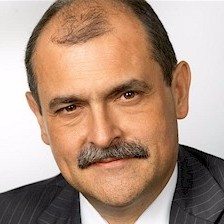 Franz Hörmann, born 1960, Univ.-Prof. Mag. Dr.
Employed since 1983 at the Institute for Auditing, Trust and Accounting of the Vienna University of Economics and Business, and a licensed management consultant since 1997.
- 1995–2015: corresponding member of the Data Processing Senate of the Austrian Chamber of Chartered Accountants
- 2001–2010: visiting professor at the Institute of Business Informatics (Communications Engineering) at the University of Linz
- 2001–2010: lecturer at the FHW (University of Applied Sciences of the Vienna Chamber of Commerce)
- 2001–2015: examiner in the training of chartered accountants at the Austrian Chamber of Chartered Accountants
First came to public attention in 2011 as a critic of interest-bearing debt money with his work “Das Ende des Geldes” (The end of money, German); he developed the new form of money “Informationsgeld” (information money, German) and is bringing it to market as OSBEEE:Money with the OSBEEE cooperative. Co-founder of the “Interdisciplinary Research Institute for Systemic Sciences” (IRISS). Franz Hörmann is married and the father of two children (daughter Sophie, born 1996; son Leonhard, born 1999).
CONTACT BY EMAIL MY WEBSITE (German) SUBSCRIBE TO MY NEWSLETTER (German)
In many areas, GAIA pursues the same goal as I do. So in December 2017 we decided to use GAIA as an information platform and to contribute a series of articles. I look forward to interacting actively with readers and interested people through GAIA and its network.
Notes on content provided by authors
Comments
Loading comments …
Become a member to comment publicly. GAIA members write comments in the members' portal — under their nickname, visible to everyone.