The planned energy crisis


Politically steered restructuring with far-reaching consequences
Thomas Oysmüller, tkp.at
The current energy crisis is the result of years of political decisions – and thus a deliberately brought about and planned situation. The goal is a radical restructuring of the energy system. The consequences: impoverishment, deindustrialisation and the erosion of civil rights.
Politicians and the media have a simple answer for the current explosion in energy prices (not a shortage!): the war against Iran and the resulting controversy over the Strait of Hormuz. But that is at most half the truth. The current energy crisis is not a consequence of geopolitics, but a result of the “green energy transition”.
Since the turn of the millennium, Germany has pushed ahead with phasing out nuclear power and coal without renewable energies being able to close the gap. Wind and solar plants only deliver electricity when the wind blows or the sun shines. The missing base load was compensated for by imports of Russian gas. This dependency was then cut off politically. Supply was made artificially vulnerable. The blowing up of Nord Stream stands as a symbol of this.
The nuclear phase-out followed. Three safe nuclear power plants that were still running were shut down, even though they could have supplied cheap, low-CO₂ electricity. Electricity and gas prices in Germany are extremely high by European comparison. Industrial companies are relocating production abroad or cutting it back. Households pay record bills, while politicians only fight symptoms with subsidies and price caps.
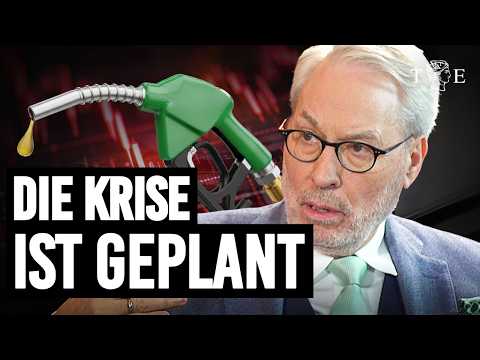
In a recent video interview, the German energy expert and former SPD politician Fritz Vahrenholt explains in an easily understandable way, using figures and timelines, how Germany manoeuvred itself into the energy crisis. Even before 2010, energy economists pointed out that expanding renewables without sufficient storage and backup capacity was bound to lead to shortages. Instead, the EU’s “Green Deal” was pursued, bringing further regulations and bans – from replacing heating systems to the end of the combustion engine.
The shutdown of nuclear power plants, the obstruction of liquefied gas terminals until recently and the resistance to new gas or even nuclear projects were not accidents. They were ideological goals that were consistently implemented. At the same time, billions were pumped into wind and solar parks whose actual contribution to security of supply remains limited because grid expansion and storage technology are lagging behind.
Vahrenholt explains how dependence on imports from Qatar or the USA after the Russia embargo has neither lowered prices nor reduced dependency. At the same time, the expansion of renewable energy continues to be pushed. Grid stability is already reaching its limits today – not only in Spain, where a major blackout has already occurred.
And the new energy price shock plays perfectly into this. “Change through renunciation” is the unspoken motto in Brussels and among climate NGOs. The looming energy lockdowns are then the logical result of this ideology. Renunciation is simply enforced, because very few people will voluntarily give up their freedom of movement.
This staged energy crisis, which can now be blamed on Trump, is intended to advance this socio-political project. Not (only) with lockdown decrees, but simply with high energy prices. If you have to pay more than 2 euros per litre for fuel, many people’s behaviour will change. The roads will then belong only to those who can easily afford to fill up. That is then “sustainable”.
But it is not only about mobility. Energy-intensive food, such as fish and meat, becomes a luxury good only for the rich. Everyone else can eat lab-grown meat.
The former SPD politician argues for a second energy transition: extending the service life of nuclear power plants or building new ones, accelerating the expansion of gas and later hydrogen infrastructure, and realistic targets for expanding renewables that do not jeopardise security of supply. Pragmatism instead of ideology. The remaining Nord Stream pipeline should also play a role. This is also why Hungary is calling for the “lifting of sanctions against Russian energy companies”.
That too would be politically feasible. Instead, politicians and the media are spreading fear of an alleged energy shortage and an unavoidable energy crisis. But that is a lie. The crisis has been created politically and built up over years. The attack on Iran is at most the drop that makes the “energy transition” hit EU citizens with all its brutal consequences.
Notes on content provided by authors
Comments
Loading comments …
Become a member to comment publicly. GAIA members write comments in the members' portal — under their nickname, visible to everyone.