Alzheimer's: single psilocybin dose awakens 80-year-old to new life

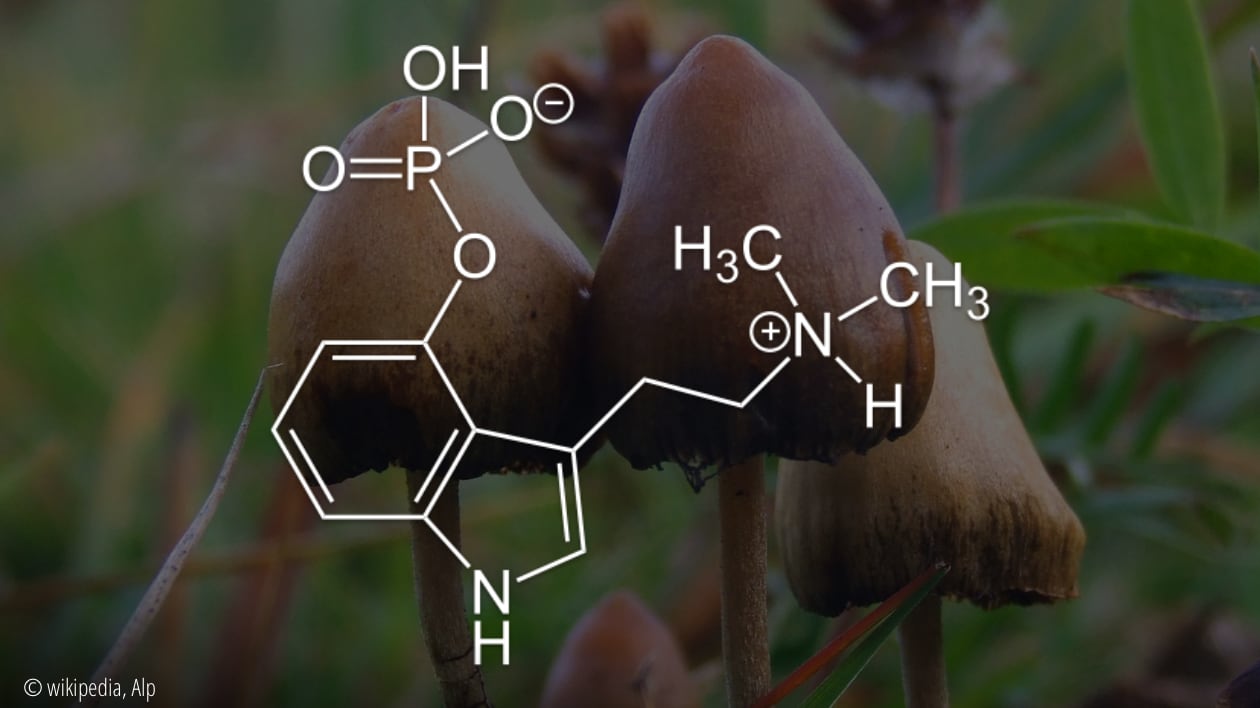
Dr. Peter F. Mayer, tkp.at
Alzheimer’s: a small dose of psilocybin awakens an 80-year-old to new life – markedly more effective than anything conventional medicine has to offer. A case report that contradicts the official claims about Alzheimer’s.
As so often, it is not the multibillion-dollar pharmaceutical trials but individual cases that show the dogmatic mainstream its limits. A new case report, published in Frontiers in Neuroscience, describes an 80-year-old Japanese-American woman with advanced Alzheimer’s disease – ten years of illness, five of them with severe functional decline – who began to speak again overnight after a single dose of five grams of psilocybin mushrooms (Enigma strain).
The list of what her reality was before the dose reads like a distillation of the misery of old age: almost only monosyllabic utterances, chronic urinary incontinence, swallowing difficulties, inability to move, executive dysfunction, flat affect, no spontaneous communication. The medical textbook view on this: irreversible. End of discussion.
What actually happened
What happened next does not fit into this picture. After the dose, the patient fell into a deep, sleep-like state with profuse sweating and clinically suspected hyperthermia – in other words, strong autonomic activation. And then, around 19 hours later, she woke up and began to speak autobiographically for hours, remembering things that had seemed beyond recall for years.
Over the following days and weeks, the authors documented improvements in nearly every area: speech and communication, memory and contextual recognition, walking and mobility, emotional bonding, social engagement – and restored bladder control after years of chronic incontinence. After a month the improvements persisted, whereupon a second, supervised psilocybin session followed.
Astonishing revelations about biochemical processes
The authors – Marcos Lago, Mariana Cerveira and Joe Xavier Simonet – draw a remarkably cautious conclusion from this: it is not a matter of reversing the pathology, but rather that latent functional capacities evidently survive even in the late stage of neurodegeneration and become temporarily accessible under certain neuromodulatory conditions.
So it cannot be a case of permanent damage, as has always been assumed or alleged. For decades, conventional medicine has claimed that in advanced Alzheimer’s the cognitive apparatus is irrevocably extinguished. If a single substance that lies outside the patentable Big Pharma scheme can reawaken this supposedly extinguished system – then the question arises of what actually became of the billions spent on antibodies against amyloid plaques.
The recently published TREM2 trial AL002, for example, completely missed its primary endpoint – with 381 patients and millions in investment. And the NAD+ approach from Cleveland shows in animal models what a case report here hints at in humans: the brain evidently has more capacity for repair than the textbooks concede.
Causality or coincidence?
One can dismiss the case report as a single case – the authors themselves stress the limitations: no randomised control group, no polysomnography monitoring, no standardised cognitive scales, causality cannot be proven. That is methodologically honest.
But precisely this honesty should also be demanded of the large trials, which for years have just barely scraped over the finish line with tiny, clinically meaningless effects on the positive side. If a single case, with a single dose of a substance from the forest floor – five grams, no equipment, no infusions – shows multidimensional improvements over several weeks, while a multibillion-dollar antibody moves nothing, then that tells us more about the priorities of Alzheimer’s research than a hundred conference abstracts.
Psychedelics are not miracle cures – in advanced disease they require medical supervision and carry risks, especially in elderly patients with a risk of hyperthermia. But they are a window into a brain that was supposedly long deaf and mute. Perhaps it was only deaf to the narratives forced upon it – and is listening to the frequencies that the industry would rather not see investigated.
Nicolas Hulscher reported on this and similar cases for The Focal Points.
This article first appeared in German on tkp.at – with kind permission of Dr. Peter F. Mayer.
Cover image: Von Arp - This image is Image Number 6514 at Mushroom Observer, a source for mycological images., CC BY-SA 3.0, Link
Notes on content provided by authors
Comments
Loading comments …
Become a member to read and write comments. GAIA members read and write comments in the members' portal.
Become a member Already a member? Read the comments in the portal →