Neutrino Group soon to start series production

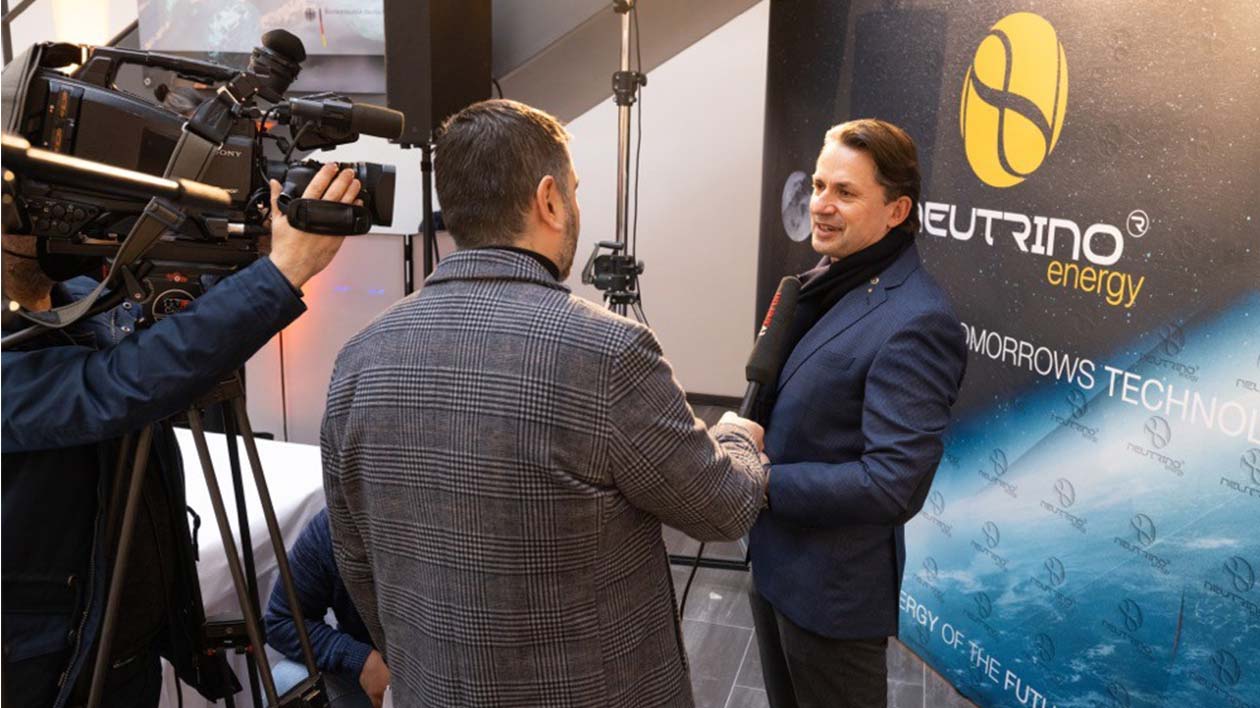
Dynamic developments in green forms of energy reduce dependence on fossil fuels.
In recent years, mainly solar photovoltaics and wind power have reduced demand for traditional coal power in some countries and regions.
Solar photovoltaic and wind power generation, however, have very limited development potential in countries with high population density and a small geographical area. That is why most countries are very interested in alternative new energy technologies. These countries are also formulating national strategic plans for energy development, such as China’s 3060 energy policy of carbon peaking and carbon neutrality.
Energy in general is an important foundation for economic development in every country and has a direct effect on the development of the national economy. The comprehensive introduction of new energy technologies, however, will still take decades. For new power generation technologies to have a significant share of the national energy balance between 2050 and 2060, other new technologies must already enter the phase of industrial production now. Neutrino photovoltaics (neutrinovoltaics), developed by Neutrino Deutschland GmbH, a German company of the Neutrino Energy Group, has attracted a great deal of attention in this field.
Neutrinovoltaics is protected by patent number EP3265850A1 (European Patent Office). In January 2022 the company invested 60 million euros in building a production base in Frankfurt, Germany. On this basis it is working to expand production sites to other continents and countries. Above all, work is under way on realising the Neutrino PowerCube® as industrial production of power supplies for domestic use. Meanwhile, Holger Thorsten Schubart, president of the Neutrino Energy Group and CEO of Neutrino Deutschland GmbH, explained that neutrino photovoltaic technology can not only cover household power supply but can also help generate the electricity demand of industrial companies. Supplying vehicles is also under discussion, through flexible use of neutrinovoltaics in the car.
The way neutrinovoltaics works can be understood similarly to photovoltaic power generation. Neutrinovoltaics can be connected in several modules in series and in parallel, making it possible to realise different voltages and currents. The decisive advantage of neutrinovoltaics compared with conventional photovoltaics, however, is that it is not limited by space and time. It works efficiently and independently of brightness (e.g. at night), weather (e.g. on rainy days) and placement (e.g. even in tunnels). For neutrinovoltaics converts the energy of other electrical fields, such as radiation fields from space, into electrical energy. The technology is based mainly on the special material developed by Neutrino Energy, a multilayer composite material of alloying elements in which 10 to 20 layers of graphene and silicon alternate. The layers must be dense enough to allow interactions with neutrinos and other invisible particles of the radiation spectrum. They efficiently convert the mini-energies of a multitude of radiation field particles into electricity.
According to patent number EP3265850A1, the total coating thickness is 0.01 mm to 1 mm. The thickness of the silicon particles should be between 5 nm and 500 nm, that of the graphene particles between 20 nm and 500 nm. The optimum thickness was identified as 5 nm for silicon particles and 20 nanometres for graphene particles. In this combination, the best efficiency of energy conversion is achieved.

The base coating of the nanomaterials used in neutrinovoltaics is graphene, a 2D material with the properties of a 3D material, which means that graphene atoms oscillate (vibrate) in three-dimensional coordinates. The stronger the effect of the radiation field, the stronger the vibration frequency of the graphene atoms. As a result of this interaction, a wave forms on the graphene surface. It is comparable to a wave on the ocean, when small spontaneous movements combine and give rise to larger spontaneous vibrations. The displacement of one atom adds to the displacement of other atoms, leading to a horizontally polarised surface wave. In acoustics this is known as a Love wave, also known as a Q wave. In the presence of a low-velocity layer over a semi-infinite medium, a wave oscillates in a horizontal plane perpendicular to the direction of propagation. In the vertical plane, the particles oscillate in an anticlockwise ellipse and the vibration amplitude decreases with increasing depth.
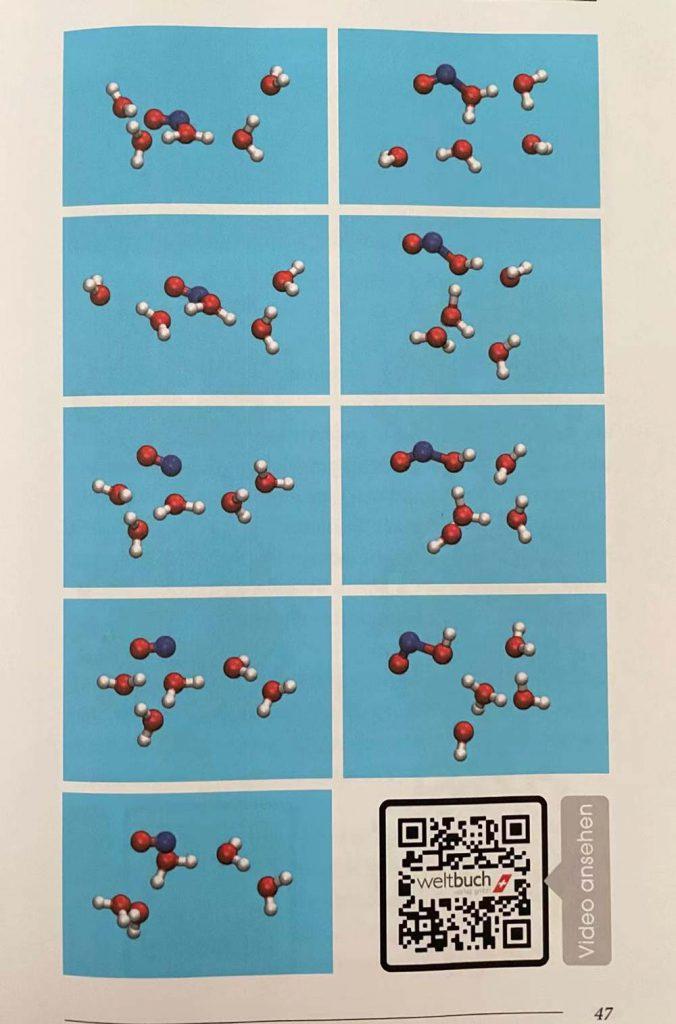
In elastodynamics, Love waves, named after Augustus Edward Hough Love, are horizontally polarised surface waves. Love waves are the result of the interference of many shear waves (S waves) guided by the elastic layer, on an elastic half-space on one side and close to a vacuum on the other. Owing to the peculiarities of graphene crystals, its atoms vibrate in tandem, unlike the spontaneous movement of molecules in a liquid. Since the vibrations of graphene atoms are 100 times stronger than those of silicon atoms, the superposition of frequencies of external effects of electromagnetic radiation – including the action of neutrinos – amplifies the internal frequencies of graphene wave vibrations. This vibration causes the atoms to vibrate in resonance. The atomic vibrations in resonance multiply the electron yield on contact with the doped silicon alloy. The side of the metal foil coated with nanomaterials becomes the positive electrode, while the uncoated side becomes the negative electrode.
Neutrino Deutschland GmbH’s patent EP3265850A1 describes in detail all possible materials and alloying elements that can be used to convert the kinetic energy of particles in a radiation field into electrical energy. Many scientists around the world are currently investigating this phenomenon and have already begun the experimental design of lattices on the basis of relevant information in publications. Holger Thorsten Schubart greatly values China’s scientific and economic achievements. He is therefore examining the possibility of promoting this technology on the Chinese market.

The technological achievements of neutrino photovoltaic power generation and the latest discoveries in high-energy physics offer the world a unique opportunity for energy development: to create a decentralised power generation system that needs no grid electricity and releases no harmful emissions into the atmosphere.
Holger Thorsten Schubart
CEO Neutrino Energy
The Neutrino Energy Group
The Neutrino Energy Group is a German-American research group. Its aim is to find ways to harness the power of the invisible radiation spectrum. As fossil fuels are limited and climate change requires the development of alternative and CO2-neutral energy sources, this research group is dedicated to an urgent problem. It has succeeded in creating a dense substance that can interact in a specific way with neutrinos and other invisible radiation. This unique substance is used to build the first neutrino photovoltaic cells for power generation. Vapour-deposited layers of silicon and doped graphene are applied to the carrier layer to make the end product. The thickness of these layers is in the nanometre range. When neutrinos and other invisible radiation strike this substance, they generate both horizontal and vertical impulses. It is crucial that the doped materials have the right layer thickness. At the optimum layer thickness, the atomic vibrations caused by the impulses are brought into resonance. As a result, an electric current can be detected in the substrate material. The hypothesis states that the amount of energy that can be harvested depends on the distance travelled in the process. With this approach it will soon be possible to charge electrical devices anywhere in the world without needing a socket or a cable. Simply “collecting” energy from the environment is a viable option. As a result, humanity will have access to an endless supply of clean energy, which will help to slow or halt global warming.
The Neutrino® Energy Group works with a worldwide team of scientists and various international research centres. They research applications for converting invisible radiation spectra of the sun, including neutrinos – high-energy particles that reach the Earth incessantly and can be converted into electrical energy.
The image rights lie with the author of the press release.
Notes on content provided by authors
Comments
Loading comments …
Become a member to comment publicly. GAIA members write comments in the members' portal — under their nickname, visible to everyone.