Programme tip 21 September from 4.30 pm: live guest on Radio SOL
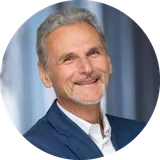

Topic: “The psychological side of police operations at major events”
Dr rer. soc. Angelika Schrodt-Meyl, psychologist and former police adviser for major events, on a highly topical subject on Radio SOL 105.1 and DAB+, and on the Radio SOL live stream at: www.radioSOL.at (German)
Radio SOL programme calendar All current studio guests, always up to date: www.planetsol.eu/programmkalender/ (German)
Radio contributions by GAIA (German) Radio SOL WEBSITE (German)
Who is Dr rer. soc. Angelika Schrodt-Meyl?
After almost a decade working in a large psychiatric hospital, I taught psychology at the Baden-Württemberg University of Applied Sciences for Police from 1987, first as an associate lecturer and later as a member of staff. Over the years, more grew out of these beginnings. For example, the trainee police inspectors in the sociology lecture asked how fan behaviour at major sporting events could be explained psychologically. They asked how it can be that some football fans travel with their club every weekend, and that particularly “enthusiastic” ones seek confrontation with “opposing” fans there. It was about damage to property and bodily harm at football matches. Since I did not know the answer at first either, I went along on operations of the North Rhine-Westphalia police at football matches in order to observe the scenario in the stadium and on the routes to and from it. That was in the 1990s. At various events at police training institutions I was also able to learn a great deal about how the police “tick”. Mostly I enjoyed the support of heads of department and of the police leadership.
In search of the right and sustainable support, I was able, through the International Police Association (IPA), to make contact with police psychology units at the San Francisco Police Department (SFPD) and the New York Police Department (NYPD), where I learned which psychological support measures really help and are welcome, and also which are hardly or not at all accepted.
Equipped with this knowledge and with the SFPD’s training material for peer support counselling, I led two EU projects (Peer Support Counselling and Emergency Psychology Network) in the following years. Together with many other colleagues and organisations, we built up a European Network of Emergency Psychology and until about 2007 were involved in one way or another in the crisis organisation of almost all major disasters.
And so I became familiar above all with the psychological strains of the police profession, but also with operational procedures in major incidents, and was able, among other things, to work with special police units. This cooperation even led to a programme in which my psychologist colleagues were trained by special operations instructors on the model of the San Francisco Police Department. We really learned a lot from each other.
And of course I was always looking for ways and means to support emergency personnel psychologically. There were many kinds of strain: besides the use of force up to and including the use of firearms, there were other serious events, for example when children were harmed, as well as deployments abroad or at demonstrations, at that time for example against nuclear power plants. In short, in those years I learned a great deal about the framework conditions of police work and about the people in uniform. I am convinced that only ignorance of this subject leads to the common and often ideologically coloured views. Reality is more nuanced and in part quite different.
Over many years, during which I was also available as a psychotherapist, I was able to witness the many and varied problems, including personal failure and genuine heroism. By emergency personnel I mean above all police officers, but also firefighters, members of the German Federal Agency for Technical Relief (THW), ADAC rescue pilots, airline pilots and so on. Personally, I have great respect for these people who bear such great responsibility, and I am still able to count many of them among my friends today.
To this day I am a personal point of contact for various emergency services – quietly and discreetly, and acting in the interest of my clients.
Notes on content provided by authors
Comments
Loading comments …
Become a member to comment publicly. GAIA members write comments in the members' portal — under their nickname, visible to everyone.