Risks of undersupply and cost increases in winter 2026/27

Herbert Saurugg, saurugg.net
At the start of autumn 2026, Europe’s energy supply is at a critical point. Unusually low gas storage levels, a pronounced drought with consequences for hydropower and cooling water supply, geopolitical escalations and disruptions to oil, LNG, diesel, AdBlue and helium supply chains are overlapping. Added to this are attacks on critical infrastructure and persistent shortages of grid components. Individual risks thus combine into a complex, potentially cascading risk picture. It would be negligent to hope only for the most favourable course of events. What matters instead is how robustly society, the economy and infrastructure can respond to unexpected escalations.
Gas storage: an unusually low starting position
The situation regarding natural gas storage is tense. In the second half of September 2026, German storage facilities were only about 57 per cent full. The EU average was around 70 per cent, well below the seasonal five-year average of roughly 85 to 88 per cent. Germany thus has the lowest fill level for this time of year since comparable records began in 2011. Low storage levels do not yet mean an immediate shortage, but they reduce the buffer against a cold winter, low LNG inflows or infrastructure failures. And they increase the price risk.
Like the electricity supply, the natural gas supply is an interconnected system. Disruptions in one region can affect other regions through trade flows, grid bottlenecks and price signals. This also applies to possible knock-on effects. Moreover, a possible undersupply affects not only heating and power generation. Gas is also used in numerous industrial processes and as a raw material. Because the supply usually works reliably in everyday life, these dependencies are often underestimated.
The turkey illusion: why we underestimate risks
The well-known risk researcher Nassim Nicholas Taleb illustrates this problem with the turkey metaphor: a turkey is fed day after day and concludes from this experience that its owner means well by it. But it lacks the crucial information about the purpose of this care. Shortly before Thanksgiving, the supposed security ends abruptly.
We act similarly when we uncritically extrapolate stable experiences of the past. Especially with rare events with major impacts, the absence of past damage is no proof that a system is safe. Resilience therefore begins with a willingness to consider developments that are unlikely but plausible.
Multilayered causes
The low storage levels have several causes. High gas prices and unfavourable summer-winter price signals reduced the economic incentive to inject gas into storage. At the same time, competition for LNG with Asian buyers persists. Since the largely complete loss of Russian pipeline imports, Europe has had to procure considerably more LNG; this business follows different price and logistics mechanisms. The severely restricted passage through the Strait of Hormuz since the end of February 2026 aggravates the situation further: normally around one fifth of global oil and LNG trade passes through the strait. As a result of the war situation, QatarEnergy declared force majeure on LNG deliveries.
Storage as elements of robust infrastructure
Gas storage facilities were already used more heavily than expected last winter. In August 2026, the Federal Ministry for Economic Affairs called on market participants to inject more gas. In mid-September, the federal government announced that it would expand the tendering of long-term supply options and agree additional injections with the state-controlled companies Uniper and SEFE. However, there was no direct state purchase of gas as in 2022 at that point. Whether these measures will still significantly widen the safety margin for the winter depends on inflows, prices, weather and consumption.
Storage facilities are not mere trading venues but buffers of vital infrastructure. Purely short-term market incentives do not always adequately reflect their insurance value to the national economy. Responsibilities, minimum requirements and the financing of reserves must therefore be clearly regulated. Otherwise, profits are privatised in normal operation, while the costs of a crisis fall on the general public.
This problem is particularly visible at Rehden, Germany’s largest gas storage site. The operator SEFE was nationalised in 2022; nevertheless, the fill level there was still below ten per cent at the end of September. For Rehden, a statutory target of 45 per cent applies as of 1 November. The storage facilities in Bavaria, which are particularly important for southern Germany, had a fill level of only just under 32 per cent.
A risky game
If the winter passes without incident, the structural deficits easily remain invisible. With persistent cold, low imports or technical failures, however, they could quickly become expensive and painful. Gas is needed for heat, power generation, industry and numerous basic services. Preparedness must therefore be geared to the potential for damage – not just to the most likely scenario.
El Niño 2026/27: high weather uncertainty
A very strong El Niño event is emerging for the winter of 2026/27. At the beginning of September, the World Meteorological Organization put the probability that El Niño will persist until February 2027 at almost 100 per cent and expected it to strengthen further by the end of the year. Globally, this can alter the risk of droughts, heavy rain, heatwaves and tropical cyclones, and thus burden harvests, water availability, energy generation, commodity markets and supply chains.
The strongest and most reliable effects occur in the Pacific region and parts of the Americas. For Europe, the connection is considerably weaker. Seasonal models currently point rather to a mild, westerly-dominated start to winter and to more precipitation in parts of southern Europe. However, such long-term forecasts describe probabilities, not reliable daily or weekly predictions.
The polar vortex is regarded as an additional uncertainty factor. Some seasonal models show an increased probability of weakening in January or February 2027. This does not, however, necessarily imply a sudden stratospheric warming, nor automatically a cold wave in Central Europe. A late cold snap remains a plausible risk scenario whose occurrence and duration cannot currently be predicted with any reliability.
The most favourable case would be a mild winter with stable imports. A cold winter or a further supply interruption, by contrast, would quickly push the scarce buffers into a critical state. For preparedness, therefore, it is not only the mean of the forecasts that counts, but also the range of possible outcomes.
Drought and electricity supply
The low-precipitation winter of 2025/26 and the subsequent drought have significantly reduced hydropower generation in large parts of Europe. In seven particularly affected countries between the Alps and the Danube, production from April to July was about a fifth below the average for the years 2019 to 2025. In July, the declines in individual countries amounted to roughly a third to a half. In Austria and Switzerland, inflows to reservoirs and run-of-river power stations in July were almost 50 per cent below average.
The reservoirs in the Alps and in Norway were also well below seasonal comparison values. In the southern Norwegian price area NO2, the reservoirs were only about 48 per cent full at the beginning of August. The 20-year median was almost 75 per cent. Norwegian authorities are monitoring the situation particularly closely with a view to the winter. Restricting exports is in principle legally possible if domestic security of supply were endangered. Lower Norwegian exports could put heavy strain above all on Germany, Denmark and Great Britain during low-wind periods and require additional use of gas-fired power plants.
The low water levels in many rivers not only had considerable effects on shipping and the transport of goods, but also led to cooling water problems at nuclear and thermal power plants. The Hungarian nuclear power plant Paks, which normally produces around two gigawatts and generates a large share of the national electricity, had to reduce its output drastically to about 240 megawatts at the beginning of August and was subsequently shut down completely – for the first time in 44 years of operation. In Romania, after the earlier shutdown of one unit, the last reactor of the Cernavodă nuclear power plant was also taken off the grid on 13 August because of the low Danube level. At the end of July, Romania had declared a state of emergency because of the impact of the drought on the energy supply.
In particular, the transport of coal and crude oil on the Rhine could continue to be significantly impaired in winter as well if the dry conditions persist.
Battery storage: Bulgaria as a model country
Bulgaria has greatly expanded its large-scale battery storage within just two years. In September 2026, around 5.4 gigawatts of battery capacity with a storage capacity of over 16 gigawatt hours were in operation. This corresponded to around 23 per cent of the country’s total installed generation capacity.
Measured against the size of its national electricity system, Bulgaria thus has an exceptionally high density of battery storage worldwide in 2026. The systems absorb PV surpluses during the day and release energy again in the evening hours. In addition, Factory X1 was opened in Sofia in 2025, a large European production site for battery storage systems with a current annual capacity of five gigawatt hours.
Germany and other countries are also planning a considerable expansion of BESS (battery energy storage systems). However, grid connection, permitting and revenue risks stand in the way. At the same time, there are substantial production overcapacities in China, while European manufacturing is only now being built up. Whether storage prices will continue to fall in the long term therefore depends not only on technology, but also on trade, raw materials and industrial policy.
Battery storage is very valuable for frequency control, peak load management and the short-term balancing of volatile generation. But it solves only part of the problem. Many large-scale storage systems that are economical today are designed for only a few hours of discharge and then have to be recharged.
For longer periods of low wind and sunshine (Dunkelflaute) or multi-day bottlenecks, secured generation, controllable loads, grids, imports and longer-term storage are additionally needed. Especially for rarely used long-duration capacity, a viable market mechanism is often lacking. If we think only in terms of individual technologies, we again risk privatising short-term revenues while socialising systemic risks.
Systemic steering instead of individual optimisation
The fundamental problem in Germany and Austria is less a lack of individual projects than an inadequate overall architecture. Without planning coordinated in space and time, grid operators can be flooded with connection requests, even though projects in the wrong place or with unsuitable operating modes create only limited system benefit.
The state should therefore define functional requirements more clearly instead of supporting individual technologies in a piecemeal fashion. One possible approach would be to link market participation and funding to a contribution to firm capacity, flexibility, reactive power, black-start capability or grid congestion management. Renewable generators could meet these requirements together with storage, flexible consumers or controllable power plants. A binding CO₂ framework would secure the climate path without prescribing every technical solution in detail.
Geopolitical escalations
At the same time, the geopolitical situation is worsening, and with it energy vulnerability. In Europe, suspected cases of sabotage, cyberattacks and open threats against critical infrastructure are accumulating. Responsibility must be established reliably in each individual case. In the context of hybrid attacks, however, this is rarely easy because of the concealment measures involved. At the same time, energy facilities in Ukraine, Russia and the Middle East are regularly attacked and destroyed.
Repairs to refineries, pipelines, power grids or LNG facilities can take months to years. For the global market, this does not necessarily mean a physical shortage, but it does mean higher risk premiums, volatile prices and less redundancy. Further attacks on European infrastructure remain a realistic scenario for which operators, authorities and also the population must be prepared.
The situation in the Strait of Hormuz is particularly consequential. Since the start of the war between the USA, Israel and Iran at the end of February 2026, passage has been severely restricted. Normally, about 20 per cent of global oil and LNG trade passes through this strait. That the global economy has so far withstood this disruption without a complete collapse must not be mistaken for an all-clear: stocks, alternative routes and demand declines can shift the consequences in time. One can also easily fall for a turkey illusion here.
Diesel and AdBlue supply
For mineral oil products, the risk lies less in the quantity of crude oil alone than in available refinery capacity and transport routes. In September, three of the six largest Russian diesel refineries had to curtail production sharply or halt it entirely after drone attacks. Together, these six plants account for about half of Russian diesel production. Russia then limited exports of petrol, diesel and jet fuel.
Europe covers a considerable part of its diesel demand through imports. Before the attack on Ukraine, almost half of European diesel imports came from Russia. Afterwards, the Middle East, the USA, India and Turkey took over, above all. Europe’s structural import dependence for diesel is now around 35 per cent. The disruption of the Saudi East-West pipeline (“Petroline”) in September therefore hit an important alternative route to the Strait of Hormuz. Before the attack, the pipeline transported about four to five million barrels per day.
Indian refineries operated at 105 to 108 per cent of their nameplate capacity in the six months to September and in some cases prioritised diesel over jet fuel. Utilisation of more than 100 per cent is technically possible when plants are run above their original design output. But it does not mean unlimited reserves. Additional outages would be harder to compensate for in an already tense market.
So far, the shortages have shown up mainly in high and volatile prices. In Pakistan, petrol and diesel in September were up to 50 per cent above the level of early March. Political protests and a march on Islamabad formed in response.
The systemic danger lies in the passing on of costs. If diesel and AdBlue become scarce or very expensive, expenses rise in logistics, agriculture, construction and industry. AdBlue is operationally indispensable for modern diesel fleets. Its production also depends on the natural gas market via urea. Urea prices already rose significantly in spring, even though the situation eased again regionally. Numerous uncertainties remain, however, which could strike unexpectedly.
Helium: an underestimated side risk
A little-noticed consequence of the crisis is the tight helium supply. In 2025, Qatar produced around 63 million cubic metres, about a third of world production. After attacks on the Ras Laffan industrial complex, QatarEnergy halted LNG and related production processes at the beginning of March. Helium is obtained as a by-product of natural gas processing. A considerable part of the supply was thus lost. The restricted passage through the Strait of Hormuz additionally hinders transport.
Helium is used in medicine, semiconductor manufacturing and analytics, among other fields. Some gas chromatography methods for analysing dissolved gases in transformer oil also use helium as a carrier gas. Such DGA (dissolved gas analysis) measurements help to detect incipient faults in liquid-filled transformers. A helium shortage can therefore increase the costs and turnaround times of individual diagnostic chains.
Grid components and cyber risks
The transformer shortage is a risk in its own right. Before the pandemic, delivery times for large power transformers were often around twelve to 18 months. In 2026, two to four years are quoted in Europe depending on manufacturer and specification, and in some cases 48 to 60 months for large established suppliers. The drivers are grid expansion, electrification, data centres, replacement of old plants and limited production capacity.
High-voltage switches, cables and power electronics also have long delivery times and concentrated upstream supply chains. As a result, the failure of a single component can considerably delay the repair or commissioning of a plant. Resilience therefore requires standardised designs, strategic spare parts, alternative suppliers and early procurement.
Cyberattacks on energy infrastructure likewise remain a permanent threat. This applies in particular to distributed inverters, storage systems and charging equipment, which are often permanently connected to manufacturer clouds and are therefore in principle remotely controllable. In 2025, security research documented a total of 46 new vulnerabilities in inverters from various vendors. The aggregation effect is decisive: a coordinated attack on many devices could trigger a change in output relevant to the grid and lead to cascading effects.
The European Commission is now responding with funding restrictions for inverters from so-called high-risk states. This addresses supply chain and remote access risks, but does not replace technical minimum standards, secure update processes, network segmentation and ongoing monitoring. In addition, the shortage of skilled workers aggravates the situation, because maintenance, fault clearance and cyber hygiene require qualified personnel.
Cascading effects: when risks interact
At present, the greatest danger therefore lies not in a single bottleneck but in the interaction of several disruptions. A cold winter would increase gas and electricity demand. Low water levels can limit hydropower and cooling capacity or energy transport. A refinery outage makes diesel more expensive. Missing spare parts or skilled workers prolong repairs, while cyber or sabotage attacks tie up additional personnel. Such feedback loops can turn manageable individual problems into a far-reaching supply crisis through cascading effects. There is no one hundred per cent security, but one can be better or worse prepared.
Prices and costs
For the coming months there is a considerable upside risk to energy prices. How strong it will be depends on winter temperatures, import volumes, geopolitical developments, plant availability, consumption responses and electricity generation from wind and water. A reliable price forecast would therefore not be serious.
Costs will also remain high in the medium term, because grids, storage, reserve capacity, power plants, cyber defence and supply chains have to be adapted. These investments are a burden on the national economy, but forgoing them would not be a saving, merely a shifting of risks into the future. For Germany and Europe, it will be decisive to increase resilience in such a way that industrial competitiveness and security of supply are strengthened together.
Recommendations for action
The outlook is demanding, but not hopeless. Security of supply cannot be achieved by a single technology. What is required is a paradigm shift from isolated efficiency optimisation towards systemic robustness.
- Systemic thinking instead of faith in efficiency: Markets coordinate supply and demand very effectively in stable times. For vital infrastructure, however, they must be complemented by clear resilience requirements, reserves and crisis mechanisms.
- Pragmatism instead of micromanagement: Permits for storage, grids, reserve capacity and replacement investments must become faster and more predictable. At the same time, more technological openness and fewer contradictory individual requirements are needed. This also includes “exnovation”: outdated rules, procedures and structures must be ended so that scarce financial and human resources are freed up for more effective solutions.
- Strategic reserves: The state must assume its role as guardian of security of supply. This includes realistic minimum fill levels, strategic gas and fuel reserves, spare parts pools, and remuneration for firm capacity and system-supporting functions. The political promise of steadily falling infrastructure costs needs to be questioned: buffers and redundancies cost money, but in a crisis they prevent far greater damage.
- Transparent communication: Uncertainties must neither be dramatised nor glossed over. The population, businesses and authorities need comprehensible scenarios, clear responsibilities and concrete preparation steps. Only if our organisational complexity keeps pace with the technical complexity of the systems can stability be secured in the long term.
Structures and power relations rarely change by themselves. We should therefore not wait for the next crisis before responsibilities, reserves and incentive systems are corrected. Resilience as learning and adapting means changing the logic that has produced recognisable vulnerabilities.
Preparedness is expensive. Undersupply, production standstills and the loss of social stability would, however, be incomparably more expensive. It is better to have reserves and not need them than to be unprepared in an emergency.
We are therefore well advised to prepare for further turbulent and crisis-ridden times and to take appropriate precautionary measures before reality catches up with us. For we can ignore reality, but not the consequences of an ignored reality.
This article first appeared in German on saurugg.net – with kind permission of Herbert Saurugg. Licence: CC BY-NC-SA 4.0, Herbert Saurugg. Translated from German by GAIA.
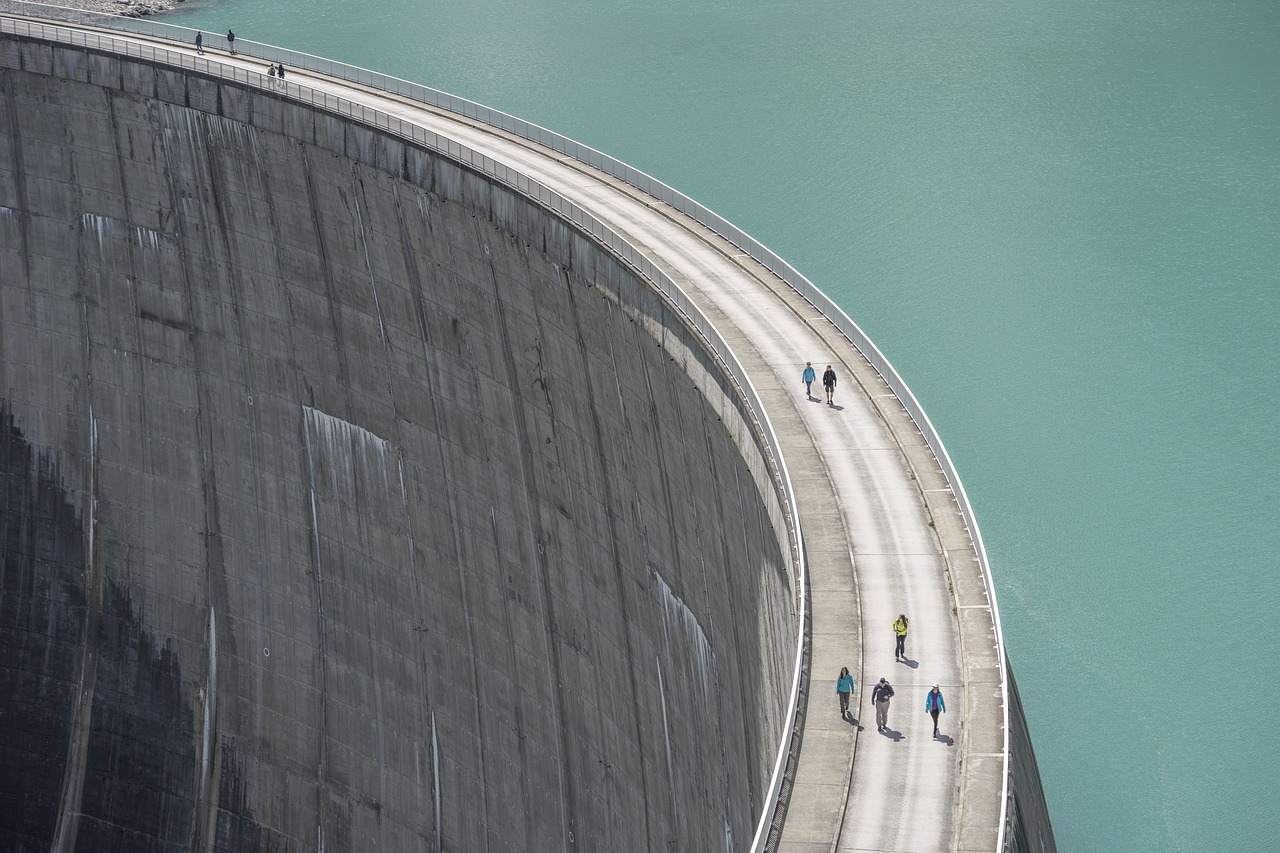
Cover image: wallner / Pixabay
Notes on content provided by authors
Comments
Loading comments …
Become a member to comment publicly. GAIA members write comments in the members' portal — under their nickname, visible to everyone.