Wind power bonanza


Wind power is being expanded in Europe, whatever the cost.
Dr. Peter F. Mayer, tkp.at (German)
Germany already has 30,000 turbines, and 2,000 new ones are added every year. In Austria, too, it seems to be a great business: in some places there is massive expansion, in others resistance is stirring.
One federal state that has kept its nature clean and free of soil contamination is Tyrol. In East Tyrol, however, the black-red state government wants to build the “Hochalm Campedal” wind farm in Assling. The mega wind farm, which is to be built by 2030 if the assessment report is positive, is an “important step towards the energy transition”, state councillor Mario Gerber told the media. But it is meeting resistance from the East Tyrolean district chairman of the FPÖ, Gerald Hauser, who has recently also become a member of the European Parliament.
In a press release, Hauser firmly rejects promoting the project under the banner of sustainability and environmental compatibility. Wind farms have been proven to be harmful to people and the environment, says the FPÖ politician:
“We already know that highly toxic substances are released into the environment through abrasion of the rotors. Ultra-fine respirable carbon and glass fibres and chemicals such as bisphenol A poison people, animals and plants around wind farms. In southern Crete, serious illnesses were observed in people living near such a wind farm, and the construction of further turbines was stopped. That has no place in our healthy East Tyrolean environment.”
Gerald Hauser
Good business in Lower Austria
Ahead of Burgenland, Lower Austria is the market leader, so to speak, in the expansion of wind turbines. The website of the energy and environment agency of the state of Lower Austria (German) presents the key figures as follows:
“At present, 797 wind turbines generate electricity for 1.4 million households (as of the end of 2023). That is over 4,800 gigawatt hours (GWh). Lower Austria thus holds the top position in Austria, ahead of Burgenland. … By 2030, electricity from wind power is to almost double from the current (end of 2023) 4,800 GWh to 8,000 GWh.”
Continue reading in the original article on tkp.at (German)


Decentralised energy
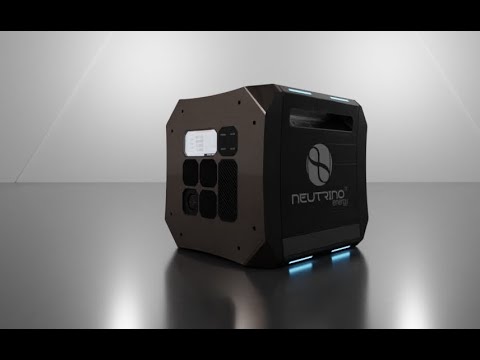
Neutrinovoltaics, which works on the basis of freely oscillating graphene, offers us – as scientifically proven – a viable way of generating baseload-capable, environmentally neutral renewable energy. This could also slow down the subsidised expansion of weather-dependent technologies.

Notes on content provided by authors
Comments
Loading comments …
Become a member to comment publicly. GAIA members write comments in the members' portal — under their nickname, visible to everyone.