AISEG • AI Smart Electromagnetic Generator • Seoul (KR)
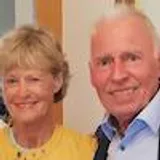

A delegation from Europe and Switzerland travels to SEMP in South Korea
Jupiter-Verlag, NET-Journal 09/24 (German)
We had invited the representatives of the “intelligent power generator with 1769% efficiency” from the Seoul company SEMP as surprise guests to the congress “Technologien der Neuen Zeit” (Technologies of the New Age) from 21 to 23 June. We reported on it in “NET-Journal” no. 7/8. From 13 to 19 August we then flew to Seoul with a delegation from EU countries and Switzerland!
A grand reception wide dimensions
We (Adolf and Inge) as initiators, and Roman, were welcomed at the airport at 9.30 am on 14 August by a cheerful team from SEMP – and straight away came the customary Korean ritual of exchanging business cards. We had studied Korean customs and knew that business cards are handed over with both hands and a bow. And so we all did this with each other, laughing and in the best of spirits. Then we were taken in the company car on a drive of about an hour to the Swiss Grand Hotel, where we could recover from the eleven-hour flight.
On the way our minds expanded in view of dimensions we are not used to in Europe and Switzerland, and a sense spread that here we might experience larger dimensions in other areas too. We drove along arms of the sea and admired delicate bridges sweeping over populated areas from one inlet to the next. South Korea is a peninsula west of Japan, surrounded by the South China Sea, and borders only North Korea, to the north. Seoul, the capital of South Korea, is a huge metropolis combining modern skyscrapers and a state-of-the-art underground with Buddhist temples, palaces and street markets. Seoul has 10 million inhabitants, while the whole of South Korea has 51 million, 85% of whom live in cities.
After the other colleagues – eleven in total – had gradually arrived at the hotel, SEMP director Sungkwon Yoo and SEMP CEO Woohee Choi came to the hotel to hold a confidential preliminary talk with us (Adolf and Inge). Then we all went to a welcome dinner at a restaurant, where tables had been laid for all of us and about a dozen company employees. Besides plenty of meat, there was a kind of pizza for us vegetarians and spring rolls made with rice paper and fresh vegetables, all rather colourful and in exotic colours. During the meal people talked in German, Korean and English – a cheerful company with its 71-year-old director who, as we learned in passing from Woohee Choi, still jogs 15,000 steps every day. Since we were all tired from the long flight, we soon went back to the hotel.

A typical Korean meal with plenty of meat grilled on the table, but also vegetables and salads for vegetarians like us and Michael Sigg
At the temple complexes
The next day we were picked up by the SEMP company car and taken into the city centre to the temple complexes and the National Museum. 15 August was a national holiday, celebrating liberation from the Japanese by the Americans in 1945. Everywhere ladies in long dresses with starched petticoats were strolling about, accompanied by gentlemen in black suits and top hats. It was tropically hot, so we were glad to cool off a little in the air-conditioned café of the shop. Soon the company car drove us back to the hotel, where we enjoyed a more Western dinner and good conversation with our colleagues.

Visit to the temple complexes at the National Museum on the national holiday (15 August)
In the SEMP laboratory
A large SEMP team welcomes us warmly as we get out at a huge industrial building somewhat outside Seoul. Later, over a meal in the canteen, we learn that 60 companies with a total of 800 employees have their premises there. In the conference room we are first presented with a non-disclosure agreement. Inge initially does not want to sign it, because she wants to write a report for the “NET-Journal” and also inform other interested parties about the visit; the same applies to Reinhard Wirth for his blog www.gehtanders.de. Woohee Choi explains that the agreement only means that we may not film or photograph the manufacturing process of a coil former that will take place later.

SEMP CEO Woohee Choi (centre) explains the history of SEMP and the development of the AISEG using a photo gallery. On the left, the German interpreter Lea S. Cha
Woohee Choi explains the company’s history using a photo gallery on the wall, which culminated for the time being in the AISEG development. She started here as an employee in 2014 and then developed into an inventor. At first SEMP built motors, later electromagnetic systems with rotating parts, later without rotating parts – so-called solid-state generators.
Technical director Changhyeon Kim introduces the staff and informs us that they will heat 140 litres of water for the calorimetric test. Then director Sungkwon Yoo shows a film illustrating the difference between the AISEG generator and a normal generator.

When presenting the business plan, director Sungkwon Yoo also introduces the principle of bandwagoning. It consists of grouping several coil columns close together. Their mutual influence then produces an amplification effect that can be calculated using a formula.
Bandwagoning was invented by Nankyung Hwang, who is now the company’s president. She explains that until now an overunity effect only occurred once three towers were combined.
Recently such an effect can be achieved with a single tower. Among other things, the SEMP team presents the test reports of KES of 26/27 April 2020.
According to one measurement, an output of 25.065 kW was recorded at an input of 1.417 kW. That gives an efficiency of 1769%.
Everything the Koreans explain is translated into German by the likeable Korean Lea S. Cha, who studied German in Göttingen and is a Kafka scholar.

Extract from the business plan. As can be seen at the top left, SEMP already has a small AISEG generator designed to charge electric cars continuously while driving – a revolution, quite apart from all other applications.

Extract from the business plan. Here SEMP lists three cooperation partners with photos (further ones follow, such as the Arab Emirates, etc.): a company in Peru (which has signed a contract worth $500 million) and a government-affiliated company in Bulgaria that has already signed a contract worth a high double-digit million amount, in which the government holds a 50% share. For Germany, the EU and Switzerland, SEMP is seeking cooperation with Jupiter-Verlag as organiser of the congress “Technologien der Neuen Zeit” (see the photo below from the 2024 congress in Stuttgart)

According to the test report of KES (the Korean testing authority) of 26/27 April 2020, they recorded, among other things, an output of 25.065 kW at an input of 1.417 kW. That gives an efficiency of 1769%
Display reading: 1 kW input, 13 kW output the demo and the energy of dreams
At the demo, Adolf is asked to switch the system on. Everything is photographed and filmed. On the display of the Hioki multichannel data logger you immediately see 1 kW input and 13 kW output; lamps light up, three immersion heaters of 3 kW each heat 140 litres of water, and outside a welding machine is started! That is actually a great result!

Director Sungkwon Yoo shows the measurement of the AISEG generator after asking Adolf to switch the system on.

After the AISEG generator is switched on in the SEMP laboratory and the display shows 1 kW input and 13 kW output, a bank of lamps lights up, and a welding machine is started in front of the laboratory. On the second day, 140 litres are additionally heated in the calorimetric test. In total this gives a load of 13 kW
On this occasion we see that above the entrance to the laboratory hangs a large poster reading “Welcome Switzerland and EU to SEMP!” with the corresponding national flags. Above it, in German and Korean: “The energy of dreams becomes reality”.

The delegation from Switzerland and Europe was welcomed by SEMP staff in the SEMP laboratory with a banner for the EU and Switzerland. Above the welcome it says: “The energy of dreams becomes reality!”
After we have all lined up there for a group photo, the discussion on interpreting the measurements gets under way in the laboratory. The measurement engineers ask why the battery was not disconnected after start-up, as was the case in other tests. Sungkwon Yoo replies that the battery is to be replaced by a supercapacitor, which unfortunately did not arrive in time before the group from the EU and Switzerland arrived. Sungkwon Yoo explains that it is a recycled (fed-back) system in which energy is returned from the output to the input via an AC/DC converter. Klaus Rauber notes that the thick cable is getting warm, so he wants to measure himself. A problem arises with the measurements using current clamps, whose measuring range is exceeded.
Top secret!
Then the company is led to a rear part of the room, and here something happens that may no longer be photographed or filmed (but may be described).
Director Sungkwon Yoo explains that he thought long about whether he could show this to the group. They have never shown it to outsiders before: the live assembly of a generator unit:
Grouped around a steel tube in the middle, a magnetic, heat-treated sheet is built up alternately between copper coils of enamel-insulated copper wire (1.2 mm for output coils and 0.8 mm for input coils). Epoxy resin insulation is applied between the layers. The finished tube is pressed together and then screwed. The contact resistance is tested on the protruding wires; it is 1.8 ohms everywhere.
Back in the meeting room, Sungkwon Yoo asks everyone to introduce themselves. It turns out that the individual members of the group, and all of them together, represent great potential. Each in turn is connected to a network of contacts in which the contacts multiply exponentially.

The generator units are built up alternately from pole pieces, field magnets and insulating discs, each electrically connected to the arrangement after next
The huge potential
This is not the place to introduce every member of the group. One entrepreneur who has built an energy hub for 400 MW deserves mention. Another has been working for 15 years for Germany’s largest grid operator – RWE – in renewables and built the first offshore wind turbines at sea; his last project was worth 1 billion. Another is a building contractor and investor who has long been enthusiastic about the possibilities of free energy, which he wants to make accessible to humanity, for example with the AISEG. Reinhard Wirth of gehtanders.de (German) already works in public relations, which is why he may be mentioned by name here. He explains that his blog is heavily frequented worldwide. He can translate documentation into German and English and add subtitles. He could do that for SEMP too. An entrepreneur and farmer has postponed a 6.5 MW photovoltaic and wind energy project because he would like to use SEMP technology instead. He knows large energy companies and has access to the Nuremberg municipal utility, where alternative energy systems are urgently being sought. Germany has a huge energy problem anyway, which could be solved with SEMP technology.
In any case, the group’s potential is huge. One member of the group asks how SEMP could cooperate with the group on production and distribution. The director replies that he did not know the group before, only Adolf, and that he is SEMP’s contact person. Adolf, for his part, says that only some are represented here, but together they represent a large network. Inge mentions that a German investor with whom Klaus Rauber and we are in contact could invest 50 million. The director replies that they cannot depart from their concept of licence transfer for building large factories, because they already have, for example, a memorandum of understanding worth $500 million with Peru, one with the United Arab Emirates worth $5 billion, a contract with Saudi Arabia of the same order of magnitude, and so on
The discussion shows that on this basis hardly any transfer of know-how to the group from Europe is possible. On the other hand, there are glimmers of hope. Reinhard Wirth asks the director whether SEMP would be prepared to send a demo unit to Germany to present it to the energy minister and to television. The director replies: yes – and everything seems open again.
The group is then taken by van to a restaurant, where the director presents SEMP’s business plan in a hall using a film projection. Afterwards, plenty of good food is again served in the restaurant.
Impressions in pictures
[
One of many meetings at the SEMP research institute. On the left you can see some AISEG towers.](/wp-content/uploads/2024/09/semp-reisebericht-netjournal-bild-gallerie1.jpg)
[
Various AISEG generators developed for recharging the batteries of electric cars (prototypes)](/wp-content/uploads/2024/09/semp-reisebericht-netjournal-bild-gallerie2.jpg)
[
Left: director Sungkwon Yoo shows Adolf coil components • Right: Woohee Choi uses a block diagram to show the principle of how their recharging system works](/wp-content/uploads/2024/09/semp-reisebericht-netjournal-bild-gallerie3.jpg)
[
Lunch in the canteen at SEMP](/wp-content/uploads/2024/09/semp-reisebericht-netjournal-bild-gallerie4.jpg)

[
The high peaks produced when the solid-state coils are pulsed](/wp-content/uploads/2024/09/semp-reisebericht-netjournal-bild-gallerie6.jpg)
[
Meeting Porky Pig while sightseeing](/wp-content/uploads/2024/09/semp-reisebericht-netjournal-bild-gallerie7.jpg)
[
And back we go to Switzerland](/wp-content/uploads/2024/09/semp-reisebericht-netjournal-bild-gallerie8.jpg)
Processing the data in the group
Between the meetings and demos, the group used the opportunity to reflect on the data and information presented at SEMP. The engineers pointed out, for example, that the thick cable getting warm indicated a much higher input power than the 1 kW displayed by the Hioki. On the other hand, some wondered why during the tests the battery did not recharge itself via the feedback, as had been the case in the demo in Dubai, but gradually discharged. When asked about this, SEMP CEO Woohee Choi sent the group a video filmed on 12 December 2023 at the presentation of the AISEG system at COP28. There, however, they had used supercapacitors. At an input of 0.630 kW, an output of 6.962 kW was measured, corresponding to a COP of 11:1.
This did not particularly impress the group’s engineers, who rightly remarked that they had not seen it live. In addition, the group could not warm to SEMP’s technology transfer strategy of building large factories, some costing billions. Most of them pursue the concept of making free energy devices available to “the man (or woman) in the street” for their personal electricity needs. Quite apart from the fact that SEMP estimates two years for building the factories it has designed, including construction time and the necessary robotic manufacturing, which is too late for many readers of the “NET-Journal”.
The main point of the discussions, however, revolved around the question of whether the system works at all, or works the way the SEMP experts claim
The insight that reactive power is converted into active power
At this point the group was rather sobered, and the motto SEMP had written on its poster to welcome the delegation from Europe and Switzerland – “The energy of dreams becomes reality!” – seemed written on the wind.
But Adolf and Inge stuck to their view that the SEMP generator is a functioning system – Inge through intuition, Adolf through insight into other, similar developments. According to Inge, one has to see the whole thing like this: about thirty SEMP employees have been researching the system since 2017 and have already invested $20 million in it. Although she herself is interested in free energy technologies and has been committed to them for decades, she is not an expert. But she observed the people there closely and, from their manner and their almost childlike joy, could see no signs of a devious approach aimed only at fraudulently extracting money from entrepreneurs. They would all have to expect to be arrested. No!

Still from the video recorded on 12 December 2023 at the presentation of the AISEG system at COP28. It shows that the voltage of the supercapacitors used there rose steadily. Also visible is the input of 0.630 kW at an output of 6.962 kW. That gives a COP of 11:1

Battery voltage after the system starts. From the initial value of 46.45 volts, the voltage falls to 45.75 volts within 80 seconds and then rises steadily as a result of the recharging via the AC/DC converter, which is now taking effect. After about 100 seconds the battery voltage has already risen to 45.87 volts

Detailed display of the switching signals of the IGBT switching transistors
Adolf, for his part, had an insight early one morning into how the AISEG works, which he sent to his colleagues via WhatsApp. It reads:
“I think I have now understood how the AISEG works. Unlike in a transformer, the load at the output is not transformed to the input but is fairly decoupled. This means that at the input we have more or less the full complex (inductive) load of the input coils. That is why the current there lags the voltage by almost 90 degrees, which is also visible in some of the Hioki displays.
This means that the battery is not loaded with a real (transformed) load but with the inductive load of the coils, which can also be seen in the photo on page 1418 in the red book. There the rms measurement at the input shows 157.944 V, 64 A, 1.343 kW, 10.110 kVA, 10.020 kvar (reactive load), cos φ = 0.13283 and φ = 82.367 degrees (current lag). So we have an effective input load of 1.343 kW. On the DC side at the battery we have 157.898 V and 13.852 A and an input power of 2.187 kW (the product of voltage and current gives 2.188 kW).
If the DC data correspond to the recharging of the battery, it is effectively being recharged with 2.187 kW, while 1.343 kW is permanently being drawn towards the AISEG, i.e. less. That would give us constant positive recharging, which is what we all expect and what Woohee also showed in the red voltage curve (her ‘secret’) on slide 27 (75 s after the start phase) in the ppt file AISEG240814.pptx.
That is exactly what she may show in today’s measurement with the current system and the current data. That is, the battery here has 72.852 V and is being recharged with 1.004 kW (which we must check), while the rms measurement and display on the Hioki should show a larger value.
However, the battery is loaded with very high oscillating currents (in/out), which is not good for the battery. One should therefore connect a supercapacitor in parallel (charging it at first via a resistor), which can absorb a large part of the pulsating current. Perhaps the battery is then only needed for starting, which Woohee Choi also once told me and which is also shown this way in the pptx file on slide 11 (UltraCapacitor).
When it works correctly, we then have pulsed excitation (magnetisation with a selectable duty cycle) of the heat-treated sheets between the coils, which in each demagnetisation phase return additional energy or deliver an induced power in the secondary coils at the output. Because of the load chosen here, this is purely ohmic, but considerably larger than what we feed in at the input.
In principle, the whole thing works similarly to the system of Arkadi Stepanov, who presented his system, filed for a patent, at our congress on 13 August 2011 at the Marriott Hotel in Zurich.
Here are some links on this (2) Here is a comparison of Arkadi Stepanov’s system with Holcomb (3). Here is an SGS measurement of Arkadi’s invention (4): On the development of the company Steho, see the following link (5). Here is another link to measurements by Steho (6).
Because of these insights, my confidence that SEMP technology works has risen to 99%.”
Live demonstration by Arkadi Stepanov at the conference on 13 August 2011 at the Marriott Hotel in Zurich
In a film shown at the conference, values of up to 9,115% were measured on Arkadi Stepanov’s system. The measured values suggest that in this system reactive power is “converted” into active power. The inventor himself claims that his system works on the basis of several physical processes, including a particular resonance state, which enables him to convert reactive power (i.e. reactive current) into active power. The high values shown in the film were not demonstrated at the conference; instead, the following factors were measured live and confirmed by experts such as Dr. sc. nat. Hans Weber and Dr.-Ing. Martin Keller:
- Demo with a white black box in the middle of the table and two load outputs for lamps. Active input power: 214 W, active output power: 218 W + 43 W = 261 W. COP: 122%
- Demo with a blue black box on the left of the table and lamps at the output. Active input power: 133 W, active output power: 456 W. COP: 343%. Apparent input power: 477 W, apparent output power: 476 W. Active power in generator mode: input 87 W, output 670 W. COP 770%
- Demo with a black black box on the right of the table with a lithium battery. Active input power: 60 watts, active output power 90 W (lamp). COP: 150%

The Russian inventor Arkadi Stepanov (who worked in the laboratory of Arthur Tränkle, Steho, in Stuttgart) demonstrating his device with an overunity effect at the conference on 13 August 2011 in Zurich
Back in the SEMP laboratory
Although the next day – 18 August – was a Sunday, we found the entire staff in the SEMP laboratory, who again welcomed us warmly. Normally no one works on Sundays, but an exception had been made because some of us would already be flying back the next day.

In the waiting room: the tension rises. What will director Sungkwon Yoo (centre) say? From left: Nankyung Hwang, inventor of bandwagoning and SEMP president, CEO Woohee Choi, director Sungkwon Yoo, the interpreter Lea S. Cha and members of the group from Europe
The SEMP team had connected a stronger battery to the AISEG system, but it soon became clear that this one too was gradually discharging, just more slowly, without recharging itself. Director Sungkwon Yoo and CEO Woohee Choi saw this too. While the SEMP team withdrew, the group was served lunch.
Afterwards, director Sungkwon Yoo gathered his team around him and, visibly struggling to keep his composure, apologised for the inadequate demo. He explained that they needed supercaps but had not received them in time. He also hinted that, given its own high investments, SEMP urgently needed further funding.
The group conferred among themselves and then presented the SEMP team with the proposal that, after optimising the system, they should show the group via livestream that the battery is being recharged. Part of the group would then come back to measure the system again. After that, SEMP should be prepared either to sell the group a system for Switzerland and the EU or Germany, or to come over with a team to carry out a demo themselves. Once a demo had been secured, raising capital would be no problem!
The ceremony dinner

The director replied that they would consider this proposal. He thanked the group for the visit.
The group was then taken back to the hotel and later picked up for the ceremony dinner scheduled in the programme. It took place in an elegant Korean restaurant. There were gifts for the group from Europe and Switzerland, such as fans for men and women, which makes perfect sense in the heat there.
Extract from the editor’s diary:
“We had all dressed up; Adolf had even put on a tie. After arriving at the restaurant we were shown into a kind of waiting room where the whole SEMP crew and the director were already sitting. We were told that they were waiting for the hall to be prepared for dinner. Since it would only be ready a quarter of an hour later, I asked the German interpreter whether it would not now be possible to get the announced answer from the director.
But it soon became clear to me that Western thinking, which expects clear, quick facts, was colliding with Asian reserve and diplomacy. The director gave a typically Asian answer to a typically Western question: he had nothing to say at the moment. That had to be accepted, even though we all thought our proposals were accommodating.
Then we went upstairs to eat, where for an hour and a half so much food was served that the tables groaned.
Before the meal, the director, surrounded by his cheerful team, who applauded again and again, gave a speech to the delegation from the West: he thanked us for the visit and looked forward to further cooperation. Whether this was just Asian politeness or meant as such – for me and the group it was the word of relief that let us tuck into the lavish meal with appetite. For the vegetarians there were plenty of vegetables, salad and tofu soup.
In between we kept hearing cheerful laughter and applause from the other part of the hall, where the SEMP people were sitting together. At our table someone said the director had probably just named ‘employee of the month’. In any case it seems to be a ‘family’ that sticks together through thick and thin. Towards the end of the meal, Wolfgang, who moves in international circles, said that Adolf should perhaps also give a speech of thanks now. Adolf stood up immediately and waited until everyone was quiet. Then he thanked them for their hospitality and the perfect organisation and expressed his joy about future cooperation.
Everyone applauded enthusiastically, and Wolfgang said he could not do that – give a speech so quickly and off the cuff. Then we all set off – after all, we knew we both had to get up early the next morning.
Back at the hotel we sat down with the group once more and reflected on our impressions. Some did not think it right that SEMP had let us come without being able to show us anything convincing. Adolf and I formed the counterweight and said that we regarded the shortcomings as temporary and remained convinced of the technology, because on the whole the company, its team and the technology had enormous charisma.
Then came the grand finale, as Adolf sang the Korean national anthem in a loud, sonorous voice – he had learned it by heart decades ago as a member of an international singing group. That lifted the mood at the table considerably, and then came the big round of farewells with hugs, for it was a great group with which there will certainly be further cooperation, even if only on other developments, such as the autonomous 5 kW generator from South Africa expected in September.
After a few hours’ sleep we got up at 6 am and were already in the lobby at half past six to check out. To our surprise we met director Sungkwon Yoo and the interpreter Jay there, who had come to see us off. The director apologised once more for the inadequate demos, and we said: ‘We come back again!’ Then the chauffeur took us to the airport in a smaller company car.”

Not the end but only the beginning
From there we wrote to our colleagues: ‘Dear friends, we woke up today with the thought that this is not the end, but only the beginning. The director came specially to see us off and to apologise once more for the demo, which did not meet our expectations. We told him: “We will come back!”’
For us, at any rate, the glass is not half empty but half full. We look to the future with hope and wish everyone a good journey! Adolf & Inge
CONCLUSION:
What is very important for us is the fact that the AISEG generator is a self-runner and is to be produced and marketed normally. Unlike the Holcomb technology, which did develop a self-runner but then only wants to distribute the energy amplifier system ILPG – and that only via contracting.
In the meantime we are in ongoing contact with Woohee Choi, who is making great efforts to optimise the AISEG system so that it works as it was demonstrated to 85,000 visitors at the COP28 environmental fair in Dubai. There remains the question of the very high financial expectations. But there are people in the group who pointed out that if the system delivers what is promised, an international revolution in the energy sector would be in the making. One of them said that when it comes to improving the global environment, “big thinking” is called for, and “the man or woman in the street” will eventually get their turn too. After all, it has always been our goal to do what benefits the environment most.
In addition, in the week after our return from the trip, a total of five contacts with well-known investors came about for whom improving the environment with such technologies is a concern. In any case, we are excited to see what the near future brings and are already preparing for the next trip to South Korea – and are looking forward to it!
Postscript: On 29 August, when asked, Woohee Choi said that – after prior proof of function via livestream – they would be prepared to demonstrate the system in Germany and then also show it in Switzerland!
Literature (German)
- (1) borderlands.de/net_pdf/MET0724S4-25.pdf
- (2) borderlands.de/net_pdf/NET0911S4-15.pdf from p. 9
- (3) borderlands.de/Links/Arkadi-Inventions.pdf
- (4) borderlands.de/Links/2548849-1.2_Trafo%205kVA_%23137422_en%20(2).pdf
- (5) borderlands.de/Links/LV-STEHO.pdf
- (6) borderlands.de/Links/Messungen-STEHO.pdf
Subscribe to the NET-Journal
Notes on content provided by authors
Comments
Loading comments …
Become a member to comment publicly. GAIA members write comments in the members' portal — under their nickname, visible to everyone.