Cancer: more and more young people affected


Cancer in the prime of life
Thomas Oysmüller, tkp.at (German)
There is detailed reporting on the constant increase in cancer diagnoses among adults in the prime of life. The trend has been going on for a long time but is becoming even stronger. Doctors are baffled. Cancer diagnoses among young people and people under 50 are increasing worldwide. The Wall Street Journal reported this on 11.01.2024 in a detailed investigation. The trend was already clear up to 2019, as a study in the British Medical Journal shows.
Cancer in the prime of life
According to this, the USA recorded an increase of 12.8 per cent between 2000 and 2019. The highest rates are in the “West”: North America, Western Europe, Australia. Doctors are “baffled”, writes the WSJ.
Gastrointestinal cancer in particular is said to be increasing especially quickly among younger people. Breast cancer, the most common diagnosis in people under 50 in the USA, also continues to increase. One clue that the WSJ did not take up could be found in the VAERS database: TKP has published a detailed series of articles on this (German).
Current voices from 2024 sound like this:
- “Patients are getting younger and younger. It’s probably a change in the environment, whether it’s something in our food, our medicines or something we haven’t identified yet,” says Dr Andrea Cercek, who co-leads a programme for patients with early-onset gastrointestinal cancer at Memorial Sloan Kettering Cancer Center in New York.
- Or Dr Monique Gary, medical director of the cancer programme at Grand View Health in Pennsylvania: “We are seeing more and more young people who don’t fit the classic teaching that cancer is a disease of ageing.”
According to the WSJ, the data show that the risk of cancer at a young age “has increased for every generation born since the 1950s”. One study found that people born in the 1990s have twice the risk of early-onset colon cancer and four times the risk of rectal cancer of people born around 1950.
Medicine has no explanation for this. The progress made in the fight against cancer over the last 50 years could therefore even be reversed.
What else does the WSJ know? Here is an extract:
Cancer begins with genetic mutations that prompt cells to multiply uncontrollably, spread and form tumours. Such mutations accumulate with age, and so the risk of cancer rises too. In more and more young people, however, something triggers this cascade of uncontrolled cell production earlier.
Researchers are investigating possible causes ranging from an inactive lifestyle to microplastics. Oncologists have found that women who spend a lot of time in front of the television have a higher risk of developing colon cancer at a young age. Consumption of sugary drinks in high school was also correlated with a higher risk. Even birth by caesarean section appeared to be associated with a higher risk of early colon cancer in another group of women.
Fried and highly processed foods have been linked to early-onset colon cancer in other studies, while a diet with fibre, fruit and vegetables probably lowers the risk. Cancers such as colon, breast and pancreatic cancer have been linked to obesity, and studies show a link between excess weight and some early-onset cancers.
Original article on tkp.at (German)
Albumin carrier therapy is a low-side-effect form of treatment for tumours, metastases and inflammation.


The active substance is coupled to albumin, a protein found in the blood, and thus transported naturally and directly into the tumour cells. Basically, the therapy is based on the idea of a “Trojan horse” – it is minimally invasive and highly effective.
In the 1950s, US scientists recognised that albumin, a protein found in the blood, can be used to transport drugs into tumours. At the end of the 1990s, Dr Hannsjörg Sinn and his team at the German Cancer Research Center (DKFZ) in Heidelberg succeeded for the first time in using this carrier medically. Dr Sinn was unable to bring his life’s work through to approval. We, Petra and Michael Denck, are now pursuing this goal with the private initiative Albumin-Carrier-Therapie.
MTX-HSA – the beginning of albumin-bound active substances
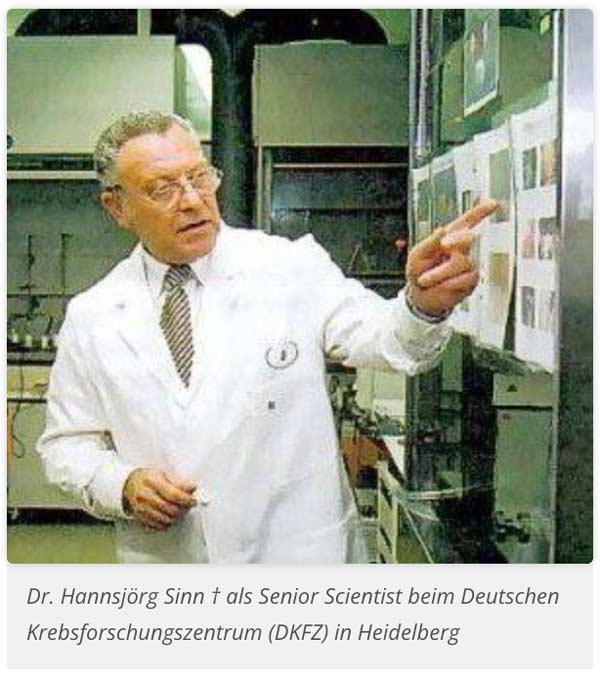 Dr Hannsjörg Sinn † worked as a senior scientist in radiochemistry and radiopharmacology at the German Cancer Research Center (DKFZ) in Heidelberg. He discovered a way to couple already approved active substances, such as methotrexate (MTX), successfully to albumin as a carrier in order to smuggle them into tumour cells according to the Trojan principle. This ideal carrier hides the active substance until it is released enzymatically at its target, the tumour. In this way the diseased tissue can be treated in a targeted manner.
Gentle and longer-lasting effect
Selective accumulation in the tumour reduces the wide range of serious side effects. Because of the coupling, MTX-HSA also remains in the body’s entire bloodstream for much longer. The pharmacological half-life of MTX-HSA is around 19 days. This means that MTX-HSA acts around 150 times longer than MTX administered on its own, whose half-life is half an hour to three hours.
Effect on various solid tumours and metastases
In preclinical studies from 1996 onwards and in several clinical phase I/II studies, the albumin conjugate MTX-HSA showed a good tolerability profile and, for some of the tumour types tested (in particular renal cell carcinoma and pleural mesothelioma), also a tumour-inhibiting effect that would not have been expected from therapy with conventional methotrexate. No effects were seen in diseases of the blood-forming system.1,2,3,4
 Because of restructuring at the pharmaceutical company involved, industrial approval of MTX-HSA has not been pursued to this day, according to the German Cancer Research Center on its website.5
Since albumin is returned from tissues and organs to the circulation via the lymphatic vessels, and MTX-HSA behaves like natural albumin, lymph node metastases can also be reached by systemic administration of such a combined compound.
In conventional chemotherapy, pure MTX is used in combination with other drugs for various tumour diseases, for example breast cancer or cerebral lymphoma.
Inflammatory processes / rheumatoid arthritis
In the course of its research, the DKFZ team also recognised that MTX-HSA can be used successfully in inflammatory processes such as rheumatoid arthritis.
Legal basis / tumour therapy with MTX-HSA
MTX-HSA is the coupling of two already approved substances (methotrexate and albumin). The conjugate can be produced by pharmacies that meet the relevant requirements under the German Medicinal Products Act.
Enabling MTX-HSA as an accompanying therapy
In a phase I study in 2002, weekly administration over two to three weeks appeared to be well tolerated.2 The treatment of patients has shown that administering MTX-HSA often has a disease-stabilising effect, without the well-known side effects of chemotherapy.
Use of albumin carrier therapy
Until preparations for industrial production are complete, patients and doctors can obtain the active substances of albumin carrier therapy via pharmacies. We can recommend the pharmacy in Freiburg without reservation. MTX-HSA can be administered intravenously by any doctor in private practice (oncologist).
Information on the cancer therapy
Links for doctors and anyone interested
Notes on content provided by authors
Comments
Loading comments …
Become a member to comment publicly. GAIA members write comments in the members' portal — under their nickname, visible to everyone.