Challenges in the Energy Supply System


The warnings are increasing
The coming months will bring further major challenges for the European electricity supply system. An actual physical halt to deliveries of Russian gas through the Ukraine pipeline on 1 January 2025 is still on the cards, and has become very likely now that OMV has terminated its contract. The previously announced halt to deliveries of Russian gas to Austria’s OMV from mid-November 2024 has so far had no noticeable effect.
Officially, the gas supply continues to be presented as secure, even if deliveries actually stop. However, the European Court of Auditors warned as early as the summer of inadequate preparation, particularly with regard to price formation in the event of a renewed gas crisis. Another energy price shock would hit the already badly battered economy hard. So the situation is anything but relaxed.
There also remains the big unknown and uncertainty about what would happen if, in addition, a large-scale and long-lasting cold spell occurred in January or February for the first time in years. After the dark doldrums at the beginning of November and now in mid-December 2024, there were very clear warnings that such a situation might then no longer be manageable.
The most recent dark doldrums on 11 and 12 December put enormous pressure on the European electricity market and led on 12 December to record prices of almost 1,000 euros per megawatt hour (MWh), the highest prices in 18 years. Normally a MWh currently costs around 100 euros. Prices for balancing energy also rose to several thousand euros. Not good conditions for a stable and secure supply in the coming winter.
In the worst case, there could also be large-scale load shedding (electricity shortage) in Central Europe for the first time, if not enough electricity can be produced or transported to the regions where it is needed. The debate about this is very heated, with mutual recriminations, so only an actual event will make clear that it was meant seriously. Unfortunately, many players and decision-makers seem unable to anticipate the seriousness of the situation and take timely action. So once again people will only “learn the hard way”. And the turkey illusion sends its regards.
Should the winter nevertheless pass without major problems, which we do not rule out, the next big challenge is already waiting next spring: the problem of non-controllable photovoltaic systems, which numerous experts from the renewable energy sector are now warning about, and for which critical grid situations are expected between Easter and Whitsun 2025, especially on sunny Sundays. A core problem is the continuing lack of storage capacity, as well as incorrectly configured home storage systems. Another example that well-meant is not always better – just as there are unfortunately still a number of serious errors in implementing the energy transition, which are examined in more detail in “Die Energiewende und die steigende Fragilität des europäischen Stromversorgungssystems” (The energy transition and the increasing fragility of the European electricity supply system).
At the same time, the practical analysis “Notstromversorgung – Durchdachte Konzepte statt Schnellschüsse” (Emergency power supply – well-thought-out concepts instead of knee-jerk reactions) shows that a great deal could be done better on the preparedness side too, and that a lot of money is repeatedly spent unnecessarily here. There is an urgent need for action on the energy transition, but at present no serious efforts to change course can be seen in either Austria or Germany – not least because of the political situation. On the contrary, polarisation threatens to lead to even greater chaos.
Lessons from the recent floods
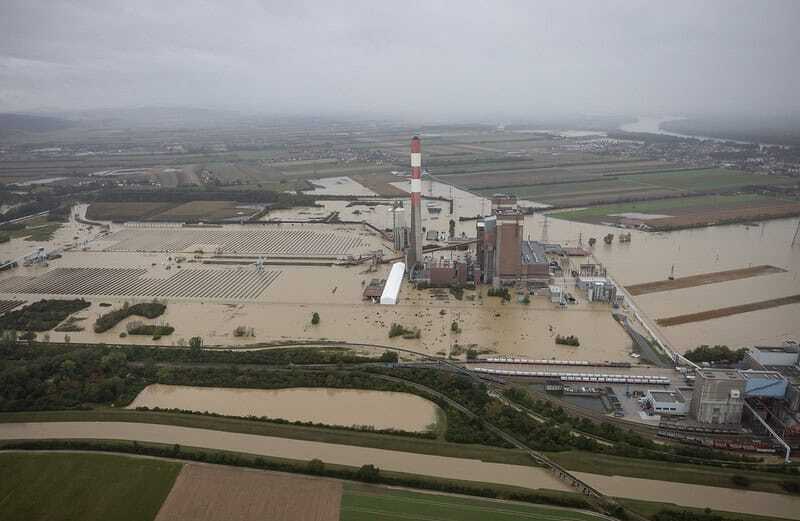
Going beyond energy supply, Peter Erlhofer and Herbert Saurugg also looked at the recent floods and the problem of inadequate safety communication from a systemic perspective.
One important finding, unfortunately, is that, as with the Ahr floods in 2021, there was again a lack of sufficient safety communication and guidance in advance. This caused far more damage than necessary. A similar failure was seen in the events in Spain a few weeks later. We must finally be better prepared and get ahead of the situation, not least because climate change is forcing us to and the damage is becoming ever more expensive and hardly affordable.
Especially with flash floods, there is often very little time to act. This only works if appropriate precautions are taken in advance. Warnings are often possible only at very short notice. With larger events, there is a danger that the potentially affected area cannot be clearly delimited. This is where all of us as citizens are called upon.
Warnings are often issued for events that then do not occur, or not with the predicted intensity. As a result, many people no longer take warnings seriously. A change of culture is needed here: better to react unnecessarily ten times and be prepared than to be nastily surprised once.
Read the whole newsletter (German)
Kind regards Herbert Saurugg and Sandra Kreitner

For years I have been publishing extensive analyses on my website for the event of a blackout.
Since 2019 also in cooperation with GAIA: my newsletters are also published here for interested readers when they appear.

Notes on content provided by authors
Comments
Loading comments …
Become a member to comment publicly. GAIA members write comments in the members' portal — under their nickname, visible to everyone.