GfKV Newsletter #08 – Society for Crisis Preparedness

In our last GfKV newsletter #07 before Christmas 2021 we encouraged you to make personal provisions for coming crises,
as a number of facts had pointed to a critical development. Thank God, the options we outlined did not materialise last year. Was this warning exaggerated, or – as some critics accuse us – “scaremongering”?
 No, we merely wanted to draw your attention to a possible critical development and help you increase your own self-efficacy should the worst happen. In other words, risk communication (German) of the kind that is unfortunately currently lacking from the authorities or comes too late. This is also a lesson from the most recent major power cut in Tyrol (early August): “It is important that communication between the authorities works. Fast and precise initial information about the extent and possible duration is decisive for the further course of events.” What is unfortunately forgotten here once again is that it is not only about the authorities but about the general public, namely the population. Next example: the current heavy rainfall in Vorarlberg. The civil protection alarm was triggered at 9:30 pm, when the primary event had long been over in the afternoon. The warnings issued beforehand hardly reached the population, because the information and instructions people needed to act came too late or did not reach most people at all. In Germany, too, the findings after the latest events are not much better, even though this lesson was already drawn from the catastrophic event in the Ahr valley a year ago.
It is not just about triggering a siren alarm when the damage has already occurred, but above all about informing people in advance and in stages about developing crises and supporting them with instructions for action. None of this is new, but we apparently still haven’t learned, even though we have known for some time that extreme weather events will occur even more frequently in future. Shortly after the events there is always great consternation, and soon afterwards everything is forgotten again and things carry on as before. Resilience (German), that is, the ability to learn and adapt, looks different!
We ourselves are called upon! Extreme weather events are becoming increasingly dynamic and even harder to predict, especially with regard to the direction in which storms move. It is better to be warned “as a precaution” in a crisis without ultimately being affected than too late or not at all. The “danger” of a false alarm is often the (pretended) reason why warnings are not issued preventively. It is not about finding “culprits”, but about presenting concrete proposals for how early warnings can work better in future.
A lot has happened in recent months – not all of it for the better (examples are documented by Herbert Saurugg (German) on his website). It is not possible to communicate all the findings from developing crises via newsletter. Hence our request: visit the above website regularly, so you stay up to date with developing crises.
No, we merely wanted to draw your attention to a possible critical development and help you increase your own self-efficacy should the worst happen. In other words, risk communication (German) of the kind that is unfortunately currently lacking from the authorities or comes too late. This is also a lesson from the most recent major power cut in Tyrol (early August): “It is important that communication between the authorities works. Fast and precise initial information about the extent and possible duration is decisive for the further course of events.” What is unfortunately forgotten here once again is that it is not only about the authorities but about the general public, namely the population. Next example: the current heavy rainfall in Vorarlberg. The civil protection alarm was triggered at 9:30 pm, when the primary event had long been over in the afternoon. The warnings issued beforehand hardly reached the population, because the information and instructions people needed to act came too late or did not reach most people at all. In Germany, too, the findings after the latest events are not much better, even though this lesson was already drawn from the catastrophic event in the Ahr valley a year ago.
It is not just about triggering a siren alarm when the damage has already occurred, but above all about informing people in advance and in stages about developing crises and supporting them with instructions for action. None of this is new, but we apparently still haven’t learned, even though we have known for some time that extreme weather events will occur even more frequently in future. Shortly after the events there is always great consternation, and soon afterwards everything is forgotten again and things carry on as before. Resilience (German), that is, the ability to learn and adapt, looks different!
We ourselves are called upon! Extreme weather events are becoming increasingly dynamic and even harder to predict, especially with regard to the direction in which storms move. It is better to be warned “as a precaution” in a crisis without ultimately being affected than too late or not at all. The “danger” of a false alarm is often the (pretended) reason why warnings are not issued preventively. It is not about finding “culprits”, but about presenting concrete proposals for how early warnings can work better in future.
A lot has happened in recent months – not all of it for the better (examples are documented by Herbert Saurugg (German) on his website). It is not possible to communicate all the findings from developing crises via newsletter. Hence our request: visit the above website regularly, so you stay up to date with developing crises.
Neustart blackout simulation
 The 1st edition of the Neustart (restart) blackout simulation (German) has been a great success and is now almost sold out. A few copies are still available (German).
The 2nd edition will be commissioned once a sufficiently large number of binding orders has again been received. If you are interested in a larger quantity, please contact us.
The 1st edition of the Neustart (restart) blackout simulation (German) has been a great success and is now almost sold out. A few copies are still available (German).
The 2nd edition will be commissioned once a sufficiently large number of binding orders has again been received. If you are interested in a larger quantity, please contact us.
#krisenfit
Fortunately, there have now also been the first preparedness offers under the umbrella brand “Mach mit! Österreich wird krisenfit!” (Join in! Austria gets crisis-fit!) (German) We are confident that demand will keep rising! We are still looking for partner organisations to support us (German) with their logo and their own crisis preparedness activities. Our logo (German) can be used for the respective activities. With this umbrella brand (recognition value) we reach more people and can contribute even better to crisis preparedness.
“Schritt für Schritt – Krisenfit!” (Step by step – crisis-fit!)
 We are particularly pleased to have won Sandra Kreitner (German), an incredibly valuable activist, as ambassador for Bavaria. She is currently setting up the partner initiative “Schritt für Schritt – Krisenfit!” (German) in Germany. Since we now also have some members from Germany and Switzerland “on board”, we are preparing an organisational expansion of the Austrian Society for Crisis Preparedness (GfKV) with its own national organisations. The topics of “preparedness” and “crisis fitness” are current across borders.
Children’s podcast
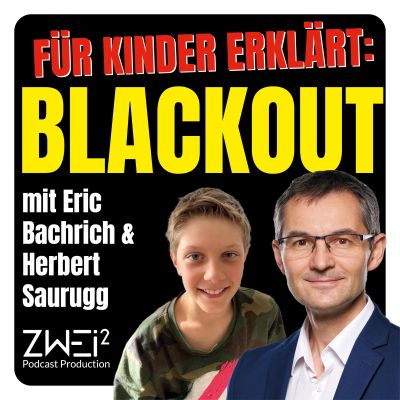 Children are particularly affected in crises. We have therefore provided a podcast series for children (German) in which Herbert Saurugg explains the topic in an age-appropriate way. This helps children (but also young people and adults) to be better prepared for this topic and to become crisis-fit. That relieves parents in a crisis. It is important that you as parents contact the care facilities (nurseries, day centres, schools, boarding schools, student residences etc.) in advance and find out what crisis preparedness plans they have. This reduces your stress level when the time comes, because you know your children are well looked after. If there are no concrete crisis plans, you should point out this shortcoming. There is a set of questions (German) for this. We are also currently working on a guide for schools, which will again be made publicly available (German). There are also two children’s books (German), which convey the topic vividly and in a child-friendly way. Please recommend these aids to others as well.
Possible disaster winter 2022/23
As you can see from media reports, we are in a serious energy crisis, even if it is not clearly addressed everywhere. While the crisis is being discussed intensively in Germany, authorities and media in Austria continue to rely on the principle of hope and try to play down the seriousness of the situation. In Switzerland, too, a veritable crisis is expected and this is already being actively communicated.
Our warnings are also clear! Hope alone is not enough, especially when many indicators point to developing crises and major social upheaval is to be expected.
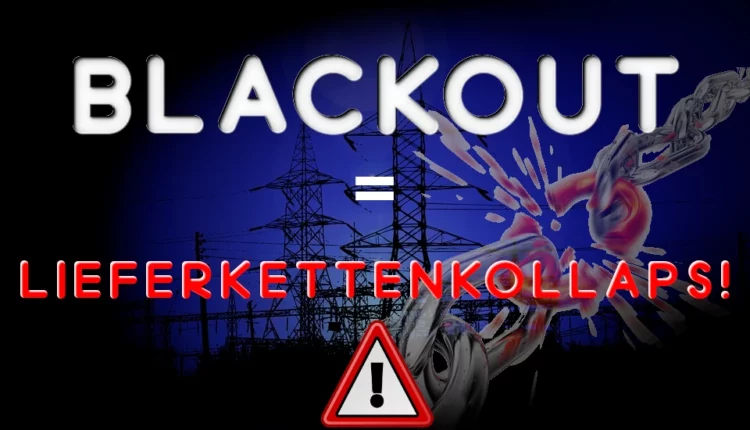
We are in the most severe energy crisis for at least 45 years, which could still have unpleasant consequences for us! Current developments suggest a disaster winter 2022/23 with far-reaching interruptions to gas and electricity supplies. In the worst case, even a blackout looms. Each of these events alone would lead to serious supply chain disruptions and supply shortages. If they occur at the same time, the problems can become existence-threatening. All the more important, therefore, is effective crisis preparedness at all levels of administration (authorities) and in the private sphere in order to prevent worse.
A blackout scenario (German) and various electricity shortage situations have been discussed for years, but a natural gas crisis such as is currently emerging in Europe seemed rather unrealistic until recently, even though such a disaster was already discussed in 2018 in the cross-state exercise (LÜKEX 2018) “Gas shortage in southern Germany”. The findings from it are shocking (German) and the assessed consequences devastating. A global natural gas crisis would trigger fatal supply chain disruptions and supply chaos.
At the same time, the situation in the European power grid has come to a head massively in recent months: electricity prices are going through the roof, not only because of the horrendous gas prices. Many countries are also short of production capacity. In France, for example, where around half of the nuclear power plants have currently been taken off the grid and nobody yet knows whether they will be available again by next winter. France was previously the main electricity exporter and has already become an importer in summer. Electricity for the 4th quarter is already being traded in France at well over €1,000 per MWh and in some cases over €2,000. For something that not so long ago was traded at under €100, that is an enormous price increase. The exploding gas prices are also partly responsible; they too have exploded from $ 3.50/MMBtu (million British thermal units) in August 2019 to $71.00/MMBtu recently (global natgas benchmark ICIS TTF). In addition, far-reaching gas supply stops are being considered because of the Ukraine war and the sanctions. Missing energy, however, cannot be replaced by anything, not even by any amount of money.
The extreme drought in Europe has also meant that electricity production had to be reduced in many countries – not only at hydropower plants but also at thermal power plants that need cooling. The planned short-term reactivation of German coal power plants as a replacement for gas power plants is failing not only because of a lack of staff but also because of the coal, which first has to be procured on the world market and can no longer be transported along the Rhine to the power plants because of low water. The naively demanded 15% reduction in gas demand often cannot be implemented technically because no preparations have been made for it. For many processes it is not possible at all. Enforcing it by way of gas shortage management would only be possible through large-scale power cuts. Massive damage to infrastructure would follow. If the gas pressure drops below a certain level, safety valves are activated, all of which would then have to be put back into operation manually. By then, however, gas power plants or industrial production would long since have collapsed, as they need considerably more pressure. We should therefore prepare for a very hard winter, even if there is still a spark of hope that things will not turn out so badly.
You can find in-depth and further considerations in the systemic analysis Katastrophenwinter 2023 – Fiktion oder bald Wirklichkeit? (Disaster winter 2023 – fiction or soon reality?) (German, PDF) or in the Update 04/22, Europa auf dem Weg in die Katastrophe (Europe on the way to disaster) (German, PDF). An evaluation of current developments can be found under current situation and gas crisis in Europe (German).
So far, official bodies have relied almost entirely on the principle of “hope” and wasted valuable time for preparations. For the point is not whether it really comes to that, but that we would hardly be able to cope with such events, which threatens severe economic and social upheaval.
Call to action: personal preparedness!
That is why we once again call on you to make provisions and ask you to pass this knowledge on in your networks and to try to move as many people as possible around you to act on their own responsibility. Passively waiting for solutions to “fall from the sky” makes the situation worse! Should turbulent developments occur, social cohesion in your own environment is decisive for coping with a disaster. As long as we talk to each other and try to find common solutions, escalations are postponed. If people isolate themselves, things can quickly become very “unpleasant”. Read the review of the book “Humankind: A Hopeful History” (Im Grunde gut) (German), which clears up some myths, even if one or other statement or assessment may be open to criticism.
The previous recommendations on crisis preparedness (German) still apply. Topping up your supplies anyway is no mistake, however! Rule of thumb: be able to get by for at least 14 days without shopping! The problem is not a temporary gas or power cut, but the fact that it can take a long time before supply logistics work again.
In Austria we are currently trying, together with food retailers, food producers and logistics, to initiate an emergency supply concept so that, after a blackout, at least a simple emergency supply can be ensured as quickly as possible. It is the foundation for getting things going again at all, and for employees to get back to work in order to restart the systems!
As you can see, a lot has happened and the challenges are not getting any smaller. If you have already made sufficient provision, CONGRATULATIONS and many thanks for your valuable contribution to the resilience of our society! If you are not that far yet, we hope that this passionate appeal will encourage you to start effective crisis preparedness quickly as well. It is not too late yet!
Our aids for you:
- Do you have a plan “B”?
- Basic supplies
- Behaviour during a blackout

Kind regards and stay healthy! Herbert Saurugg, Gottfried Pausch and Franz Hein

For years I have been publishing extensive analyses of what happens in the event of a blackout on my website.
Since 2019 also in cooperation with GAIA: my newsletters are also published here for interested readers as they appear.

Notes on content provided by authors
Comments
Loading comments …
Become a member to comment publicly. GAIA members write comments in the members' portal — under their nickname, visible to everyone.