Electricity from sunlight was today. Invisible light is tomorrow.

Electricity from sunlight has served us well up to now. Neutrinovoltaics adds electricity from invisible light.
Photovoltaics already uses the visible radiation spectrum, i.e. waves with a length of 400 to 800 nm. In future we will be able to use the radiation of the much broader invisible spectrum to generate electricity.
Pragmatically speaking, according to Maxwell’s theory the cause of electromagnetic waves is the accelerated motion of electric charges. Electromagnetic fields, the flux of neutrinos and other particles of the surrounding radiation fields are now increasingly arousing scientists’ interest. This is despite the fact that scientists do not yet fully know the properties of these substances and fields, let alone can explain them fully with existing scientific theories. Nevertheless, research is under way, in particular into applications for generating energy. And interest in this research keeps growing. More and more scientists are looking for solutions to use the fields of the invisible radiation spectrum for generating electricity without harmful emissions into the atmosphere.
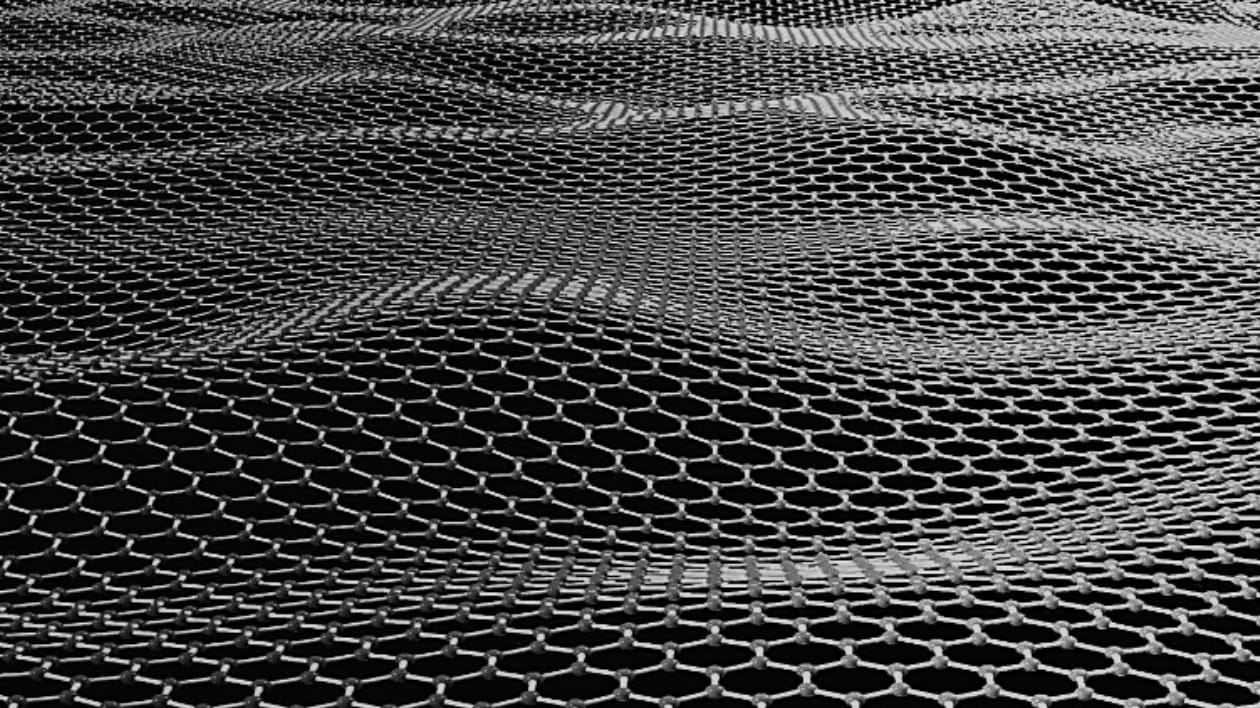
The task is not easy, because a material is needed that can convert the energy of particles from the surrounding radiation fields into electric current. At present only graphene and its special properties are known. Graphene can be used because of its peculiarities with regard to vibrations. Graphene atoms in the hexagonal crystal lattice – i.e. in a 3D plane – generate “graphene waves” that can be observed under a high-resolution microscope. And it gets even better: the stronger the emission of the fields of invisible radiation and the higher the temperature, the more intensely the graphene atoms vibrate. The vibration amplitude therefore increases considerably.
Graphene makes it possible
The article linked here (Russian), whose title translates as “Graphene is able to convert the energy of electromagnetic fields into electricity”, points out that graphene is one of those 2D materials that have a hexagonal crystal lattice and thus show signs of 3D materials. The 3D structure in graphene’s crystal lattice leads to so-called “graphene waves”, or simply “ripples”, when neighbouring regions alternate between concave and convex curvature. The stronger the influence of energy and thermal fields, the stronger the vibrations of the graphene atoms. The frequency and amplitude of the “graphene waves” increase. Theoretical studies explain that the source of this process is electron-phonon coupling, as it suppresses the stiffness of long-wave bending and amplifies out-of-plane fluctuations. Modern high-resolution scanning microscopes can image graphene’s “ripples”. Graphene offers an extremely high density to electric current. The mobility of charge carriers is record-breaking. Each graphene atom is bonded to 3 other carbon atoms – on a two-dimensional plane, mind you. So one electron in the third dimension always remains freely available for electron conduction. The cover picture of this article shows such a wave on the graphene surface with horizontal polarisation.
It can therefore be said with certainty that “graphene waves” are precisely the mechanism that paves the way for humanity to generate energy from “limitless” radiation fields of the invisible spectrum. About this mechanism for generating electricity, Professor Thibado (University of Arkansas) once said a few years ago in an interview with the magazine Research Frontiers:
This is the key to using the motion of 2D materials as a source of inexhaustible energy. Tandem vibrations cause ripples in the graphene sheet, allowing energy to be drawn from the surrounding space with cutting-edge nanotechnology.
Professor Thibado
University of Arkansas
And this “key” to obtaining electricity from the wave motion within graphene in its 3D plane was found by scientists at the science and technology company Neutrino Energy Group. They developed a nanomaterial made of alternating layers of graphene and silicon. This nanomaterial can be applied to metal foils, where it generates a voltage of 1.5 V and a current of 2 A on a 200 × 300 mm wafer. The side of the foil with the nanomaterial forms the positive pole and the back of the foil without nanomaterial the negative pole.
It is a truly momentous discovery. The general scientific community has so far recognised neither its global significance for emission-free power generation nor for electric mobility. The performance of this technology is stated in patent no. EP3265850A1 and confirmed by many independent studies.
Even an independent review commissioned by Daimler and carried out at the beginning of January 2021 by Professor Victoria Martin of the Royal Swedish Academy of Sciences confirms these positive results.
GAIA field test and series production
Numerous confirming laboratory studies on neutrinovoltaic technology and conclusions of renowned scientific centres laid the foundation for initiating the industrial implementation of this technology since 2021. Last week, at a meeting in Berlin between Holger Thorsten Schubart and me, it was agreed to herald the pre-industrial production of the first fuel-free power generators with a field test at the end of 2023 / beginning of 2024. This calorimetric field test, designed to be as broad and transparent as possible, is to be carried out in a very practical way in island mode in the DACH region (Germany, Austria, Switzerland) over a period still to be defined. Numerous Neutrino® Power Cubes deployed decentrally and operating in parallel are to help demonstrate the performance of the technology to those interested. On GAIA’s part, we suggested starting the field test with smaller devices to save time and resources. The devices for the field test may therefore initially have an output of 1–2 kW and can be upgraded later. From today’s perspective, the series-produced Cubes are planned for a powerful output of 5–6 kW. Unlike other fuel-free generators developed by a number of inventors on the basis of magnetic and electromagnetic fields, both devices have not a single rotating part.
More detailed information on the field test will follow shortly in further articles here on the platform. We particularly recommend subscribing to our newsletter.
Cooperation with India on the Pi Car
The properties and broad adaptability of neutrinovoltaic technology also allow it to be used for electric mobility. To develop this further, the science and technology company Neutrino Energy Group has concluded cooperation agreements with the Indian “Centre for Materials for Electronics Technology (C-MET)” in Pune. It is the leading government laboratory of the Ministry of Electronics and Information Technology (MeitY), headed by CEO Dr Bharat Bhanudas Kale – Fellow of the Royal Society of Chemistry in London and one of the world’s most renowned scientists in the field of energy and materials – and with SPEL Technologies Pvt. Ltd., India’s first and currently only manufacturer of supercapacitors and their improved versions. SPEL Technologies Pvt. Ltd. is also an industry partner of COERB, an initiative of MeitY-CMET. Dr Rajendrakumar Sharma, in his capacity as CEO of SPEL Technologies, is known as the “father of supercapacitors”. At a press conference in India in early February 2023, Holger Thorsten Schubart announced the development of a self-charging Pi electric car within the next 3 years and held out the prospect of investments of 2.5 billion euros in this project.
The emergence of new nanomaterials and their applications opens up great opportunities for modern scientists, researchers and industry to develop technologies that can permanently do without fossil fuels.
The Neutrino® Power Cube
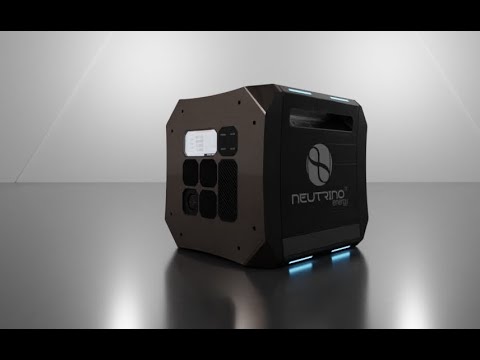
Thanks to the commitment of the Neutrino Energy Group team – made up of highly motivated and inventive energy specialists and scientists from around the world under the leadership of Holger Thorsten Schubart – this innovation has emerged as one of the most significant technological advances of the century: a device that can reliably generate electricity day and night, is compact, uses no moving parts, is quiet and, regardless of the weather, does not contribute to environmental destruction.
Notes on content provided by authors
Comments
Loading comments …
Become a member to comment publicly. GAIA members write comments in the members' portal — under their nickname, visible to everyone.










