"Free energy" replaces fossil fuels

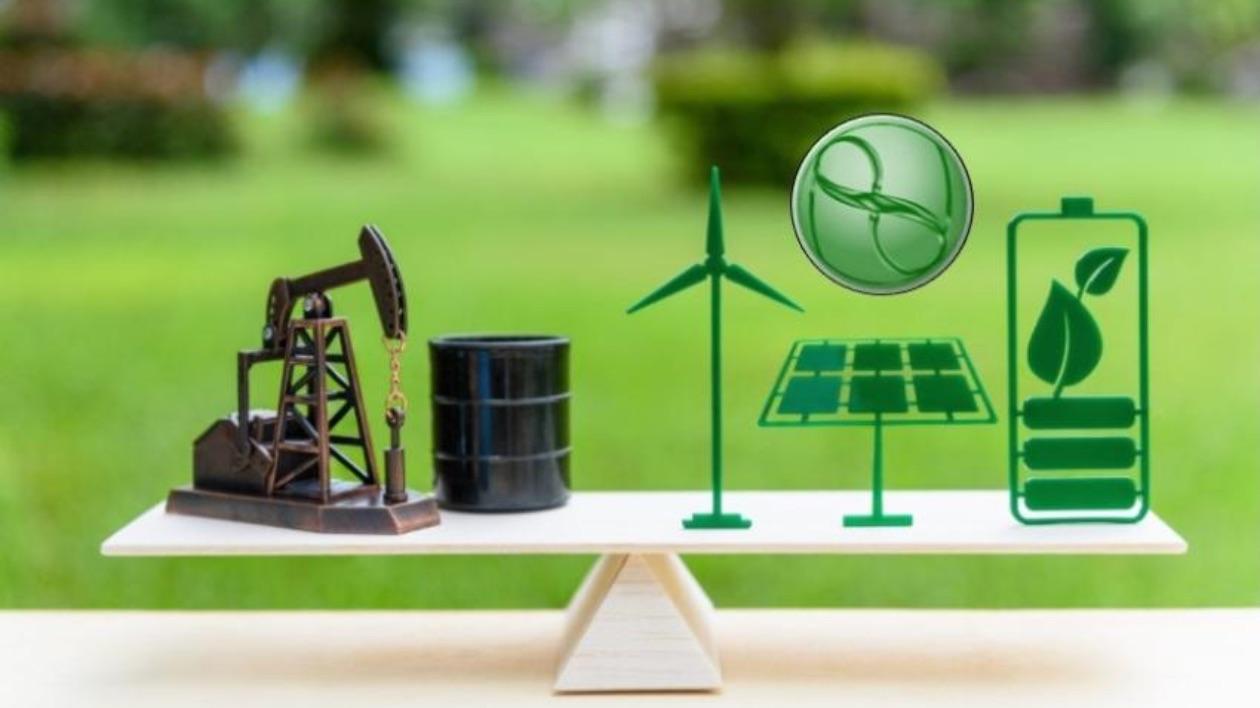
Against the backdrop of the current conflict in Eastern Europe, the carbon-free economy seems to have lost some of its urgency.
Sooner or later, however, the fighting will end and the topic of climate change will be back at the top of the agenda. According to Interfax, Igor Shumakov, head of Roshydromet, says that Russia’s climate is warming faster than the global average.
The strongest warming is recorded in Russia’s northern polar region, and in the Arctic permafrost is thawing and the area of sea ice is shrinking. A critical rise in the average annual temperature could lead to major man-made disasters in the form of destruction of buildings and structures, logistics and communication lines, and enormous methane emissions. That is why the transition to a carbon-neutral economy must not be postponed, especially when it comes to replacing fossil energy technologies.
At present the range of carbon-free energy generation technologies is rather limited, and the focus of development is on solar and wind energy, whose power generation, however, depends entirely on weather conditions. In addition, questions about recycling disused solar panels and wind turbine blades have not yet been resolved. This energy development should therefore only be seen as an intermediate step on the way away from fossil fuels.
For a long time a number of scientists, starting with Nikola Tesla, have been interested in the possibility of harnessing so-called “free energy”, which the great Serbian scientist called the “ether” and modern scientists call “radiation fields of the invisible spectrum”. The 21st century has seen scientific and technological breakthroughs in understanding the nature of the concept of “free energy” and in developing nanomaterials capable of converting “free energy” into electric current.
This nanomaterial turned out to be graphene – a two-dimensional allotrope of carbon consisting of a layer of carbon atoms one atom thick. The carbon atoms are in sp² hybridisation and are connected by σ and π bonds to form a hexagonal two-dimensional crystal lattice. It turned out that graphene cannot exist in 2D, but only in 3D. It behaves like a 3D material and provides the necessary stability. The “loophole” is the displacement of the moving atoms, which gives graphene its three-dimensional properties. In other words, graphene was never 100% flat – it vibrated at the atomic level so that its bonds did not spontaneously break apart. A team of physicists at the University of Arkansas led by Paul Thibado showed that these are so-called “Lévy flights” – patterns of small random vibrations combined with sudden, abrupt displacements. By measuring the speed and extent of these graphene waves, Thibado proposed using them to harvest energy from the environment. Graphene is exceptionally strong and elastic and has very high thermal and electrical conductivity, so it can conduct an electric current a million times higher than the maximum possible current in copper layers.
At high temperatures, according to the Fermi-Dirac distribution, some of the electrons migrate into the conduction band and “holes” remain in the valence band. This predetermines a fairly high electrical conductivity of graphene at room temperature. The conduction electrons and “holes” in graphene have zero effective mass, i.e. they cannot be stationary but move constantly at the “Fermi velocity”, which in graphene is about 10⁶ m/s and thus already relativistic. This is the reason for the very high mobility of the electric charge carriers in graphene, which is at least 2 orders of magnitude higher than in silicon, and for the “ballistic” character of their movement along the layer. The mean free path of conduction electrons and holes in graphene at room temperature is more than 1 micrometre.

Holger Thorsten Schubart, president of the science and technology company Neutrino® Energy Group
The possibility of a practical application of graphene for generating electricity was first demonstrated by a group of scientists of the Neutrino Energy Group led by the German researcher and mathematician Holger Thorsten Schubart. They created a multilayer nanomaterial of alternating layers of graphene and doped silicon that is applied to one side of a metal foil. The side of the foil with the applied nanomaterial becomes the positive pole, and the back without nanomaterial becomes the negative pole. The multilayer coating (optimally 12 graphene-silicon layers) allows more energy per unit area, which is crucial for industrial power generation products and makes it possible to manufacture compact power sources of various capacities and sizes. The nanomaterial’s ability to generate electricity is determined by the properties of graphene, which accounts for about 75% of the nanomaterial by mass. Holger Thorsten Schubart comments on the properties of graphene:
Tandem vibrations induce a “graphene” wave that results from a combination of small spontaneous movements and leads to larger spontaneous movements that can be observed under a high-resolution microscope. These vibrations, which go into resonance, make it possible to extract energy from the surrounding space with the help of state-of-the-art nanotechnology.
Holger Thorsten Schubart
CEO Neutrino® Energy
Graphene waves
The emergence of the atomic vibration resonance of graphene is due to the coincidence of the vibration frequencies caused by the thermal Brownian motion of the graphene atoms and the external influence of particles from the surrounding radiation fields, above all neutrinos.
It should be noted that the Neutrino® Energy Group manages to move very quickly from scientific invention to the industrial implementation of the development. At the end of 2023 or the beginning of 2024, licensed production of Neutrino Power Cubes – power sources with a minimum net output of 5–10 kW – is to begin in Switzerland. Such a source has sockets for 220 V and 380 V alternating current as well as a socket for direct current devices. The Cube with a planned net output of 5–6 kW has 6 separate power generation units. The Cube with a planned net output of 10–12 kW has 12 power generation units. The design features of the Neutrino® Power Cubes are intended to allow users to increase the required output by connecting additional power generation modules, each consisting of a set of densely packed power generation plates. A plate measuring 200 × 300 mm generates a voltage of 1.5 V at a current flow of 2 A. The Neutrino® Power Cube will probably be offered in the form of a switch cabinet divided into two sections: the generator section, in which the power-generating modules are installed, and the installation section of the control system.
The Neutrino® Power Cube, which generates a net output of 5–6 kW, will measure approx. 800 × 400 × 600 mm and weigh about 50 kg. The projected net price for series production by the Swiss manufacturer of the Neutrino® Power Cube with a net output of 5–6 kW is given as approx. 11,000 euros. At current electricity and heating prices in the EU, this investment will pay for itself within 2–3 years.
Local production of Neutrino® Power Cubes is also to start in Russia in the next few years.
Neutrino® Power Cubes represent a source of guaranteed, baseload-capable energy supply that can generate electricity 24 hours a day and 360 days a year.
The Neutrino Energy Group
The Neutrino Energy Group is a German-American research group. Its aim is to find ways to harness the power of the invisible radiation spectrum. As fossil fuels are limited and climate change requires the development of alternative and CO2-neutral energy sources, this research group is dedicated to an urgent problem. It has succeeded in creating a dense substance that can interact in a specific way with neutrinos and other invisible radiation. This unique substance is used to build the first neutrino photovoltaic cells for power generation. Vapour-deposited layers of silicon and doped graphene are applied to the carrier layer to make the end product. The thickness of these layers is in the nanometre range. When neutrinos and other invisible radiation strike this substance, they generate both horizontal and vertical impulses. It is crucial that the doped materials have the right layer thickness. At the optimum layer thickness, the atomic vibrations caused by the impulses are brought into resonance. As a result, an electric current can be detected in the substrate material. The hypothesis states that the amount of energy that can be harvested depends on the distance travelled in the process. With this approach it will soon be possible to charge electrical devices anywhere in the world without needing a socket or a cable. Simply “collecting” energy from the environment is a viable option. As a result, humanity will have access to an endless supply of clean energy, which will help to slow or halt global warming.
The Neutrino® Energy Group works with a worldwide team of scientists and various international research centres. They research applications for converting invisible radiation spectra of the sun, including neutrinos – high-energy particles that reach the Earth incessantly and can be converted into electrical energy.
The image rights lie with the author of the press release.
Notes on content provided by authors
Comments
Loading comments …
Become a member to comment publicly. GAIA members write comments in the members' portal — under their nickname, visible to everyone.









