Fuel-free generators


The age of fossil fuels is drawing to a close
The technologies humanity has at its disposal today, or that are already at the stage of industrial implementation, will determine what the energy industry looks like in 30 to 50 years. The age of fossil fuels is drawing to a close, regardless of the energy crisis in several European countries. For all people on our planet, this topic is more important than ever.
Instead of simply drilling holes in the ground, extracting gas and oil and selling it at high prices, the task of our time is to diversify the economy and give it an imaginative character. Consequently, the focus must be on expanding research and education while building new development institutions and unique economic zones. To put the vision of a sustainable future into practice, it is necessary to invest in new technologies and to familiarise people all over the world with these instruments.
Unfortunately, some developing countries lag far behind the industrialised countries in renewable technologies, and since these countries often do not have significant reserves of fossil fuels, their scientists are forced to concentrate mainly on applied research in energy technology. The goal should therefore be to look proactively for new fuel-free power generation technologies while paying timely attention to the growing trends in the global energy industry that follow their development. A number of countries are currently working actively on technologies for generating energy under the influence of radiation fields of the invisible spectrum. Progress in research is directly linked to the emergence of nanomaterials capable of converting the kinetic energy of the particles of the surrounding radiation fields into electric current.
Since studies have shown that graphene cannot exist consistently in the 2D plane and has 3D properties, scientists have concluded that graphene is a special material. Professor Thibado (University of Arkansas) assessed graphene’s ability to generate electricity in an interview with the magazine Research Frontiers, stating: “This is the secret to harnessing the endless energy that comes from the movement of 2D materials. Tandem vibrations result in ripples in a graphene sheet, enabling energy to be drawn from the surrounding space utilising cutting-edge nanotechnology.” All materials consist of atoms that vibrate. These atomic vibrations, called phonons, are responsible, for example, for how electric charge and heat are transferred in materials. The vibrations of metals, semiconductors and insulators are well known. But now materials at the nanoscale are being used to improve the performance of devices such as displays, sensors, batteries and catalytic membranes. What happens to the vibrations when a material becomes nanoscale?
This is the secret to harnessing the endless energy that comes from the movement of 2D materials. Tandem vibrations result in ripples in a graphene sheet, enabling energy to be drawn from the surrounding space utilizing cutting-edge nanotechnology.
Prof Thibado
University of Arkansas
Professor Vanessa Wood of the Swiss Federal Institute of Technology in Zurich (ETH) and her co-authors have shown that the vibrations of the outer atomic layers on the surface of nanoparticles are significant when the materials are smaller than 10–20 nanometres (5,000 times thinner than a human hair). This property explains a phenomenon in which the vibrations of graphene atoms lead to the formation of “graphene waves”, which can be clearly seen under a high-resolution microscope. The work of the 2015 Nobel laureates in physics Takaaki Kajita and Arthur B. McDonald, who proved that neutrinos have mass and concluded that neutrinos with a certain mass can propagate through space; the work of Prof Vanessa Wood and Prof Thibado; the work of the Massachusetts Institute of Technology on graphene and boron nitride; the results of the COHERENT collaboration at Oak Ridge National Laboratory (USA), published in 2017, on the interaction of neutrinos with mass with the nuclei of argon atoms; and many other works by scientists at home and abroad enabled a science and technology company led by the mathematician Holger Thorsten Schubart to underpin theoretically their team’s long-term experimental research results. The aim: to create a material that makes it possible to obtain an electric current under the influence of particles of the surrounding radiation fields (neutrinos, electrosmog, terahertz waves (T-rays), antineutrinos etc.) as well as through the thermal Brownian motion of the graphene atoms.
The experimental work of Holger Thorsten Schubart and a team of scientists has found the optimal composition of the material that can convert the kinetic energy of particles in radiation fields into electrical energy. It consists of up to 12 alternating layers of graphene and doped silicon, applied to a metal foil in an overall ratio of 75/25%. The choice of graphene as the predominant material is due to its hexagonal crystal lattice, so that the vibrations of graphene atoms cause “graphene waves” to occur. According to Holger Thorsten Schubart, the displacement of one atom, added to the displacements of other atoms, causes surface waves with horizontal polarisation to occur, known in acoustics as “Love waves”. Because of the peculiarities of graphene’s crystal lattice, the atoms vibrate as if in tandem, which distinguishes these movements from the spontaneous movements of molecules in liquids.
Atomic vibrations alone, however, cannot cause an electric current, so the challenge was to direct graphene’s electrons in the same direction. To do this, the internal symmetry of the material, which physicists call “inversion”, has to be broken. Normally, graphene electrons should feel the same force between them, which means that any incoming energy scatters the electrons symmetrically in all directions. It was necessary to break graphene’s inversion and induce an asymmetric flow of electrons in response to incoming energy from neutrinos and particles of the surrounding radiation fields. On the basis of research results on graphene published by other scientists, Holger Thorsten Schubart proposed that a graphene layer between layers of doped silicon would throw graphene’s electrons off balance and that the electrons near the silicon would be influenced in some way. The overall effect was what physicists call “skew scattering”, a term describing a process in which clouds of electrons deflect their movement in one direction. The stronger the energy of the incoming radiation, the more energy can be converted into direct current via a converter.
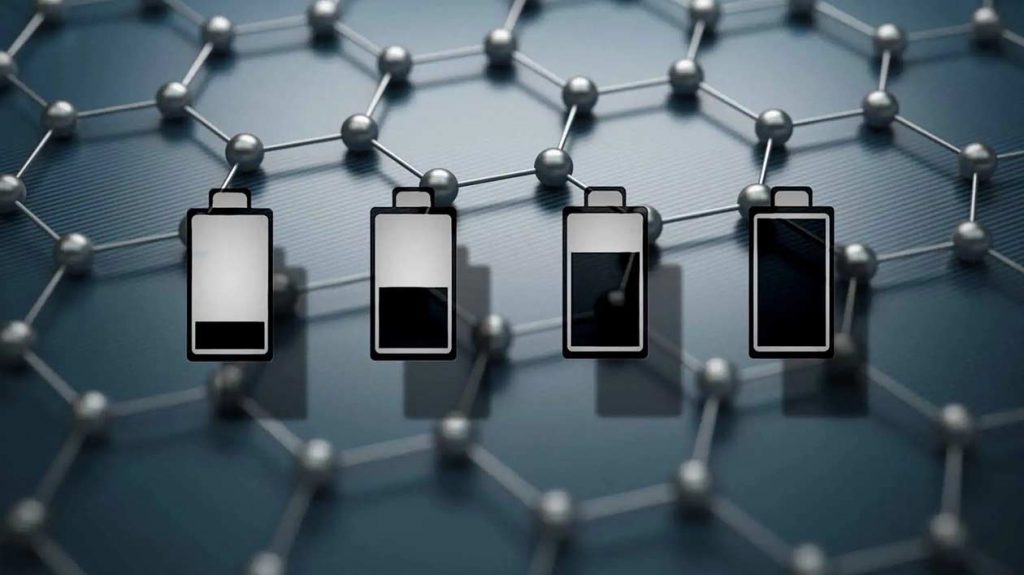
With this design, the scientists were able to obtain a voltage of 1.5 V and a current of 2 A from a plate the size of A4. In the experiments it turned out that applying the nanomaterial to one side of the metal foil made it a positive pole, while the clean back of the foil became a negative pole. Taking into account the factors that influence the spontaneous vibrations of the “graphene wave”, the Neutrino Energy Group’s scientists concluded that the electricity-generating plates should be arranged in a stack, like a stack of writing paper, to achieve maximum compactness. This technical solution has led to a convincing result: their newly created “free energy” off-grid generator (BTG) of 5–6 kW currently measures only 800 × 400 × 600 mm and weighs about 50 kg, so it can be set up anywhere in a house or flat. This will enable consumers to do without a centralised power supply in the near future. This is particularly important for European electricity and heat consumers who are worried about the trend of rising energy prices.
Neutrino energy is truly the energy of the future, all thanks to the efforts of the Neutrino Energy Group and its impressive Neutrino Power Cube. Humanity now has a long-awaited and reliable answer to the current energy crisis and a method of combating climate change. Thanks to their hard work, further fundamental changes will follow, and hopefully others will follow in their footsteps, so that in the coming years we will live in a better and more environmentally friendly world.
The image rights lie with the author of the press release.
Notes on content provided by authors
Comments
Loading comments …
Become a member to comment publicly. GAIA members write comments in the members' portal — under their nickname, visible to everyone.










