Life cannot be trivialised
Higher economic circles dictate what we are to think and believe!
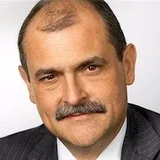
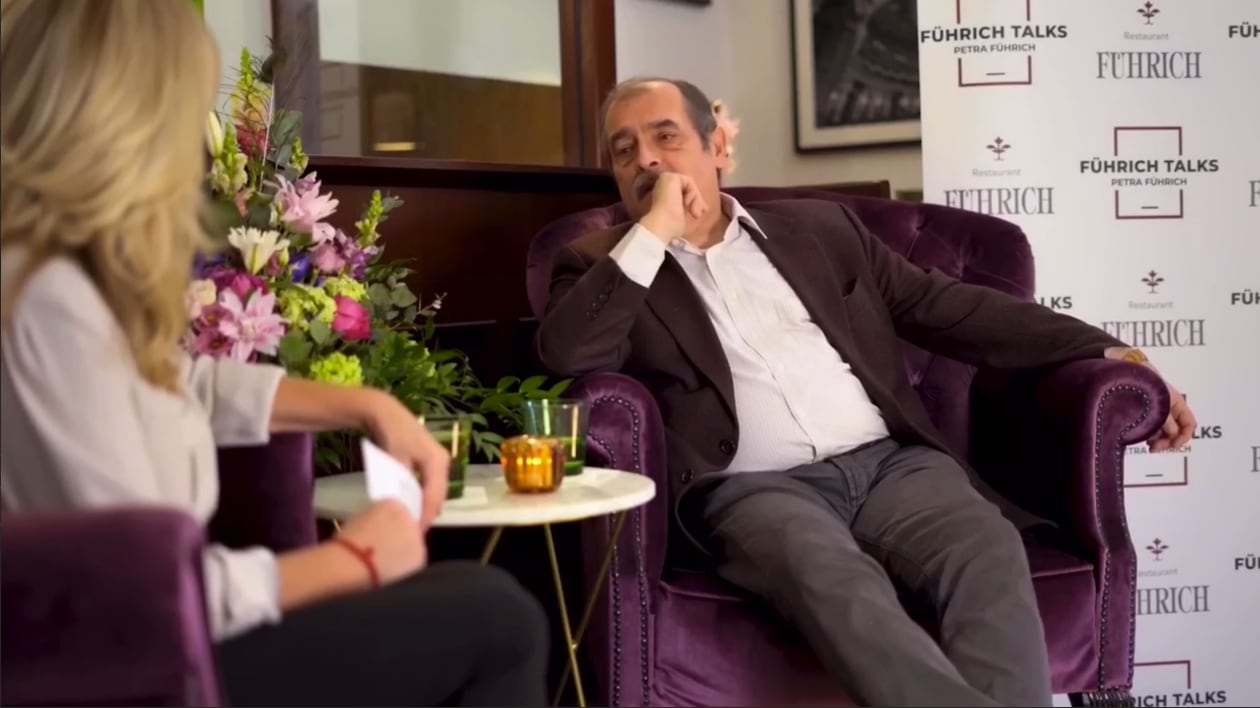
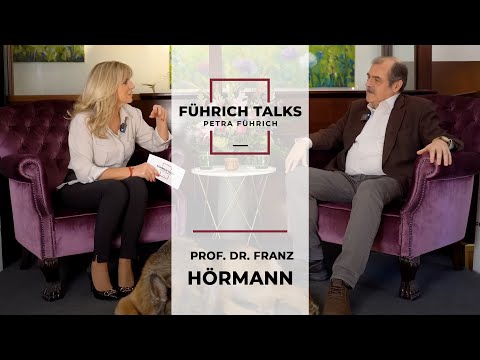
Petra Führich invited me to an interview. We discuss higher economic circles that dictate what we are to think and believe! As an economist and associate professor at the Vienna University of Economics and Business, I have been working on the monetary and financial system for many years.
I am currently reading a book from which I would like to use a quotation as a fitting introduction to my interview. The author Heinz von Foerster writes in his book “Wissen und Gewissen” (Knowledge and Conscience):
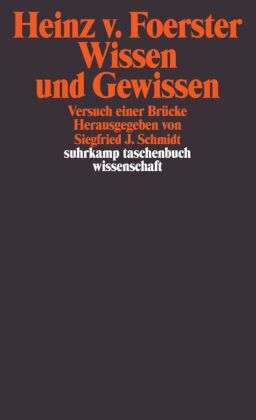 If there is anything like a central intellectual fascination in this century, it probably lies in the discovery of the observer. […]
The fascination as well as the scandal of the discovery of the observer lies in the fact that one has to recognise blindness and insight in all cognitive processes as one side of a coin whose other side we do not know. We can switch back and forth between blindness and insight. For first-order observation, the observation of facts, that is quite sufficient.
Only at the second-order level, the observation of observations, does it become apparent that facts only ever exist for an observer and that the observer does not see what he does not see. Enlightenment, critique of ideology, hermeneutics and psychoanalysis make use of this. But the problem lies in the fact, as Heinz von Foerster succinctly puts it, that the observer does not see that he does not see what he does not see.
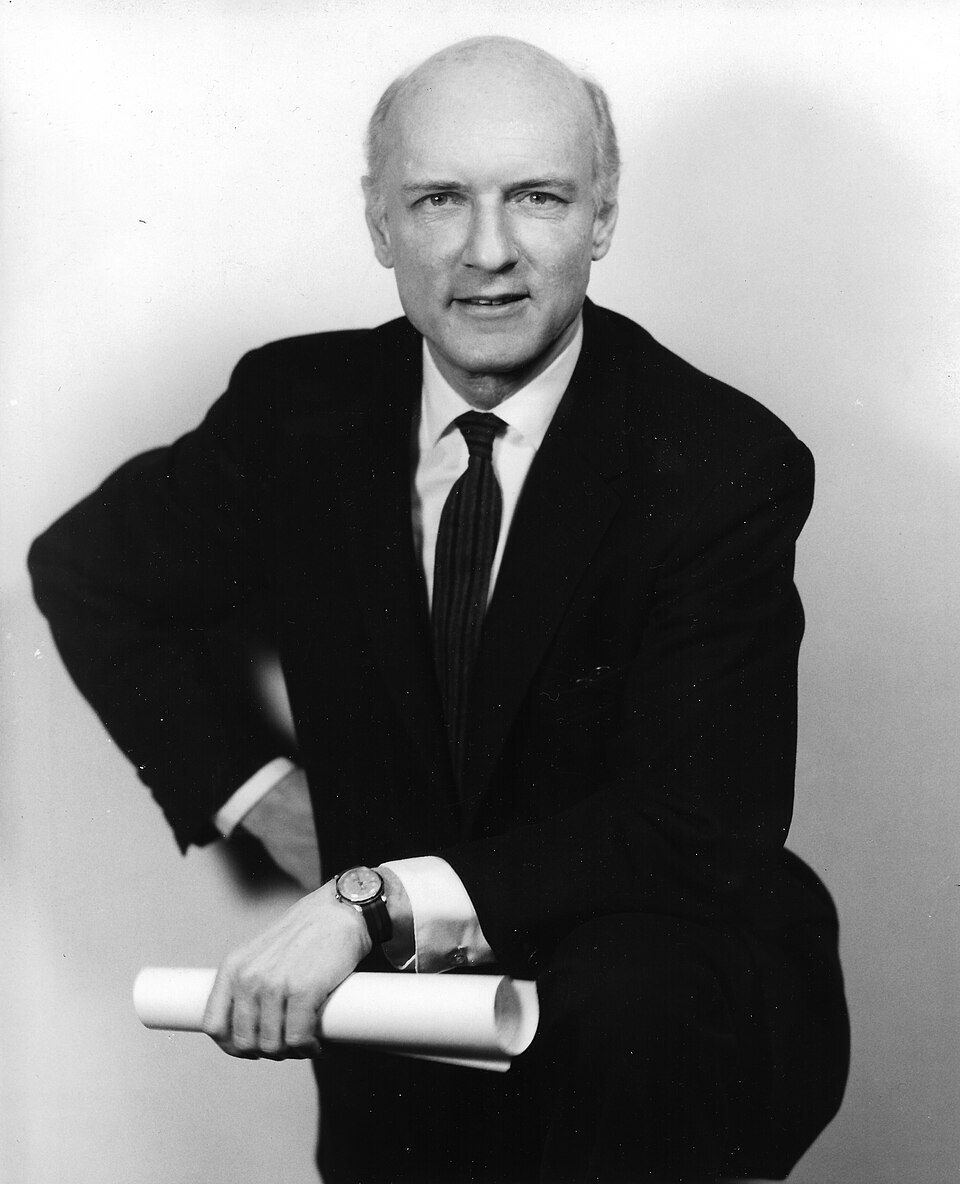
Heinz von Foerster
Wissen und Gewissen
Heinz von Foerster distinguishes conceptually between “trivial” and “non-trivial machines”. Strictly speaking, these are merely mathematical functions in which the input variable (x) and the output variable (y) can be perceived by an outside observer. We all know the simplest case of a trivial machine from our school days:
y = kx + d
A simple equation of a straight line. If we measure X and Y values for certain events and plot them on graph paper, we can then algorithmically – e.g. using the method of least squares – fit a regression line through the empirically determined cloud of points and in future, instead of determining a Y value empirically, i.e. by experiment, for each X, simply insert the X value into the equation and thus obtain an approximate value for Y by calculation instead of measurement. Strictly speaking, we can only do this within the limits of X for which we have previously taken measurements (i.e. determined Y values); this makes the calculation an interpolation and not an extrapolation (outside empirical measurement ranges). This procedure is commonplace in engineering and the natural sciences and has proved its worth accordingly. Heinz von Foerster, however, points out that there is another form of equation which presents the observer with much greater, almost insurmountable challenges. It has the form:
y = f(x,zt)
with
zt = f(zt-1)
Here z is a “hidden variable” that is not accessible to the outside observer. In addition, it always depends on its own value in the previous period, i.e. zt is a function of zt-1. Thus a “secret history”, invisible to the outside observer, is hidden in the series of zi. I already used this modelling approach at the end of the nineties of the last century to prove that published annual financial statements have no meaningful information content. For in accounting, the “secret history of the zi” very much exists, in the form of internal accounting (cost accounting, investment and financial plans, etc.), i.e. all the calculations that are relevant to management’s decisions but are not communicated to the capital market. And of course all these values also depend on their own values in the previous period, since budgets and their remaining balances exist. Under these conditions, however, it is mathematically proven that neither causal relationships can be perceived nor forecasts made between the variables X and Y. Published balance sheets thus lose all meaning and relevance – for mathematical reasons! (see www.antibilanz.info (German)).
A “hidden history” is, however, also found “inside” every single living being, in the form of its biography. Without knowledge of this biography, living beings can neither be explained causally by an outside observer nor can their behaviour be predicted. It is therefore understandable that a plutocratic elite, which draws up its plans according to the naive basic arithmetic rules of financial economics and then wants to implement them accordingly, prefers to “trivialise” the population, i.e. turn people into automata that can be interpreted unambiguously and whose behaviour is predictable (the concept of transhumanism). Only then can the financial plans stemming from naive positivism appear relevant and feasible to the plutocrats. In fact, however, they thereby rob their fellow human beings and other living beings of their freedom (of decision). Trivialisation goes hand in hand with reducing the options available to the subjects to be steered. The insights of the 1927 Solvay Conference, with the central position of the observer for the results of experiments, have still not reached this “financial elite”, let alone been understood in their implications. This is the main reason for the turning point now taking place, in which “second-order observations” (observations of observation processes including the observer, instead of simple facts) will be decisive and creative people will take responsibility for their ideas and communications themselves, in love and freedom, empathy and voluntary commitment.
Indoctrination by higher economic circles (German)
Multiparadigmenwechsel
Anyone who would like to read more from me or join the discussion is invited to follow my Telegram channel. In the channel “Franz Hörmann | Multiparadigmenwechsel” (multi-paradigm shift) I regularly post interesting material.
Notes on content provided by authors
Comments
Loading comments …
Become a member to comment publicly. GAIA members write comments in the members' portal — under their nickname, visible to everyone.










