Neutrino Energy Group Innovation Boost: Five Billion Euros


The German car industry is at a crossroads
In view of the enormous competitive pressure from Asia and the challenges of electric mobility, new impetus is needed to keep the industry on course. This is exactly where the Neutrino® Energy Group comes in. With an investment of five billion euros in research and development in Germany, it wants to support carmakers so that they can get back out in front in a rapidly changing world.
“The German car industry is in the process of reinventing itself. But despite all efforts, additional financial strengthening is urgently needed so as not to lose touch with international markets.”
Holger Thorsten Schubart, CEO Neutrino® Energy Group
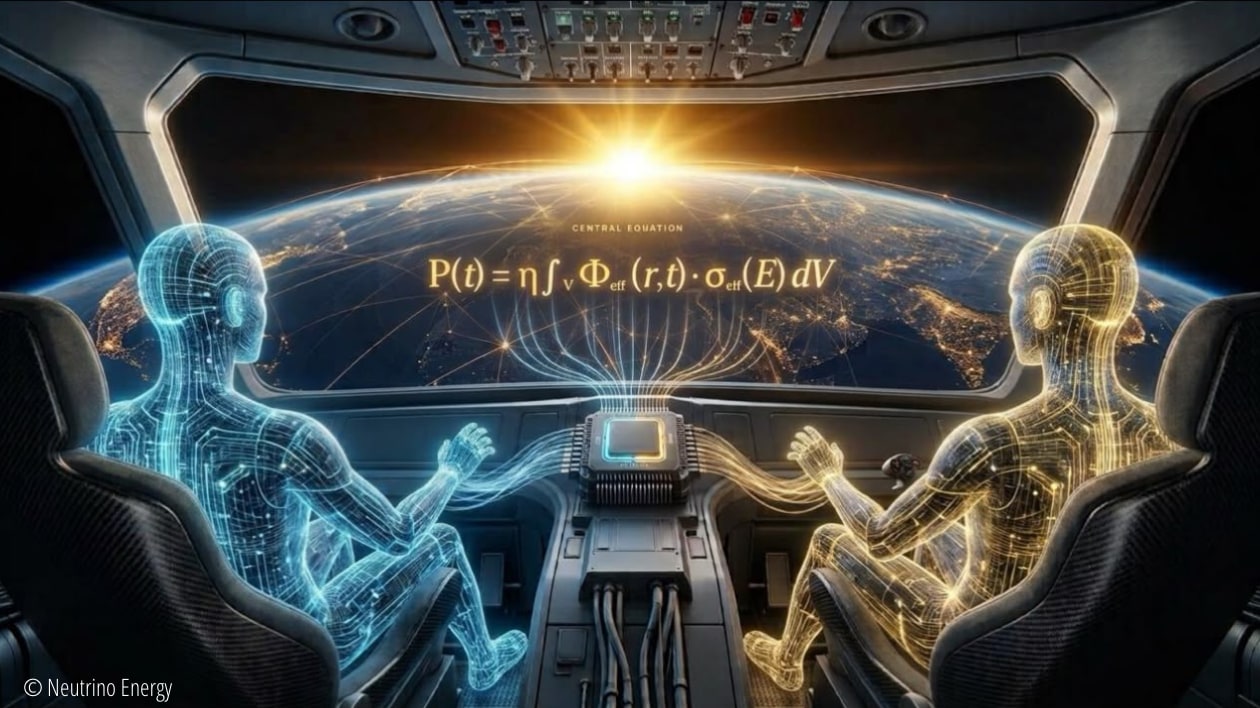
Schubart speaks of a five-billion-euro boost for innovation that could considerably strengthen the industry’s capacity to innovate – especially in the key areas of electric mobility and digital technologies. The German car industry, once the world leader, is under growing pressure to reposition itself in a time of technological upheaval. Schubart sees this not only as a challenge but also as a unique opportunity. “Germany has a long tradition of innovation leadership, especially in mobility. But to preserve this status, new, bold steps are needed. The market is developing fast, and the competition from Asia and elsewhere is not asleep.” At the heart of Schubart’s vision is the Neutrino Energy Group’s Pi Car concept. Using neutrinovoltaic technology, which uses the kinetic energy of neutrinos as well as other invisible radiation and temperature differences to generate electricity, the Pi Car could operate completely independently of conventional charging infrastructure. This technology could revolutionise the operation of electric vehicles, especially in urban areas. Vehicles that charge themselves while driving or standing still? A vision that is suddenly within reach.
“Imagine,” says Schubart, “a vehicle collecting enough energy from its surroundings through its bodywork in one hour at 20 degrees Celsius to drive up to 100 kilometres. Day and night, even in an underground car park. That is not a distant dream but a new technology which – although not yet fully mature – already exists today. And we are ready to turn it into reality together with the car industry and research partners over the next few years.”

This is made possible by micro-vibration energy converters based on graphene and doped silicon and integrated into the vehicle’s bodywork. This technology could take electric mobility to a whole new level and give the German car industry back a badly needed technological leadership role. But it is about more than technological progress – it is about the future of the entire industry. The current job cuts and closures of production sites are only a symptom of a deeper crisis that cannot be overcome without new innovations.
“Such a powerful boost to innovation could give the industry a fresh start not only technologically but also economically and ecologically,” says Schubart. “The German car industry must regain its old strength and put itself at the forefront of the technological revolution. What we need now is a bold step forward – and that is exactly the step we want to make possible with our investment and partners for implementation.”
Where do the five billion euros come from?
Schubart explains that the Neutrino® Energy Group generated this sum by selling licences for Neutrino Power Cubes and selling preference shares to international partners, and that further international partners are ready to support the new technology.
“The money is already there,” says Schubart. “Unfortunately, because of the strict compliance rules tightened by the war in Ukraine, we still have to overcome legal hurdles to secure access to these funds within the EU. I am not sure whether, by excluding certain financial resources from the market, interest-driven policy has not also been made, and is being made, to the advantage or disadvantage of certain technologies. What must not be, cannot be.”
Despite these challenges, Schubart remains optimistic. He sees the possibility that the investment could transform the entire German car industry.
“The idea of promoting new technologies in Germany will prevail – that is inevitable. Progress cannot be stopped. Either we take up this challenge together and actively help shape the future, or we risk falling further behind.”
An optimistic look into the future
For Schubart there is no question: Germany must rely on new technologies to maintain its leading role in the car industry.
“If we missed this opportunity, it would be a serious mistake,” he warns. “But I am convinced that qualities such as creativity, courage, diligence and willpower, which Germany has shown in the past, still exist today and will become more visible again with the right impetus.”
Source: pressetext.com, text: David Kornblum, Gudrun Weise and Michael Postulka (German)
Notes on content provided by authors
Comments
Loading comments …
Become a member to comment publicly. GAIA members write comments in the members' portal — under their nickname, visible to everyone.