Neutrino Energy: Transformation of the Energy Sector


Nanostructures as the basis of successful energy converters
“Neutrinovoltaics will become better than photovoltaics, because it uses all kinds of radiation from space, from the Earth and from the environment, so that electricity can be harvested independently of the sun at any time of day or night,” is how Prof. Dr.-Ing. habil. Jochem Unger of the Technical University of Darmstadt summed up his commitment. ”[…] Decentralisation comes first. At the same time, the efficiency of all electrical systems must finally be increased.”
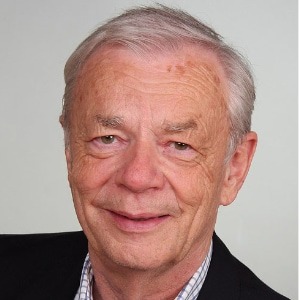
Prof. Dr. Jochem Unger (1944–2023) was a physicist and mechanical engineer specialising in aircraft construction and space technology. He taught heat, control and environmental engineering at the FHD (Darmstadt University of Applied Sciences). In 1991 he was appointed honorary professor of mechanics and physics at the Technical University of Darmstadt. He also became known as the author of numerous specialist books, including “Alternative Energietechnik” (Alternative energy technology, German). The topic of voltaics, especially neutrinovoltaics, fascinated him so much that from 2021 he became a member of the scientific advisory board of the Neutrino Energy Group in Berlin.
He came across the Neutrino® Energy Group on the internet at the time and put critical questions to the company, whereupon its CEO got in touch with him personally. The intensive exchange with Holger Thorsten Schubart marked the beginning of his path from former critic to enthusiast.
In his commitment to the neutrino idea, Prof. Dr. Jochem Unger wanted to establish this technology in society. “I am trying to make the neutrino idea socially acceptable,” the physicist explained, stressing that he was already working to bring more and more colleagues on board. He deliberately approached professors who had not yet spoken publicly on the subject. The initial reactions were often reserved, and many were worried about Unger’s reputation. “But everything started somehow at some point,” Unger explained. He drew a comparison with space travel, recalling that in the past nobody believed signals could be sent from Mars to Earth. Radiation from space is now measurable and detectable.
Unger was aware that the path would not be easy: “Of course there will be resistance. You will be confronted with various prejudices, such as the accusation that you are talking about a perpetual motion machine or free energy. But that is not the case! The neutrino idea is about using particles and radiation from space and the environment, which – similar to photovoltaics – are to be converted into electricity. This is done by special converters developed by the Neutrino Group.”
It is particularly important not to give sceptics anything to attack, Unger said. He criticised the fact that nonsense is often spread in esoteric circles in order to fleece gullible people financially. “That is a catastrophe,” he said. Concepts from the parasciences were too uncertain for him, whereas the neutrino concept had a solid scientific basis.
Asked whether it was realistic that enough energy could be obtained with multilayer films from cosmic radiation and environmental influences to power, for example, a mobile phone charger, a desk lamp or even a car, Prof. Dr. Jochem Unger answered clearly back in 2021: “Yes, I consider that absolutely possible.” This is because the entire invisible radiation spectrum around the Earth is used – not only neutrinos, but also electromagnetic waves and other known and unknown influences. Although the technology bears the name “neutrino”, it is by no means exclusively about using the energy of individual neutrinos.
The physicist continued to examine how the technology works in detail. “I will test the specially coated film to establish exactly where the energy comes from,” Unger explained. A particularly revealing test would be using it in a Faraday cage, such as a lift. If the technology also works reliably there, it is clear that particles interacting with the doped base materials of neutrinovoltaics – especially optimised graphene and silicon – play a role. These so-called “atomic vibrations” in nanostructures could provide a deeper understanding of the mechanisms.
Asked whether he believed that the economic interests of large corporations could hinder the activities of the Neutrino® Energy Group, Unger said: “You can count on it!” However, he did not expect a change of thinking in society any time soon.
(Editor’s note: Prof. Jochem Unger died unexpectedly on 31 March 2023 – shortly after he had announced his successful test results.)
Neutrinovoltaic technology is something for the future with very great potential for genuine sustainable change, and it must be developed consistently at all levels. […] It is up to all of us ourselves to pave this way or support it, as I myself will now do with the fullest conviction
Prof. Dr.-Ing. habil. Jochem Unger, THD (Technical University of Darmstadt)
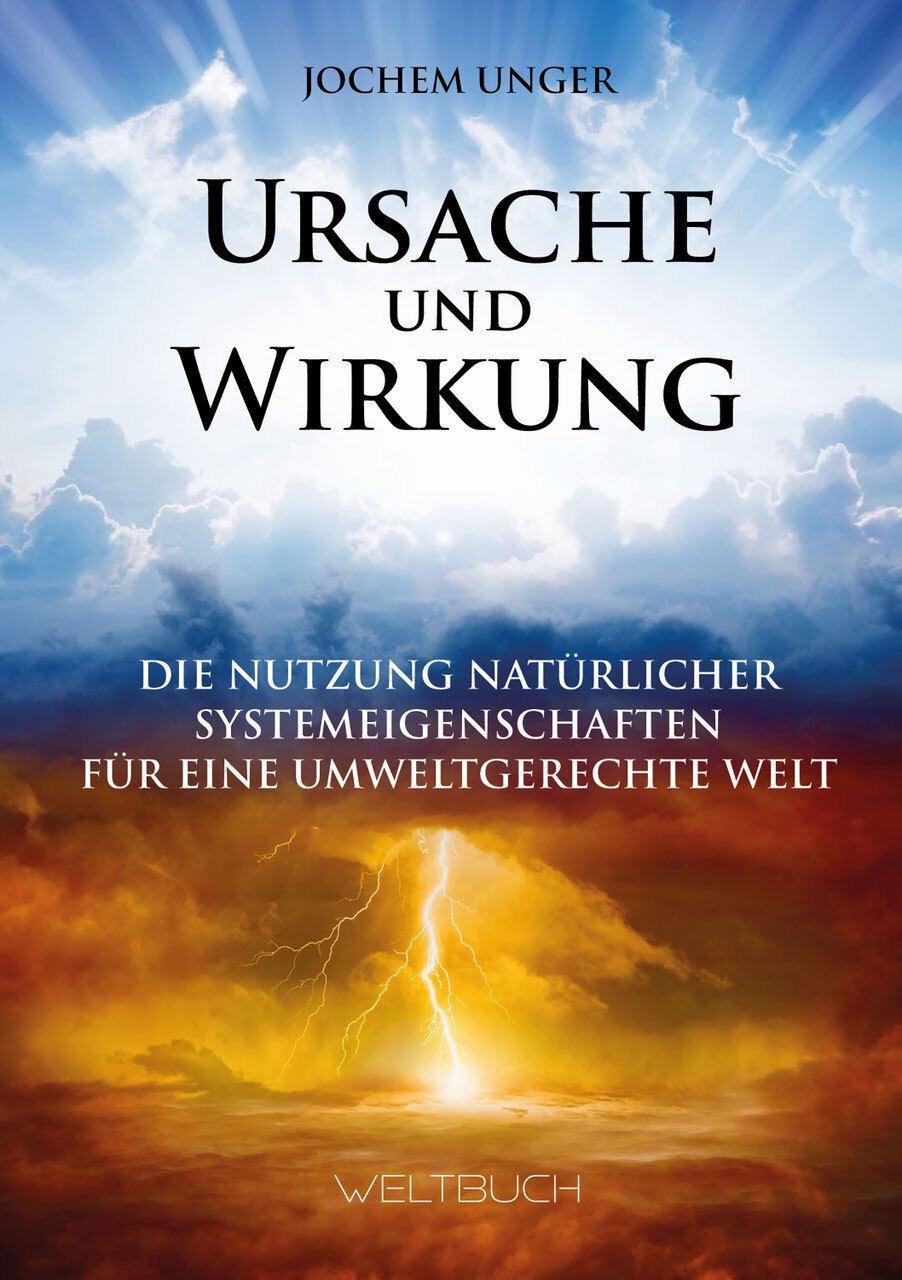
Ursache und Wirkung (Cause and effect) – using natural system properties for an environmentally sound world
Technical failure in modern societies can be observed again and again. The causes are closely linked to belief and ignorance. In the world of our ancestors, ignorance was replaced by the belief celebrated by shamans. Even today one can hear the saying “faith is more than knowledge”. The majority of people are still trapped in their respective world of belief today. […]
Source: pressetext.com, authors: Kerstin Heise, Samuel Teshome and Klaus Wieland (German)
Source: energiewirtschaft.io (German)

Notes on content provided by authors
Comments
Loading comments …
Become a member to comment publicly. GAIA members write comments in the members' portal — under their nickname, visible to everyone.










