Neutrinovoltaics – a step towards giving up fossil fuels


How can we give up our dependence on oligopolistic energy resources?
The political goal of Western countries – above all European countries – is to abandon fossil fuels in power generation and transport. Beyond that, however, the task is even more ambitious, because it also means giving up dependence on oligopolistic energy resources and significantly reducing supplies from other countries, including the United States and the countries of the Middle East.
To this end, solar and wind power installations have been introduced on a wide scale. In 5 years, all newly built houses will have to be fitted with solar panels, while the availability of solar modules for such measures is only 50%. Increasing the share of solar and wind energy in power generation can be made easier, for example, by lowering the capital costs of building them: according to reports (https://ourworldindata.org/cheap-renewables-growth), the cost of generating electricity with solar panels and wind turbines has become lower than that of burning fossil fuels.
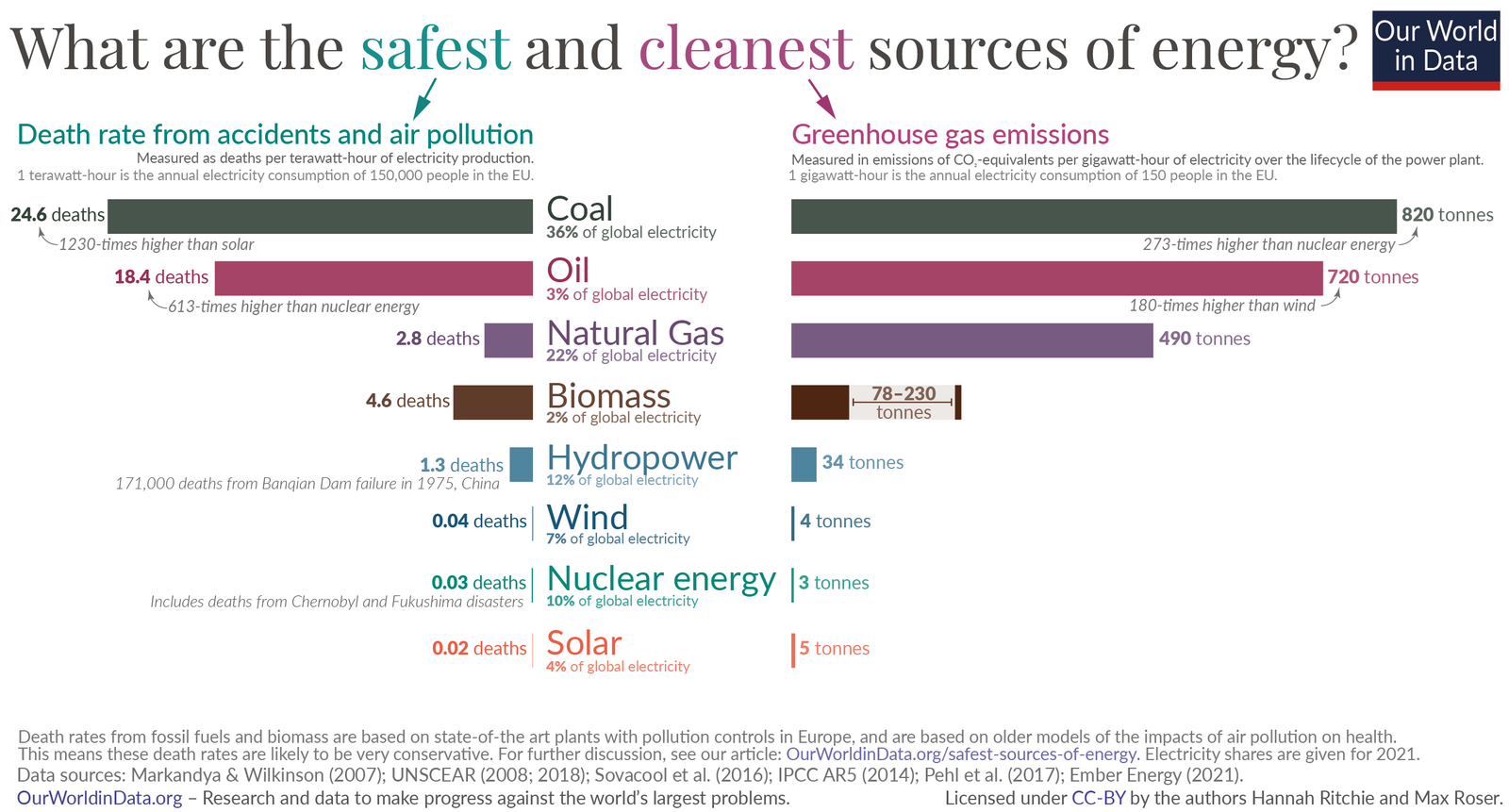
Source: https://ourworldindata.org/cheap-renewables-growth
Prices for batteries and energy storage have also already fallen considerably. And new types of batteries are being worked on in many countries. All this progress allows advocates of a complete abolition of fossil fuels to look to the future with optimism.
However, not everything is as positive as it seems at first glance. The best sites for installing wind turbines and solar panels are already in use. Additional installations can in some cases no longer be placed optimally. In Germany, for example, it is best to build wind turbines in the north, where constant winds blow from the Baltic and North Seas. Most industrial consumers, on the other hand, are located in the centre and south of Germany. Placing alternative energy installations at suboptimal locations thus considerably reduces the efficiency of power generation. This inevitably leads to higher selling prices for electricity. The weather dependence of solar installations and wind turbines also makes them vulnerable. It is therefore unlikely that it will be possible to give up fossil fuels completely on the basis of these energy sources alone.
Nor can anyone yet answer what will happen to the centralised power system when cloudy and windless weather occur at the same time. After all, we cannot predict how the climate will change. It is already difficult to maintain balance and frequency in the energy system, since non-baseload technologies such as solar panels and wind generators already make up 30% of the total energy generation balance. Further increasing these technologies alone will make balancing the energy system even more difficult and expensive.
Under these conditions, it is worth taking a close look at work on creating additional technologies for generating electricity without using fossil fuels. Nuclear power can only be counted among them to a limited extent, as uranium reserves on Earth are not infinite.
One of the most discussed new technologies today, on the other hand, is promising: neutrinovoltaics. On the basis of the Neutrino® Power Cube, fuel-free generators of various outputs can be developed. The video shows for the first time a generator with a net output of 5–6 kW. This makes it possible for the first time to form a picture of the overall dimensions and the expected design.
The geometric dimensions of the Neutrino® Power Cube generating unit are approx. 800 × 400 × 600 mm. The unit weighs approx. 50 kg. The second unit is a generator control system consisting of several inverters, where direct current is converted into alternating current at 220 V and 380 V. In addition, there are outputs for directly connecting devices that do not need AC voltage, so the inverters can be bypassed. This works, for example, for heating elements and electric cookers.
The Neutrino® Power Cube
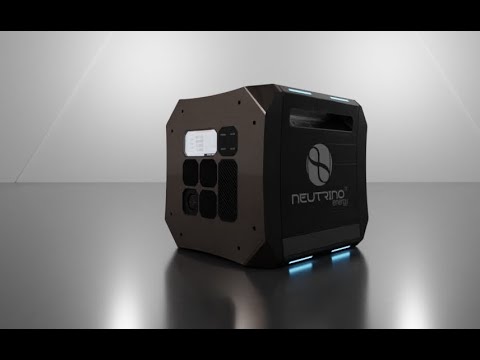
The dimensions of the Neutrino® Power Cube generating unit are approx. 800 × 400 × 600 mm and its weight approx. 50 kg. The second unit, the generator control system, consists of several inverters that convert direct current into alternating current at 220 V and 380 V. There are also outputs for directly connecting devices that do not need AC voltage – above all heating elements, electric cookers and other small appliances. Connecting such devices directly to the direct current of course also eliminates the power loss of converting DC to AC.
According to the Swiss manufacturer of BTG Neutrino Power Cubes, which was one of the first to acquire a production licence from the Neutrino® Energy Group and is currently carrying out tests and preparations for production certification, the generating unit consists of 6 modules that produce direct current with a gross output of 7 kW. Converting direct current into alternating current can cause losses of about 1–2 kW, so the net output will be between 5 and 6 kW.
It should be noted that the relevance of developing fuel-free generators is difficult to assess. The discussions on social networks trying to evaluate the mechanism of power generation convey a serious interest in the topic.
Until recently, the development of fuel-free generators was mainly paved with individual fates. Serious investors only began to pay attention to this branch of business in recent years. A striking example of this is the development of the international science and technology company Neutrino Energy Group.
The functional principle of neutrinovoltaic technology, which forms the basis of the Neutrino Power Cube published in the mainstream media, is not accepted by all scientists. Some scientists put forward their own version or theory or express doubts about the product’s performance. Scientists and inventors who are themselves trying to work in this field are particularly critical in this respect. And I believe this is an entirely acceptable situation, as truth is born in discussion. People are naturally inclined to doubt. The start of the field tests and the industrial series roll-out of the Neutrino® Power Cube at the end of 2023 / beginning of 2024 will put a final end to all discussions.
The appearance of fuel-free generators such as the Neutrino® Power Cube on the open market will complement existing alternative energy technologies. Their baseload capability, the independence of their power generation from weather conditions and their stability will allow effective use in residential areas and also in buildings in remote regions. They will help to improve people’s standard of living, especially in areas that are unfavourable for installing solar panels and wind generators.
Notes on content provided by authors
Comments
Loading comments …
Become a member to comment publicly. GAIA members write comments in the members' portal — under their nickname, visible to everyone.









