Neutrinovoltaics: what role does doped silicon play?


Doped silicon plays a crucial role
It is used in combination with graphene layers to convert the vibrations induced by neutrinos and other forms of radiation invisible to us into electric current. Together with oblique scattering – which arises from the doping – these are the key mechanisms behind neutrinovoltaic technology.
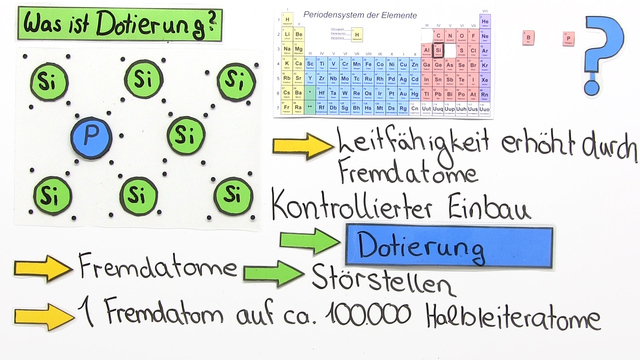
Source: sofatutor.net
Use of doped silicon
- The neutrinovoltaic material consists of several wafer-thin layers of graphene and doped silicon on a metallic substrate.
- The silicon layers are made conductive by doping with foreign atoms such as boron or phosphorus. This creates p-doped and n-doped silicon layers.
- The doping of the silicon “causes” the graphene electrons to flow in one direction, producing a usable electric current. Without doping, there would be no directed current flow.
- When neutrinos and other forms of radiation hit this material, they induce vibrations of the graphene atoms. Thermal Brownian motion brings these vibrations into resonance.
- The resonant vibrations of the graphene atoms amplify the return of electrons in contact with the doped silicon, creating a directed flow of electrons – that is, current.
Layer structure
The optimum layer thickness for the silicon particles is 5–500 nm, ideally 5 nm. The graphene particles should be 20–500 nm thick, ideally 20 nm. In total, the material consists of 10–20 alternating layers of graphene and doped silicon.
In summary, doped silicon serves to convert the vibrations induced in the graphene layers by neutrinos, among other things, into a directed electric current and to collect it. Of course, no neutrinos are “captured” in the process, as is often wrongly stated online.
Oblique scattering
Oblique scattering is also one of the key mechanisms behind neutrinovoltaics. More details in the following block:
Oblique scattering of neutrinos and graphene
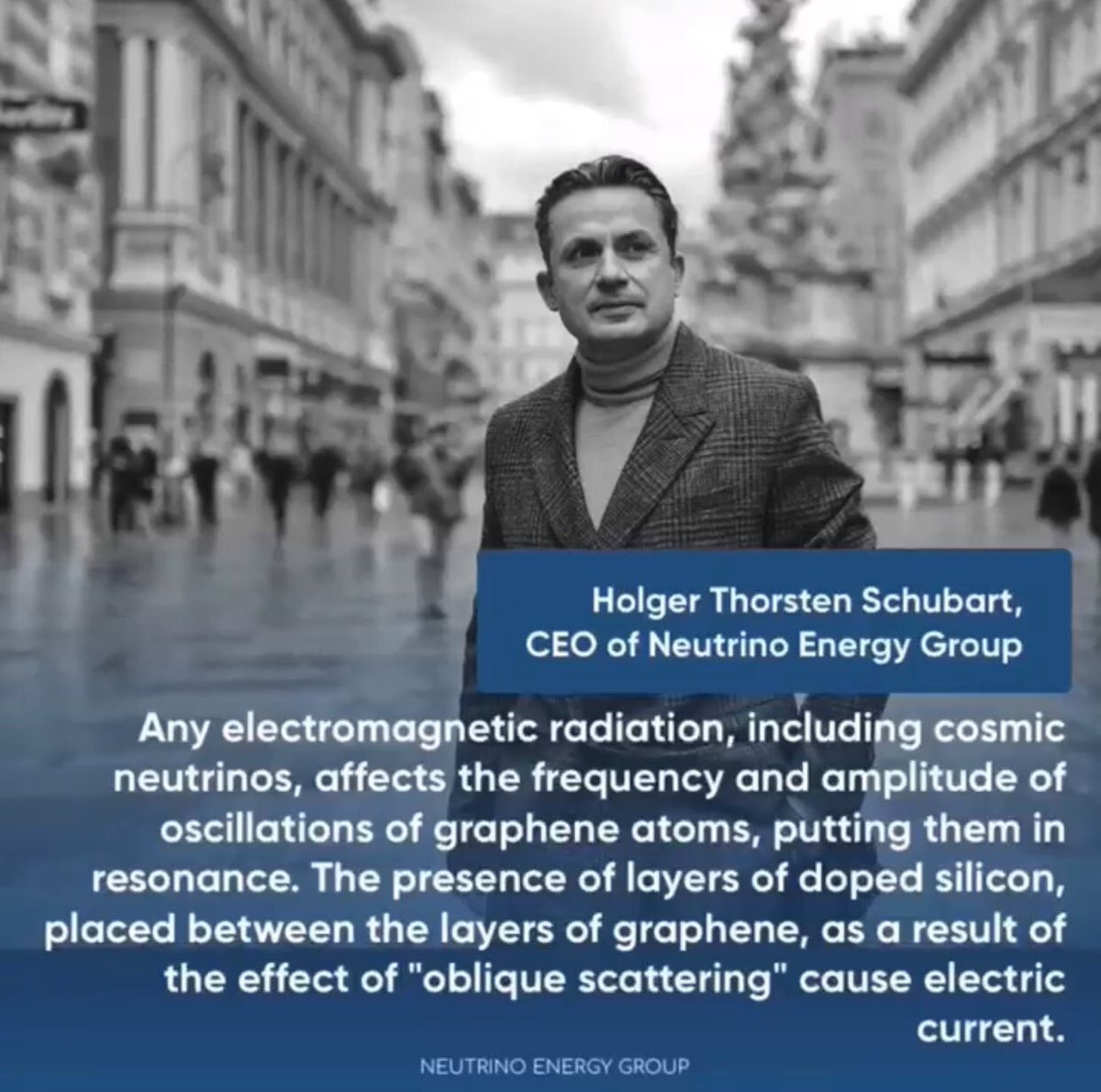 The oblique scattering of neutrinos and other radiation particles invisible to us on the layers of graphene atoms also plays a crucial role in neutrinovoltaic technology:
- When neutrinos and other radiation particles hit the layers of graphene and doped silicon, they induce vibrations (phonons) of the graphene atoms.
- These vibrations are amplified by the thermal Brownian motion of the graphene atoms and come into resonance.
- The resonant vibrations of the graphene atoms amplify the recoil of electrons on contact with the doped silicon.
- This leads to so-called “oblique scattering” – the clouds of electrons are deflected in a particular direction, creating a directed flow of electrons, i.e. electric current.
- The doping of the silicon “forces” the graphene electrons to flow in one direction instead of distributing symmetrically. Without doping, there would be no directed current flow.
The oblique scattering of neutrinos and radiation particles on the graphene layers thus means that the induced vibrations of the graphene atoms, in combination with the doping of silicon, can be converted into directed electric current. This effect is one of the key mechanisms of neutrinovoltaics.
Ask Perplexity.ai (German)
Notes on content provided by authors
Comments
Loading comments …
Become a member to comment publicly. GAIA members write comments in the members' portal — under their nickname, visible to everyone.