The energy revolution

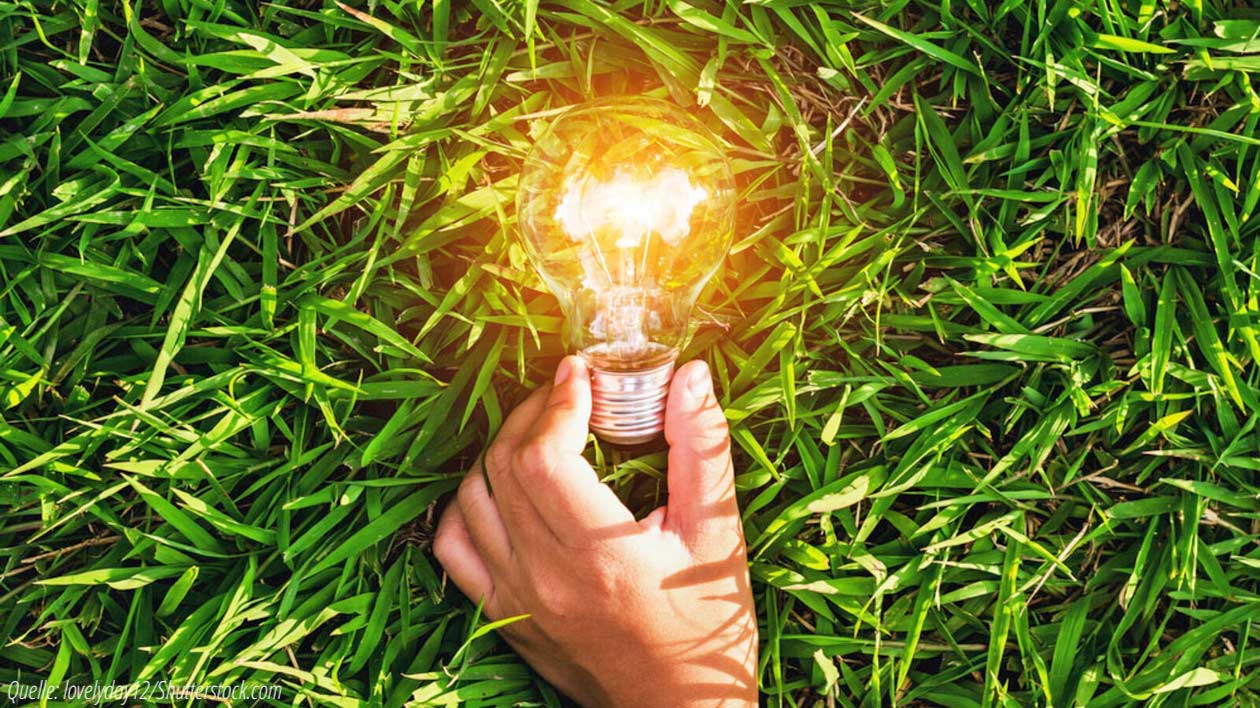
Cold nuclear fusion – the harmless alternative to nuclear fission – offers clean and cheap energy and is ready to go.
Ever since he first read about successful cold fusion experiments, Willi Meinders has not been able to let go of the subject. With his book “Kalte Kernreaktion — Die sauberste und billigste Energie steht bereit” (Cold nuclear reaction – the cleanest and cheapest energy is ready), he is now taking the next step: familiarising a wider public with a suppressed fact. Kitchen-table nuclear fusion was proved long ago. It is completely harmless – and ready for use. Daniel Wagner interviewed the fusion ambassador about the opportunities of this energy and asked why it is not yet being used.
Daniel Wagner: Mr Meinders, your book “Kalte Kernreaktion” has just been published by Novum Verlag. In it you summarise the most important findings you collected over a good seven years on your blog coldreaction.net. What made you close the blog? Didn’t the subject have enough substance to pursue it further?
Willi Meinders: On the contrary, the subject has more substance than ever. The results are becoming ever clearer, and the routes to market ever more concrete. By the way, I have not closed the blog completely – it remains as an archive and companion to my book – but I simply could no longer keep up the almost daily reporting.
I am now 75 years old and have other commitments and interests. The research was and is very time-consuming and takes place almost exclusively in the English-speaking world. It was laborious to evaluate the patents and expert reports and to present them in condensed but factually correct form. My readers rewarded me with a cumulative total of around 1.5 million page views.
There is another reason that outsiders may not be able to imagine: the constant attacks on my website. The book form has now put an end to that as well. With the book, I have also given the subject a different time horizon: away from the news of the day, towards the fundamentals.
In your book you write that you have no technical training and taught yourself the subject of “cold fusion”. What exactly tipped the balance – how did it all start?
As early as the 1960s it was becoming apparent that energy could become one of the key questions, especially in a country with few resources such as Germany. I took on this prospect as a challenge for myself.
Back then, people still quite naturally installed radiators in garages, and the little VW Beetle easily used 12 to 13 litres of petrol per 100 kilometres. But people sensed that things could not go on like this. It was clear that without new technologies there would be an energy crisis, and the path clearly pointed towards nuclear fission. This technology had already proved itself on aircraft carriers and nuclear submarines, so it made sense to bring it “ashore”.
Then, in 1979, came the nuclear accident at Three Mile Island. There was a meltdown and radioactivity escaped. The consequences were far less dramatic than at Chernobyl and Fukushima, but the mere fact that something like this could actually happen sowed considerable doubt about the technology.
That was the birth of a nuclear alternative to fission, namely nuclear fusion. Both use the so-called binding energy of atoms, which is available in practically unlimited quantities. So-called hot fusion has never worked, despite regular announcements. By the way, by fusion “working” I do not mean that a plasma can be maintained for milliseconds or seconds, but that clean energy is produced constantly, reliably and at low prices.
Perhaps we should first clarify a few basic terms. Many people will be familiar with the term “nuclear fusion”. It automatically brings to mind images of huge reactors trying to imitate the fusion processes of the sun. What is the difference from the nuclear reactions you describe?
In contrast to the huge experimental reactors of so-called hot fusion, cold nuclear reaction reactors are very small, roughly up to the size of a rolled-up newspaper. If you add the heat exchanger, the device grows to about the size of a fridge. This is similar to a heating system, where the actual burner is quite small compared with the boiler.
However, the research scene for cold nuclear reactions is extraordinarily heterogeneous, as are the technologies used. Here I will confine myself to describing the so-called nickel-hydrogen technology, which is currently the most widespread. In 1989 it would still have been called palladium-hydrogen technology.
The starting point is that hydrogen can be introduced into palladium or nickel (or other metals). The small hydrogen atoms fit effortlessly between the large atoms of the metals, which form a so-called lattice structure. Beforehand, however, the metal used must be carefully freed of any oxygen that may have penetrated it, so that there is room for the hydrogen. In the past, hydrogen was fed into the reactor from outside; nowadays the hydrogen is part of the reactor filling, bound in lithium as lithium hydride.
In most experiments, the reactors are sealed at both ends and heated, which builds up pressure. At the same time, the reactor is exposed to vibrations and resonances. Both the heating curves and the resonances are the core of the know-how in this field and mostly a closely guarded trade secret.
These external influences mean that the hydrogen atoms – in their various forms, from atomic hydrogen to tritium – can no longer escape each other in the narrow interstices of the metal lattice and finally fuse. That this is so is now even recognised by the APS, the American Physical Society.
There are many synonyms for the term “cold nuclear reaction”, which seems confusing to outsiders. In our magazine we had already written about low-energy nuclear reactions, or LENR. Is that the same thing?
Nuclear fusion takes place on the sun at around 15 million degrees Celsius. On Earth, attempts are made to reproduce this effect at around 150 million degrees, because the pressure of the sun’s mass is missing. The area in which the plasma is to form has to be kept floating freely by huge magnets, because all known materials nearby would evaporate immediately.
As is well known, these experiments have always failed. When, on the other hand, we speak of cold nuclear reaction or cold fusion, we mean that fusion takes place in small reactors made of commercially available materials. That means metals or ceramics are used that do not have to withstand more than 1,000 or perhaps 1,500 degrees.
Moreover, this only applies to the inside of the reactor. Outside the reactor, even at a short distance, there is a completely normal ambient temperature. That is why this process is given the working term “cold fusion”, because the difference from the sun’s temperature is obvious.
What other terms are used for the process? Is it always the same principle behind it?
No, there are very different approaches, and the scene is confusing. In my opinion, the confusion over terminology has harmed cold fusion technology. It is simply the case that the individual inventors found their way to excess energy by different routes. And these routes were reflected in the different names.
I called my blog “Cold Reaction” from the outset, because that also includes technologies that are not fusion. That is also why I called my book “Kalte Kernreaktion” (cold nuclear reaction). What all technologies have in common is the nuclear reaction, i.e. that, unlike in chemical processes, the atoms change their internal composition or even transmute.
It is called LENR – low energy nuclear reaction – because the low temperature is the essential difference from the fusion processes in the sun. There are of course other names for the cold nuclear reaction, such as LANR – lattice assisted nuclear reaction. This term describes that the nuclear reaction is assisted by a (metal) lattice. The term CANR – chemically assisted nuclear reaction – is also used, or AHE – anomalous heat effect. NASA, for example, uses this to describe the phenomenon, because an “anomalous heat effect” occurs.
The dispute over naming for the nickel-hydrogen systems should, however, have been settled with the recognition of nuclear fusion by the American Physical Society (APS). It calls it “nuclear fusion reactions in deuterated metals”.
The APS insists, however, that such high temperatures can arise in the microstructures of the reactor filling that one must also speak of hot fusion here – i.e. that the Coulomb barrier is overcome by pressure and extremely high temperature.
Other scientists hold a completely different view: the “crowding” created by pressure and resonances produces negatively charged electron clusters, which cancel out the positively charged protons in terms of charge. So the Coulomb barrier does not come into play. If that turns out to be true, it would be the most elegant form of nuclear fusion of all.
I don’t know which theory will prove correct in the end. Only one thing has been proved: the excess energy, which for some researchers is at least around three times the energy fed in and at most infinite. Infinite because the excess energy obtained can itself generate the energy needed to start the reaction, for example by charging a battery.
That means: excess energy has been real for around 20 years, patented many times and scientifically documented.
The sprawling discussions about naming and the self-righteous disputes about the theoretical background often obscure this epoch-making result. One may simply be grateful for a phenomenon, too!
Alongside your work on your blog, you have also given seminars on the subject, because you believe people need to understand what happens in cold fusion. Only then can the political will to use the technology widely arise from below. Is the principle that easy to understand? What do you think people need to learn about it?
You are describing the biggest problem of all. I only held these seminars to find out what people want to know about cold fusion.
Problem 1: people understand cold fusion technology as a device whose market launch is similar to a new smartphone. “When can I finally buy it?” The epochal economic, socio-political and general political frictions and conflicts of interest are not perceived.
Problem 2: nuclear power is in places not understood, and the difference between nuclear fission and nuclear fusion is completely unknown. Even less known is the decisive role played by binding energy – not to mention Einstein’s crucial formula E = mc², i.e. the duality of mass and energy.
The public does not even have a vague idea of cold nuclear reactions.
In the end I had to admit to myself that my blog was not, and is not, helpful in educating the general public. It is a very popular source of information for “insiders” at home and abroad, but it achieves practically nothing for a general debate. So the step to a book was logical and necessary.
Many people know that monstrous fusion reactors such as ITER have been funded with billions for decades, and that the researchers involved come before the public every few years with a glimmer of hope, only to put them off for further decades. Your subtitle “The cleanest and cheapest energy is ready” suggests that we would not need to waste these huge sums at all. Has cold fusion really been researched so well that we only need entrepreneurs to put the concept into practice?
That is exactly how it is. In some areas, government money has been flowing into cold fusion for decades, for example into research by the US Navy and NASA. Patents have been granted in large numbers.
A big problem of the “LENR scene” is that it does not speak with one voice. There have been international conferences for about 20 years, organised by the International Society for Condensed Matter Nuclear Science, but it is not a body that represents the scene’s interests.
Every year people present the latest research results to each other, but nobody goes before the press and says: “We have been producing excess energy for decades and want politicians and the public to finally take note!” But this organisation does not represent the entire scene either.
One of the most successful companies, Brilliant Light Power, does not work with the nickel-hydrogen system at all, and Dr Andrea Rossi, who is furthest ahead with this technology, never takes part. He has held a patent valid worldwide since 2015. Incidentally, Wikipedia still writes today that the patent was not granted, although anyone has been able to look it up since 2015 (1).
The various research groups are at different stages of development. Some produce excess energy very unstably and not for long, while others are almost ready for the market with their products and are looking for industrial partners willing to take on the risk of a completely new technology. This has succeeded in at least two cases. Most companies, however, urgently need capital to continue their research.
In your book you discuss, among other things, the research of Pons and Fleischmann, whose work has become synonymous with the controversy surrounding cold fusion. It has become accepted in the collective consciousness that the effect the two measured could not be reproduced – for example, a current report by MDR.de, in answer to a reader’s question, says that “no research team […] was able to repeat this type of nuclear fusion experimentally” (2). Is that true?
That is demonstrably sheer nonsense and unworthy of a public broadcaster. Over the last decades the experiments have been replicated hundreds of times. Perhaps MDR should also be given food for thought by the fact that the EU’s research projects refer explicitly to Fleischmann and Pons.
But one should know that the equipment is not always the same: Pons and Fleischmann used a small plate of palladium which they hung in a tank of deuterium (heavy water). With the help of electric current, electrolysis took place and heat was generated, which continued for a long time even after the current was switched off.
The experiment was successfully replicated immediately after Pons and Fleischmann, but this was not counted, because no neutron radiation – the unmistakable sign of fusion – could be measured. Many replications evidently also failed because the metal lattice had not first been cleaned of oxygen, so the hydrogen could not penetrate.
Electrical engineers such as Garret Moddel (see NEXUS 96) (3) believe that Pons and Fleischmann’s LENR experiments showed that the excess heat was due to purely chemical effects. Can you comment on that?
Pons and Fleischmann’s experiments have been refined over decades, so I cannot say whether the techniques of then and now are really comparable. The processes in today’s small reactors are nuclear in nature. This can be proved beyond doubt by the fact that the elements used show different atomic compositions before and after the reaction.
For example, traces of copper were found after a reaction although it was not part of the filling. The US Navy, Mitsubishi (4) and the University of Kyiv (5) are all researching these transmutation properties of cold fusion. They are pursuing this possibility in order to produce non-radioactive elements from radioactive ones.
The US Navy holds a granted patent on this, on the basis of which licences can be acquired (6). To come back to the question: if one assumed that Pons and Fleischmann had worked on the same principles as today’s researchers, the answer would be clear – it is physics, not chemistry.
I am also reminded of the presentation by the chief scientist of NASA’s Langley Research Center, Dennis M. Bushnell. The title of his paper is “Beyond Chemical” (7).
However, here again I see a dispute over nothing, similar to the many different names for the technology: for the political and economic success of cold fusion it is completely irrelevant whether one speaks of chemistry or physics in this borderline area. All that matters is the “excess heat”.
You write in detail about Andrea Rossi’s E-Cat and Dr Randell Mills’ hydrino technology, which we have already reported on in our magazine (8). Some who have been following these researchers for some time criticise that the inventors are pursuing delaying tactics and that many announcements come from them too that then do not materialise – very much like the “big brothers” of hot fusion. Do you agree?
No, not at all. The “big brothers” are not big brothers either; they are an unsuccessful product of basic research, inflated with billions in tax money, which does not want to admit that it is wrong. Because the Earth is simply not the sun.
With the budgets of the press offices of the numerous experimental facilities alone, a great deal could already be achieved in the field of cold fusion. Its product launches are repeatedly bumpy because they have to be organised and financed by the researchers themselves.
Where do you think the problem lies here?
The fundamental problems are no longer technical. The excess energy achieved has been measured and established many times using scientific methods. Dozens of patents have been granted. Expert opinions from recognised scientists and institutes confirm that the technology works.
If cold fusion were about large power station units, they would quickly be fully developed and then snapped up by the energy companies “like hot cakes”. But cold fusion reactors are small – ideal for supplying larger buildings or even individual households with heat and electricity.
You don’t need energy companies for that – and that is exactly why not only is there no support from them, but even resistance. The state is not as interested as it should be either, because it does extremely well with the energy companies, in more than one respect.
In your book you criticise that Germany, a country with few resources, jumped on the bandwagon of cold fusion research practically last, only after the EU set up a research programme on it. Many people will not even know that research is being done on the subject at all. What is the current situation?
I think the situation in Germany is bleak. There is a certain number of committed researchers working on the subject, but they are completely on the defensive against mainstream research and their careers are at risk.
With reference to this “rule”, which applies worldwide, the Cambridge scientist Huw Price wrote in an essay about the “reputation trap” (9). It says that researchers lose their scientific reputation if they devote themselves to the subject of cold fusion. In Italy, laboratory equipment was even destroyed years ago.
The background is that cold fusion is not the result of basic research but the result of trial and error. This method naturally has a much longer tradition than basic research.
In more recent history, for example, the basic elements of the steam engine were invented by mine workers in order to drain the pits. The science of thermodynamics came much later. In other words, this science owes everything to the steam engine, not the other way round.
Basic research sees itself, essentially rightly, as the elite of science. In the case of cold nuclear reactions, however, that does not apply. This cutting-edge technology is a product of chance. And what is so bad about that? In any case, the outstanding results have been verified with recognised scientific methods.
No – what stands in the way of the progress of cold fusion, especially in Germany, is the defence of interpretive authority combined with self-righteousness, vanity and ignorance.
Max Planck would certainly not disagree with this assessment. He wrote:
A new scientific truth does not triumph by convincing its opponents and making them see the light, but rather because its opponents eventually die, and a new generation grows up that is familiar with it.
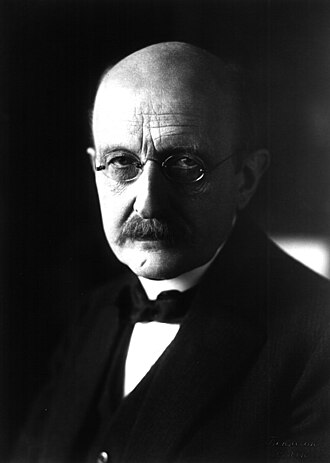
Max Planck
Scientist, physicist
Negative statements on cold fusion by high-ranking scientific institutions still show today that the bulk of scientists continue to follow this pattern. What is particularly grotesque is that physics does not even have a unified explanatory model, because the Standard Model of particle physics and quantum physics do not fit together. So there is plenty of room to research unexplained phenomena, including the – evidently functioning – cold nuclear reaction.
Let me say one more thing about the EU’s research programmes: the cold nuclear reaction may largely be a chance discovery, but then the question arises of how to research a chance result systematically. Well, perhaps the official projects will get closer to the goal. In my view, however, it would make just as much sense to use the results already available, for example by acquiring licences or stakes in companies (10).
What is the situation in other countries?
There is significant research in the USA, Canada, Italy (the motherland of cold fusion), Sweden, Norway, Finland, India, Switzerland, Ukraine, Russia, the UK, France, Spain, Israel, Australia, South America, China and – highly developed – in Japan.
The USA has the biggest lead. There, research benefits among other things from the defence budget, and NASA likewise from tax money. Smaller research groups are also partly funded by wealthy “patrons” – a practice that unfortunately hardly exists in Germany. I remember a blog entry by Dr Rossi in which a reader unexpectedly asked him to get in touch if he ever needed money.
Can you name the most important research papers that paved the way for the subject now being researched worldwide after all?
All these research papers are written in English and are quite extensive. First of all, there is the work of Pamela Mosier-Boss and Lawrence Forsley, carried out on behalf of the US government. Under the title “Investigation of Nano-nuclear Reactions in Condensed Matter”, it came to the conclusion: LENR works. The report was only released for publication in 2016, although it had been finished four years earlier. I refer in particular to section 4 on page 81 (11).
The so-called “Lugano report” had already appeared in 2014. It was a collaboration of scientists from Sweden and Italy who observed and tested the E-Cat of inventor Dr Andrea Rossi using scientific methods. Their result: it produced considerable amounts of excess energy for 32 days and was then stopped (12).
Another report comes from the American Physical Society, which I have already mentioned: “Nuclear fusion reactions in deuterated metals” (13).
Dr Andrea Rossi has also recently written another important paper in which he explains how his E-Cat works. Incidentally, it is by far the most-read physics article on ResearchGate (14).
In your opinion, where is the most promising research taking place – which developments and companies should one keep an eye on in the long term?
For years, joint first place for me has gone to the two researchers Dr Randell Mills with his company Brilliant Light Power (BLP) and Dr Andrea Rossi with his Leonardo Corporation.
Mills’ explanations of the theory behind his method are extensive and easily run to several thousand pages. Nevertheless, he is consistently successful and, as the first company of its kind, has been integrated into one of the largest US energy groups. His supervisory board reads like a who’s who of industry, banking and politics, and his progress is transparently documented. BLP’s parent company is Connectiv-Solutions LLC. Among other things, it collects consumption data, but it belongs to the Exelon Corporation.
Dr Andrea Rossi with his Leonardo Corporation is the archetype of the highly intelligent creative inventor. At the same time he is – for good reason – suspicious, because there have been several attempts to take his invention away from him. On his website he currently presents only an LED light fitted with an E-Cat, which produces a light output of 10,000 lumens with a power consumption of 3.9 watts.
Anyone who has followed Rossi’s path despairs of his erratic nature on the one hand, but on the other is fascinated by his outstanding intelligence and creativity. The following companies should also be kept in view:
There are certainly a whole range of other companies that I have not mentioned here. Many of these companies, especially in the USA, are privately run and financed by retired, highly qualified scientists, in some cases with astonishing results.
Listening to you, one gets the impression that there is a kind of media blackout on cold fusion. Yet it sounds like the solution to the problems we are constantly being bombarded with: climate change, dependence on fossil fuels, pollution. Do you also have the impression that the media keep away from the subject? And why, for example, are the Greens not enthusiastic about it?
On such topics, the mainstream press gets its information from mainstream science. In the case of cold fusion, this mainstream is at the level of more than 30 years ago. Back then, Pons and Fleischmann’s work was declared junk science.
That the EU now explicitly refers to these two researchers in its projects is not known in the mainstream. There is no deeper fall for a serious scientist than down to “junk scientist”. It would be absolute intellectual and economic ruin. Since Pons and Fleischmann, this risk has been in everyone’s bones.
If the scientific and journalistic mainstream does not dare, politicians do not dare either, because nobody works without mutual reassurance.
With my book I “bombard” those involved with facts as best I can with my limited resources – if only they would read it. My supporters and I send out thousands of emails to arouse interest. There are hardly any politicians, journalists, associations, universities, foundations, environmental groups and the like who have not been written to by me or others. I also want to say: any help is welcome!
Whether I will achieve anything in the end, I cannot say. In any case, I hope that much more will have been achieved within five years, when I will be 80.
Mr Meinders, thank you for this illuminating conversation.
Willi Meinders, born in 1946, trained as a banker, was a member of the board of a multinational public limited company and worked for several years as a self-employed business consultant. After the turn of the millennium, he devoted himself mainly to his private interests and to cold nuclear reactions.
Willi Meinders, “Kalte Kernreaktion — Die sauberste und billigste Energie steht bereit”: the book is available in print or as an ePub from the usual outlets. When ordering in a bookshop, it is best to give the ISBN 978-3-99107-698-8.
Editorial note: The interview originally appeared in NEXUS-Magazin (German) (issue 98).
Sources and notes:
(1) Rossi, A.: “Fluid Heater”, patent no. US9115913B1, https://bit.ly/rossi-fluid-heater (2) Jakobi, L.: “Warum investiert Deutschland nicht in Forschungen zur kalten Kernfusion?” on MDR.de, 28.09.2021, https://bit.ly/mdr-kalte-fusion (3) Kimball, Dr G. interviewing Garret Moddel: “Von Psi-Maschinen und Wellenfeldkollektoren” in NEXUS-Magazin, August–September 2021, 96:71–77; https://bit.ly/nexus-moddel (4) Krivit, S. B.: “Mitsubishi Heavy Industries Continues Efforts to Commercialize LENR” on NewEnergyTimes.net, 13.07.2016, https://bit.ly/mitsu-lenr (5) See “Vladimir Vysotskii”, research department of Taras Shevchenko National University of Kyiv, https://bit.ly/3F5tftn (6) Information on TechLinkCenter.org: “Generator for α and β particles, neutrons, deuterons, X-rays, γ-rays and tritium”, https://bit.ly/3wt0FPs; for the patent see “System and method for generating particles”, US patent no. US8419919B1, https://bit.ly/3qksyIk (7) Bushnell, D. M.: “Beyond Chemical — Exotic Energetics/Propulsion”, PDF download via https://bit.ly/kkf-bushnell (8) See the interview with Achmed Khammas “Der Bibliothekar der Synergie” in NEXUS-Magazin, June–July 2020, 89:60–72; and the interview with Dr Randell Mills: “Hydrino-Update: Ein Blick in die Kessel des Dr. Mills” in NEXUS-Magazin, August–September 2021, 96:64–70 (9) Price, H.: “The cold fusion horizon” on AEON.co, 21.12.2015, https://bit.ly/aeon-price-cf (10) On this topic see e.g.: “Lawrence Forsley Interview: Governments ‘Nibbling at the Edges’ at Funding ‘Cold Fusion’/LENR/Lattice Confinement Fusion” on E-Catworld.com, 07.10.2020, https://tinyurl.com/rxahjjrt (11) Mosier-Boss, P. A. et al.: “Investigation of Nano-nuclear Reactions in Condensed Matter”, report for the DTRA, PDF download via https://bit.ly/kkf-mosier-boss (12) Levi, G. et al.: “Observation of abundant heat production from a reactor device and of isotopic changes in the fuel”, 06.10.2014, PDF download via https://bit.ly/kkf-lugano (13) Pines, V. et al.: “Nuclear fusion reactions in deuterated metals” in Physical Review C, 20.04.2020, 101(4):044609, DOI: 10.1103/PhysRevC.101.044609 (14) Rossi, A.: “E-Cat SK and long-range particle interactions” on ResearchGate.net, January 2019, DOI: 10.13140/RG.2.2.28382.48966/11 (15) You can find an article on HB11 here: Blain, L.: “Radical hydrogen-boron reactor leapfrogs current nuclear fusion tech” on NewAtlas.com, 21.02.2020, https://bit.ly/new-atlas-hb11
Further information:
- LENR wiki, see LENR.wiki; EU report on LENR from 2012: https://bit.ly/kkf-13
- Answer of the European Commission to a parliamentary question on LENR: https://bit.ly/kkf-14
- EU research project no. 1: CleanHME.eu
- EU research project no. 2: HERMES project, https://bit.ly/hermes-eu
- Little-known patent in German (Airbus): https://bit.ly/kkf-19
Further articles in English:
- Drexel University: “Just squeeze in—researchers discover when spaces are tight, nature loosens its laws” on Phys.org, 18.09.2017, https://bit.ly/3muH1io
- Frank, A. and Gleiser, M.: “A Crisis at the Edge of Physics” in the New York Times, 05.06.2015, https://www.nytimes.com/2015/06/07/opinion/a-crisis-at-the-edge-of-physics.html
- Kushner, D.: “The Coldest Case” in Foreign Policy, 07.07.2016, https://bit.ly/3Cz6tJm
- Price, H.: “The cold fusion horizon” on AEON.co, 21.12.2015, https://bit.ly/31hjzNJ
- Ridley, M.: “The Myth of Basic Science” in the Wall Street Journal, 23.10.2015, https://on.wsj.com/3CBbiC8
- Silberg, B.: “The nuclear reactor in your basement” on Phys.org, 19.02.2013, https://bit.ly/2ZFQdrC

All articles from the last few days
Rubikon has published numerous other articles. Follow the link.
Did you like the articles?
Then feel free to recommend Rubikon or support its work in other ways. By the way: you can also find Rubikon on Telegram and BitChute – it is available as a news feed and in part even as a book.


Notes on content provided by authors
Comments
Loading comments …
Become a member to comment publicly. GAIA members write comments in the members' portal — under their nickname, visible to everyone.