Scholé news July 2020
At the end of the strange 2019/20 school year, I sent an open letter.
It is addressed to education ombudsman Nekula, the successor of Ms Wiesinger:
Dear Mr Nekula,
I am turning to you as a human being, a civil servant and an education expert with the heartfelt request for help and support! The immediate reason for this open letter is a number of exemplary legal cases which show that a new legal definition of the guiding concept of the WELFARE OF THE CHILD is long overdue:
- Viennese parents who take exemplary care of their two self-directed learning sons, as the responsible youth welfare office and several official expert reports confirmed to the courts, had custody taken away from them entirely in spring 2020 after years of proceedings. The reasoning: although the children were doing well, it could not be ruled out that they might have problems in their later working lives because they lack school reports. In addition, an example was expressly to be made in order to discourage like-minded parents.
- Another Viennese couple, only one of whose 4 well-cared-for children – a girl – does not want to go to school, has to serve a prison sentence in lieu of fines, because the family cannot afford to pay them.
- Because the needs of her three highly sensitive children could not be reconciled with the school laws, a mother in Lower Austria was repeatedly fined, and she can no longer pay. As she is a single parent, she cannot go to prison, so the court had the following items seized from the household of the very modestly living family and put up for auction: a borrowed harp, the children’s musical instruments, a printer that everyone uses all the time, and the two sewing machines with which the mother earns her living. All this in the name of the WELFARE OF THE CHILD, mind you!
- Even those who opt for the legal form of home education must expect problems: while many examinations were waived for the involuntary corona homeschoolers, the authorities handled the external examinations for voluntary homeschoolers and for pupils of alternative schools without public status particularly strictly this year – even though these children suffered no less from the exceptional situation, for they too became frightened, were not allowed to attend courses, could not meet their grandparents and friends, could not do sport and so on! Some parents are therefore even considering legal action.
All the mothers and fathers mentioned here act out of conviction. As unusually conscious and attentive parents, they have watched with amazement and joy how well their children develop emotionally, socially and intellectually at home or at freely chosen places of learning. For this reason, they are not prepared to use physical or psychological violence to talk the children into attending school regularly against their will or to force them to sit the prescribed annual examinations. The children’s and youth advocates whom I asked for assistance in this and similar cases did show a certain personal understanding, but declared that they were not responsible, since their hands were tied by legal requirements.
When it comes to the point where the well-being of real children is impaired by legal provisions that were enacted to protect the welfare of the child, it is, in my opinion, time for a paradigm shift!
So I am turning to you as a higher authority. Individual cases like those briefly mentioned above raise a socio-political question of very great importance. Do you still remember the debate about conscientious objectors in the 1970s? It was set off by a few courageous young men who went to prison for their pacifist convictions. At first this triggered a heated, ideologically charged debate for and against conscientious objection, but in the end it produced a new CIVILIAN SERVICE ACT that marks considerable socio-political progress. Even more dramatic was the opinion-forming process that finally led to the decriminalisation of homosexuality.
What is due today is a similarly dramatic socio-political advance in education: the welfare of the child must no longer be made dependent on completing a STANDARD CURRICULUM. That is undignified and undemocratic, because every child brings different preconditions. Moreover, it contradicts all recent scientific findings and certainly does not prepare pupils in the best possible way for the demands of their future working lives. Teaching according to a curriculum suppresses a great many potentials; it requires the constant use of manipulation, pressure and coercion and nourishes feelings of inferiority and/or superiority in everyone involved (teachers, learners, authorities, scientists): the fear of not being good enough, alternating with the intoxication of power at being allowed to decide over others. (Whoever had to learn to bow to those above will kick those below to compensate.)
What should replace the right to education as currently defined? THE CHILD’S RIGHT TO THE INDIVIDUAL DEVELOPMENT OF THEIR POTENTIAL. This requires no coercion and no manipulation, because being allowed to develop one’s individual gifts and talents means the greatest pleasure and fulfilment for EVERY HUMAN BEING. Respectfully accompanying young people IN THIS is an extremely enriching task and turns the whole world into a space for lifelong learning with and from one another.
For many centuries, first the churches and later the states laid down a binding educational canon. Teachers were obliged to pass on to the next generation, with carrot and stick, the content that the regime of the day considered necessary to preserve its structures. Dictatorial regimes such as communism or National Socialism restricted natural parental rights and teachers’ personal freedom even further through ideological terror and rigorous compulsory schooling. Unlike Germany, Austria – where such compulsory schooling also existed from 1938 – fortunately returned in 1945 to the traditional compulsory education (rather than compulsory schooling) and thereby legalised home education.
Interestingly, however, the idea of compulsory schooling persists in the public mind. Until the homeschooling decreed because of corona in spring 2020, most Austrians did not even know that there was an alternative to school lessons, or they considered people whose children do not go to school “normally” to be bad parents and/or dangerous sectarians. The media are responsible for this, as the subject of homeschooling comes up there almost exclusively in connection with cases of abuse.
All friends of free learning are confronted with these isolated cases of abuse, which nobody wants to deny or gloss over, as soon as they try to suggest a sensible reform of the current education laws – as the network of unschoolers recently did with the position paper “Alternativen zu den Jahresprüfungen – Überblick, Fakten und Lösungen zur Realisierung informeller Bildungswege” (Alternatives to the annual examinations – overview, facts and solutions for realising informal educational paths). And although the media can come up with some disaster report from the school system almost every day, all the shortcomings of the prevailing system are reflexively blanked out as soon as someone proposes possible alternatives. Those responsible still seem to prefer the familiar old complaints to constructive new proposals that would require a fundamental examination of the subject…
This examination, however, must not be postponed any longer! Critical experts rightly describe the relationship between the effort and the results of school teaching as alarming. According to the official National Education Report 2018, a schoolchild cost the Austrian taxpayer on average 8,200 to 12,700 euros a year, in some cases much more. Nevertheless, 42% did not reach the educational goals in the main subject of mathematics, and at least one sixth of compulsory-school pupils could not even read with comprehension after 8 or 9 years of school. Weighing even more heavily is the result of a study by the Medical University of Vienna, according to which almost a quarter of Austrian children and adolescents are under moderate to severe psychological strain. Teachers do not fare well in this system either: the burnout rate among teachers is above average, and fewer and fewer committed young people choose the teaching profession.
Such indisputable facts and figures are usually also disregarded when it comes to assessing the performance of voluntary homeschoolers: these children are expected to master at the age of 7 or 8 much of what a high percentage of school leavers have still not learned at 15, despite all the costs and effort. What homeschoolers learn and achieve outside the curriculum does not count at all. If children in home education fail the external examination, they have to go to school the following year. Austrian law provides for them neither the possibility of repeating the external examination or the school year, nor the possibility of skipping a year for the intellectually gifted among them. How can this unequal treatment be justified?
After traumatising examination experiences, quite a few homeschooling parents take their children’s side and stop forcing them into bulimic learning, that is, cramming for exams. In doing so, however, they come into conflict with the law. From then on they have to expect heavy fines or, in the worst case – as with the Viennese couple mentioned above – even the loss of custody. Conscientious objectors and homosexuals probably suffered similarly outrageous injustices before the corresponding legal reforms, but in education these injustices are only the tip of the iceberg!
For this is not about a minority but, in truth, about EVERY CHILD! The right to develop one’s potential must be granted to ALL children, because as soon as voluntary learning becomes the rule, the seemingly unbridgeable differences between pupils, homeschoolers and unschoolers dissolve all by themselves, as existing positive examples at home and abroad show.
Experts now agree that drilling young people with the standardised educational content of yesterday and the day before has long been out of date. Nobody can predict what the future will look like, which is why abilities such as self-confidence, respect for others, courage, initiative, the ability to cooperate, creativity and flexibility have become far more important in the 21st century than conformity, obedience, arithmetic, spelling and similar skills that were urgently needed in the past, have long since been taken over by computers, yet still play a central role in school lessons.
Children who learn voluntarily and in a self-directed way develop precisely these “new” abilities – provided they are accompanied lovingly and competently – BY unfolding their innate individual potential! Unfortunately, those affected have so far been rebuffed with their urgent request to research informal educational paths in Austria. In the English-speaking countries, by contrast, where education outside school is legal and increasingly popular (in the USA alone, around 2.3 million children are educated outside educational institutions), numerous scientific studies on the social behaviour and career prospects of unschooled children have already been commissioned. Austrian parents who “unlawfully” let their children learn informally and in a self-directed way have presented some of these studies to the courts, because every single one of them clearly refutes the courts’ reasoning:
Both in terms of their social behaviour and in terms of academic success, employability and job satisfaction, people who were allowed to educate themselves in a self-directed way as children and adolescents do noticeably BETTER on average than comparable school leavers!
Ultimately, these study results allow only one conclusion: school authorities, educators and experts could learn a great deal about DEVELOPING POTENTIAL from the experiences of children who learn voluntarily and in a self-directed way! That is why parents who, against all resistance, enable their children to educate themselves voluntarily and in a self-directed way must no longer be treated like criminals. Rather, they deserve at last to be heard, honoured and supported as pioneers of a forward-looking new CULTURE OF DEVELOPING POTENTIAL!
With thanks and hopeful greetings Alexandra Terzic-Auer
Vienna, 8 July 2020
I wish you and your children a summer of joyful unfolding of your potential! Warmly, Alexandra
P.S.: As newsletters are not easy to forward, here is a link where the Scholé News have been published as posts for some time now: https://gaia-energy.org/tag/schole/
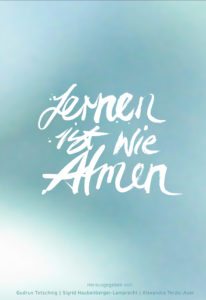
Book tip – “Lernen ist wie Atmen” (Learning is like breathing)
Together with two unschooling mothers, Gudrun Totschnig and Sigrid Haubenberger, we published it ourselves.
We all feel that the time is ripe for this many-voiced account of how unschooling can be lived in practice. Order your own copy on the GAIA marketplace, with a 10 % discount for members. The book is in German.
Notes on content provided by authors
Comments
Loading comments …
Become a member to comment publicly. GAIA members write comments in the members' portal — under their nickname, visible to everyone.