The multi-paradigm shift becomes visible, part IX

The multi-paradigm shift becomes visible – part IX: on the current state of money awareness
“Nothing in the world is as powerful as an idea whose time has come.” Victor Hugo
But how do we recognise whether “the time of an idea has come”? In my current newsletter I try to pursue this question in detail.
The weaknesses and contradictions of our monetary system are currently being published and openly questioned more and more. Stock market presenters and business journalists, as well as ordinary interested private individuals, are bringing into the open what only a few years ago was still regarded as a “conspiracy theory” or “distorted perception”. I would therefore like to turn to some of these publications, show their standpoints and their limits, and then, in further issues of this newsletter, ask which movements have so far worked – and how seriously and soundly – on solutions to these social problems. To begin with, I turn to three current books, all of which deal with “money”, how it works and its problems.
- Die Wahrheit über Geld (The truth about money)


In this book, Raimund Brichta (who has presented the TELEBÖRSE programme since 1992) and Anton Voglmaier (a graduate in business administration and law, currently a lawyer in Berlin, and also a business journalist) try to show “how money actually comes into the world, what the connection is between assets on the one hand and debts on the other, and why our current global financial system can never be made sustainable and crisis-proof.” (See the back cover.)
To explain interest-bearing debt money and its “creation” as a booking entry when a loan is granted, they use a materialistic example: “It is rather like digging a hole on a beach and piling up the sand you have dug out next to it. The heap of sand only comes about because the hole is created at the same time.” (p. 15) This metaphor also immediately shows the limits of these authors’ understanding of money. Since what we have here is, on the assets side, a “claim” (i.e. a “value” that can only be realised in the future!) and, on the liabilities side, a liability (debt) of the bank (!), a better comparison would be a slip of paper reading “counts as sand” (for the liabilities side, the “deposit money”) and a second slip reading “will bring sand later” (for the assets side, the bank’s “loan claim”)! The (materialistically formulated) “sand” already suggests a “value”, something “physical” and “real”. But none of this exists in the banks’ lending business – at most the borrowers’ collateral (which is subject to the free play of valuers’ opinions).
At any rate, the banks’ privilege of “money creation” is also presented in full: “A bank can also produce money by buying assets, for example gold, property or securities. … So here it pays with money that it does not yet have, but which it only ‘produces’ itself in the course of the purchase. This is a really nice privilege that only banks and central banks enjoy.” What is astonishing about this account is that the lawyer Voglmaier does not immediately cry out and ask whether an “exchange for a means of payment that I myself have yet to produce” (which, moreover, is not legal tender, since only the central banks may produce that) can be a “purchase” at all! An “IOU for central bank money” (which, for bank customers today, can ultimately only mean cash – the very cash the banking lobby threatens to abolish!) as the “equivalent” for assets can hardly be called a “purchase” in legal terms. Nor can the exchange of IOUs (the borrower’s secured loan agreement in exchange for a booking entry – “deposit money” – as the bank’s unsecured IOU!) be called a “loan”!
The fact that such legal questions are not asked anywhere in the book proves that the invention of the pseudo-science of “economics” has very successfully accomplished the “intellectual separation from law”, and that the mass hypnosis of “feigned indebtedness” is still effective.
Further passages also show that, unfortunately, a deeper “understanding of money” is lacking in the two authors: “Suppose the bank had only assets in its asset bowl that can only be turned into money after a few years – such as long-term loan claims. If at the same time it had many debts on the liabilities side that fall due in the short term, it could get into difficulties.” (p. 46) These remarks can only be called strange. Earlier in the book it was correctly explained: “Every repayment of a bank loan leads to money being destroyed.” (p. 25) So “turning something into money” only ever leads to further indebtedness at the bank! But this money is then destroyed when the loan is repaid. Here a strict distinction must be made between “deposit money debts”, which are “repaid” anyway through the receipt of the claim (“automatically”, i.e. in a single booking), and the banks’ “real debts” (e.g. to other banks or institutions). These “real debts”, however, concern only the interbank balance within the inner clearing circle of the national (central) bank, i.e. “real money”, and not the commercial banks’ “freely invented Monopoly units” (“deposit money”).
The following quotations also show that a deeper understanding of debt money (as a legally unresolved edifice of dogma with mass-psychological effects) is not yet present in the two authors: “So central banks really can produce as much money as they like? And of all things, the reserve that the other banks hold consists of their money? Yes, because despite everything this money is very trustworthy, because the state stands behind it.” (p. 54) These formulations invoke the scarcity dogma (the basic axiom of economics: “Economics is the optimal use of scarce resources.”). And at the same time, bank customers are prepared to “rescue” their account balances themselves (as taxpayers), i.e. the population, as taxpayers, may pay for the damage they suffered as bank customers. This form of mass hypnosis is then even celebrated as a “good idea”: “The Icelanders rescued their banks by issuing a debt claim on themselves.” (p. 58)
Again and again, the scarcity dogma is invoked to make an “intrinsic value of money” credible, i.e. to reinforce bank propaganda: “Then the medieval receipts did at least still have a kind of ‘inner value’ that today’s banknotes do not have. That’s right. And this inner value also acted as a kind of brake on the multiplication of the money based on it. After all, the amount of gold is limited, but the amount of money is not.” (p. 54) Here, as always in the dogmatic “economic sciences”, only “exchange value” is considered and never utility value, which is always relevant in everyday life. An “exchange value” always presupposes scarcity. But if we assume that, in principle, all chemical elements can be transmuted into any other chemical elements (even without radioactivity being released!) (see e.g. here (German)), then an “exchange value” based on artificial scarcity can no longer be asserted dogmatically either.
Nevertheless, the fundamental criticism of the commercial banks’ “privilege of creating deposit money” is made unusually clear in this book: “Another example, incidentally, is provided by the former owners of the venerable banking house Sal. Oppenheim. As private individuals, they had their own bank give them more than 300 million euros in loans without depositing any collateral for it. If that wasn’t money out of nothing, what was? But that was criminal behaviour. You are never safe from that. Why criminal? It is not forbidden to issue loans without collateral. That there may have been conflicts of interest in this case, because managers, owners and borrowers were the same people, is another matter. There may have been criminal acts. You can be sure, however, that nothing of this would have reached the public if they had not got into difficulties with the loan. That is why I assume that similar cases happen much more often and we simply never hear about them.” (p. 57 f.) Nothing needs to be added to these remarks!
Unfortunately, secrecy (cover-up) is again justified in this book by “trust”: “In principle our money even consists only of trust, which may or may not be justified. … And the banknotes themselves have no inner value either.” (p. 71) But we only find out whether “the trust is justified or not” through transparency and public scrutiny. Declaring trust to be important while at the same time preventing it from being checked is not a logically comprehensible strategy, but plays into the hands of dubious bankers and their lobbies!
The concept of “growth” is also interpreted only quantitatively and not qualitatively: “However, it is clear that there is no infinite growth on Earth – certainly not exponential growth.” (p. 92) No, that is not at all “clear” – it is merely abused for scarcity propaganda! The numbers that grow here are nothing more than valuation figures. What they refer to lies “in the eye of the beholder”. If we “measure” human abilities, needs and wishes, i.e. express them in numbers, then they can grow without limit (in the case of wishes, they may in fact already be limitless today). Our task will be to satisfy (potentially limitless) human needs and wishes in a way that ensures that people come into conflict neither with the material resources of their environment nor with the needs of their fellow human beings and the other forms of life with which they share the biosphere. Open communication and cooperation are better tools for this than austerity budgets (dictates of scarcity).
The authors are not even aware of the relevance (or irrelevance) of money supply growth and rising prices, although they (unconsciously?) reproduce the empirical data quite correctly: ”… – an inflated money supply is always the precondition for a sustained general rise in prices to be possible at all. Inflation – that is, of the money supply – is therefore always the cause; rising prices are only one possible effect.” (p. 142) And immediately afterwards it is pointed out that precisely this “effect” (a general rise in prices) cannot in fact be observed: “All that is missing so far is for prices to get a fever – like a person with a proper flu.” (p. 143) The supposedly clear cause-and-effect relationship between expansion of the money supply (empirically clearly present on an enormous scale) and a general rise in prices (empirically not observable) evidently cannot be demonstrated. Instead of taking this as an occasion to question the causal hypothesis and to make the data the starting point for revising it, the authors unsettle and frighten the public with a latent threat (the analogy of a “fever breaking out with flu”) – and anyone who follows the link to the recommendation of “real assets” on the book’s homepage (German) can easily recognise the “real business model”.
It is obvious that the authors also cannot recognise the real possible solutions to the “euro crisis”: “The rescue fund works exactly according to this principle – no matter whether it is about Spain, Greece, Portugal or any other country: nobody has anything – neither the rescuers nor the rescued – but everyone is very generous with what they do not have. That may surprise all those who think you can only help with something you have, and not with what you do not have.” (p. 148) On the one hand, one should recommend that the authors read Erich Fromm’s “To Have or to Be?” and (even more important!) “Vom Haben zum Sein” (The Art of Being) by the same author. On the other hand, they have not understood the real aims of balance-sheet accounting either: to include in the balance sheet only what can be used as a tool to appropriate precisely what is not on the balance sheet! Greece was “manoeuvred” into the euro group, through the tricks of Goldman Sachs advisers, precisely because there are natural gas deposits hidden in the Aegean whose extent has not even been fully surveyed yet. These reserves represent (at market values) an unimaginable “value”, which of course is meant to go not to the Greek population but to those banks that will later “rescue Greece” with their self-printed IOUs. The sell-off of Greek islands has already gathered considerable pace – along with the mineral resources and natural gas reserves that lie beneath them. Anyone who sees only what is on the balance sheet usually does not see what is essential!
It is astonishing that the authors have not been accused of antisemitism because of their account of the self-granted loans at Sal. Oppenheim. The “creation of debt money” (both when loans are granted and when banks “buy” in exchange for IOUs they have booked themselves) is also presented correctly, but is in no way questioned legally (not even by the lawyer Voglmaier!) – loan: a loan proper or an exchange of IOUs? Bank purchases: are self-booked debts a “means of payment”? Nor does this work anywhere consider the possibilities of “positive money”, i.e. money creation against earnings (= equity). The usual bank propaganda (money must be scarce in order to keep its value; trust in unbacked IOUs is important so that they keep their – actually non-existent?? – “value”) is, however, used to stir up uncertainty (fear) among the public, perhaps in order to market “their own expertise” (see (German))?
- Wer regiert das Geld? (Who rules money?)


In this book, the freelance journalist Paul Schreyer (who writes for Telepolis and Global Research, among others) offers a perspective on our monetary system that focuses above all on the aspect of power. He begins by describing how in 2008, within a single week, a “second state budget” (roughly twice as large as the German federal budget) was passed, bypassing all committees and deadlines, as an “additional debt of the taxpayer”: for the “bank rescue”. These limitless gifts of money are evidently available only to “systemically relevant banks”, neither to companies in the real economy nor to private individuals – unless they are those who hide behind the “systemically relevant banks” (keyword: “Financial Market Stabilisation Act”). The list of the largest buyers of German government bonds is headed by Commerzbank, a bank that had only just been “rescued” by the state with billions. He therefore asks the legitimate question: “Where does the bank that was ‘in distress’ only a moment ago get the funds for its billion-euro loan to the state?” (p. 23)
Buy the book (German) Website of the book (German)
Talk of 12.09.2017 (50 minutes, German) Interview with KenFM (1 h 35 min, German)
The strange method of “money creation” has a chapter of its own and is presented correctly, but unfortunately its legal nature is not questioned in depth: “So banks create money. No law has directly allowed the banks to do so – but it is not forbidden either. The process takes place in a legal grey area.” (p. 27) “One can say: banks do not actually lend money, but merely issue electronic vouchers for money, which, however, are regarded and accepted by everyone else as money. … Paper money is created by the state, but deposit money is mostly created privately.” (p. 31)
It is set out entirely correctly that the banks are restricted in lending neither by “minimum reserves” (which are only obtained from the central bank “afterwards”) nor by “equity limits”. The historical example of Barclays Bank is presented: “It is even possible to increase equity through money creation – which reduces current attempts at regulation to absurdity. As could be read in the press, at the end of 2008, under the pressure of the financial crisis – and in order to avoid partial nationalisation – the British bank Barclays issued new shares worth the equivalent of around nine billion euros. As demanded by the government, it thereby increased its equity. The buyers of the largest block of shares were the royal houses of Qatar and Abu Dhabi, who, however, as it later turned out, only ‘financed’ the enormous purchase price through a loan created by Barclays Bank.” (p. 36)
This author evidently also understands the power of bank cooperation (= synchronisation of interbank clearing): “The bank skims off values created by society… The bank lets itself be given gifts. Ultimately, of course, this is not just about a few company cars or office furniture. It is about land, property and large-scale purchases of securities.” (p. 45) And further: “However, it receives its purchases as gifts to the extent that the settlement payments between it and its competitors offset each other, i.e. cancel each other out.” (p. 46) … with the consequence: “If all banks buy exactly the same amount, the payments in interbank trading between the institutions can balance out completely, and all of them receive all their own purchases as gifts. … If all banks make exactly the same losses, for example during a stock market crash, none of them suffers any real damage, since the settlement payments between the institutions again cancel each other out. … If everyone owns an equally large piece of the ‘debt cake’, then cancelling the debts is completely cost-neutral for the banks.” (p. 47) And to make it clear: “Once again: the higher this compensation, the greater the share of everything they acquire that the banks receive as a gift. If, for example, the payments between the banks balance out by 70 per cent on average, the banks receive their purchases for 30 per cent of their actual value. … Chapeau, dear banks! How on earth did you manage to establish such a system and even make people believe that it is practically a law of nature and ‘quite normal’?” (p. 48 f.)
For this reason, it also becomes immediately clear to the author that “conventional” balance sheets are not at all suitable for assessing and managing a bank: “What falls by the wayside in this calculation, however, are the payments between the banks. Yet these are the actual yardstick of success.” (p. 49) The responsibility (or complicity) of auditors and accounting regulators also becomes immediately apparent. Especially when, in this context, the definition of cash in the US accounting rules (US GAAP) is quoted: ”… For example, granting a loan by booking the amount to a customer account constitutes a cash payment by the bank (…).” (p. 50) The consequence is: “Preparing and auditing a bank balance sheet with the help of a set of rules that ignores the specific way a bank works is somewhat absurd.” (p. 51) He shows that, for example, the German representative on the IASB (International Accounting Standards Board) in London (the body that issues the worldwide accounting rules for all listed companies) was a former KPMG auditor (and bank adviser) and himself a banker at Deutsche Bank before he was “appointed” to this body, and, partly for this reason too, comes to the crystal-clear conclusion: “Objectively speaking, a bank balance sheet serves to conceal how a bank really works. Whether many bank employees are aware of this is another question. Some will certainly know it, some will suspect it.” (p. 57)
The short and concise explanation of how “national debt” arises and works is amusing: “For example, on a typical Tuesday morning (5 January 2016), the Bundesbank granted loans totalling 70 billion euros to a total of 110 banks. Term: one week. Interest rate: 0.05 per cent. In principle, a transaction of this kind is repeated every Tuesday. Conveniently, the Federal Finance Agency organises its auctions of government bonds immediately afterwards, always on Wednesdays. So the central bank supplies new money on Tuesdays, with which the banks can then buy government bonds on Wednesdays.” (p. 70) But who are the creditors of the “national debt”? On this: “Nor does the federal government pay the interest directly to its creditors, but into an account of the private company ‘Clearstream’, one of the world’s largest service providers for payment settlement and securities custody. Only hidden behind the screen of ‘Clearstream’ (what an original name in this context) are the proceeds then delivered to the investors. … The good 30 billion euros of interest a year, financed from tax revenue, therefore actually flow into a kind of nowhere, without name, address or house number. The beneficiaries receive the money completely shielded from the public.” (p. 71) Thus one of the key questions of so-called “national economics” is also asked here: “Why does the Bundesbank supply money to banks on Tuesdays which the state then borrows back from them on Wednesdays at higher interest? In what way is that a good deal?” (p. 72)
The actual process of “state financing” is in fact so grotesque (but at the same time so profitable for the “anonymous customers”) that it can in any case no longer be justified by feigning “science” (“economics as a normative science” (German), or “normative science”)! Which “political” or other movements, groups, social networks, associations or the like will then carry these insights into the public sphere (together with practicable solutions, i.e. improved ways of cooperative production and distribution) cannot yet be reliably predicted. But it already seems foreseeable today that investments in “cryptocurrencies”, “precious metals”, “securities” or other speculative investments whose “value” follows the “rule of supply and demand” (i.e. is simply manipulated by the “market makers” in the background) will no longer pay off in the long term, because a fully provided-for population that decides freely can no longer be driven into staged speculation by feigned scarcity.
Paul Schreyer also takes a very intelligent and convincing position on the political fighting term “conspiracy theory”, which – at least in the context of “money creation out of thin air” – is no longer invoked: “The police describe their own conspiracy theories, as harmlessly as accurately, as ‘investigative hypotheses’. Without them they could not work at all – at least if, in an unsolved case, they assume more than one perpetrator. As is well known, a conspiracy takes at least two. Investigators are explicitly taught during their training to develop such theories – and not by crazy ‘conspiracy paranoiacs’ in dark back rooms, but by state-certified teachers at public police academies.” (p. 79) Incidentally, (empirically working) scientists also proceed by first developing hypotheses and then trying to refute them (in the sense of Sir Karl Popper). Without this approach, the empirically working sciences, at least, would also be impossible. That today, however, police work is massively hampered (by economists, i.e. pseudo-scientists, namely “for budgetary reasons”), just like free, empirically researching science (as long as it does not follow the private sector’s research requirements for “promoting profit”), fits these findings quite well as a piece of the larger picture of society. After all, in the official training financed by the private auditing firms, the “business detectives” (future auditors etc.) are taught to restrict themselves (above all “for reasons of cost”!!) to minimal “samples” and on no account to question complete (e.g. information) systems. Successful detection and the recognition of systemic connections are thus successfully prevented. Who would think ill of it on learning that, for example, future IT auditors are trained to audit SAP systems using “manuals” written by this software company itself?
Paul Schreyer must in any case be aware of this steered training too when he writes: “Anyone who considers everything to be chance or incalculable chaos ultimately sees hardly any possibility of shaping society in a fundamentally different way. Anyone who judges an ordering plan behind the major processes to be absurd superstition will hardly have alternative visions either.” (p. 84 ff.)
In chapter 7, Paul Schreyer turns to the findings of anthropologists (e.g. the statements of David Graeber in his work “Debt: The First 5,000 Years”), who found no evidence anywhere that a society based on “barter” actually existed in earlier times. “The story is a construction from a later period. It was made popular by Adam Smith, the founding father of today’s economics, who set it out in detail in his standard work ‘The Wealth of Nations’, published in 1776.” (p. 86) With reference to Graeber, Schreyer points out that in early human history “barter” was practised only between strangers (members of hostile tribes), because there it was also “morally justifiable” to exploit (cheat) the other or to “collect” any “arrears” by force. Within the same tribe, on the other hand, people always cooperated, i.e. mutual support happened spontaneously, without compulsion and sanctions, because people knew and trusted each other (and were usually even related to one another). But precisely this key information was blanked out in the pseudo-science of “economics”, and hostile exploitative behaviour was generalised as “typically human” (for the purely fictitious artificial figure of “homo oeconomicus”) or even idealised – for “rationally acting people”. This misanthropic attitude is taught subtly today – not explicitly, but hidden in the so-called “decision rules” – at “economics faculties” all over the world, and the youth of the world is thereby “mentally poisoned”.
If one looks more closely at the year 1776 (the American Declaration of Independence) and considers what else happened at that time (the founding of the “Bavarian Illuminati” by Adam Weishaupt, then in 1789 the “French Revolution” and the beginning of the so-called “Enlightenment”, i.e. the intellectual reconstruction of a materialistic society), a large number of far-reaching “investigative hypotheses” arise, which are reinforced in various directions by literary sources.
The book then sets out the political development of money, for example in ancient Rome, through the introduction of “private money creation” and its fatal consequences (patricians “enriching” themselves unrestrainedly with precious metals and gaining political influence, with growing dependence on the East, which at that time had the largest quantities of precious metals). For me, a key sentence of this author is central in this context: “A sovereign society sets itself a money according to its own measure.” (p. 95) My variant of this saying is: “Democracy begins with a democratic monetary system.” In a somewhat different, slightly satirical form, a similar quotation can also be found on my homepage (German), where I simply reverse a better-known quotation in order to point out its meaning and inner connection: “Give me the power of legislation and I don’t care who books the money!” Is the increasing privatisation of public tasks (e.g. here (German) or here (German)), which today extends as far as “privatised legislation” (see for example here (German)), a further piece of the puzzle of our “investigative hypothesis”?
Paul Schreyer also states the political consequences for our own time very clearly: “In this way, the practice of conducting lending, money creation and the management of the national debt as a private business became established in the USA. Soon hardly anyone even had the idea that credit, and thus money, could be created in public hands at all. The system was based on the old belief that money is gold and can therefore only be created by people who are already rich. This belief became a self-fulfilling prophecy: the more deeply a state goes into debt to its wealthy citizens, the less sovereign it becomes, and thus the less able to create money itself. The construction of a private national bank – first in England and then in the USA – created its own dynamic, which would soon be perceived as a matter of course: the rich have money and create it. Establishing this system in the USA only a few years after the revolution compromised the development of a living democracy from the outset.” (p. 122) The exact causes and consequences of this development can, incidentally, be read in the excellent work “Gangs of America” by Ted Nace (available to buy here and to download free of charge here as a PDF).
Paul Schreyer has also seen through the political argument of “central bank independence to protect currency stability” as propaganda. In this context he quotes, for example, Bundesbank President Jens Weidmann in 2012: ”… In the light of this experience, central banks were created as independent institutions in recent decades precisely in order to explicitly prevent the state from appropriating monetary policy, and were committed to safeguarding the value of money.” (p. 144) The author counters this political argument with scientific facts: “Historical research does not support this argument. Neither were state central banks ‘often created precisely for this reason in the past’, to print money for the government, as Weidmann says, nor was the money supply ‘often expanded too much’ by governments, as he goes on to claim. Both the Bank of England and the various central banks founded in the USA in the 18th and 19th centuries were precisely not the idea of elected governments. Instead, as already described in this book, they all went back to the initiative of rich private individuals, were mostly owned by them and were meant to safeguard their investments and political influence.” (p. 145)
At the end of his work, the author then goes into detail on the sovereign money initiative (see for example the Vollgeld-Initiative (German), Vollgeld.de (German) and Monetative (German)), and logically observes: “The curious punchline: the result of such a reform would be a state of affairs that most citizens assume already exists today – only the central bank, as a public, not a private body, may create money; private banks can borrow it from there and, beyond that, lend the fixed savings of their customers to others.” (p. 191)
- Welt Macht Geld (World power money)


In this first book by Georg Zoche, born in 1968 (he studied mechanical engineering and philosophy, won the UNESCO essay competition “Global Governance” and in 2001 co-founded the “Transnational Republic”, which some five thousand citizens from over a hundred countries worldwide have joined), the author very ruthlessly and openly exposes the machinations that in 1944 led to the establishment of the US dollar as the “global reserve currency” (the Bretton Woods conference).
Buy the book (German) Website of the book (German)
KenFM interview with Georg Zoche (1 h 47 min, German)
After a basic explanation of the central functions of money (measure of value, medium of exchange and store of value), the author attempts to systematise various “forms of money”, contrasting “good and bad” money (evidently based on its “intrinsic value”, but also on its ability to make prosperity possible for the population). Drawing on literature and legends, he also shows the connection between the “nation state” and “monetary power” (Paul Schreyer, by contrast, pointed more strongly to the private-sector organisation of “money creation”!) and also repeats the political propaganda that “countries with the same currency” would “not wage war against each other”. (p. 31)
He then, however, shows the original ideas in Nazi Germany (the Reichsmark as the “European reserve currency”, labour backing of the Reichsmark, replacing gold with an efficient clearing system), in England (Keynes’s idea of the bancor) and in the USA (the dollar as the global reserve currency through “formal gold backing of the dollar”). Keynes’s bancor was based on the idea that, within a new global monetary order, not only the debtor country but above all the creditor country should also be “held to account”, for example by being forced to accept products from the debtor country as payment of the financial debt. In trade between states, then, “goods for money” were no longer to be exchanged, but “goods for goods”, valued and settled only in the international currency, the bancor. In reality, however, the “Bretton Woods negotiations”, together with the “conclusion of the agreement” that followed there, went completely differently from what today’s school textbooks proclaim: “For the 44 nations represented there had by no means agreed, after long debates and on rational grounds, on the US dollar as the world’s reserve currency. Rather, it was chosen for this role without the conference participants noticing or even discussing it. For this result only became known months later and led, among other things, to protests from the British government.” (p. 42)
This deliberate deception of the conference participants (above all of the British representative, Keynes) was made possible mainly by the following tricks of the American representative (who was also the organiser), White: “He divided the Bretton Woods conference into two parallel tracks, ‘currency’ and ‘bank’, and appointed Keynes chairman of the sessions on the bank. Keynes was thus not involved in the talks on currencies, whose chairman he declared himself to be.” (p. 118) Further organisational peculiarities were used specifically for deception and manipulation: “The conference was divided into numerous commissions … the secretaries and their assistants were all Americans.” (p. 119)
The final manipulation then took place in the texts of the agreement: “In order to raise the US dollar to the rank of gold and assign it the special role of world reserve currency without the 730 other delegates learning of it, White had used the simplest trick imaginable: in the documents he had simply replaced the word ‘gold’ with the words ‘gold and US dollars’ and inserted a few additional passages. How he managed to pull off this feat unnoticed is documented in Morgenthau’s diary and in the records of the Federal Reserve: …” (p. 125)
After Britain recognised this deception and consistently refused to ratify the Bretton Woods agreement, the USA exploited the plight of that country (which had been bled dry and was on the verge of insolvency) by rejecting, as late as September 1945, the request for a loan of 5 billion US dollars that Keynes himself had delivered. This plight was now abused as an instrument of blackmail: “Finally, on 13 November 1945, the USA declared itself willing to grant Britain an interest-bearing loan of 3,750 million US dollars. But on one essential condition: the ratification of the Bretton Woods agreement.” (p. 140 f.)
What is interesting in this context is that the author completely misses the obvious circular reasoning of a “gold-backed currency”: if the US dollar (or any other currency) is tied to gold at a fixed exchange rate (here, for example, $1 = 1/35 ounce of gold), then the only logical consequence is that gold itself (in general, the “value anchor”) can never again be “valued” or “paid for” in the currency it backs. A “gold market” with prices changing daily would be an obvious circular argument, which, however (and that is precisely why it was ultimately established), can be and was used for very convenient arbitrage deals!
The second part of this book (from page 160) is devoted to the dollar crisis. It first explains that the Marshall Plan had less to do with charity and more with solving the problem of the dollar shortage, and that the initial dollar shortage was followed by a flood of dollars (in particular also via the so-called petrodollars, i.e. the international “obligation” to settle and process all oil transactions exclusively in dollars). The consequences of the “world reserve currency US dollar” for other countries are also briefly described: “Germany, for example, was forced to buy billions of dollars in order to support the dollar in its exchange rate against the mark, and, in order to be able to do so, printed billions of additional marks. This increased Germany’s money supply, and the absorbed dollars became its ‘reserve’.” (p. 163) France finally heralded the de facto end of this era: “De Gaulle knew that the only way to slow down the US Treasury was to demand gold for these paper dollars – an approach that ultimately worked. … The USA had issued excessive US dollars, not least to finance the Vietnam War, and had to abandon the gold convertibility obligation as early as 1971.” (p. 164)
But this author too has still fallen for the idea of “money with intrinsic value” as a “stability anchor”: “Out of this dramatic situation arose the monetary system that we have grown used to today and that we consider completely normal and self-evident: free fiat currencies without intrinsic value.” (p. 174) Of course, the end of the “gold backing” had an effect on the exchange rate of the US dollar, even though a “crash” could be avoided: “From 1973 its value was no longer certain at all – neither in gold nor in money. Completely detached from gold and currencies, the US dollar was now in free fall and had lost half its value within just six months – from January to June 1973.” (p. 175)
The account of the developments surrounding the “fall of Bretton Woods” is followed practically seamlessly by an account of the more recent “financial crisis” of 2008. The author correctly recognises the subprime crisis as an emergency solution for expanding the global money supply: ”… by far the greater part was newly created by American banks in the form of deposit money. Accordingly, the property bubble led to an enormous increase in the dollar money supply.” (p. 192) … “The money supply is limited by the existence of property that can be pledged.” (p. 195) … “This new method of ‘money creation 2.0’ was made possible because the US credit institutions succeeded in reselling the homebuyers’ promises of debt all over the world, and thus externalising the default risk of the loans.” (p. 196)
This clearly worked-out connection is hardly ever stated in this way in the mainstream media, let alone in day-to-day politics: the artificial growth of a price bubble at home (with all its positive side effects), in order then to let it “burst” abroad (with all its negative side effects – see above all the German state banks!). Money as a physical medium of exchange within a fixed accounting zero-sum game invites precisely this abuse when “economic laws” are at the same time misunderstood as “laws of nature”.
“So: bubbles do not destroy money, they merely redistribute it on a large scale. Dramatic losses are matched by equally large gains. … Bubbles are a zero-sum game – as long as winners and losers come from the same national economy, the total wealth of that economy initially does not change. However, the side effects of the redistribution of wealth can lead to considerable crises: to company bankruptcies, unemployment, social tensions and even wars. As a result of such crises, the performance of an economy is impaired, which then in turn leads to a loss of national wealth. … The bubble becomes a lucrative business when the losses are borne by others.” (p. 213 f.)
The author summarises the political considerations (in the form of an “investigative hypothesis”) as follows (FOMC = Federal Open Market Committee of the Fed): “The interaction of the US dollar as the world’s reserve currency, extremely low interest rates and the granting of unsecured loans led to credit expansion, a property bubble and finally the financial crisis.” (p. 226) What is particularly interesting, however, is the evidence that supports this “investigative hypothesis”: ”– the Fed knew that the level of interest rates was dangerously low. This can be read in ‘Appendix 1: FOMC: dangerously low interest rates’; – the Fed knew that the low interest rates threatened a property bubble. This can be read in ‘Appendix 2: FOMC: low interest rates increase the danger of a property bubble’; – the Fed knew that the property boom was also based on the special role of the US dollar as the world’s reserve currency – since the boom was fed from the funds of the world economy, whose players were increasingly buying US mortgage bonds instead of US government bonds. This can be read in the minutes of the FOMC meeting of 11.12.2001. … – the Fed kept interest rates low in order to allow the economy positive growth despite wars and terror warnings. This can be read in ‘Appendix 3: FOMC: wars and terror warnings paralyse the economy’; – this economic growth needed the property boom as its basis. This can be read in ‘Appendix 4: FOMC: property boom as the engine of the economy’; – the Fed underestimated the size of the property bubble and assumed that the risk could already be passed on to other (foreign) investors. This can be read in the FOMC minutes of 29 and 30.6.2005.” (p. 230 f.)
A very special value of this book lies precisely in this evidence: the FOMC minutes mentioned here alone run to 25 pages. In the last chapter (“What does the future hold?”), the author mentions that the role of a national world reserve currency always anticipates a future failure of the monetary system, and that the UN and the BRIC states therefore already wanted a successor currency to the US dollar: “The desirable goal of a reform of the international monetary system therefore consists in creating an international reserve currency that is not tied to particular nations and is able to remain stable in the long term. This would eliminate the inherent shortcomings caused by the use of national currencies created from credit. … The UN expert commission and the BRIC countries are therefore already pulling in the same direction.” (p. 246)
In the concluding chapter (“What would money be if we reinvented it?”), the author then proposes the following: an Internet Clearing Union. “Each participant decides for themselves in which good (or currency) they want their own account to be kept: in gold, silver, coffee, kilowatt hours, euros, dollars etc. or a basket of goods that could be made up of almost any components.” (p. 253) The author does not seem to be concerned with hoarding physical objects (gold, coffee etc.), but merely with the arithmetical link to the “exchange value” of these things. Nevertheless, is he still not aware that their prices can practically always be manipulated, and are? What “security” can be achieved through manipulable prices? Further proposals are an open-source system with the possibility of “exchanging anything for anything”. Once again, a special attraction of this system is presumed to lie in the most universal possible exchange, which, as we have already learned from Paul Schreyer (and David Graeber), was an invention of Adam Smith. Particularly questionable, in the end, is the following idea: “Of course the fluctuations of goods relative to one another (coffee to gold) and over time (grain in summer and in winter) remain, but they are no longer additionally multiplied by the fluctuations of national currencies.” (p. 256) Why is the possibility of a meaningful representation of subjective utility value, instead of a manipulated, pseudo-objective “exchange value”, not recognised here? But the author has my full agreement with regard to his concluding lines: “For our current fiat money system hampers the mediation between supply (labour) and demand (needs), since fiat money must already exist before it can mediate between these two things, which are in themselves available without limit. Since it is created from credit – that is, from trust – there is most of it when it is least needed, and least of it when the need is most urgent: in a crisis.” (p. 256)
Conclusion
In summary, I find that of the three books presented here, the one written by what are probably the most professionally competent authors (at least in terms of formal training and profession) – “Die Wahrheit über Geld” by Raimund Brichta and Anton Voglmaier – contains the fewest illuminating moments. It is remarkable that the fact of “debt money creation by private banks” has now evidently reached the mainstream, but there it is still not questioned legally. The work by Paul Schreyer (“Wer regiert das Geld? Banken, Demokratie und Täuschung” – Who rules money? Banks, democracy and deception), on the other hand, impresses with its holistic view: historical, legal, and in terms of democratic politics. Finally, I also thank this author quite personally for the excellent term “investigative hypothesis” (Ermittlungshypothese), which I will be very happy to use myself in future (not without citing him appropriately!). Georg Zoche (“Welt Macht Geld”), on the other hand, informs us about the fraud (combined with the blackmail of Britain) that ultimately led to the “world reserve currency US dollar”. Beyond that, he also gives us unique insights into the minutes of the US Fed, valuable evidence in support of various “investigative hypotheses” (in Paul Schreyer’s sense).
I can therefore recommend these works, with the weighting set out above, without reservation as private reading that broadens one’s view of the world, and I wish you illuminating moments!
With warm regards, Franz Hörmann
WHO I AM
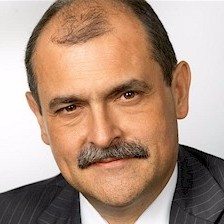 Franz Hörmann, born 1960, Univ.-Prof. Mag. Dr.
Employed since 1983 at the Institute for Auditing, Trust and Accounting of the Vienna University of Economics and Business, and a licensed management consultant since 1997.
- 1995–2015: corresponding member of the Data Processing Senate of the Austrian Chamber of Chartered Accountants
- 2001–2010: visiting professor at the Institute of Business Informatics (Communications Engineering) at the University of Linz
- 2001–2010: lecturer at the FHW (University of Applied Sciences of the Vienna Chamber of Commerce)
- 2001–2015: examiner in the training of chartered accountants at the Austrian Chamber of Chartered Accountants
First came to public attention in 2011 as a critic of interest-bearing debt money with his work “Das Ende des Geldes” (The end of money, German); he developed the new form of money “Informationsgeld” (information money, German) and is bringing it to market as OSBEEE:Money with the OSBEEE cooperative. Co-founder of the “Interdisciplinary Research Institute for Systemic Sciences” (IRISS). Franz Hörmann is married and the father of two children (daughter Sophie, born 1996; son Leonhard, born 1999).
CONTACT BY EMAIL MY WEBSITE (German) SUBSCRIBE TO MY NEWSLETTER (German)
In many areas, GAIA pursues the same goal as I do. So in December 2017 we decided to use GAIA as an information platform and to contribute a series of articles. I look forward to interacting actively with readers and interested people through GAIA and its network.
Notes on content provided by authors
Comments
Loading comments …
Become a member to comment publicly. GAIA members write comments in the members' portal — under their nickname, visible to everyone.