The multi-paradigm shift becomes visible, part VIII: Systemic crash analysis and forecast

The multi-paradigm shift becomes visible – part VIII: Systemic crash analysis and forecast
After a break of several months (since October 2018), during which I devoted myself to developing the Systemic Science approach further, today, in my current newsletter, I would like to take the opportunity to demonstrate the methodology of Systemic Science to my esteemed readers using a practical case study.
Systemic Science does not play the zero-sum game between “true” and “false” (following the motto: “Only one can be right.”). Nor does it try to capture a “reality”, however defined, in a model in order to make it calculable and plannable. Rather, Systemic Science deals with the acquisition, modification (formulation), storage and transmission of “knowledge” in a psychosocial context. This first of all means that we have to become aware that different individuals have very different criteria for “truth” or “reality”, which is why the “hunt for universal truth” is not pursued at all, as an illusory goal that can never be reached. In many fields of science, once these connections had indeed been recognised, radical simplifications of models were agreed, and “consensual realities” were thus constructed, so that researchers could agree among themselves on a minimum of “empirical reality”. The principle of “reproducibility” followed in the natural sciences, for example, represents the attempt to create “objectivity”, even though the perception of the scientists themselves is and always will be subjective – objects, after all, have no perception. But the fact that, for example, the production of special alloys with extraordinary properties (e.g. a measurable reduction in gravity) cost a single researcher many years of experiments with the most varied combinations of materials (German), so that his colleagues cannot reproduce such results (in a shorter time), shows that in practice this principle places very narrow limits on what we are able to know.
But it is not only our five natural (electromagnetic) senses that already distort our perception. Far more insidious are unconscious beliefs, which often tempt us to construct models whose “lack of alternatives” (precisely because they are based on premises that are too narrow and owed to a social tradition) then sometimes leads us to make fatal decisions (such as waging wars over resources because of supposed “scarcity”).
Systemic Science therefore tries to question the communicative process of the “co-construction of knowledge” and to document the premises underlying it and the belief systems used in it (unconsciously, too!). The natural starting point here is the exploration and documentation of the interests involved in each case. Every participant in a mental co-construction (the creation of a technical construction, the drafting of laws, but also the application of given rules by way of subjective interpretation), as well as in the mental analysis of systems, quite naturally – in many cases even largely unconsciously – starts from certain interests which, above all because they are usually not stated explicitly, only have to be recognised or explored once this traditional concealment leads to an insurmountable conflict of interests. How relevant and explosive these connections are, above all in the natural sciences too, you will understand immediately (German) once you have read the little book “Auch die Wissenschaft spricht nur in Gleichnissen” (Science, too, speaks only in parables) by Hans-Peter Dürr. The mathematisation of the sciences does not change the fact that algorithms, too, are simply “commands” (= instructions in a particular formal language). These, too, ultimately serve certain interests, although – since mathematics is stripped of the multidimensionality of our human feelings – these interests can be represented in such formal constructs all the more. This connection is explained very nicely in this short animation by the Royal Society of Arts:
So let us now dare a practical experiment. As systemic scientists, let us examine the statements made in a YouTube video documentary that has been breaking click records since 1 January 2019: “Mega-Finanzcrash ante portas (01.01.2019)” (Mega financial crash at the gates, German; duration: 2:01:02)
DOCUMENTARY: MEGA-FINANZCRASH ANTE PORTAS (German)
It opens with the term “black swan”, a synonym for particularly rare events, which was first introduced into the context of finance by Nassim Nicholas Taleb (German), a “philosophical essayist and researcher” who comes from a famous Lebanese family and, after relevant studies, himself worked for a long time as a stock market trader. His experiences from this period, which he condensed and published in the book “Der Schwarze Schwan: Die Macht höchst unwahrscheinlicher Ereignisse” (The Black Swan: The Impact of the Highly Improbable, German edition), 2nd edition, August 2018, date from this time. He therefore deals with “probable and improbable events from the point of view of statistics”, i.e. under the premise that stock market events follow a random course.
If, however, we now look at the phenomenon of the “financial crash”, it immediately becomes clear that such events are not “random” or “unforeseeable”, but that in every case a group of insiders used their information asymmetry to make a profit, as a minority, at the expense of the majority of market participants (see, for example, the film “Der schwarze Freitag” (Black Friday, German) or the book “When Genius Failed” by Roger Lowenstein).
Completely contrary analyses and conclusions therefore result, depending on whether we assume – like “state-of-the-art economics” – random events, or – like independent historians and the former participants in these machinations themselves – planned, controlled events. If we also take into account our insight that “book money” (i.e. deposit money in bank accounts) is on the one hand intrinsically worthless, since it is merely a sequence of zeros and ones in the data storage of a bank computer, but on the other hand is formally “owned by the bank” – while at the same time representing a balance-sheet liability for the bank! – then we can now subject the most important statements of the speakers in the YouTube documentary mentioned above to a systemic analysis.
Systemic analysis
In what follows I will subject the most important statements to a systemic analysis, i.e. I will try to show the possible interpretations of these statements depending on different premises and beliefs. Before that, however, I would like to begin, by way of example, with a statement of my own that I made in an interview in 2011, namely that in my opinion “the euro will disappear as early as 2012.” Many of my friends and fans held this statement against me afterwards and found it “tactically clumsy”, since in their opinion “the euro still existed” in 2013 and the following years.
For me, on the other hand, there is either “legal tender” or “no means of payment at all”. Illegal means of payment are not relevant (do not exist) for me, either legally or economically, which is also why I have certain problems with cryptocurrencies, or rather point out their problems openly. If we now see that, on the one hand, the German Financial Market Stabilisation Act violated the German Basic Law (a sum of tax money twice the size of the German federal budget was “shifted” by politicians to banks, bypassing parliament, without any control or transparency, see for example here (German)) and that, on the other hand, the establishment of the ESM (European Stability Mechanism (German)) quite obviously violates the no-bailout clause (German) and thus the Treaty of Lisbon, then it also becomes clear that, after these violations of the highest legal norms, the euro can no longer be “legal” (in the sense of “law-compliant”) tender. In short(-lived) interviews there is of course never enough time to shed light on such deeper connections, and that is exactly where those who manipulate the public through “other interpretations” of statements come in. But now to the documentary and the statements it contains.
02:44 The comparison of the “collapse of the major bank Lehman Brothers in New York” with the “crash of 1929, which led to the Great Depression at the time…”.
As we already know – see my last newsletter, VII 2018/10 – the “Lehman bankruptcy” was a deliberate manoeuvre by the banking lobby to create panic among politicians (governments) and regulators (International Accounting Standards Board (German), IASB), in order on the one hand to be able to draw on taxpayers’ money for the “bank bailout” and on the other hand – exclusively for banks! – no longer to have to write down “distressed” securities in their balance sheets (see (German)).
Depending on the viewer’s prior knowledge, this statement can therefore be seen either as a warning of a diffuse danger of a crash (diffuse because, as the result of a random process, it cannot be clearly foreseen), or as a warning of a renewed abuse of legislation, and thus of the monetary system, in the interest of a minority and to the detriment of a majority (possibly even combined with a danger of war, should these malpractices threaten to be exposed).
- The monetary system has recovered by itself…
- … the system was clinically dead in 2008 and had to be resuscitated…
- … governments as emergency doctors…
- … the biggest redistribution from the bottom to the top in human history…
- … central banks create money and lower interest rates
At first the first two statements seem to be an open contradiction. How could a “monetary system” “recover by itself”? The analogy with a living organism that had to be “resuscitated by emergency doctors” is not helpful either. Governments doubled the amount of the first raid (the “creation of debt money in the current accounts” of the private commercial banks) by then committing a tax robbery for these (purely bookkeeping, i.e. fictitious!) “debts” – to “settle the banks’ debts”. Since we now know that book money is always bank debt, it is also incomprehensible why this quantity of book money should then be “destroyed” (“repaid”) again by means of tax money that has already been created. This merely initiates deflation (a reduction in the money supply) while at the same time increasing the wealth in the hands of the bank owners. Strictly speaking, however, a “redistribution from the bottom to the top” only takes place when the state enforces the tax debts, or when it then “owes” the public the services that were supposed to be financed with the stolen tax money, or refuses to provide them (for lack of “budgetary cover” = austerity policy). The largest amounts of money are created by the private commercial banks, not by the central banks. Nor are interest rates set by an institution (the central bank), but by the members of the ECB’s interest rate committee (for example). These are specific people who represent specific interests of specific principals. A “general attack on anonymous institutions” (the central bank, the state, the banks, politics etc.) is counterproductive; it leads to a feeling of helplessness and generally to a state of confusion instead of transparency and the disclosure of individual and group interests.
Prof. Dr Hans-Werner Sinn – 21:50
”… with a subject that weighs on all of us: interest, … I don’t get anything on my little savings book any more…”
Here the argument is made one-sidedly with savings interest, whereas loan interest, i.e. interest burdens, usually consists of fixed rates and is therefore not subject to an “interest rate trend”. That the population has simply accepted this one-sidedness with resignation (falling savings rates while lending rates stay just as high or even rise) evidently no longer even strikes us. This line of argument can only be used if the speaker expects to be addressing an audience consisting mainly of savers.
- 23:00 ”… negative real interest rates (with 1–2 % inflation)…”
- 24:50 ”… the states cannot afford market interest rates…”
- 25:50 ”… return to the market economy after 10 years of planned economy…”
- 26:50 ”… there can no longer be any marked interest rate rises… otherwise the countries of southern Europe will be bankrupt immediately…”
- 27:10 “The system is not healthy…”
That savers are already suffering real losses is just as clearly recognisable today as the fact that borrowers are always losers too. As in the casino, the principle still applies today: only the bank always wins. Even that does not quite correspond to reality, for “the bank” as an accounting entity does in fact show (balance-sheet!) losses, while its “debts”, as “book money”, find their way to the bank owners, their families and friends.
Unfortunately, as always in such talks, it is not explained what a “market interest rate” is actually supposed to be and how it comes about. Interest rates are and always have been set by individuals and groups, following their own or someone else’s interests. A “market” here merely stands in for “the invisible hand”, a placeholder intended ideologically to hide the interest groups that profit from the interest asymmetries. For these reasons there has never been an “unplanned market economy”. Every international corporation today is a far more precise planned economy; every finance ministry consists almost exclusively of rigid plans which, by comparison, make the Soviet five-year plans look like spontaneous decisions. But it is not only “the countries of southern Europe” that would be “bankrupt immediately” in the event of an interest rate rise: so would the USA and the Federal Republic of Germany, most corporations and practically all international banks!
It is a pity that no economist has ever described what a “healthy system” might look like, or what the relevant “health values of the system” should be at all. We can see that “economics”, presented in this way, essentially exhausts itself in unquestioned anthropomorphisms and sweeping insinuations (“the countries of southern Europe”, “planned economy” etc.). Neither how “interest rate decisions” come about nor the definition of “market” (namely an explanation of the market form in question – in the case of interest rate decisions, regularly a monopoly!) is defined or questioned here. A scientific character is feigned by spreading undefined terms, dressed up in academic rhetoric, before an audience without specialist training. Used in this way, the “technical language of economics” is fatally reminiscent of medieval church Latin.
Prof. Max Otte: 28:50 … criticises Mario Draghi’s monetary policy, but forgets to mention that even Ben Bernanke warmly recommended the use of so-called “helicopter money (German)” (a term that itself goes back to Milton Friedman). Max Otte is one of the most famous “crash prophets” in the German-speaking world. There are, unfortunately, business models that profit from the uncertainty and growing fear among the population by selling precious metals or other so-called “safe investments”, or by selling books and consultancy services. If we try to find out whether individual investors managed, for example in 1929 (shortly before the Second World War), to escape the crash and the loss of their wealth through “intelligent investment strategies”, we come across the gold ban (German) both in the USA in 1933 and in the Weimar Republic, as well as the collapse of the stock market (German). The only people who were really able to profit from this were probably those who actually triggered these events. They, however, buried their tracks under the rubble of the Second World War.
Marc Friedrich & Matthias Weik – 35:20
“The question is not whether a crash is coming, … only when!”
Since both the money supply and its effect are controlled (it either reaches the real economy and creates inflation there, or remains “in derivatives” and thus tends to have a deflationary effect), it is not clear why a deliberately triggered hyperinflation with a stock market crash and a subsequent world war should now be staged for the third time. Unfortunately, the two authors fail to provide a scientific basis for the claim that a crash scenario must occur as a necessity of natural law. In the past, the so-called “crises” were deliberately initiated and brought about as an exit scenario for mass frauds, by exploiting certain features of the interest-bearing debt money system that were not known to the public. Since this deliberate instrumentalisation is already known to a wider public today, however, and since the actual instigators (no matter behind how many “curtains” they are hidden) can also be identified very quickly, it can be assumed that there is no longer any interest in deliberately taking this guilt upon oneself once again.
What makes me personally sceptical, in any case, is that these two authors too apparently belong to the group of “crash prophets with financial interests”. I take as an indication of this the fact that in their public appearances they hardly ever present solutions to the audience (which would then also be available free of charge on YouTube and other internet platforms), but mostly merely refer to their “advisory skills” – in other words, to a “scarcity of knowledge to increase fees”.
- “As debt rises, investors flee from shares into government bonds…”
- “The central banks have bought the government bonds…”
Debt currently affects the nation states as well as private corporations and the banks too. The main reason why, in this scenario, investors should flee “into government bonds” can be seen in the fact that politicians who can be blackmailed or are corrupt misuse tax money for a “repayment of debts” that, under accounting law, never arose in the first place (keyword: “lending as an exchange of promissory notes”). As long as politicians can be manipulated in this way, government bonds are indeed “more attractive” than shares, especially as the bubbles in the internationally embellished corporate balance sheets can also burst at any time.
Is the speaker once again assuming a law of nature between “debt” and “flight into government bonds”? The central banks have bought not only government bonds but, recently, above all shares as well! All securities will probably “lose their market value” very quickly (as a result of the collapse of the belief system that we today call “intrinsic value”). The senior employees of the institutions responsible for this (“central banks”) are therefore currently making sure that the wealth of the previous owners of these “papers” is secured (albeit only “in book money”).
I am not familiar in detail with Mr Wolff’s business model. His books (also in the “crash prophecy” category) have certainly become bestsellers by now, and reading them has already led to violent emotional reactions (keyword: “anger at politics and banks”) among some of the people I have spoken to. Here too, however, I miss practicable, generally comprehensible proposals for solutions. The (re-)introduction of “regulations and laws against speculation” is a longing for a historical state of affairs which, in the interest of certain powerful groups, led precisely in the direction that the “crash prophets” lament today. For exactly this reason I consider the idea of a “revision of the financial markets” hardly enforceable politically and not sensible either, for after a short “trial of strength” these reforms would probably be suspended or reversed again immediately. Taking pro and contra positions within a system that is to be changed usually leads not to a sustainable solution but to cycles of power struggles – sometimes violent ones – between the respective interest groups. A better way seems to me to lie in a consensual change (i.e. one supported jointly by all interest groups) of the basic assumptions (premises) of the system in question. This presupposes, however, that the problems of all interest groups are also formulated and accepted, i.e. that interests and problems can be spoken about openly and communicated in a common language. As long as shame, feelings of guilt, presumed expectations, fears and other socialised emotions prevent or hinder this, such open and desirable communication is hardly likely to come about. It is precisely for this reason that emotional competence (in the sense of a mindful approach to one’s own emotions and those of others) is of central importance, today in particular. But the more a speaker moralises and condemns in public, the more he hinders or makes impossible precisely this opening towards empathetic communication!
“2008 … the bursting of an American housing bubble… … with the crash of Lehman Bank there were then international upheavals…”
Through their creation of book money when granting loans, banks can deliberately create “bubbles” in individual markets (property, commodities, shares, …) simply by expanding lending and thereby ensuring rising demand and thus rising prices. Once they have then founded the relevant (e.g. property) realisation companies, usually together with friendly lawyers, they can also make these “bubbles” “burst” again by calling in the loans. When the former buyers suddenly run into liquidity problems, they become sellers out of necessity, prices fall, and the properties can be bought cheaply at the forced auctions by the banks’ subsidiaries and sold again at a large profit in the course of the next artificially created price bubble. In the textbooks this mechanism is also called the “invisible hand” – an apparent law of nature, not described in any detail, as a cloak for a business model based on information asymmetry, to the advantage of a minority and to the disadvantage of the majority of the population. To politicians and economists who have been socialised and conditioned in the existing dogma of economics, however, this connection (hidden in a “black box”) appears to be a “scientifically proven law of nature”. They would therefore never dare to question these processes or to argue against them. Rather, they use it – in the interest of their own country and thus, in the global financial zero-sum game, again necessarily because systemically, to the disadvantage of other nations. From a financial policy point of view, the trick of the so-called subprime crisis in the USA simply consisted in inflating a credit-financed housing bubble at home, with all its positive effects and side effects (people looking for homes get cheap housing, lenders can earn well), but then letting it burst abroad (through the bundling of the loan contracts and their rating as AAA – triple A – by the rating agencies!) (see in particular the German Landesbanken). As a result, however, the Fed was in turn forced, through its own “money creation”, to refinance a number of the major international banks “behind the scenes” (i.e. through the “invisible hand”) (“to take the pressure from the dollar market”) in order to prevent a collapse of the global financial system (see for example).
Dirk Müller himself advises clients on their investments and takes the view that shares are the best form of investment. He too therefore belongs to the circle of “professional crash prophets”. I still remember very well our shared taxi ride on the morning after our appearance on the Beckmann show in 2011 (see (German)). At the time I honestly tried to convince him of my scientific findings on the lack of informational value of balance sheets (see (German)) and on their open abuse through manipulation, or at least to persuade him to look more closely at these connections. Unfortunately I did not succeed at all. Cognitive dissonance evidently protects the business models of the “crash prophets” just as effectively as those of the bankers and politicians.
- 43:20 “Companies that should actually go bankrupt are kept alive artificially by zero-interest loans… these zombie loans are also accumulating in the banks’ loan books.”
- 46:40 “The zombie companies will drop out of the market at the next interest rate rise (interest rate turnaround).”
- 50:30 “We have about 40 % overcapacity in the USA… in the other countries it is very similar…”
- 51:50 ”… that means a global recession bigger than 2008, … unfortunately we have to go through it, there is no way around it…”
It is interesting that most “crash prophets” had previously agreed that interest rate rises would not be possible at all, since not only companies but above all whole states (“the southern European countries”) and of course most banks too would then immediately be “insolvent”. Nevertheless, this scenario – probably unrealistic in the majority view – is now used here to stoke fears of a crash among the audience once again.
Dr Markus Krall developed the statistical stress test models for the German banks and thus used scientific methods (“risk models”) for whose application the prerequisites were not met (no known and constant distributions!). Nevertheless, in his talk he rails loudly that most bankers are not familiar with these methods – methods that, scientifically, are demonstrably not even relevant in this context. In addition, he promotes the ICO of a blockchain-based cryptocurrency platform (see), so that we must probably count him among the profit-oriented “crash prophets” as well.
“War with nuclear weapons is no fun, nobody wins it. The Americans are pulling the plug on the Chinese economically; all they have to do is raise interest rates and put up tariffs.”
Dirk Müller, too, evidently overlooks the fact that the USA is one of the most heavily indebted countries in the world. A global interest rate rise would probably hit it much harder than China, which means that the “interest rate weapon” currently has the same effect as nuclear weapons: collective self-destruction. Whether the illogicality of these assumptions is consciously accepted in the course of promoting one’s own business model (investment advice in shares), or whether this is once again cognitive dissonance, is difficult for an outside observer to judge.
“Wave of zombie loan defaults:
- No bank bailout –> deflationary shock, disorderly break-up of the euro –> total loss of German foreign assets –> restart.
- European bank bailout –> inflationary shock –> devaluation of nominal assets –> Sovietisation.
- National bank bailout –> semi-orderly euro exit –> total loss of German foreign assets –> restart.”
In these three options, well structured from a logical point of view, neither “banks” nor “bailout” are questioned. Apparently well-known “real objects” are simply combined or permuted with one another. The rule of “supply and demand” is built into the scenarios just as unquestioningly as the rules of inflation and deflation. A fundamental change of structures and institutions is in no way considered; these proposed scenarios therefore preserve the system rather than change it.
From a systemic point of view, a more suitable solution (in the sense of enabling a win-win situation for all the interest groups involved) is certainly offered by the debt/equity swap I have proposed (the “bank bailout without tax money”, see here (German)). Simply “writing off” debts is also a practicable option, as long as the creditors can nevertheless be satisfied (e.g. from other sources). And not least, money creation by the national and central banks is useful rather than harmful for the economy if this book money is matched by “real values” (e.g. a clean environment, sustainable infrastructure, a healthy and educated population and social peace). Direct project financing from the “central bank printing press” may even be the only way of remedying all the grievances observable today (over-indebtedness, environmental problems, dilapidated infrastructure, poor health and education of the population) at the same time and in the short term.
Prof. Dr Hans-Werner Sinn – 1:40:20
“There are four options for Europe… but they are all ugly… … our science is a dismal science; it presents reality and shows the therapeutic options with all their side effects.”
Here the trained economist again presents us with his personal interpretation of his “science” – by analogy with a doctor who diagnoses and treats a body on a physical and chemical basis, i.e. in the idealised image of a natural scientist. According to this, there are simply only four options; the “natural laws of the hidden hand” would not permit any others:
“1. Setting up a transfer union The countries of the north send money to the south every year… because they are no longer competitive… that may stabilise Europe… that is ultimately Macron’s solution… but as an economist one is sceptical; first, the sums are very large… can we manage that, is the population prepared to put the money on the table… I don’t know.”
What is not said here is how the “money” that is “sent to the south” every year actually came into being, or what kind of “money” it is at all: if it is containers of bundles of banknotes taken directly from taxpayers’ wallets and purses, then the economist’s suspicion is right – we cannot be sure whether “the population” “will want to put the money (the notes) on the table”. If, on the other hand, it is newly created book money (i.e. the liability of a bank), then the first question is in which bank’s balance sheet there is still “room” for it (with regard to the Basel capital rules), and where the realistically valued “assets” are to come from that must provide the basis for creating the book money. If, however, it is money “created” by the national or central banks, then the “counter-item” may well be future economic output (direct financing of the national debt from the printing press); the only necessary precondition, however, would be realistically calculated and implemented projects, without corruption and price gouging. Not least, “state financing from the printing press” could also be booked as equity in the national bank (debt-free state financing), since “the central bank’s indebtedness through money creation” has become meaningless in substance since the abolition of the gold standard, as even former bank directors now dare to say publicly in their publications (see the article by Wolfgang Edelmüller: “Die verhinderten Möglichkeiten der Geldpolitik” (The prevented possibilities of monetary policy, German)). Now to the second option that Prof. Sinn’s picture of science allows us.
“2. Deflating The way of lowering prices is a terrible one, because you also have to lower wages and you have to club the trade unions down… none of that works, it leads to social uprising… What do you do with people who have loan agreements… prices and wages are falling, they can no longer repay the loans… what do you do with tenants who have long-term leases… they get into difficulties too…”
Whoever lowers prices must (automatically?) lower wages too. In a symmetrical exchange economy this seems to be a law of nature, although even here a balance could be created, for example through subsidies (though not as “public debt”!). And so one arrives – at first only in thought and in words – at the “natural necessity” of having to “club down” those disadvantaged by one’s own mental model, i.e. of using violence. The question about those who have concluded “loan agreements or leases” is again clearly ideological: that loan or rent claims can simply be cancelled, reduced or publicly subsidised evidently does not fit the world view, so here the “weaker” are simply “declared unavoidable victims” by an apparent law of nature. Statements of this quality from supposed experts ultimately justify politicians, in turn, in doing injustice to the majority of the population and possibly – in the event of resistance – violence as well. Let us now also consider the third “option”.
“3. The north is inflated The south keeps its price level and the north inflates… then the south becomes more competitive again… the ECB is trying that… it wants 2 % inflation, but because 4 % arises in Germany and 0 % in Italy, we need an inflation differential… we don’t see that yet; if inflation rises, it rises in all countries… is that even legally covered, the ECB’s goal is price stability…”
Different inflation rates in different regions of a single currency area are hardly feasible even in the existing economic model. In this respect this statement can be agreed with from a systemic point of view too (within the system under consideration) – but strictly speaking it is therefore not a “third option” at all. What remains in the end?
“4. Exit – and devaluation … the Schäuble solution, … he wanted that for Greece… but then high politics said no, and they got a rescue package… now they already have the fourth, it isn’t called the fourth because that doesn’t look so good… Devaluation is a quick option, because consumers then stop buying imports and turn to domestic producers.”
An exit (from the euro area) would probably only “work” for smaller, economically weaker countries (in the sense of “would cause less damage to the economically stronger countries than to themselves”). Larger states (such as Italy, France or Spain), on the other hand, would subject the remaining euro area to such violent turbulence that the euro construction itself could hardly be maintained. Prof. Sinn’s concluding assessment:
”… those are four options; unfortunately there is no fifth…”
The belief system of this well-known economist does not allow him to question “money as a means of exchange”, the “rule of supply and demand”, “money with intrinsic value” or “money as interest-bearing debt”, and to imagine that human society could cooperate and flourish more sustainably and peacefully with other beliefs. His personal reality consists in “proclaiming unpleasant truths” (economics as the “dismal science”), in making forecasts based on traditional rules of behaviour which, simply because they have hardly ever been seriously and thoroughly questioned in human history, have built the (invisible!) social power structure and preserved it for centuries, if not millennia.
“Ahead of us lies a historic change that, for lack of experience, we cannot imagine.”
This statement is reminiscent of a quotation from the Danish philosopher Søren Kierkegaard (German): “Life can only be understood backwards, but it must be lived forwards.” In this respect it is at the same time a commonplace and the strongest restriction on human action of all: the future is unknown.
A comforting alternative, however, can be seen in co-construction based on open, empathetic communication. Perhaps the main function of human language for our species is, after all, to shape an unknown, threatening future into a safe and desirable one through shared communication and cooperation.
Conclusion
Most of the speakers presented in this documentary belong to the category of “professional crash prophets”, i.e. “experts” trained in certain disciplines whose business model profits above all when their audience can be made fearful and feel helpless. Then some of the listeners engage these speakers (or buy certain investment products on their advice). Should this decision later turn out to be economically disadvantageous for these clients… one can always invoke “force majeure”, since “ahead of us lies a historic change that, for lack of experience, we cannot imagine.” Since lawyers and economists, too, will confirm this simple truth in court at any time, especially “in times like these”, it is a business model with rising returns and at the same time falling adviser risk – something that, according to the economic principle of the correlation between risk and interest rate, should not actually exist at all…
I myself therefore withdrew from this “scene” several years ago and am trying, through solid research and development work, to work out solutions that are transparent and understandable for all interest groups, lead to win-win situations, and whose economic added value will lead to such rich abundance for all people that the business practice of emotionally manipulating others in one’s own financial interest will disappear by itself for lack of necessity.
I wish all my readers, too, a path through life full of light and insight!
With warm regards, Franz Hörmann
WHO I AM
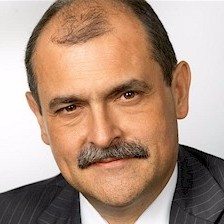 Franz Hörmann, born 1960, Univ.-Prof. Mag. Dr.
Employed since 1983 at the Institute for Auditing, Trust and Accounting of the Vienna University of Economics and Business, and a licensed management consultant since 1997.
- 1995–2015: corresponding member of the Data Processing Senate of the Austrian Chamber of Chartered Accountants
- 2001–2010: visiting professor at the Institute of Business Informatics (Communications Engineering) at the University of Linz
- 2001–2010: lecturer at the FHW (University of Applied Sciences of the Vienna Chamber of Commerce)
- 2001–2015: examiner in the training of chartered accountants at the Austrian Chamber of Chartered Accountants
First came to public attention in 2011 as a critic of interest-bearing debt money with his work “Das Ende des Geldes” (The end of money, German); he developed the new form of money “Informationsgeld” (information money, German) and is bringing it to market as OSBEEE:Money with the OSBEEE cooperative. Co-founder of the “Interdisciplinary Research Institute for Systemic Sciences” (IRISS). Franz Hörmann is married and the father of two children (daughter Sophie, born 1996; son Leonhard, born 1999).
CONTACT BY EMAIL MY WEBSITE (German) SUBSCRIBE TO MY NEWSLETTER (German)
P.S.: On the subject of “Bedingungsloses Grundeinkommen – Wandel in und aus der Gesellschaft” (Unconditional basic income – change in and out of society), a systemic constellation will take place on Wednesday, 27 February 2019, 18:00–21:00, at the Rudolf Steiner School, Endresstraße 100, 1230 Vienna.
EVENT: Unconditional basic income (German)
The event will be led by Peter Klein, and I will assist him. A short introductory talk on the subject will be given by Helmo Pape (German). I look forward to meeting you there in person!
Next constellation dates on the paradigm shift
- Wed, 27 February 2019: “Bedingungsloses Grundeinkommen” (Unconditional basic income)
- 9 April 2019: “Freie Energie” (Free energy)
- 2nd quarter of 2019: “Energiewende” (Energy transition)
In many areas, GAIA pursues the same goal as I do. So in December 2017 we decided to use GAIA as an information platform and to contribute a series of articles. I look forward to interacting actively with readers and interested people through GAIA and its network.
Notes on content provided by authors
Comments
Loading comments …
Become a member to comment publicly. GAIA members write comments in the members' portal — under their nickname, visible to everyone.