Abundant energy from invisible radiation

Can neutrinovoltaics help end consumers too?
We end consumers have always been the nation’s cash cow. Above all, spending on energy has increased massively in recent months and is putting a heavy strain on our budgets. How much longer will we have to endure this? Is there a light at the end of this tunnel, or will it get even better?
Showering in the morning because the boiler is heating. Cooking at midday while the meter races. In the evening, the technical devices for unwinding after the day’s work run at full speed in the meanwhile warm home, after perhaps the combustion-engine car has warmed the parking space with its waste heat. Energy in the form of heat, electricity or mobility accompanies us 24/7 on every single day of our lives. We always assume that wherever we need energy there are sufficient resources, and that we can tap them quite easily – whether electricity, gas or fossil fuels.
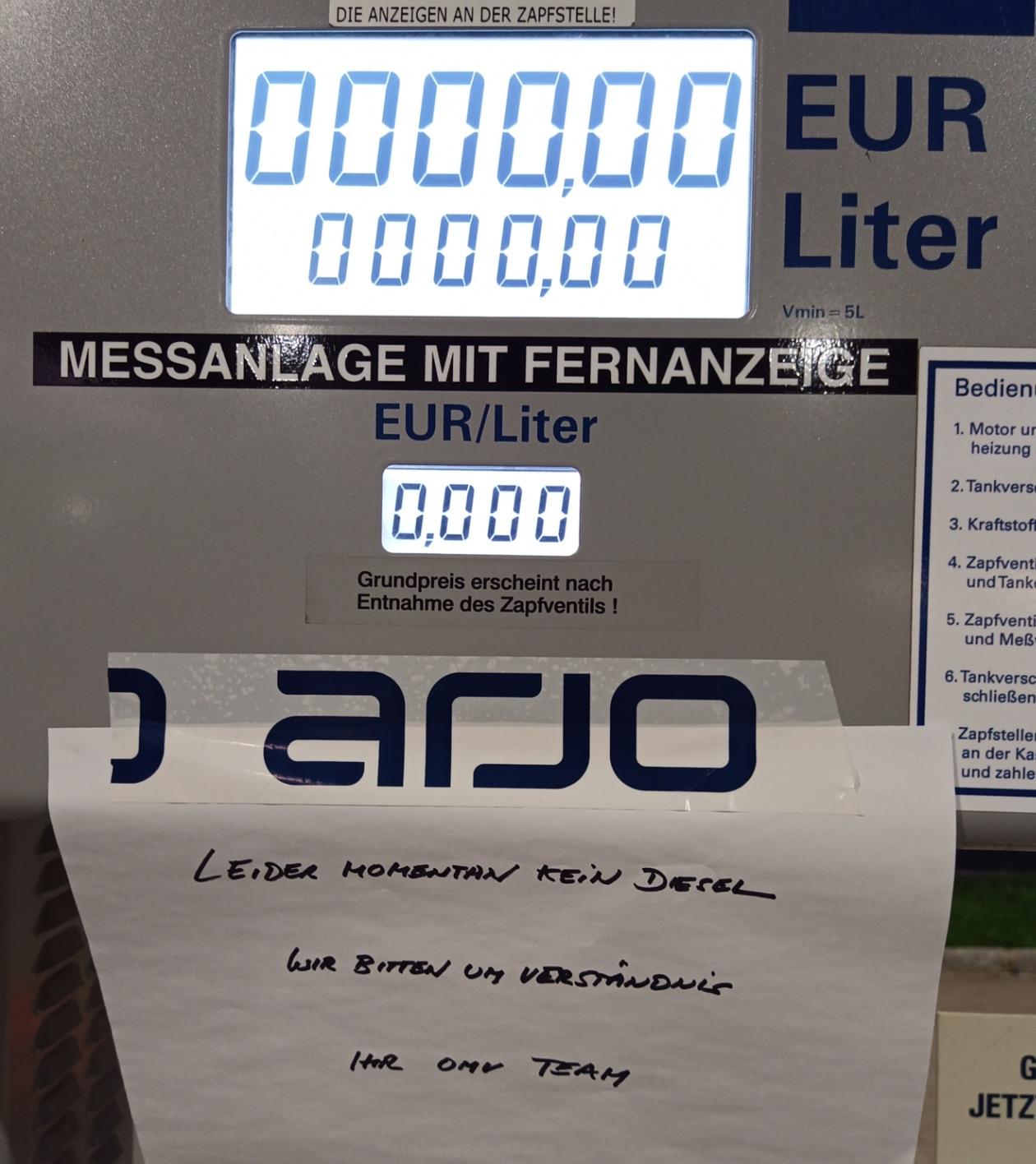 Since this year at the latest, however, we have been learning more and more painfully that the central provision of energy is a complex process accompanied by economic and political interests. Not that this was ever different – but the current situation goes beyond our imagination and cannot possibly be accepted in the long term. Looming dangers of blackouts, regional fuel shortages and astronomical electricity costs flank our new everyday life – above all the everyday life of families on average incomes, in other words of us, the end consumers.
In our work at the Society for Self-Sufficiency (GAIA), we regard energy in the form of electricity as the noblest resource, through which almost all processes essential to human life are made possible everywhere on Earth. By this we mean heat, cooling, mobility and of course the free use of electricity itself. As is well known, we have been searching the field for such robust technologies for years, through our own efforts and with partnerships. Together with numerous members, we have already been through quite a lot.
Since 2018 we have been following the field of magnetic generators particularly intensively. Since then, GAIA has been a distributor of InfinitySAV (KR) and, from 2020, also an active part of the rescue group trying to bring Andrii Slobodian’s MG10 to market after his death, as already described in numerous topic posts on the GAIA platform.
Our activities are based first and foremost on the needs of us end consumers. Being able to provide around 5 kW of electrical energy per hour independently and with baseload capability is the central pivot of our activities in the field of energy. For energy generation to be described as baseload-capable, it must be available consistently every day, regardless of the time of year or day, the weather and the location. Wind and solar energy can only do this to a limited extent with additional energy storage. So since GAIA was founded we have been looking for other forms of energy and regularly looking beyond the established “edge of the plate”. Not everyone understands this straight away. Nevertheless, everyone is probably now realising how important it is to question existing systems consistently.
Why 5 kW of output?
The figure is based on two considerations. Let us first look at an example of energy consumption: a family of four consumes an average of 10 kWh of energy per day – i.e. around 3,600 kWh per year. This includes the family’s completely normal life, including cooking, washing and working from home, but no electric heating or hot water preparation. In the household in question, energy-saving LEDs light all the rooms, and a modern washing machine together with an energy-saving heat-pump dryer copes with the mountain of laundry. The family does not go without comfort, but it lives in an energy-conscious way.
In this case, the average demand is just under 500 W per hour and day. We now assume ten times that – i.e. 5,000 W (5 kW) – as maximum demand, so that the whole of daily life can be cushioned well even at peak times without energy storage. If we now look at the amount of energy over a period of 12 hours, 60 kWh of energy are to be generated per day, which in turn corresponds to 21,500 kWh per year – in theory, mind you. There will certainly be fluctuations depending on lifestyle and type of installation.
The second reason why it is advisable to stay below 5 kW of peak generating capacity is a legal one. In Austria, PV systems for self-consumption that generate a maximum of 25,000 kWh of energy per year are “only” subject to notification.
Neutrinovoltaics – the game changer
The Neutrino® Energy Group intends to offer the first “Neutrino® Power Cube”, probably from the end of 2023. This novel device has a modular design and can generate up to precisely this figure of 5 kW of energy per hour. However – and this is the huge advantage – not only from visible sunlight, like a familiar PV system, but also in the dark. Neutrinovoltaics mainly converts invisible radiation, including electromagnetic radiation of all kinds, terahertz waves, heat differences and the neutrinos that give it its name. These particles, which really do have mass, stream in high density through (almost) all the materials around us and through ourselves, through room walls and house walls. This is a great advantage, because it means the Cube can also be placed inside a building.
 Several hundred international scientists, engineers and special supporters, whom the CEO of the group, the mathematician Holger Thorsten Schubart, has gradually formed into a think tank since 2008, have developed a material mix capable of converting parts of the tiny charges of the approx. 60 billion particles per cubic centimetre into micro-vibrations of graphene, and converting these resonances in turn into usable electricity. “Atomic vibrations at nano materials” is the key that makes abundant electricity technically possible. This works statically, i.e. without a generator, without magnets and coils. And it works always and everywhere, decentrally, with baseload capability and without detours via distribution grids. Considering the possibilities that arise from it, this kind of energy generation amounts to a fundamental liberation from fossil dependencies.
And it gets even better: these Cubes are built modularly, similar to a cabinet with drawers. It should therefore be possible, to a certain extent, to retrofit generating elements, e.g. to adapt to changing needs. According to current plans, the Neutrino® Power Cube is to generate an output of 5–6 kW at a size of approx. 800 × 400 × 600 mm and a weight of approx. 50 kg. The direct current generated inside will be available at the output itself, but grid-compliant alternating current at 220 V and 380 V is also to be provided at the Cube. At present, the net price estimated by the Swiss manufacturer for such a Cube is given as approx. 11,000 euros, provided the Cube is produced in industrial mass production. Given the development of electricity prices, such a system would certainly pay for itself very quickly in any household.
Too good to be true?
Certainly not. Fear of this technology is misplaced. After all, no neutrinos are captured. No – their kinetic energy is converted into vibrations of graphene, and a rectified flow of electrons is generated from it. Anyone who wants to understand these phenomena and the developments arising from them in more detail now has a wealth of international scientific publications available. In them you can read up on how the technology works and on its details, such as the use of several layers of doped graphene and silicon to develop resonances.
Truly, I cannot foresee the timing. But one thing has been clear to me for a long time: the space around us contains a great deal of energy. It was only a matter of time before scientists and engineers developed the right converters to make this energy usable for all of us through their way of thinking and working.
I hope for GAIA that we will be able to accompany further developments and processes around this extremely promising technology, e.g. through field studies with members, and otherwise contribute our share to the breakthrough.
“You can never solve a problem on the level on which it was created.”
Albert Einstein
Physicist
The Neutrino Energy Group
The Neutrino Energy Group is a German-American research group. Its aim is to find ways to harness the power of the invisible radiation spectrum. As fossil fuels are limited and climate change requires the development of alternative and CO2-neutral energy sources, this research group is dedicated to an urgent problem. It has succeeded in creating a dense substance that can interact in a specific way with neutrinos and other invisible radiation. This unique substance is used to build the first neutrino photovoltaic cells for power generation. Vapour-deposited layers of silicon and doped graphene are applied to the carrier layer to make the end product. The thickness of these layers is in the nanometre range. When neutrinos and other invisible radiation strike this substance, they generate both horizontal and vertical impulses. It is crucial that the doped materials have the right layer thickness. At the optimum layer thickness, the atomic vibrations caused by the impulses are brought into resonance. As a result, an electric current can be detected in the substrate material. The hypothesis states that the amount of energy that can be harvested depends on the distance travelled in the process. With this approach it will soon be possible to charge electrical devices anywhere in the world without needing a socket or a cable. Simply “collecting” energy from the environment is a viable option. As a result, humanity will have access to an endless supply of clean energy, which will help to slow or halt global warming.
The Neutrino® Energy Group works with a worldwide team of scientists and various international research centres. They research applications for converting invisible radiation spectra of the sun, including neutrinos – high-energy particles that reach the Earth incessantly and can be converted into electrical energy.
The image rights lie with the author of the press release.
Notes on content provided by authors
Comments
Loading comments …
Become a member to comment publicly. GAIA members write comments in the members' portal — under their nickname, visible to everyone.